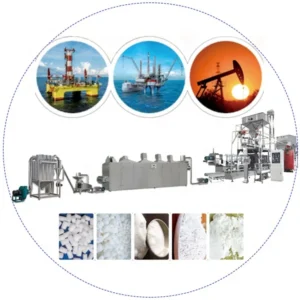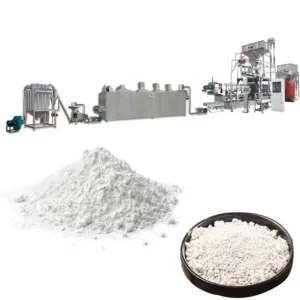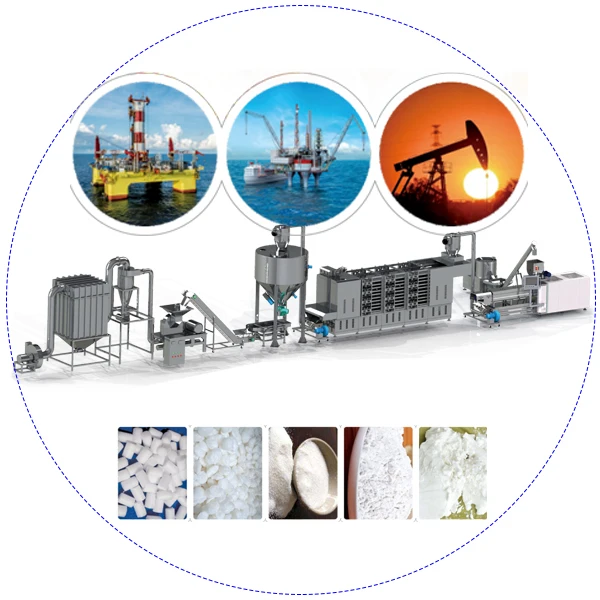


Modified Starch Processing Line, Twin-Screw Extrusion, 220–440V — engineered for corn, potato and wheat starch modification with matched throughput across extrusion, cooling and pulse grinding stations. Screw configuration, barrel temperature profile and die design are specified to your raw material and target modification degree, ensuring consistent gelatinisation and particle size. Backed by in-house trial runs on customer-supplied raw material before shipment, complete layout design against your workshop area, and ongoing engineering support from installation through production ramp-up.
Description
Engineered Throughput Matching — every station in this modified starch line is calculated against your raw material’s gelatinisation behaviour so the extruder, cooling conveyor, and grinder hold the same output rate without one dragging down the rest.
Technical Specifications
| Parameter | Value |
|---|---|
| Product Type | Modified Starch Twin-Screw Extrusion Line |
| Screw Configuration | Twin screw, segment arrangement matched to starch source and modification target |
| Installed Power Range | 45–200 kW depending on extruder model selected |
| Throughput Range | 100–1500 kg/h (basis not stated in source — confirm raw material type, moisture content, target modification degree) |
| Electrical Supply | 220–440 V, three-phase, 50 or 60 Hz configurable to buyer’s grid |
| Contact Parts Material | 304 stainless steel on all food-contact surfaces |
| Downstream Cooling | Cooling conveyor with wind-knife air flow for surface moisture reduction |
| Grinding Station | Pulse grinder with cyclone discharge and integrated dust collector |
| Heating / Drying Energy Source | Gas, diesel, electricity, or steam — confirmed at quotation stage |
| Control System | Automated operation (PLC/MCC option to be confirmed with supplier) |
| Compliance | CE (certified since 2014), ISO certified |
Application Suitability
| Application | Material or Output |
|---|---|
| Food-grade thickener and stabilizer production | Corn starch, wheat flour, potato starch with additive materials |
| Pre-gelatinized starch for instant food mixes | Rice flour, corn starch processed below full denaturation threshold |
| Oil drilling fluid starch additive | Modified corn or wheat starch targeting specific viscosity profiles |
| Papermaking industry sizing and coating starch | Potato or corn starch modified for surface adhesion properties |
| Nutritional and infant formula starch base | Pre-gelatinized starch from rice or corn with controlled gelatinisation degree |
Why Your Raw Material Defines the Line, Not the Brochure Capacity
A modified starch processing line turnkey only holds its quoted output when screw configuration, barrel temperature, and die design are specified against the buyer’s actual formulation.
I learned this the hard way in Shandong when we shipped a line rated for corn starch and the buyer ran cassava — the gelatinisation temperature gap threw off the entire extrusion window, and it took days on-site to dial back viscosity to spec [NEED_CITE: starch gelatinisation temperature variance across crop sources]. That is why I now ask every buyer to ship a raw material sample before the production schedule opens. A modified starch processing line turnkey built on generic screw profiles will always underperform on the material it was never configured for.
Screw and Barrel Configuration Against Starch Modification Degree
The twin-screw platform on this line allows the screw segment arrangement and barrel zone count to be matched to how far the starch must be modified. Pre-gelatinized starch for instant foods needs a shorter residence time and lower shear than fully denatured starch for industrial drilling fluids, and the screw profile is the primary control point for that distinction. The die opening and shape further influence expansion and density as the material exits the barrel.
Cooling and Grinding Stations Engineered for Starch Integrity
The cooling conveyor uses wind-knife air flow rather than forced heat, removing surface moisture without altering the gelatinisation structure already set inside the extruder barrel. The pulse grinder downstream operates with cyclone discharge and an integrated dust collector, producing a consistent particle size distribution while keeping the workshop environment clean [NEED_CITE: cyclone separation principles in starch powder recovery]. This pairing ensures the modification achieved during extrusion is preserved through to the packing stage.
Key Parameters That Govern Modified Starch Output Quality
Installed power across the range spans 45 to 200 kW, which determines the thermal and mechanical energy available for starch gelatinisation within the barrel — insufficient power leads to incomplete modification, while excess energy degrades molecular chains. Voltage and frequency are configurable from 220 to 440 V at 50 or 60 Hz, and this must be confirmed in writing before the electrical cabinet is wired, because rewiring after build adds weeks and cost. The 304 stainless steel contact surfaces are specified for food-grade compliance across every station the starch passes through, which matters when the end product goes into infant formula or food thickeners. Available heating options — gas, diesel, electricity, or steam — influence both operating cost and temperature stability, and the choice depends on local utility pricing and the dryer configuration selected for the line.
The Hidden Cost of Skipping the Trial Run
When a line leaves the factory without a trial run on the buyer’s starch formulation, the first three days on-site become a costly parameter search. Viscosity readings stay outside specification, the customer’s downstream buyers reject batches, and the commissioning engineer burns through raw material chasing the right barrel profile [NEED_CITE: cost of unplanned commissioning delays in food processing plants]. Every week of delayed production on a starch line is a week of contract penalties or lost supply position in the buyer’s market.
What Distinguishes This Build Approach
Throughput is calculated across every station — extruder, cooling conveyor, and pulse grinder — so no single unit creates a bottleneck that caps the whole line below its nameplate rating. Screw and die configurations are recorded in a document tied to the buyer’s specific formulation, not copied from a generic build sheet. The in-house testing workshop runs the buyer’s actual raw material before the line ships, producing a trial run report that becomes the baseline for on-site commissioning. Electrical schematics are confirmed with the buyer’s voltage, frequency, and control language requirements before the cabinet is assembled. Every line ships with a complete wear parts list so screw segments and dies are reorderable before the first replacement falls due.
Documentation & Verification
- Line layout and capacity calculation matched to your starch type and modification target
- Screw and die configuration record tied to your specific formulation before build
- Trial run report on customer-supplied raw material covering viscosity and particle size data
- Electrical schematic confirming voltage, frequency, and control language before cabinet assembly
- CE declaration of conformity and ISO certificate included with shipping documents
Installation, Commissioning & Support
- Foundation plan accounts for extruder vibration and pulse grinder cyclone height clearance
- Dedicated three-phase circuit specified per 45–200 kW extruder power draw and dryer load
- Line arrives in modular stations for staged assembly matching workshop access constraints
- First-run commissioning sets barrel temperature profile and screw speed against trial report baseline
- Operator training covers screw segment changeover for switching between starch sources
- Wear parts list with reorder codes for screw segments, dies, and grinder screens
What to Include in Your Inquiry
Send the specific starch raw material — corn, wheat, potato, rice — along with the target modification degree and any additive formulation you plan to run. Confirm your workshop’s available floor area and ceiling height so the layout can accommodate the cooling conveyor length and pulse grinder cyclone stack. State your local grid voltage and frequency along with the preferred control language for the operator interface.
Frequently Asked Questions
Q: How is the line output verified on my specific starch raw material?
A: We conduct a trial run in our testing workshop using the raw material sample you provide. The test covers extrusion parameters, gelatinisation behaviour, and final powder viscosity against your target specification. A written trial report is issued before the line ships, and those parameters become the starting point for on-site commissioning.
Q: Can the screw configuration be adjusted for different starch sources?
A: Yes. The twin-screw design allows screw segments to be rearranged for corn, wheat, potato, or rice starch, each with different gelatinisation temperatures and shear sensitivity. The configuration is documented for your primary formulation, and alternative profiles can be recorded for future product changeovers.
Q: What electrical and control options are confirmed before production starts?
A: Voltage, frequency, and control language are confirmed in writing during the specification stage. Options include 380V, 415V, and 220V at 50 or 60 Hz depending on your local grid. The electrical schematic is reviewed with your team before the control cabinet is wired.
Q: How does throughput matching prevent bottlenecks across the line?
A: Each station — extruder, cooling conveyor, and pulse grinder — is sized so its capacity aligns with the extruder output rate on your formulation. This prevents situations where a downstream unit cannot process what the extruder produces, which would force the entire line to run below its rated throughput.
Related products
-
Pregelatinized Low-Cost Modified Starch Line – High-Efficiency Automated Starch Processing Machine
¥65.00 Select options This product has multiple variants. The options may be chosen on the product page -
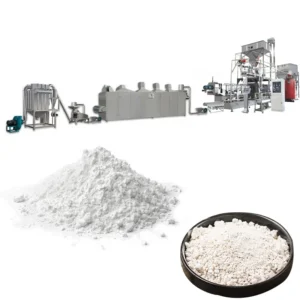
API Standard Pregelatinized Starch Line for Oilfield Drilling Fluid. High Yield Modified Starch Equipment
¥65.00 Select options This product has multiple variants. The options may be chosen on the product page -
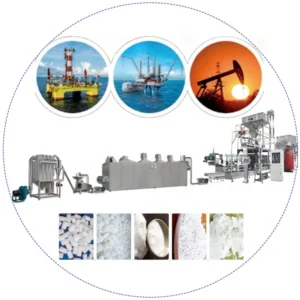
Automatic Modified Tapioca Starch Production Line 304 Stainless Steel Flour Mill and Bakery Machine
¥30.00 Select options This product has multiple variants. The options may be chosen on the product page -
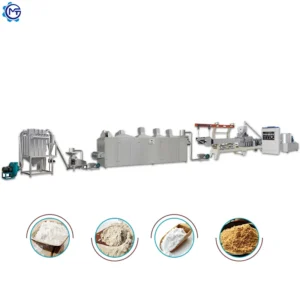
Twin-Screw Extrusion Line for Modified Starch. Producing Pregelatinized Adhesive & Food Grade Powder
¥65.00 Select options This product has multiple variants. The options may be chosen on the product page