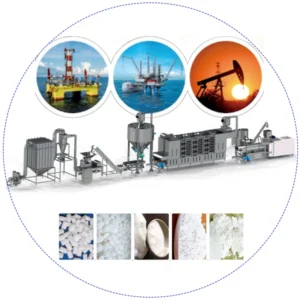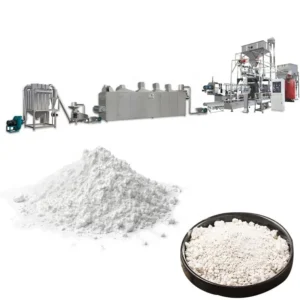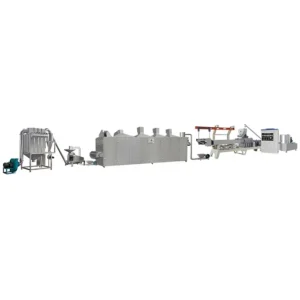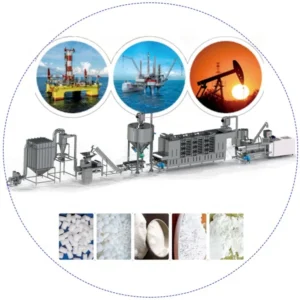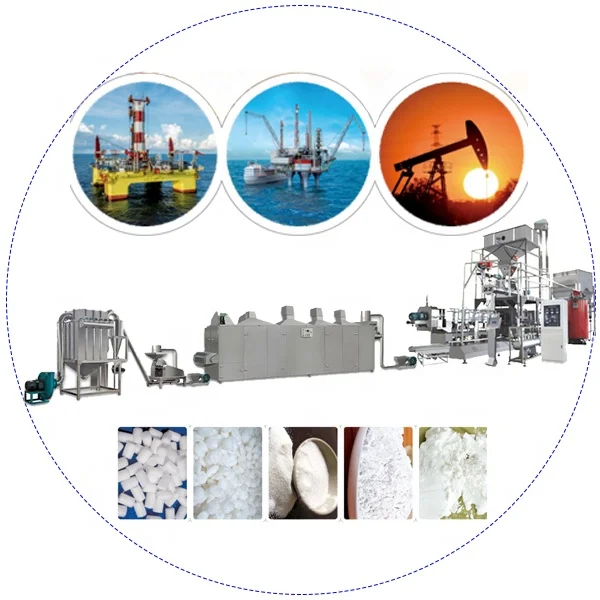

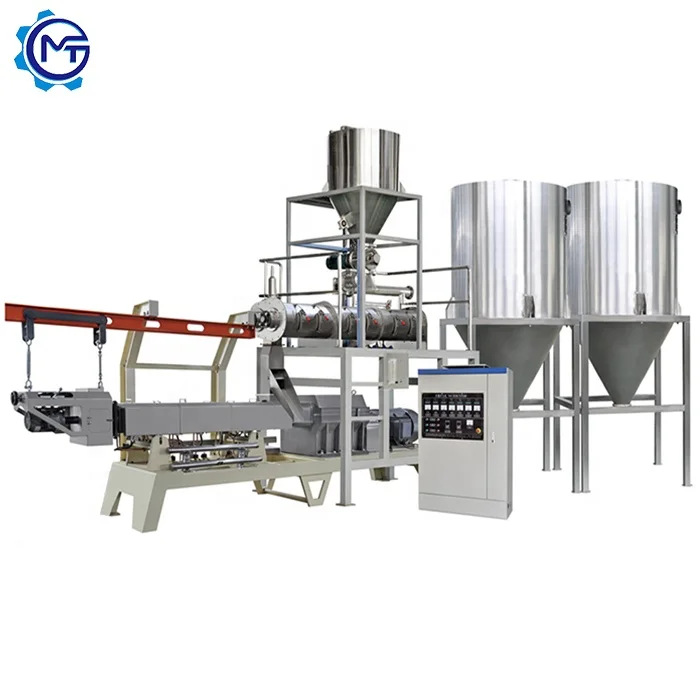


Modified Starch Processing Line, Twin Screw Extruder, PLC & MCC Control — engineered for continuous production of modified and pregelatinised starch from corn, potato, tapioca and wheat flour.
- Screw configuration and die design specified to your raw material and target modification degree, ensuring precise starch gelatinisation and expansion control
- Throughput-matched stations from mixing through extrusion, cooling, pulse grinding to packing, preventing bottlenecking across the line
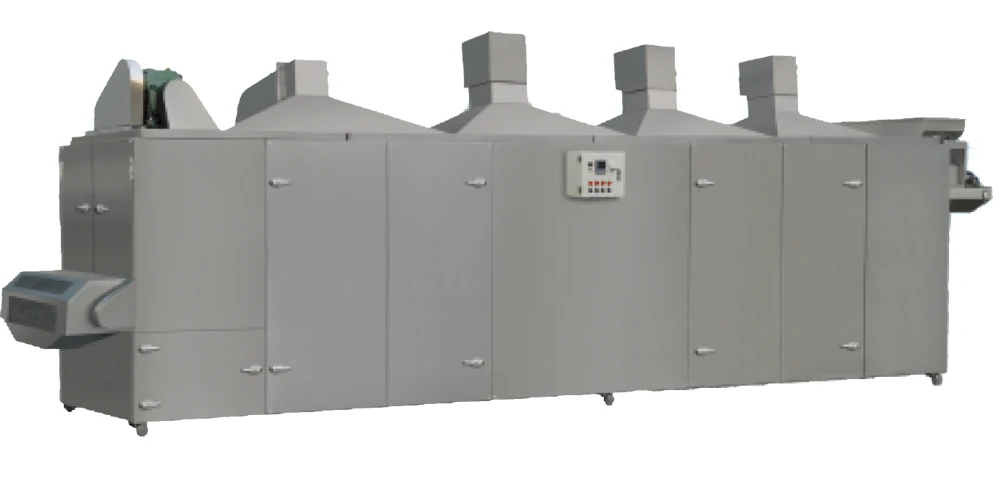
- Wind knife cooling conveyor and cyclone-equipped pulse grinder maintain product integrity and controlled particle size
Trial runs on your actual starch formulation are completed in our testing workshop before shipment, with full line layout and capacity documentation provided.
Description
Screw Configuration Matched to Raw Material — Every modified starch processing line turnkey we deliver starts with a trial run on the buyer’s actual formulation, ensuring the twin-screw profile and barrel temperature zones are set before the line leaves the factory.
Technical Specifications
| Parameter | Value |
|---|---|
| Product Type | Modified Starch Processing Line |
| Extruder Type | Twin screw extruder |
| Rated Power | 45–200 kW |
| Capacity | 100–1500 kg/h (basis not stated in source — confirm raw material type, moisture content, and modification degree) |
| Machine Weight | 1000–5000 kg (source value — verify against manufacturer catalog) |
| Voltage | 220–440 V, tri-phase (frequency to be confirmed for target market) |
| Control System | PLC and MCC control |
| Line Stations | Mixing → Extrusion → Cooling conveyor → Pulse grinding → Packing |
| Cooling Method | Low-power fan with wind knife, ambient temperature drying |
| Pulse Grinder | Cyclone discharge with dust collector, auger feeder with speed control |
| Material Contact Parts | Food-grade stainless steel (some conveyors with PVC) |
| Fuel Options | Gas / diesel / electricity / steam |
| Assembly State | Complete turnkey line |
| Standards | CE certified, ISO certified |
Application Suitability
| Application | Material or Output |
|---|---|
| Modified starch for food and nutrition | Corn, potato, tapioca, and wheat flour formulations |
| Industrial starch for oil drilling | Modified starch with controlled viscosity and thermal stability |
| Paper-making grade starch | Pregelatinised starch with specific gelatinisation degree |
| Nutritional and infant formula starch | Pregelatinised and modified starch meeting tight particle-size specification |
What Capacity Figures Leave Out on Starch Lines
A rated throughput is only meaningful when it is proven on your specific starch source and target modification degree.
I have stood on a factory floor watching an extruder run smoothly on corn starch during testing, only to see the same machine stall when the buyer’s tapioca flour arrived. The gelatinisation temperature was different, the moisture absorption rate was different, and the screw configuration that worked for one raw material simply failed for the other. The installation crew waited while we reconfigured barrel zones and adjusted screw pitch over several days. Since then, every modified starch processing line turnkey project we build includes a trial run on the buyer’s actual raw material before shipment [NEED_CITE: starch gelatinisation behaviour across different botanical sources].
Throughput Matching Across Every Station
A starch line is not just an extruder. The cooling conveyor must remove surface moisture at a rate the pulse grinder can accept. The grinder’s auger feeder speed must align with the extruder output. If any single station falls behind, the entire modified starch processing line turnkey system bottlenecks, and the rated capacity becomes a number on paper rather than a daily reality.
Screw Profile and Barrel Temperature Zoning
Twin-screw extrusion for starch modification depends on shear force, residence time, and thermal profile working in sequence. The screw elements — conveying, kneading, and reverse-flight sections — are arranged to match the specific starch source and the degree of modification required. Barrel zones are heated and cooled independently so that gelatinisation occurs at the correct point along the barrel, not too early and not too late.
How Power and Control Interact on the Line [NEED_CITE: PLC control coordination in continuous extrusion lines]
The 45–200 kW power range covers configurations from small-batch specialty starch production to high-volume industrial output. PLC and MCC control coordinates start-up, throughput regulation, and shut-down across all stations — mixing, extrusion, cooling, grinding, and packing — so that operators manage the line as one system rather than adjusting each machine independently. Voltage and frequency are confirmed for the target market before production begins.
Reading the Specification Sheet
The twin-screw configuration is central to this line because starch modification requires both mixing intensity and controlled shear that a single-screw design cannot reliably deliver. The wind knife cooling conveyor uses ambient air rather than heated drying, which prevents thermal degradation of the modified starch before it reaches the grinder. The pulse grinder’s cyclone discharge and dust collector maintain particle-size consistency while keeping the workshop environment clean. Food-grade stainless steel contact surfaces meet hygiene requirements for nutritional and food-grade starch applications [NEED_CITE: food contact material regulations for starch processing equipment].
The Cost of Skipping Raw-Material Trials
When a starch line is configured on generic assumptions, the consequences surface during commissioning. The screw elements may produce the wrong degree of gelatinisation, resulting in starch that fails the buyer’s viscosity or solubility specification. The dryer may be undersized for the actual moisture content, forcing the line to run below capacity. These are not minor adjustments — they require reordering screw segments, rewiring heater zones, and sometimes replacing downstream equipment. The buyer pays in delayed production and wasted raw material [NEED_CITE: common commissioning failures in starch extrusion projects].
Why Source This Line From One Supplier
Every station on this modified starch processing line turnkey system is selected and matched by the same engineering team, so throughput is balanced from the mixer to the packing station rather than assembled from separate vendors with mismatched ratings. Screw configuration and die design are specified to the buyer’s raw material and target product, not copied from a generic template. The in-house testing workshop allows trial runs on the buyer’s actual starch formulation before the line ships, so commissioning on site is a confirmation rather than a development exercise. Twin-screw expertise spans corn, potato, tapioca, and wheat starch applications, each with distinct gelatinisation behaviour. Documentation — from screw configuration records to voltage confirmation — travels with the shipment so the local electrical team is not guessing at connection details.
Documentation & Verification
- Line layout showing throughput calculation at each station from mixer to packing
- Trial run report on buyer’s actual starch formulation before dispatch
- Screw and die configuration record specific to buyer’s modification target
- Electrical schematic with confirmed voltage and frequency for destination market
- CE declaration of conformity and ISO certificate included with shipment
- Operation and maintenance manual with wear parts list and replacement intervals
Installation, Commissioning & Support
- Foundation and utility planning based on the 45–200 kW power range and line footprint
- Dedicated electrical circuit with confirmed tri-phase voltage and frequency at site
- Line arrives in modules for staged assembly matching workshop access constraints
- First-run parameter setting on buyer’s starch raw material during commissioning
- Operator training covering PLC interface, screw changes, and daily cleaning routines
- Wear parts inventory including screw segments and die plates for initial replacement cycle
What We Need to Configure Your Line
To move from inquiry to layout proposal, we need your starch source — corn, tapioca, potato, or wheat — along with the target modification type and any product specification you must meet. Share your local voltage and frequency so the electrical package is built correctly from the start. If you have an existing workshop layout or upstream/downstream equipment, send those dimensions so the line integrates without repositioning surrounding machinery.
Frequently Asked Questions
Q: How is line capacity verified against my specific starch raw material?
A: We run your actual starch formulation in our testing workshop before shipment. The trial covers screw speed, barrel temperature profile, and throughput at each station. You receive a trial run report documenting the achievable output under your specific conditions, so the capacity figure is based on your material, not a generic benchmark.
Q: What voltage, frequency, and control language options are confirmed before production?
A: Voltage from 220–440 V tri-phase is available, and frequency is confirmed for your local grid before the electrical panel is built. PLC interface language is set to your operator’s requirement. The electrical schematic ships with the line so local electricians have full documentation at hand.
Q: Can the screw configuration match my formulation rather than a standard build?
A: Yes. Screw elements — conveying, kneading, and reverse-flight segments — are arranged based on your starch source and the modification degree you require. Die design is matched to the target particle characteristics. The configuration record is documented and ships with the line.
Q: How is throughput balanced between extruder, cooling, and grinding stations?
A: Each station is sized so its rated handling capacity meets or exceeds the extruder output. The cooling conveyor length and fan capacity are calculated for the moisture removal required before grinding. The pulse grinder’s auger feeder speed is set to match the cooled material flow rate.
Q: What installation and training is included in the turnkey scope?
A: On-site installation covers module assembly, utility connection, and first-run commissioning on your raw material. Operator training includes PLC operation, screw and die changeover, daily cleaning, and wear part replacement. Ongoing maintenance support continues after the commissioning period ends.
Related products
-
Automatic Modified Tapioca Starch Production Line 304 Stainless Steel Flour Mill and Bakery Machine
¥30.00 Select options This product has multiple variants. The options may be chosen on the product page -
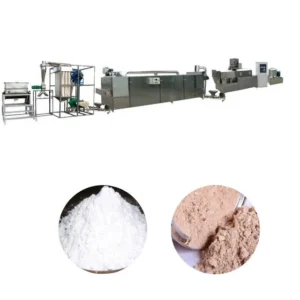
Cassava Corn Potato Flour Starch Production Line – Industrial Pregelatinized & Modified Extrusion Machinery
¥65.00 Select options This product has multiple variants. The options may be chosen on the product page -
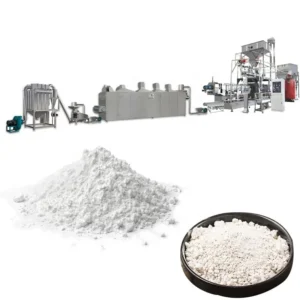
Corn Cassava Modified Starch Powder Production Line Electric-powered Motor Automatic 400kg/h Processing Equipment New Condition
¥65.00 Select options This product has multiple variants. The options may be chosen on the product page -
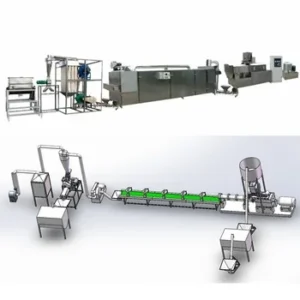
2025 New Design Modified Starch Big Capacity Industrial Use Food Additives Core Components Motor Bearing
¥50.00 Select options This product has multiple variants. The options may be chosen on the product page