

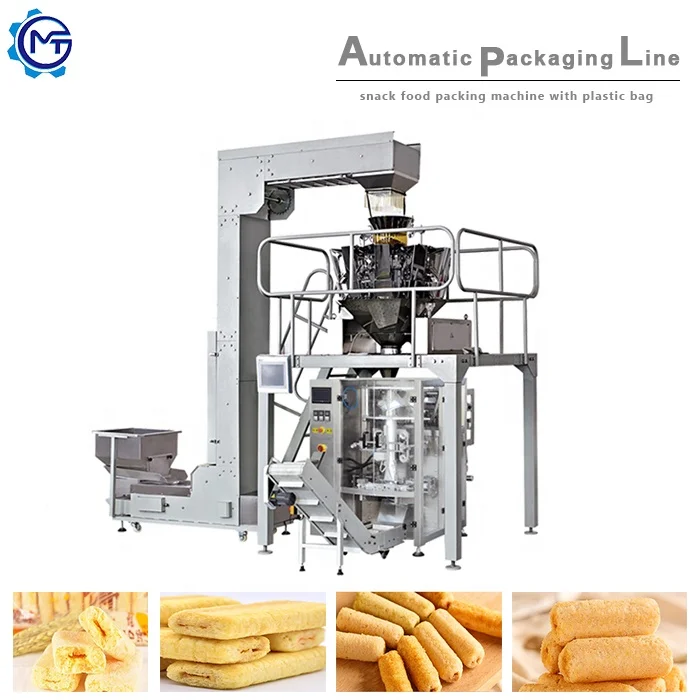
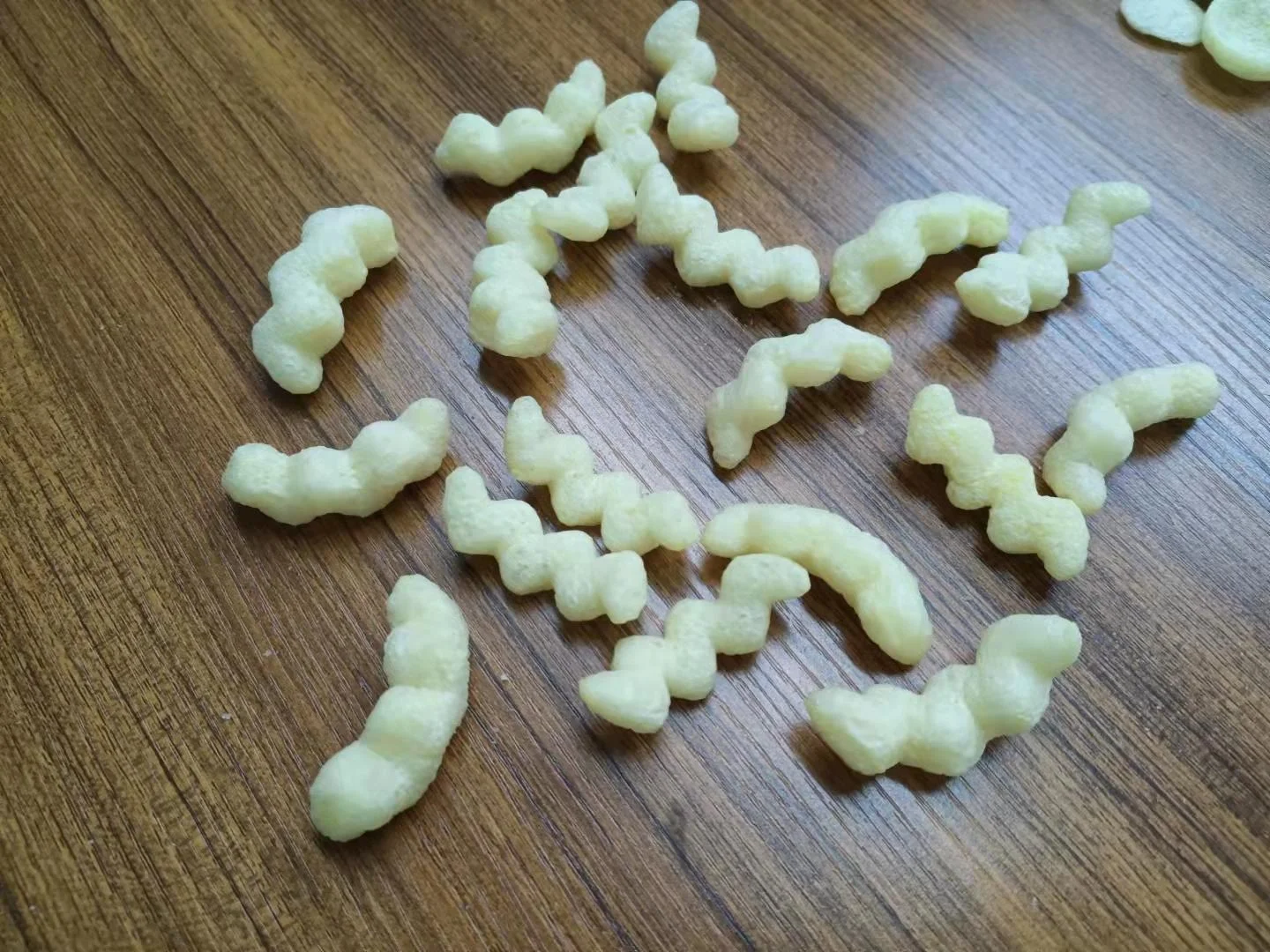
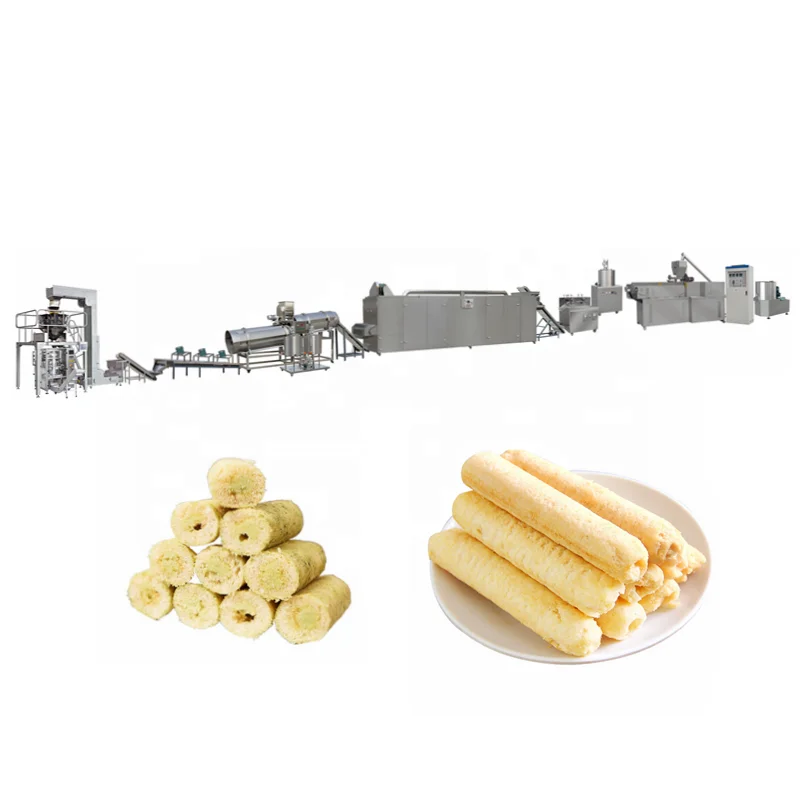
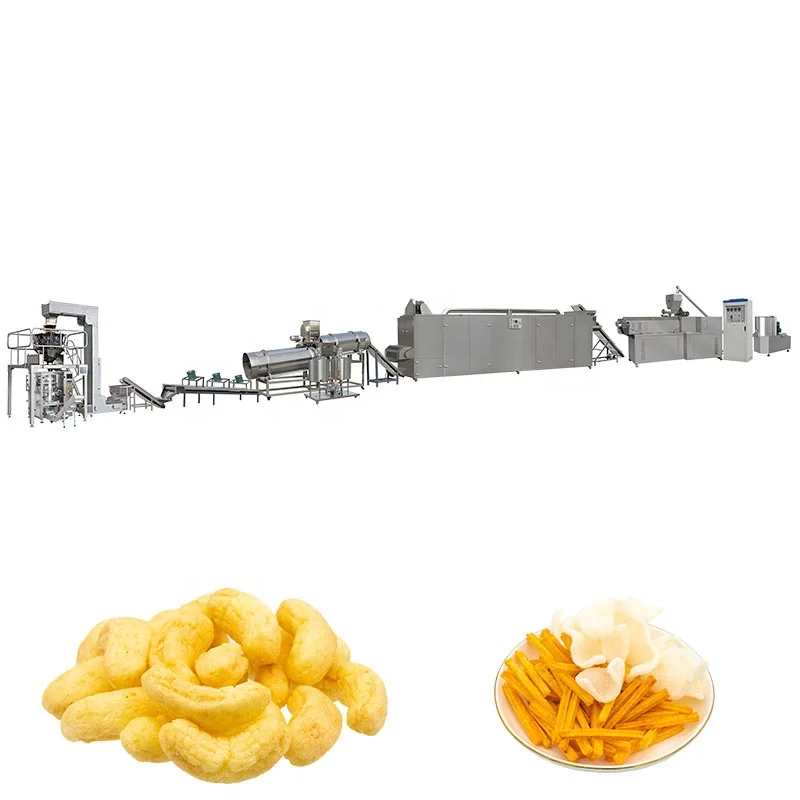
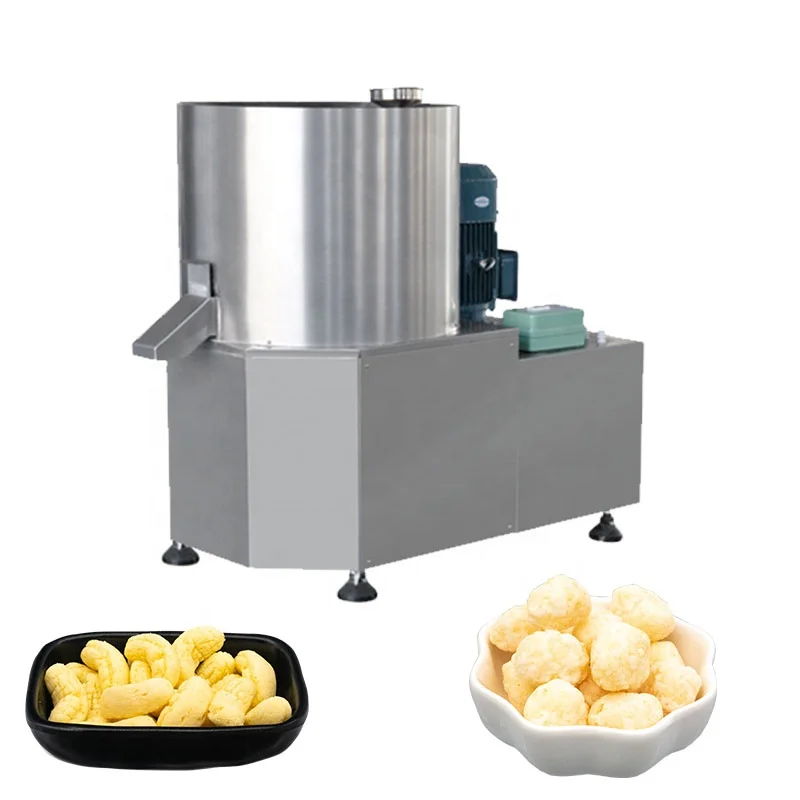
Twin Screw Puffed Snack Food Extrusion Line, 100–500 kg/h Capacity, 380V/50Hz, Siemens Motor — designed for puffed corn, rice, and multi-grain snack production across diverse formats including balls, rings, and sticks.
- Screw configuration and die design specified to your raw material blend and target density
- Multi-layer dryer, flavoring drums, and packing stations throughput-matched to extruder output
- Trial runs on your flour or grits conducted in-house before shipment
Description
Integrated Turnkey Engineering — A single-supplier puffed snack extrusion production line turnkey project where every station is throughput-matched and specified to your raw material before the line ships.
Technical Specifications
| Parameter | Value |
|---|---|
| Product Type | Twin Screw Puffed Snack Food Extrusion Line |
| Screw Type | Twin screw (double screw) |
| Capacity Range | 100–500 kg/h (basis not stated in source — confirm raw material type, moisture content and product format) |
| Raw Materials | Corn, rice, millets, wheat, oat, barley, buckwheat, brown rice (powder/flour or grits form) |
| Product Shapes | Ball, tube, stick, ring, fruit loop, star, wheel, flower, heart |
| Energy Options | Electricity, gas, diesel, or steam |
| Power Consumption | ~100 kW (electric heating); ~50–60 kW (gas or diesel heating) (rated or peak not specified) |
| Voltage & Frequency | Three phase 380V/50Hz; Single phase 220V/50Hz; customizable to local voltage |
| Motor | Siemens (made in China) or China top brand |
| Inverter | Delixi or Delta |
| Control System | Electricity control box |
| Material | Food grade stainless steel 201/304 |
| Dryer Type | Multi-layer dryer with configurable length and layers |
| Flavoring System | Semi-automatic or automatic; supports sugar, oil, and powder seasoning |
| Line Stations | Mixer → Extruder → Vibrate cooler machine → Roasting machine (dryer) → Packing machine |
| Standards | CE certified; ISO certified |
Application Suitability
| Application | Material or Output |
|---|---|
| Puffed corn snacks and cheese balls | Corn grits or corn flour with seasoning coatings |
| Rice puffs and multi-grain cereal snacks | Rice flour, brown rice, oat, and barley blends |
| Ring, stick, and fruit loop formats | Wheat, millet, and buckwheat flour blends |
| Core-filled extruded snacks | Cereal-based shells with cream or jam filling |
| Fortified and nutritional puffed snacks | Grain blends with added vitamin and mineral premixes |
| Artificial and fortified rice shapes | Rice flour and starch-based formulations |
What a Puffed Snack Extrusion Production Line Turnkey Quotation Should Actually Tell You
Capacity numbers are meaningless without the raw material recipe and moisture content they were measured against.
I spent two weeks in a Thai factory watching a twin-screw line jam because the die temperature profile was set for pure corn, while the customer was blending tapioca starch into the feed. The extruder ran fine during the factory test in China on a standard formulation, but on-site the product stuck to the die plate and came out as a continuous ribbon instead of puffed pieces. The screw configuration had to be pulled and rebuilt, the barrel heating zones re-profiled, and the dryer length extended to handle the different moisture release curve. That kind of mismatch does not show up in a brochure capacity figure. [NEED_CITE: raw material variability in extrusion processing]
How the Whole Line Is Designed as One System
A puffed snack extrusion production line turnkey project is not an extruder with a dryer bolted on. Every station — batching, mixing, extrusion, cooling, drying, flavouring, and packing — must be sized to the same throughput so that no single machine becomes the bottleneck. When the extruder pushes material faster than the multi-layer dryer can remove moisture, product backs up and quality degrades. This line addresses that by matching station capacities during the layout phase based on your specific raw material blend and target product density.
Why the Trial Run Matters More Than the Brochure
Before this line ships, your actual raw material is run through the extruder in an in-house testing workshop. The screw configuration, die geometry, barrel temperature profile, and moisture settings are all adjusted against your flour blend and target shape. The result is a trial run report that documents the operating parameters your line was tuned to — so commissioning on-site is a matter of replicating known conditions rather than starting product development from scratch. [NEED_CITE: pre-shipment testing in food extrusion projects]
Reading the Specifications That Actually Affect Product Quality
The twin-screw configuration gives this line the mechanical shear and mixing intensity needed to fully gelatinise starch across a wide range of grain flours — corn, rice, wheat, oat, barley, and buckwheat all behave differently under heat and pressure, and the intermeshing screw action ensures uniform cooking regardless of blend composition. The die design determines not just shape but also expansion ratio and final product density; a ball die with a small orifice produces a dense, crunchy puff, while a larger ring die gives a lighter, more open texture. Energy source selection between electric, gas, diesel, and steam heating directly affects how precisely barrel temperature zones can be controlled — electric heating offers finer zone-by-zone adjustment, while gas or diesel can reduce operating cost in regions where electricity tariffs are high. The multi-layer dryer with configurable length and layers allows drying time to be extended for high-moisture formulations without requiring a larger floor footprint.
What Happens When Stations Are Sourced Separately
When a buyer assembles a puffed snack line by purchasing the extruder from one vendor, the dryer from another, and the flavouring drum from a third, throughput mismatches are almost guaranteed. The extruder may deliver product faster than the dryer can handle, forcing the operator to slow down the entire line and run below the quoted capacity. Or the flavouring drum may be too small to coat the full output evenly, producing batches with inconsistent seasoning coverage. These problems typically surface only after installation, when the cost of correction is highest. [NEED_CITE: line integration risks in food processing equipment]
Why Buyers Source This Line as a Complete Project
Every station in this puffed snack extrusion production line turnkey project is specified and supplied by one manufacturer, so throughput calculations are done across the entire line rather than within isolated machines. Screw configuration and die design are selected to match your raw material and target product density, not copied from a generic template. The in-house testing workshop runs your flour blend before the line ships, producing a documented trial report. Voltage, frequency, and control language are confirmed during the specification phase to avoid delays at commissioning. Pre-sales engineering covers line layout and utility planning, and on-site support includes installation supervision, commissioning, and operator training.
Documentation & Verification
- Line layout drawing with throughput matching across all stations from mixer to packing
- Screw and die configuration record tied to your raw material blend and target product shape
- Trial run report documenting operating parameters on your actual flour or grits
- Electrical schematic with confirmed voltage, frequency, and control panel language
- Factory test record showing each station running under load before dispatch
- CE declaration of conformity and ISO certificate for export compliance
Installation, Commissioning & Support
- Floor plan and utility connection points provided for the full line from batching to packing
- Power supply verified against your local three-phase voltage and frequency before production begins
- Stations shipped in matched sets with assembly sequencing to reduce on-site installation time
- Commissioning includes parameter replication from the in-house trial run on your raw material
- Operator training covers screw and die changes, barrel temperature adjustment, and dryer settings
- Wear parts list for screws, dies, and seals supplied with recommended spare inventory
What to Prepare Before Requesting a Quotation
To scope a puffed snack extrusion production line turnkey project properly, we need your raw material formulation including flour types and moisture content, the target product shapes and density, and your intended daily or hourly output. It also helps to know your workshop dimensions, available ceiling height for the multi-layer dryer, and local voltage and frequency standards. If you have existing upstream or downstream equipment that the new line must connect to, include those details as well.
Frequently Asked Questions
Q: How is line capacity verified against my specific raw material blend and moisture content?
A: Your actual flour or grits are run through the twin-screw extruder in our testing workshop before the line ships. Screw configuration, die selection, barrel temperature zones, and moisture levels are adjusted until the target product shape, density, and expansion ratio are achieved. A trial run report documenting these parameters accompanies the shipment.
Q: How do you match dryer and flavouring capacity to extruder output to prevent bottlenecks?
A: During the layout design phase, we calculate the moisture removal requirement based on your raw material and target product, then specify the multi-layer dryer length and layer count accordingly. The flavouring drum is sized to handle the extruder’s full output so that seasoning coverage remains consistent across the entire production run.
Q: What does the in-house trial run cover and how does it de-risk commissioning?
A: The trial run replicates production conditions using your raw material in the testing workshop. We document screw speed, barrel temperatures, die pressure, and product density. When the line is installed on-site, commissioning engineers replicate these parameters, reducing the trial-and-error period that typically delays production startup.
Q: How is screw and die configuration selected for my target snack shape and density?
A: Screw element arrangement determines the shear intensity and residence time inside the barrel, which controls starch gelatinisation. Die orifice size and geometry control expansion ratio and final shape. Both are selected based on your specific grain blend, moisture content, and the texture your market expects.
Q: What is the phased installation and commissioning schedule for a complete turnkey line?
A: Installation follows a station-by-station sequence from mixing through packing, with utility connections completed before each stage is powered up. Commissioning begins with the extruder trial replication, then extends through dryer tuning and flavouring calibration. Operator training runs in parallel during the commissioning phase.
Related products
-

Automatic High Productivity Puffed Corn Snacks Extruder Production Equipment New Condition Puff Snack Food Making Machine
¥11,050.00 Select options This product has multiple variants. The options may be chosen on the product page -

Full Automatic Puffed Corn Snack Food Extruder Puffed Snack Corn bar Making Machine
¥8,500.00 Select options This product has multiple variants. The options may be chosen on the product page -

Automatic Rice Crispies Extruder Machine/Chocolate Corn Flakes Extrusion Plant/wheat Flaking Snacks Production Line
¥8,500.00 Select options This product has multiple variants. The options may be chosen on the product page -

Corn Puff Processing Line with Mixer Fryer Baking Oven Automatic High Productivity Grain Products Snack Making Machine
¥8,300.00 Select options This product has multiple variants. The options may be chosen on the product page


