

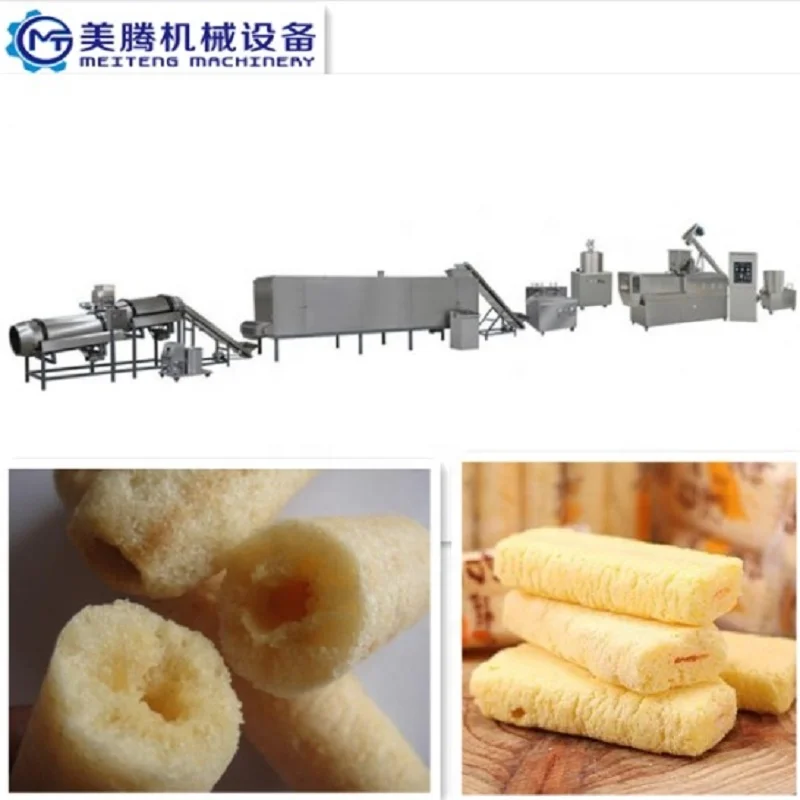
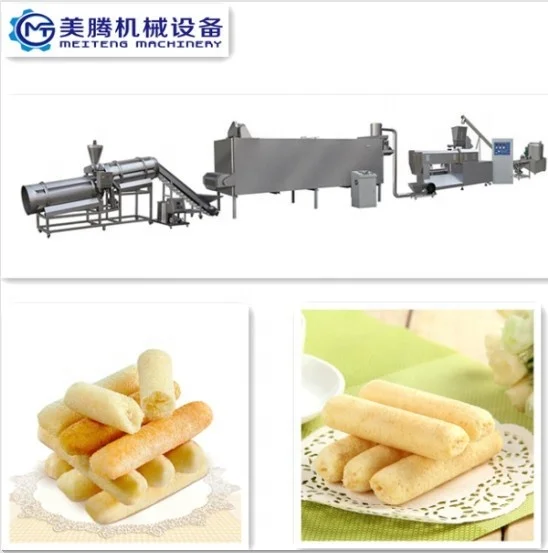
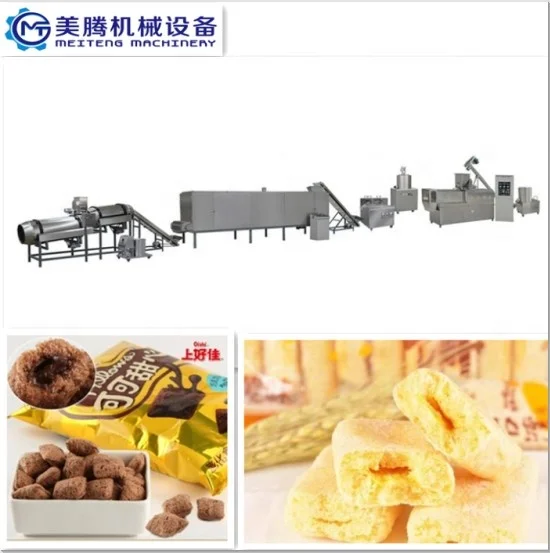
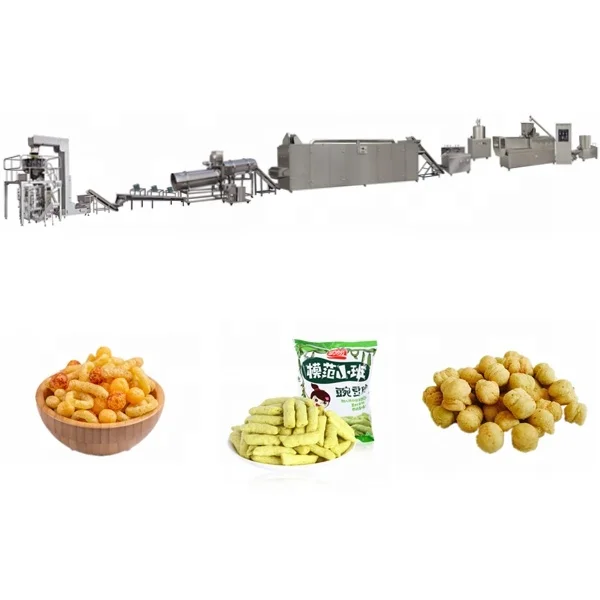
MT70 Twin Screw Extrusion Puffed Snack Production Line, 130 kW Installed Power, CE Certified — engineered as a turnkey system from batching through extrusion to packing.
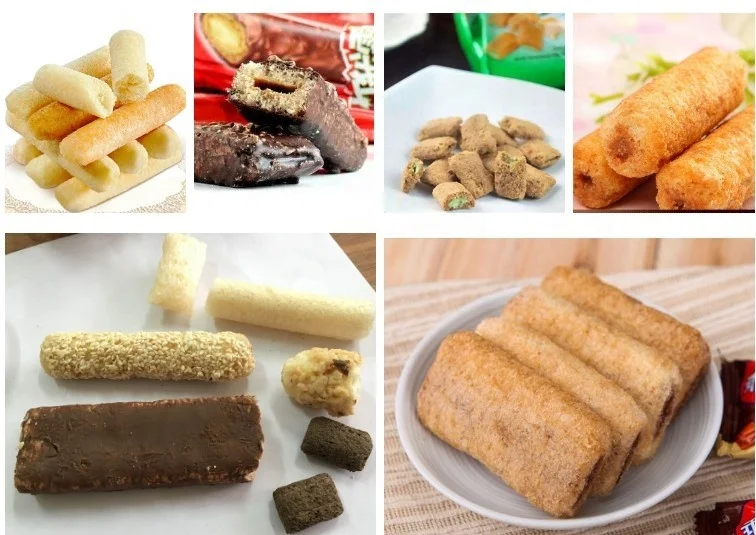
- Interchangeable die configurations support ball, tube, ring, loop, star and heart geometries on one twin-screw platform
- Screw profile and barrel zones matched to corn, rice, wheat or oat flour behaviour for consistent expansion and density control
Complete line throughput is matched across every station by one supplier, with in-house trial runs on your raw material before shipment.
Description
Customised screw configuration — every MT70 twin-screw build starts with your raw material sample in the testing workshop, not a generic screw chart pulled from a catalogue.
Technical Specifications
| Parameter | Value |
|---|---|
| Product Type | Twin Screw Extrusion Puffed Snack Production Line |
| Model | MT70 / MT85 / MT75 |
| Screw Type | Twin Screw |
| Installed Power | 130 kW (MT70); 180 kW (MT85); 220 kW (MT75) |
| Power Consumption | 95 kW (MT70); 120 kW (MT85); 130 kW (MT75) |
| Output Capacity | 100–120 kg/h (MT70, basis to be confirmed); 200–300 kg/h (MT85, basis to be confirmed); 300–500 kg/h (MT75, basis to be confirmed) |
| Overall Dimensions (L×W×H) | 21 × 1.5 × 2.2 m (MT70); 25 × 1.5 × 2.2 m (MT85); 28 × 1.5 × 2.2 m (MT75) |
| Die Configuration | Interchangeable dies for ball, tube, stick, ring, fruit loop, star, wheel, flower, heart shapes |
| Line Stations | Mixing → Extruding → Drying → Sugar-coating / Flavouring → Cooling → Packing |
| Dryer Heating Source | Gas or Electric |
| Raw Materials | Corn, rice, wheat, oat, barley flour |
| Assembly State | Turnkey line, layout customised to factory size |
| Certification | CE |
Application Suitability
| Application | Material or Output |
|---|---|
| Cheese ball and cheese ring production | Corn flour and rice flour blends |
| Extruded stick and tube snacks | Wheat and oat flour bases |
| Breakfast loop and fruit loop formats | Multi-grain flour mixtures with sugar coating |
| Star, wheel and flower novelty shapes | Barley and corn grit formulations |
| Core-filled and co-extruded snack variants | Grain flour outer shell with cream or paste filling |
What "300 kg/h" Actually Depends On
Throughput is a consequence of your material, not a sticker on the machine.
I have watched buyers sign off on a line quoted at a neat round number, then discover on commissioning day that their local corn grits absorb water differently from the supplier’s trial batch. The extruder runs, the dryer fills, but the coating drum becomes the choke point because nobody reconciled the moisture loss in drying against the seasoning capacity downstream [NEED_CITE: moisture migration rates in twin-screw extrusion of cereal-based snacks]. A turnkey twin-screw extrusion snack production line only holds its stated output when every station — mixing, extruding, drying, flavouring, cooling — is balanced to the same material profile. Without that balance, the weakest link dictates your real shift output.
Matching Screw Geometry to Grain Behaviour
The barrel section arrangement on this twin-screw extrusion puffed snack production line is reconfigured once the buyer’s raw material arrives for the pre-shipment trial. Corn flour gelatinises at a different shear threshold than a rice-and-oat blend, so the kneading block sequence and reverse-flight elements change accordingly. The goal is consistent expansion at the die face without surging or burn marks inside the barrel.
Why Dryer Sizing Matters More Than Extruder Motor Rating
A 130 kW extruder pushing product at high moisture into an undersized dryer creates a visible backlog within the first hour. The dryer heating source — gas or electric — must be specified against the buyer’s utility cost and local availability. Gas-fired dryers typically offer faster temperature recovery when ambient humidity shifts between seasons [NEED_CITE: industrial dryer thermal recovery in varying ambient conditions]. Getting this wrong means either running the dryer above its design belt speed or accepting a moisture content that causes flavouring clumping downstream.
Reading the Power and Dimension Data
The installed power figures — 130 kW for the MT70, stepping up through 180 kW and 220 kW for the larger frames — reflect motor rating rather than continuous draw. Actual power consumption sits noticeably lower during steady-state extrusion of standard grain flours. Overall line length ranges from 21 m to 28 m depending on model, which means the buyer needs to confirm clear floor space plus service access on both sides before the layout drawing is finalised. Die interchangeability across nine shape profiles allows a single extruder to serve multiple SKU requirements without a second capital outlay.
The Cost of Skipping the Trial Run
When a line ships without a material-specific trial, the first week of production becomes an expensive experiment. I recall a buyer who switched from corn flour to potato-based feedstock after the extruder was already configured for high-starch expansion. The product density dropped outside market specification, and the seasoning drum could not coat the lighter pieces evenly [NEED_CITE: expansion ratio variance with starch source substitution in twin-screw extrusion]. Three days of on-site parameter adjustment followed — time the buyer’s retail contract did not allow.
Why Source Every Station From One Supplier
Sourcing the extruder from one vendor and the dryer from another creates a gap nobody owns when throughput mismatches appear. This line delivers mixing, extrusion, drying, sugar-coating, cooling and packing under a single configuration responsibility. Screw and die records are documented against the buyer’s material sample. Factory voltage and control language are confirmed before production begins, not discovered during commissioning. The in-house testing workshop runs your actual raw material before the crate is sealed, so the trial run report reflects your product, not a substitute. CE certification covers the complete assembly rather than individual components bolted together on your floor.
Documentation & Verification
- Line layout drawing with station-by-station throughput calculation matched to your grain flour type
- Screw configuration record showing kneading block sequence selected for your raw material sample
- Trial run report documenting expansion ratio, moisture content and product density on your material
- Electrical schematic with voltage and frequency confirmed against your local grid standard
- CE declaration of conformity covering the full line assembly from mixer to packer
- Wear parts list specifying screw element and die replacement intervals for your production volume
Installation, Commissioning & Support
- Floor space of 21 m to 28 m length required, plus lateral clearance for barrel maintenance access
- Dedicated power circuit sized to the model’s installed power rating with confirmed local voltage and frequency
- Line arrives in sectional modules; on-site assembly includes belt alignment and dryer ductwork connection
- First-run commissioning covers screw speed, barrel temperature profile and die pressure tuning to target expansion
- Operator training includes die changeover procedure across all supplied shape profiles and daily barrel cleaning
- Wear parts stock recommendation based on your planned shift pattern and raw material abrasiveness
Before You Request a Quote
A meaningful proposal starts with your actual raw material formula, target product shape from the available die range, and the shift pattern you intend to run. Confirm your factory’s voltage, frequency and whether gas or electric dryer heating suits your utility setup. Share your available floor dimensions so the layout can be drafted before quotation, not after.
Frequently Asked Questions
Q: How is the real output capacity determined before I commit?
A: The rated figures in the table are reference ranges. Actual capacity depends on your specific flour blend, moisture content at the mixer, and target product density. We run your raw material in the testing workshop before shipment and document expansion, moisture and throughput in a trial report so you see real numbers tied to your formulation.
Q: Can I run different snack shapes on the same line without buying another extruder?
A: Yes. The die system is interchangeable across ball, tube, stick, ring, fruit loop, star, wheel, flower and heart profiles. A shape change involves swapping the die plate and adjusting screw speed and cutter timing. The rest of the line — dryer, flavouring drum, cooler — remains unchanged.
Q: What happens if my local voltage does not match standard industrial supply?
A: Voltage and frequency are confirmed during the specification stage before production begins. The electrical schematic is built to your local grid, and the HMI language is set to your operator preference. This avoids rewiring delays and commissioning hold-ups once the line arrives at your facility.
Q: How do you ensure the dryer and coating stations do not bottleneck the extruder?
A: Every station is sized against the same throughput target and material profile. Drying capacity accounts for moisture loss from your specific formulation, and the flavouring drum volume matches the dried product flow rate. The layout document shows the matched capacity at each stage before you approve the build.
Related products
-

Automatic High Productivity Puffed Corn Snacks Extruder Production Equipment New Condition Puff Snack Food Making Machine
¥11,050.00 Select options This product has multiple variants. The options may be chosen on the product page -

Automatic Corn Flake Processing Line Corn Coco Pops Breakfast Cereals Snacks Making Machinery
¥7,500.00 Select options This product has multiple variants. The options may be chosen on the product page -

Puff Corn Snacks Food Line Puffed Rice Ball Production Making Equipment Machines
¥10,565.00 Select options This product has multiple variants. The options may be chosen on the product page -

Twin Screw Extruder for Cheese Puffs Food Stainless Steel Simple Puffed Rice Snack Machine
¥8,500.00 Select options This product has multiple variants. The options may be chosen on the product page


