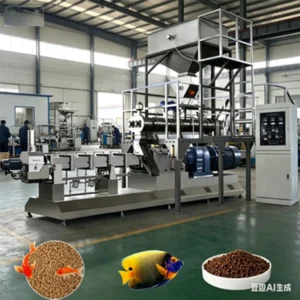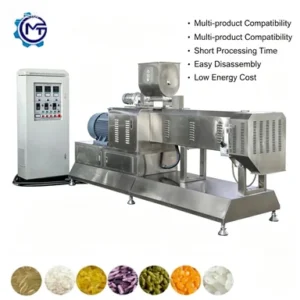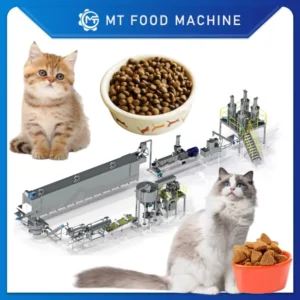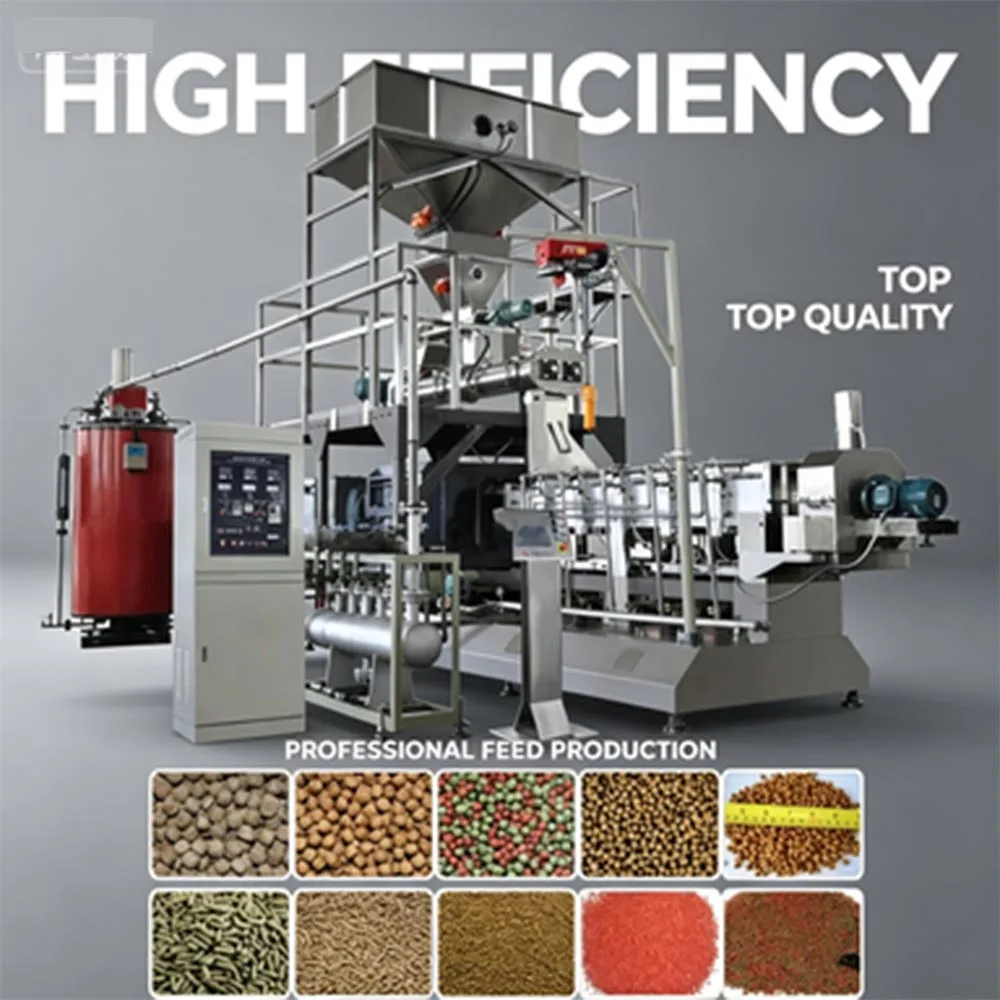

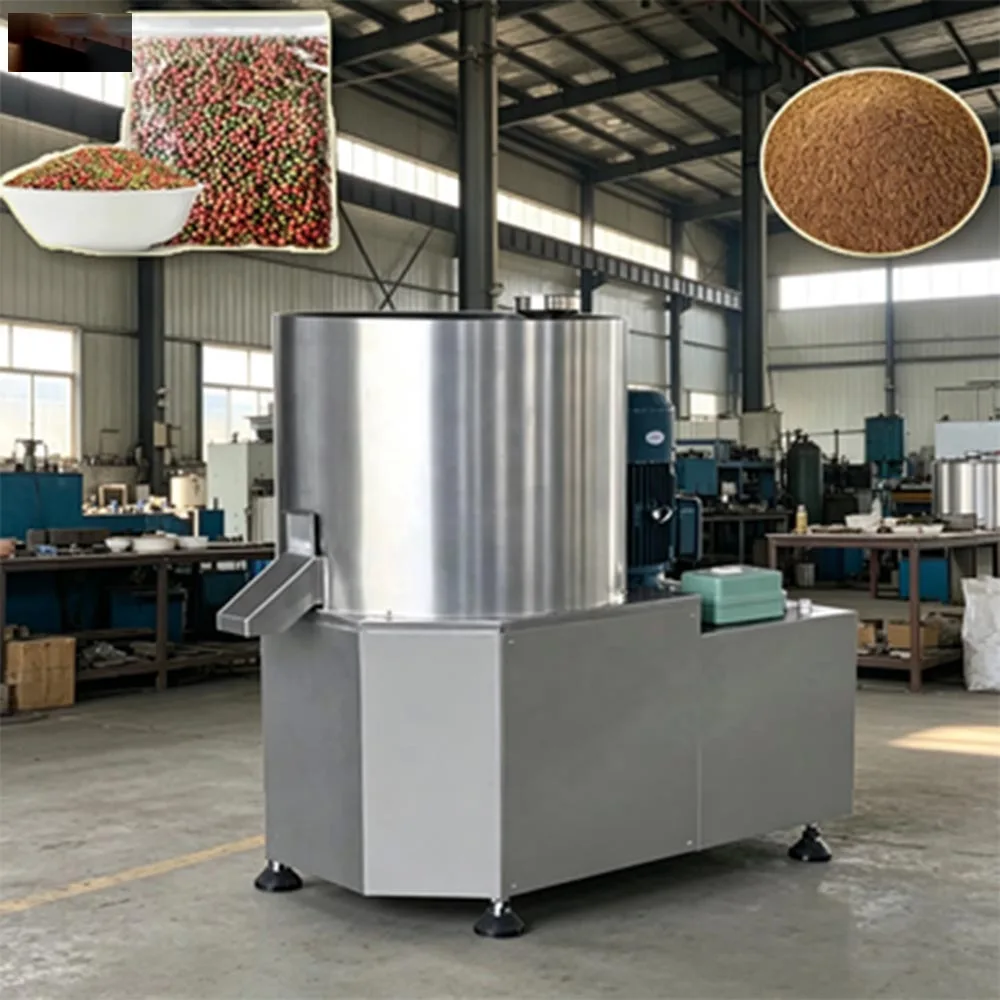


Twin Screw Fish Feed Production Line, PLC Control, Food-Grade 304 SS — engineered as a complete turnkey project where every station from batching through extrusion, drying, seasoning to packing is throughput-matched under one supplier.
- Screw configuration and die design specified to your raw material formulation and target pellet buoyancy (floating vs. sinking)
- Full-line PLC integration ensures continuous operation across mixer, extruder, dryer, coating drum and vibrating sieve
- High temperature and high pressure extrusion for consistent gelatinisation and pellet density control
Delivered with in-house trial run on your actual raw material before shipment, confirming pellet quality against your specification.
Description
Turnkey Line Integration — Every station from batching to packing is throughput-matched under one supplier, so the extruder never waits on a smaller dryer or an undersized coating drum.
Technical Specifications
| Parameter | Value |
|---|---|
| Product Type | Twin Screw Aquatic Feed Extrusion Production Line |
| Screw Type | Twin screw |
| Control System | PLC automatic control system |
| Material Contact Parts | Food-grade 304 stainless steel |
| Pellet Types | Floating and sinking fish feed pellets |
| Pellet Adjustability | Pellet size, hardness, buoyancy adjustable |
| Line Stations | Raw material mixer, extruder, dryer, seasoning coating machine, vibrating sieve, conveyor equipment |
| Output Capacity | Large-scale continuous production (basis to be confirmed) |
| Operating Environment | High temperature and high pressure extrusion |
| Assembly State | Complete matched production line |
| Standards | CE, ISO |
Application Suitability
| Application | Material or Output |
|---|---|
| Commercial aquatic feed mass production | Fish meal, soybean meal, corn powder, compound additives for koi, goldfish, tropical fish, and freshwater species |
| Floating and sinking pellet production | Formulations requiring specific buoyancy control for catfish, tilapia, and shrimp aquaculture |
| Medium to large-scale industrial feed manufacturing | Compound raw materials processed under high temperature and high pressure extrusion |
| Aquaculture breeding feed supply | Continuous output of nutritionally balanced pellets matched to species-specific dietary requirements |
What "Nominal Capacity" Hides About a Twin Screw Fish Feed Extrusion Production Line Turnkey
A line rated at 500 kg/h on the extruder nameplate means nothing if the dryer can only handle 300 kg/h.
When aquatic feed lines are pieced together from separate vendors, the extruder is often the most expensive single item, so buyers focus on its output rating. But the dryer, coating drum, and vibrating sieve each have their own throughput ceiling. I have seen lines where the extruder ran at full speed for an hour, then had to stop because the downstream dryer was still processing the previous batch. The whole concept of a twin screw fish feed extrusion production line turnkey falls apart when stations are not matched to a single throughput target from the start. [NEED_CITE: throughput mismatch consequences in multi-vendor extrusion lines]
Screw Configuration Dictates Pellet Buoyancy
The twin screw design processes formulations across a wider range of fat and starch content than a single screw can manage. For floating pellets targeting species like koi or tilapia, the screw combination and barrel temperature profile must hold enough shear to gelatinise starch fully while trapping steam for expansion. Sinking pellets for shrimp or bottom-feeding catfish need a different compression ratio at the die face. Getting this wrong means floating feed that sinks within minutes or sinking feed that drifts to the surface — both are rejects at the farm level.
Full-Line PLC Control Across Every Station
The PLC automatic control system connects the raw material mixer, extruder, dryer, seasoning coating machine, and vibrating sieve into one continuous sequence. Operators set parameters at a single panel rather than adjusting each station independently. This matters when a formulation change requires the dryer temperature and coating drum speed to shift simultaneously with extruder screw speed. Without integrated control, a recipe changeover can take an entire shift of manual adjustment, and the first several hundred kilograms of product land outside specification. [NEED_CITE: PLC integration benefits in continuous food processing lines]
Reading the Specs That Actually Matter
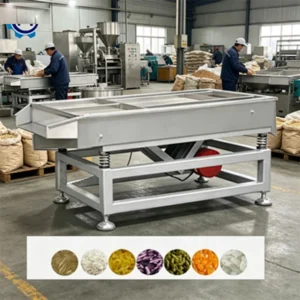
The twin screw configuration allows the line to handle raw materials with varying starch and protein ratios — fish meal, soybean meal, corn powder, and compound additives all behave differently under shear and heat. Food-grade 304 stainless steel contact parts resist the corrosive salts and oils present in aquatic feed formulations, extending component life in a high-moisture, high-temperature environment. Pellet adjustability across size, hardness, and buoyancy means one line can produce feed for multiple species without a hardware changeover, provided the screw configuration record is updated to match each target pellet. The vibrating sieve downstream removes undersized and broken pellets before they reach the coating drum, keeping surface finish consistent.
The Cost of Skipping the Trial Run
When an extruder ships without a trial run on the buyer’s actual raw material, the first production run becomes the experiment. I worked on a line shipped to Southeast Asia where the screw combination was set for a standard high-starch formulation, but the customer’s local fish meal had significantly lower starch content. The pellets did not expand properly, sank when they should have floated, and the entire first batch was returned. The screw set had to be reconfigured and reshipped, costing weeks of downtime. A twin screw fish feed extrusion production line turnkey should include testing on the buyer’s specific formulation before the machine leaves the factory. [NEED_CITE: pre-shipment trial run importance in extrusion equipment]
Why Source the Entire Line From One Supplier
Every station — mixer, extruder, dryer, seasoning coating machine, vibrating sieve, conveyors — is sized to a unified throughput target, so no single unit becomes a bottleneck. Screw configuration and die design are specified to the buyer’s raw material formulation and target pellet buoyancy rather than copied from a generic build. The in-house testing workshop runs trial production on the customer’s actual raw material before shipment, confirming pellet density and surface quality. Electrical schematics are reviewed with the buyer to confirm voltage, frequency, and PLC control language before production begins, avoiding commissioning delays. The line layout document shows how each station connects physically and logically, so foundation and utility planning can proceed before the equipment arrives on site.
Documentation & Verification
- Line layout and capacity calculation showing throughput at every station
- Screw and die configuration record matched to your raw material formulation
- Trial run report on your specific aquatic feed formulation before dispatch
- Electrical schematic with confirmed voltage, frequency, and control language
- CE declaration of conformity and ISO certificate for the complete line
- Operation and maintenance manual covering all line stations
Installation, Commissioning & Support
- Foundation plan provided based on the matched line layout and station footprint
- Electrical connection confirmed to the PLC panel voltage and frequency specification before power-on
- On-site commissioning covers screw installation, barrel alignment, and dryer calibration
- Operator training includes PLC parameter setting for both floating and sinking pellet production
- Wear parts list specifies screw segments, die plates, and barrel liners for first replacement cycle
- Preventive maintenance schedule covers bearing lubrication intervals and sieve screen inspection
Before You Request a Quote
Provide your raw material formulation — the specific ratios of fish meal, soybean meal, corn powder, and any additives — along with the target pellet size and whether you need floating, sinking, or both types. Share your local voltage and frequency standards and the preferred PLC control language so the electrical package can be confirmed before production. If you have an existing facility, include the available floor space and ceiling height so the twin screw fish feed extrusion production line turnkey layout can be drafted to your building dimensions. Let us know if you want a trial run on your raw material in our testing workshop before shipment.
Frequently Asked Questions
Q: How is line throughput verified across every station, and what raw material basis is the capacity quoted on?
A: Every station — mixer, extruder, dryer, coating drum, sieve — is sized to a single throughput target based on the buyer’s specific raw material formulation, moisture content, and target pellet size. The capacity figure in the quotation states the raw material basis it was calculated on. We do not quote nominal extruder capacity as the line output, because downstream stations determine the actual continuous throughput the completed line can sustain.
Q: How are screw configuration and die design matched to my aquatic feed formulation?
A: We review your complete raw material formulation — starch, protein, fat, and fiber ratios — and select a screw combination and die geometry that produce the required pellet density and buoyancy. Floating pellets need higher expansion through specific barrel temperature zones and die compression, while sinking pellets require lower shear and denser die configurations. The chosen setup is documented and tested before the line ships.
Q: Can a trial run on my raw material be conducted before shipment?
A: Yes. Our in-house testing workshop runs your actual raw material through the extruder with the selected screw and die configuration. The trial run report documents pellet density, buoyancy, surface quality, and expansion ratio. This confirms the line will produce your target product on arrival rather than requiring weeks of adjustment after installation.
Q: What does the turnkey installation package include?
A: The package covers the line layout drawing showing station placement and material flow, utility connection points for power, water, and compressed air, a phased installation schedule, and on-site commissioning by our engineers. Operator training runs through PLC parameter setting, recipe changeover procedures, and routine maintenance for each station. We also provide a wear parts supply plan for the first replacement cycle.
Q: How are wear parts stocked and supplied for the first replacement cycle?
A: The wear parts list included with the line specifies every screw segment, die plate, barrel liner, and sieve screen that will need replacement during normal operation. We recommend ordering a first set of critical wear parts with the initial line purchase so they are on site when the first changeover is due, avoiding production downtime while waiting for international shipment.
Related products
-
2-3t/h High Capacity Multi-Species Fish Feed Processing Line to Produce Fish Food
¥55,000.00 Select options This product has multiple variants. The options may be chosen on the product page -
250-300kg/h Capacity PLC Controlled Multi-Species Cat Food Processing Line
¥35,000.00 Select options This product has multiple variants. The options may be chosen on the product page -
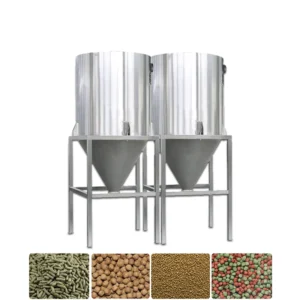
In Stock Pet Feed Production Line / Dog Cat Food Extrusion Machine
¥9,500.00 Select options This product has multiple variants. The options may be chosen on the product page -
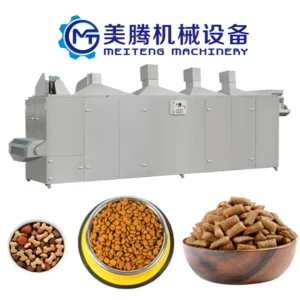
MT85 500kg/h Multi-Purpose Pet Food Processing Line for Dogs Cats Birds Fish & More-380V 50Hz Three Phase 45KW
¥65,000.00 Select options This product has multiple variants. The options may be chosen on the product page