

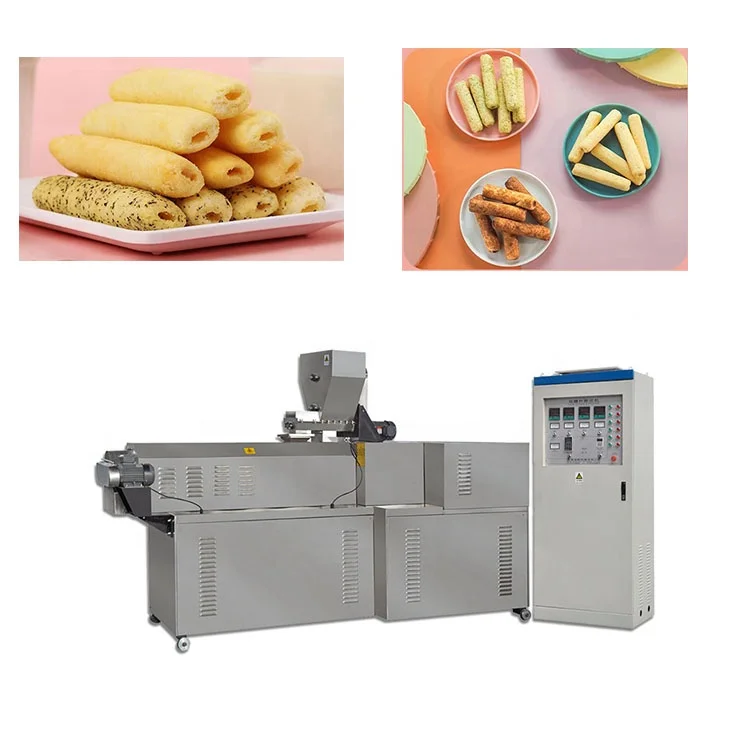
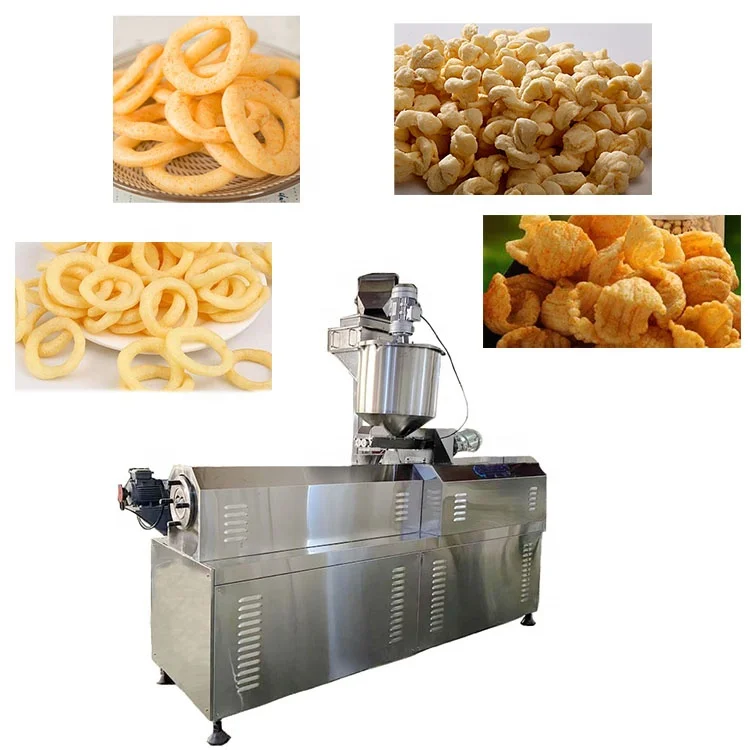
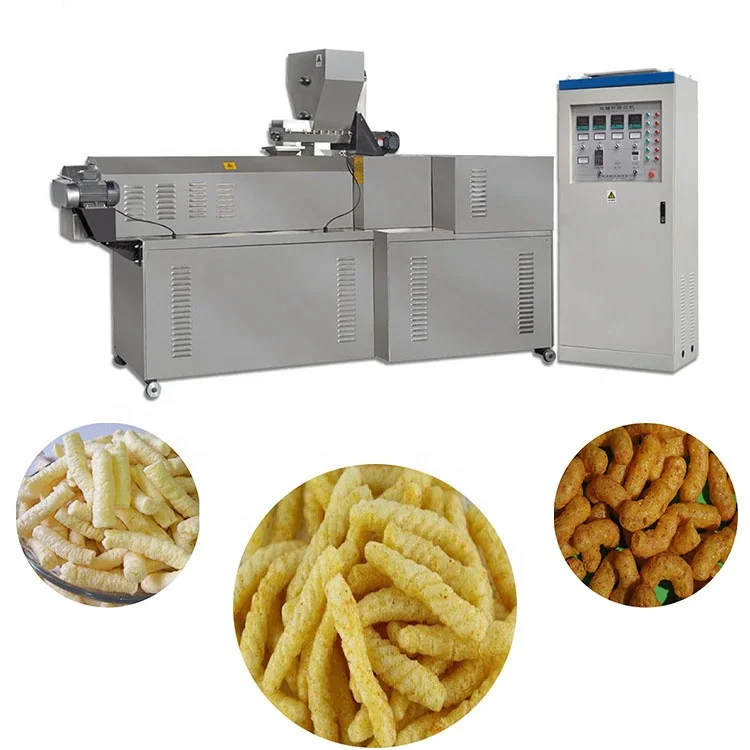
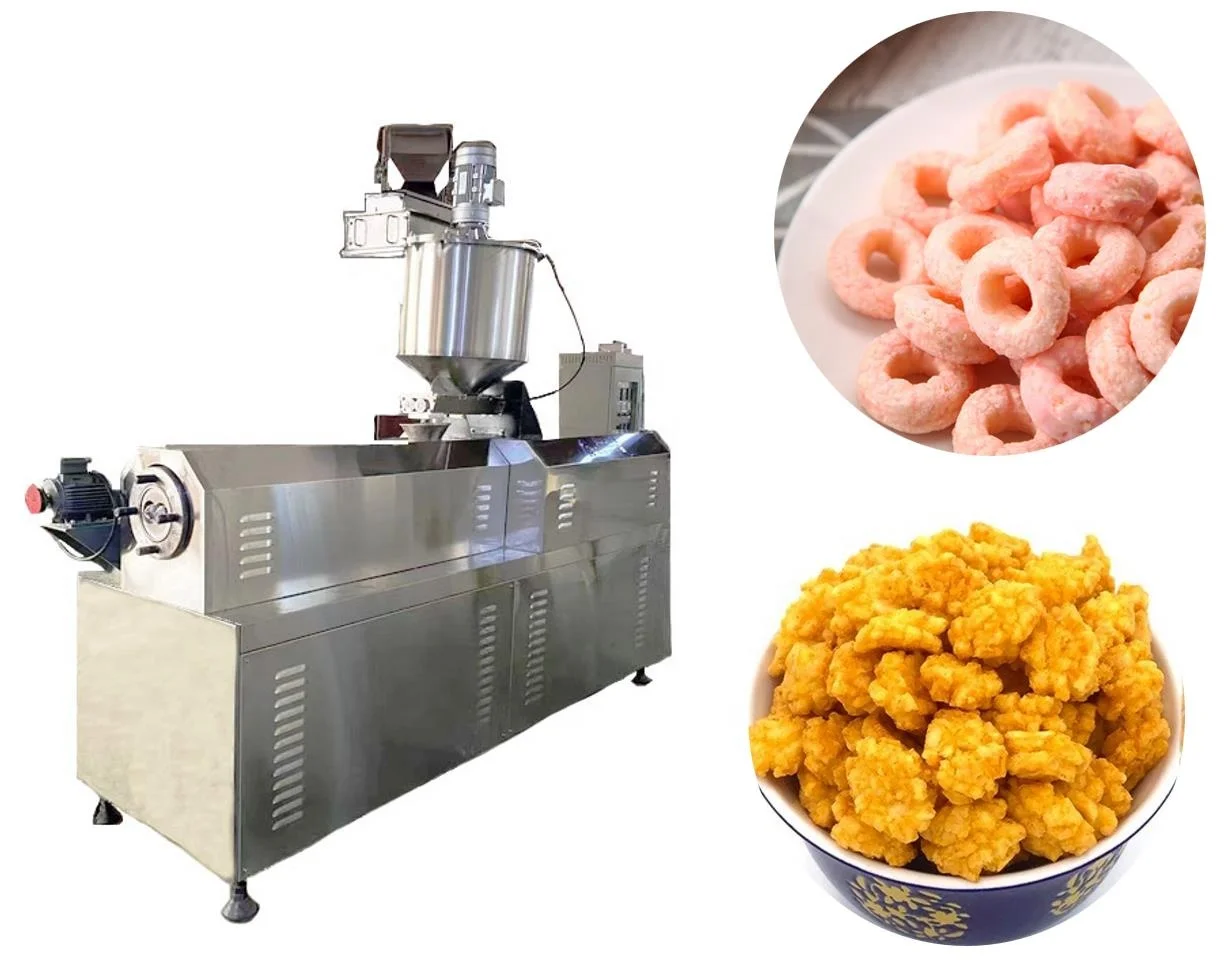
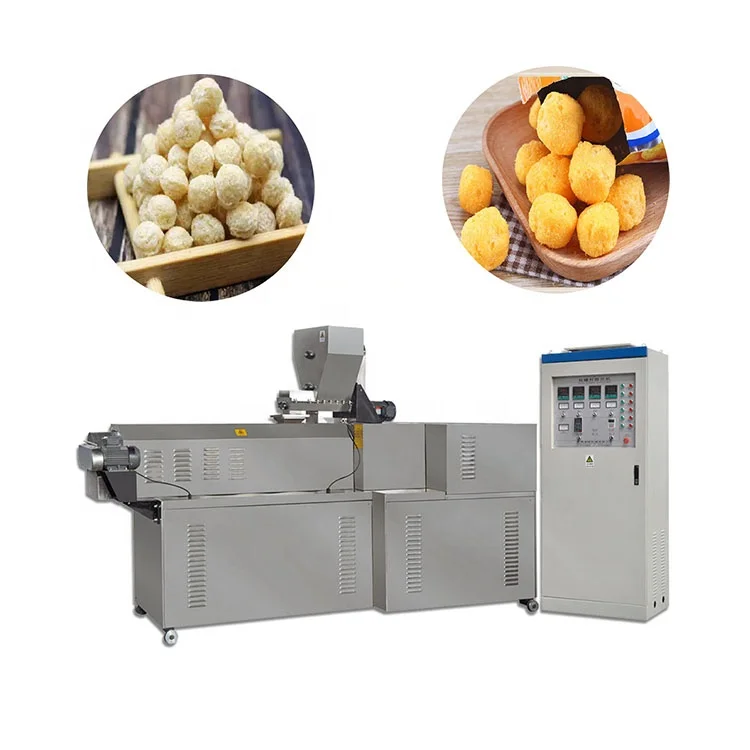
Twin Screw Puffed Snack Production Line, Food-Grade SS 304, 380V 3-Phase — configured from mixer through extruder, vibrating cooler, dryer, flavoring and packing with every station throughput-matched to eliminate bottlenecks. Screw configuration and die design are specified to your raw material and target format, controlling moisture, shear and expansion for consistent density and texture across puffed, core-filled or sheet snacks. Trial runs on your supplied raw material are completed in our in-house testing workshop before shipment, so line performance is verified against your actual formulation.
Description
Throughput-Matched Extrusion — Every station from the mixer to the packing machine is balanced to your raw material behavior and target snack format, preventing the bottlenecks that typically limit a puffed snack production line turnkey project.
Technical Specifications
| Parameter | Value |
|---|---|
| Product Type | Twin Screw Extruder Puffed Snack Production Line |
| Extruder Configuration | Twin-screw (double screw) design |
| Contact Material | Food-grade stainless steel 201 / 304 |
| Voltage Options | 380V / 50Hz (3-phase); 220V / 50Hz (single-phase); customizable |
| Rated Power | ~100 kW (electric); 50–60 kW (gas/diesel) (basis to be confirmed) |
| Line Stations | Mixer → Extruder → Vibrating Cooler → Dryer → Packing Machine |
| Energy Options | Electricity, gas, diesel, or steam selectable per station |
| Screw & Die | Configured per raw material and target product density |
| Control System | PLC / MCC options (to be confirmed per project) |
| Assembly State | Complete line, factory tested before shipment |
Application Suitability
| Application Scenario | Typical Material or Output |
|---|---|
| Direct-expanded cereal snacks | Corn, rice, millet, buckwheat grits |
| Core-filled snack bars and pillows | Cereal dough with chocolate or cream filling |
| Fortified nutritional snacks | Cereal blends with vitamin and mineral premix |
| Breakfast formats | Rice cakes, cereal bars, sheet snacks |
| Coated snack products | Cheese balls, sugar-glazed puffs, seasoned bites |
What "Nominal Capacity" Leaves Out on a Twin Screw Extruder Snack Line
A line is only as fast as its slowest station when running your specific recipe.
Many suppliers quote a twin screw extruder snack line based on a standard corn grits test, then ship it to a buyer whose actual recipe relies heavily on cassava starch or a high-protein blend. The extruder might push nominal output, but the dryer cannot remove moisture fast enough, or the flavoring drum overflows, creating a bottleneck that limits real-world production. We see lines sit idle for days while engineers re-tune barrel temperatures and screw speeds on-site because the raw material behavior was never validated before shipment [NEED_CITE: common extrusion line commissioning delays due to untested raw materials].
Screw Configuration Matched to Raw Material Behavior
The core of any puffed snack production line turnkey installation is how the twin-screw extruder handles the specific starch and protein content of your recipe. A high-corn blend requires a different screw profile and barrel temperature gradient than a recipe heavy in rice flour or oat fiber. The L:D ratio and die configuration are specified to achieve the target expansion and density for your exact product format, whether that is a light cheese ball or a dense core-filled pillow.
Throughput Balance Across Every Station
A twin screw extruder snack line fails when the downstream equipment cannot keep pace with the extruder output. The vibrating cooler, multi-layer dryer, and flavoring system are all sized to match the extruder throughput on your specific raw material, ensuring that moisture removal and seasoning coverage remain consistent. This station-level balance is calculated during the layout phase and verified during the in-house trial run before the equipment leaves the factory [NEED_CITE: industrial food line throughput matching principles].
Understanding Energy and Control Variables
The choice between electric, gas, diesel, or steam heating directly affects both operating cost and temperature precision in the drying and roasting stages. For a puffed snack production line turnkey setup in a region with high electricity costs, gas or steam options for the dryer can noticeably reduce utility expenses while maintaining the required moisture removal rate. The control system, available with PLC or MCC options, must also be confirmed for the local voltage and frequency before production begins, ensuring the motor drives and heating elements operate within their rated parameters.
The Cost of Skipping Pre-Shipment Trials
When a line ships without a trial run on the buyer’s actual raw material, the first week of production becomes an expensive experiment. Screw speeds, barrel zone temperatures, and die clearances must be adjusted on-site, often while the buyer is already committed to delivery schedules and retail shelf dates. This reactive commissioning leads to inconsistent product density, excessive scrap, and delays that strain relationships with downstream distributors [NEED_CITE: financial impact of unplanned downtime in snack food manufacturing].
Why Source This Line as a Single Project
Sourcing a complete twin screw extruder snack line from one supplier means the layout, utility planning, and throughput calculations are the responsibility of a single engineering team. The screw configuration record and die design are documented specifically for your raw material and target product format. An in-house testing workshop allows trial runs on your actual ingredients before shipment, generating a report that confirms capacity and product quality. Pre-sales consultation continues through on-site installation, commissioning, and operator training, ensuring the line reaches its target output from the first day of operation.
Documentation & Verification
- Line layout and capacity calculation showing throughput matching for your snack format
- Screw and die configuration record specific to your raw material blend
- Trial run report generated on customer-supplied ingredients before dispatch
- Electrical schematic with voltage and frequency confirmed for your local grid
- CE declaration of conformity and ISO certificate provided electronically
Installation, Commissioning & Support
- Foundation and floor plan based on the specific footprint of your configured line stations
- Power circuit requirements matching the confirmed voltage and total rated kW load
- Phased assembly schedule coordinating extruder, dryer, and packing machine installation
- On-site parameter tuning of screw speed and barrel temperatures for your recipe
- Operator training covering PLC interface navigation and daily wear part inspection
- Wear parts list including spare screws, dies, and seals for scheduled replacement
What We Need to Configure Your Line
To prepare a layout and quotation for a puffed snack production line turnkey project, we need your target product format, raw material recipe, and desired daily output. Please also confirm your facility’s available floor space, ceiling height, and local voltage and frequency standards. If you can provide a sample of your raw material blend, we can schedule a trial run in our testing workshop to validate the screw configuration and product density before finalizing the line design.
Frequently Asked Questions
Q: How is line capacity verified on my specific raw material before shipment?
A: We conduct a trial run in our in-house testing workshop using a sample of your actual raw material blend. This process validates the screw configuration, barrel temperature profile, and die design to ensure the line achieves your target product density and holds the quoted output before it leaves the factory.
Q: How do you match screw configuration and die design to different snack formats?
A: The screw profile and L:D ratio are selected based on the starch and protein content of your recipe, which dictates the shear and residence time needed. The die geometry is then matched to the desired expansion rate, allowing us to produce everything from light direct-expanded puffs to dense core-filled pillows.
Q: What voltage and control language options are confirmed before production?
A: We confirm your local voltage, frequency, and phase requirements before finalizing the electrical schematic. The control system, available with PLC or MCC options, is configured with an interface language agreed upon during the specification phase to ensure your operators can navigate the system from day one.
Q: How is throughput balanced between the extruder, dryer, and flavoring stations?
A: Each station is sized based on the extruder output and the moisture removal or seasoning coverage required for your specific product. This prevents bottlenecks where the dryer or flavoring drum cannot keep pace, ensuring the entire puffed snack production line turnkey system runs at its calculated capacity.
Related products
-

Puffed Snack Food Machine Snack Food Machine Puffed Snack Machine
¥11,050.00 Select options This product has multiple variants. The options may be chosen on the product page -

Crunchy Puffed Snack Breakfast Cereal Corn Flakes Making Machine
¥1,000.00 Select options This product has multiple variants. The options may be chosen on the product page -

Automatic Rice Crispies Extruder Machine/Chocolate Corn Flakes Extrusion Plant/wheat Flaking Snacks Production Line
¥8,500.00 Select options This product has multiple variants. The options may be chosen on the product page -

Full Automatic Puffed Corn Snack Food Extruder Puffed Snack Corn bar Making Machine
¥8,500.00 Select options This product has multiple variants. The options may be chosen on the product page


