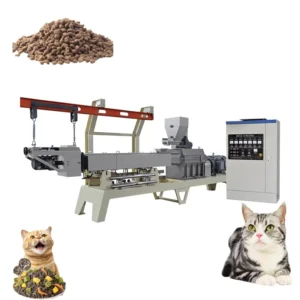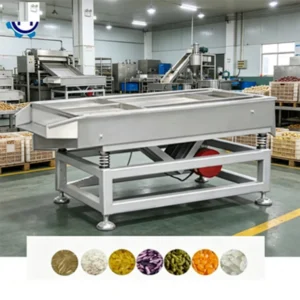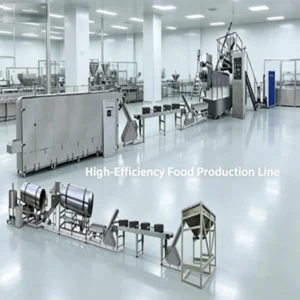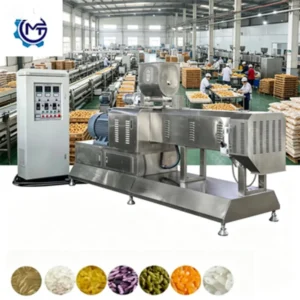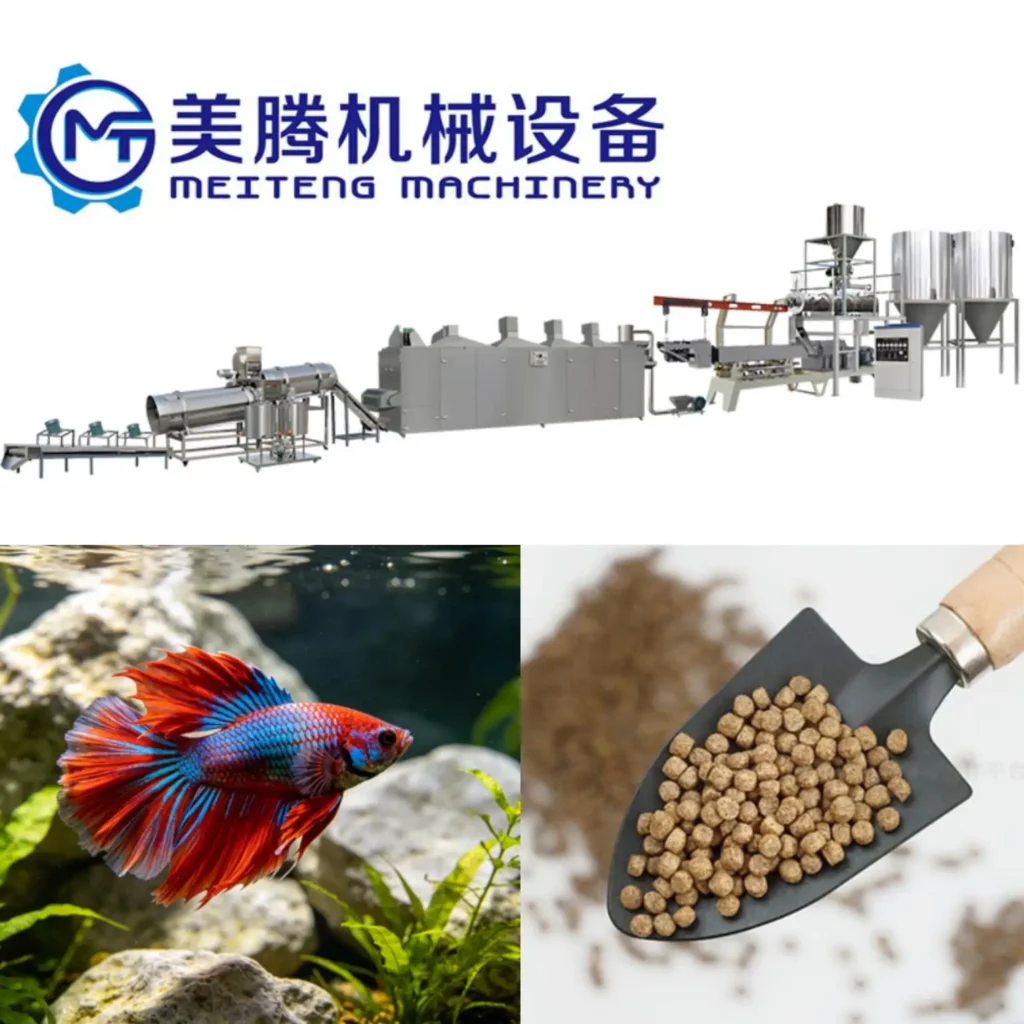


Twin Screw Fish Feed Processing Line, 1.0-1.2t/h, 304 Stainless Steel — engineered for floating and sinking aquaculture feed production targeting trout, salmon, and catfish. Complete integration from batching through extrusion, drying, coating, and packing keeps throughput balanced at every station, eliminating the bottleneck risk typical of multi-vendor assemblies. Screw configuration and die design are matched to your specific raw material and target pellet density, with trial runs validated in-house before shipment. Turnkey layout and capacity calculation provided for straightforward installation and commissioning.
Description
Turnkey Line Integration — Every station from batching to packing is throughput-matched under one supplier, so a 1.0–1.2 t/h extruder never waits on an undersized dryer or coating drum.
Technical Specifications
| Parameter | Value |
|---|---|
| Product Type | Twin Screw Fish Feed Extrusion Production Line |
| Output Capacity | 1.0–1.2 t/h (basis not stated in source — confirm raw material, moisture, pellet size) |
| Extruder Type | Twin-screw extruder |
| Construction Material | 304 stainless steel (food-contact parts) |
| Target Species | Trout, salmon, catfish, and other aquaculture species |
| Control System | PLC and MCC control (verify against final configuration) |
| Line Configuration | Complete processing line: mixing, extrusion, drying, coating, packing |
| Screw Configuration | Matched to raw material and target pellet density |
| Assembly State | Turnkey production line |
| Standards | CE, ISO |
Application Suitability
| Application | Material or Output |
|---|---|
| Floating fish feed for surface-feeding species | Corn, wheat flour, fish meal, soybean meal blends producing low-density buoyant pellets |
| Sinking feed for bottom-feeding catfish and shrimp | High-protein formulations compressed to higher density through adjusted screw shear and die geometry |
| Multi-species aquaculture feed production | Variable formulations across trout, salmon, and tilapia with pellet diameter adjustments per species requirement |
| Pilot-scale recipe development | Small-batch trial runs on customer-supplied raw material to validate floatation, expansion, and nutritional profile before full production |
Why "Rated at 1.2 Tons per Hour" Can Be the Most Expensive Sentence on a Quotation
Capacity only matters when it holds on your actual formulation, not on a reference material.
I once configured a fish feed processing line turnkey for a Southeast Asian client who ran high fish-meal ratios. The extruder was rated for the contract throughput on a standard corn-starch base. Once their sticky, protein-heavy blend hit the barrel, screw intake fell behind and actual output dropped to roughly sixty percent of what the contract stated. The dryer sat half-empty, the coating drum cycled with gaps, and the client spent months recalibrating instead of selling product [NEED_CITE: typical throughput variance when raw material deviates from reference formulations]. That failure was not a machine defect — it was a specification gap. Every fish feed processing line turnkey we now ship goes through a trial run on the buyer’s own raw material before crating, so throughput numbers are real before they are contractual.
Throughput Balancing Across Every Station in the Line
A fish feed processing line turnkey is only as productive as its weakest station. When the extruder pushes maximum output but the dryer cannot remove moisture fast enough, pellets arrive at the coating drum too wet and seasoning adhesion fails. Conversely, an oversized dryer wastes thermal energy and floor space. We calculate dwell time, belt load, and airflow for the dryer based on the exact pellet diameter and moisture target your species requires, then size the coating drum and cooling conveyor to the same hourly mass flow. This matching eliminates the surge bins and manual pacing that otherwise eat into shift output.
Screw Configuration Decided Before Steel Is Cut
Twin-screw extrusion gives operators a wide processing window, but only when the screw elements are chosen deliberately. Forward-flight elements move material quickly with low shear, suitable for high-starch floating pellets. Kneading blocks and reverse-flight sections raise shear and residence time, necessary for breaking down high-protein, high-fat blends into dense sinking feed. We record the element sequence, die bore diameter, and barrel temperature profile against your formulation during the in-house trial, then ship that documented configuration with the machine [NEED_CITE: twin-screw element arrangement and its effect on starch gelatinisation and protein texturisation].
What the Specifications Mean on the Production Floor
The twin-screw design allows the line to handle formulations ranging from lean starch-heavy mixes to blends loaded with fish meal and oil, because intermeshing screws self-wipe and resist the buildup that chokes single-screw barrels. A 304 stainless steel contact surface withstands continuous wash-down and the corrosive salts present in aquaculture recipes, extending service intervals compared to painted carbon steel. PLC and MCC control lets operators store recipes for different pellet sizes and densities, switching from a 3 mm floating trout pellet to a 6 mm sinking catfish pellet by loading saved parameters rather than manually resetting each motor and heater zone. The turnkey configuration means the mixer, extruder, dryer, and coater share a coordinated start-stop sequence, reducing the scrap generated during line start-up and shut-down.
The Cost of Skipping a Pre-Shipment Trial
Buyers who accept a generic screw-and-die build and plan to "figure out the recipe after installation" routinely spend weeks of production time on trial and error. Floating pellets that sink, or sinking pellets that crumble before reaching the pond bottom, mean entire batches are reprocessed or discarded. Coating drums fed with out-of-spec moisture pellets waste expensive oil-based attractants. The downtime cost compounds: idled labor, missed delivery windows, and reputational damage with farm customers who switched feed suppliers expecting consistency [NEED_CITE: aquaculture feed density and floatation requirements by species].
Why Source the Entire Line From One Supplier
Complete line integration means the batching scale, mixer, extruder, dryer, coating drum, cooler, and packing station are all selected by the same engineering team, removing the blame-shifting that happens when separate vendors point at each other during commissioning. Screw configuration and die design are specified to your raw material, not copied from a generic catalog build. Our in-house testing workshop runs your actual formulation before shipment, producing a documented trial report that confirms pellet density, floatation behavior, and throughput. Pre-sales consultation extends through on-site installation, commissioning, and operator training, so the crew running the line on day one already knows the parameter windows. Twin-screw expertise covers pet food, aquatic feed, snacks, and cereals, meaning lessons from one application — like moisture control in breakfast cereal extrusion — feed directly into aquaculture feed builds.
Documentation & Verification
- Line layout drawing showing throughput-matched station capacities for your target output
- Trial run report on your raw material confirming pellet floatation and density before dispatch
- Screw and die configuration record specific to your formulation, not a generic template
- Electrical schematic with voltage, frequency, and PLC language matched to your facility
- CE declaration of conformity and ISO certificate for import and regulatory compliance
- Wear parts list with part numbers for screws, dies, and barrel liners
Installation, Commissioning & Support
- Foundation plan based on line footprint and extruder vibration load for your workshop slab
- Dedicated circuit sizing for extruder main drive and dryer heating zones confirmed to local voltage
- Modular station delivery allowing phased unloading in workshops with limited overhead crane capacity
- First-run parameter tuning on your raw material with PLC recipe storage for repeat batches
- Operator training covering screw element handling, die changeover, and emergency stop sequences
- Wear parts kit shipped with initial order covering screws, dies, and barrel liners for first replacement cycle
Before You Request a Quotation
Send us your target species list, pellet diameter range, and a representative raw material formulation including moisture content and fat percentage. Tell us your facility’s voltage, frequency, and preferred PLC display language. If you have existing upstream milling or downstream packing equipment, share the model and throughput so we can size the line interface correctly.
Frequently Asked Questions
Q: How is the stated output capacity verified, and what raw material and pellet specification is it based on?
A: The 1.0–1.2 t/h figure is a reference range; actual throughput depends on your formulation’s protein ratio, moisture content, and target pellet diameter. We confirm real capacity by running your raw material in our testing workshop and issue a trial report with measured output before the quotation becomes binding.
Q: How do you ensure floating feed actually floats and sinking feed sinks to the density the market expects?
A: Pellet density is controlled through screw shear intensity, barrel temperature profile, and die bore geometry. During the pre-shipment trial we measure floatation time and sinking rate against your species specification, then lock the screw configuration and parameter set so production matches the validated sample.
Q: Can the screw and die configuration be adjusted for different species or formulations on the same line?
A: Yes. The twin-screw barrel accepts modular screw elements that can be rearranged, and dies are interchangeable. We supply a configuration record for each recipe you validate, so operators can switch from floating trout pellets to sinking catfish pellets by reloading the documented element sequence and PLC parameters.
Q: How is throughput balanced between the extruder, dryer, and coating drum to avoid bottlenecks?
A: Each station is sized against the same hourly mass flow calculated from your pellet diameter and moisture target. The dryer belt length and airflow, the coating drum volume, and the cooler conveyor speed are all matched to the extruder’s validated output, preventing surge accumulation or idle gaps.
Related products
-
250-300kg/h Capacity PLC Controlled Multi-Species Cat Food Processing Line
¥35,000.00 Select options This product has multiple variants. The options may be chosen on the product page -
MT100 Brand 1.5-2.0t/h PLC Controlled Multi-Species Cat Food Processing Line
¥45,000.00 Select options This product has multiple variants. The options may be chosen on the product page -
MT70 100-200kg/h Dog & Cat Pet Food Processing Line with 380V 50Hz Three Phase Power
¥35,000.00 Select options This product has multiple variants. The options may be chosen on the product page -
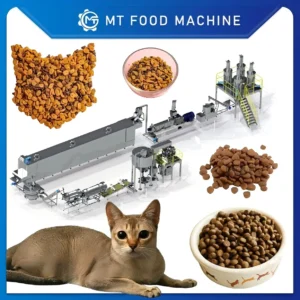
100-200kg/h Capacity PLC Controlled Multi-Species Cat Food Processing Line
¥34,000.00 Select options This product has multiple variants. The options may be chosen on the product page