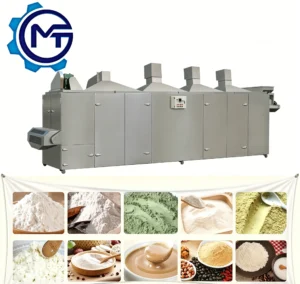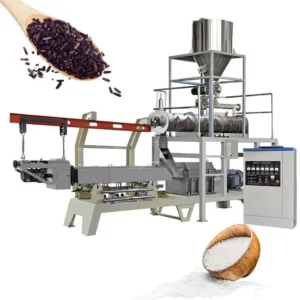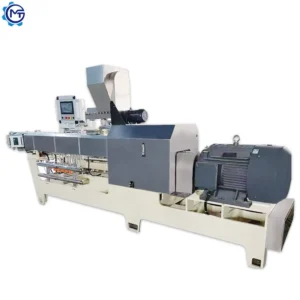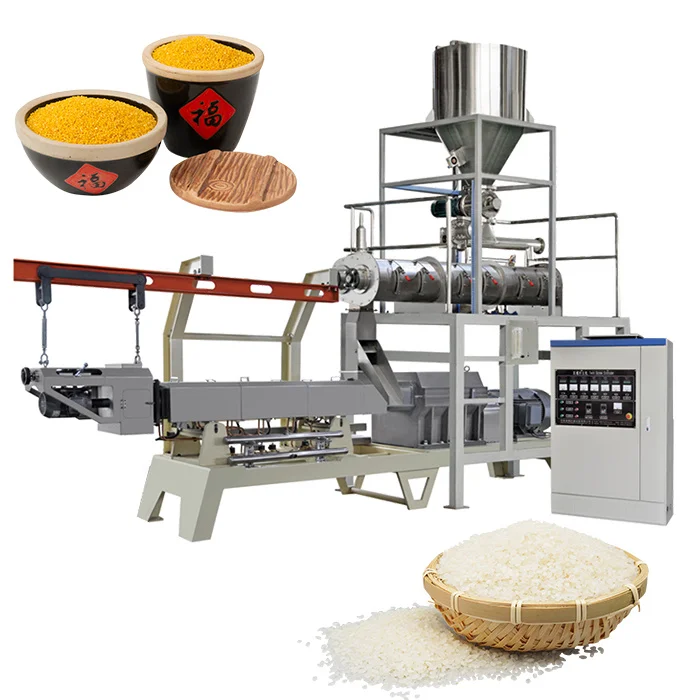
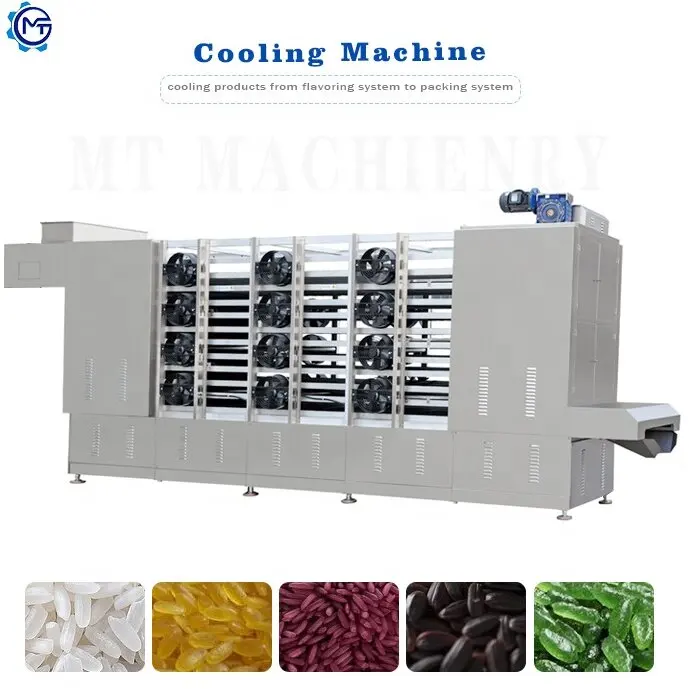
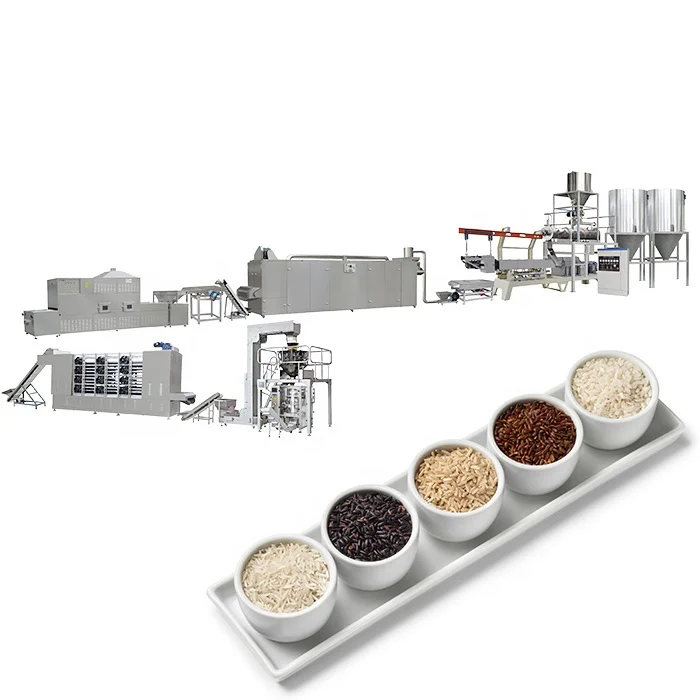
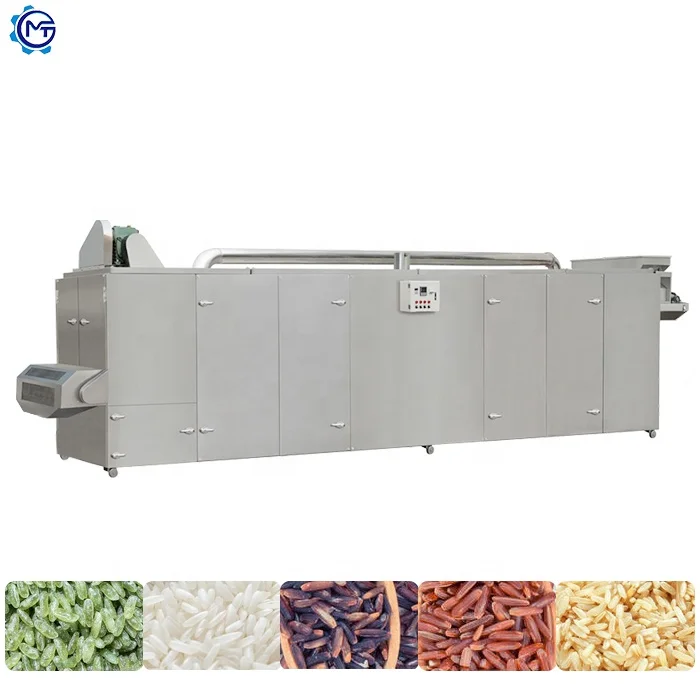
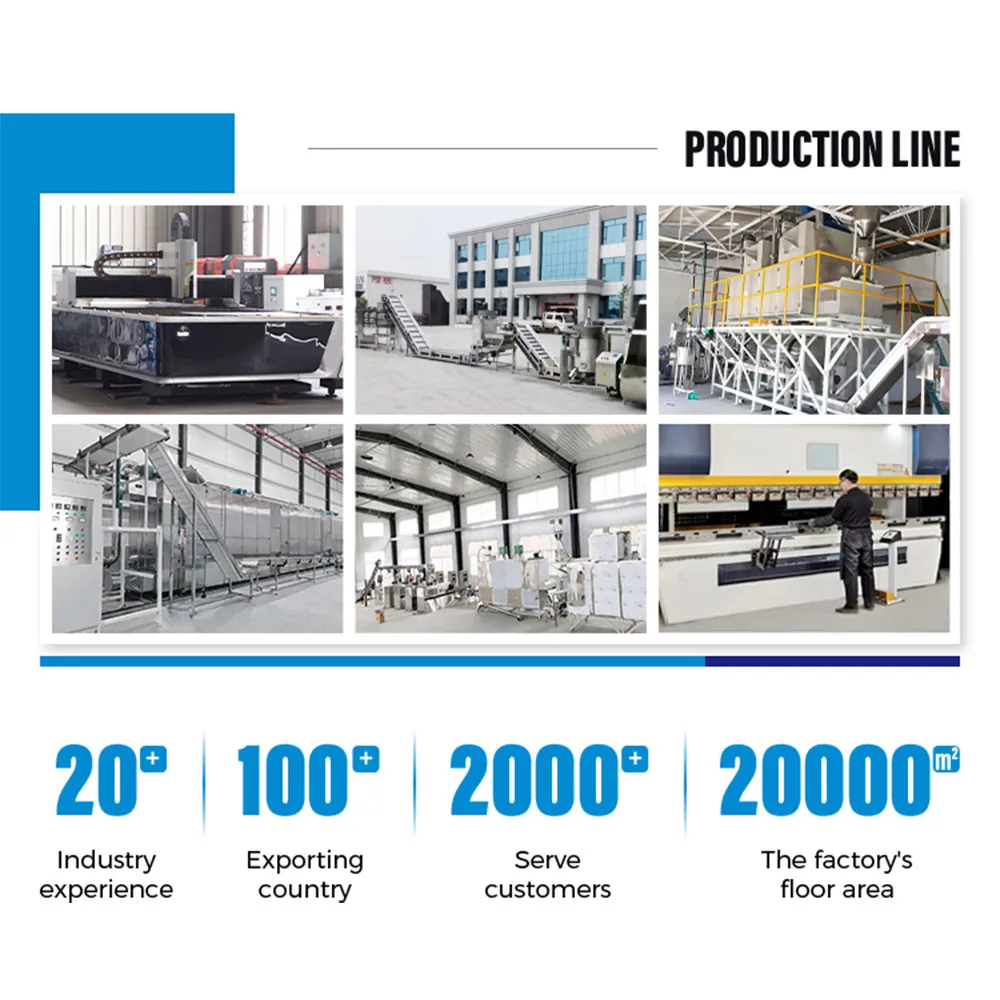
Artificial Rice Production Line, 70-300 kg/h, 380V/50Hz, Food-Grade Stainless Steel — designed as a complete turnkey project from raw material batching through extrusion to final forming.
- Throughput across mixer, fryer, and extrusion stations is matched to your rice flour formulation, eliminating integration risk from assembling separate vendors
- Twin-screw configuration and die design are specified to your target grain size and moisture profile before the quote is finalized
- Line layout and capacity calculation delivered with confirmed voltage, electrical schematic, and control language suited to your factory site
- Trial runs on your own raw material are completed in our testing workshop prior to shipment, with a full report and wear parts list included
1
Description
Integrated line engineering — every station from rice flour mixer to forming extruder is capacity-matched before the artificial rice production line turnkey layout reaches your floor, so no single machine dictates your actual throughput.
Technical Specifications
| Parameter | Value |
|---|---|
| Product Type | Artificial Rice Production Line |
| Output Capacity | 70–300 kg/h (basis not stated in source — confirm raw material, moisture content, and pellet size) |
| Voltage & Frequency | 380V / 50Hz (configurable to site requirement before production) |
| Construction Material | Food-grade stainless steel on all product-contact surfaces |
| Control System | Automatic control (PLC / MCC option to be confirmed) |
| Line Stations | Mixer, extrusion system, fryer (dryer / cooling / packing inclusion to be confirmed) |
| Raw Material Compatibility | Rice flour and grain-based materials |
| Customization Scope | Minor adjustment, drawing-based, and full factory layout customization |
Application Suitability
| Application | Material or Output |
|---|---|
| Fortified rice production for nutrition programs | Rice flour blended with vitamin and mineral premix |
| Artificial and reformed rice from broken rice or rice flour feedstock | Grain-based reformed kernels matching natural rice size and cooking behaviour |
| Grain processing plants adding nutrition-enhanced SKUs | Multi-grain flour blends with adjustable starch gelatinisation |
| Turnkey project contractors sourcing single-supplier lines | Complete production sequence from batching to formed product |
Why "300 kg/h" Means Nothing Without Your Raw Material Formula
Capacity is only real when measured against the exact rice flour blend and moisture percentage you will run.
I have watched buyers compare line quotes based on a single output number, only to discover during commissioning that their formulation — higher oil content, different starch ratio, or added fibre — cuts actual throughput significantly below the quoted figure. With an artificial rice production line turnkey project, the risk multiplies because every station in the sequence must hold the same mass flow. If the extruder pushes more than the dryer can handle at your specific moisture level, product backs up and degrades. [NEED_CITE: throughput variance across grain formulations in extrusion processing] That is why the line configuration and capacity calculation should be based on your raw material sheet, not on a generic benchmark grain.
Matching Throughput Across the Full Extrusion Sequence
An artificial rice production line turnkey solution only delivers its rated output when mixing, extrusion, and downstream stations are engineered as one mass-flow chain. The mixer must replenish the extruder hopper at a rate that accounts for your specific batch cycle time, and the fryer or dryer must remove moisture at a rate consistent with the extruder’s discharge. When these rates are mismatched, operators compensate by throttling the extruder — the most expensive machine on the floor becomes the bottleneck.
What Happens When Extrusion Parameters Ignore Your Starch Profile
Rice flour gelatinisation behaviour changes with amylose content and particle size. The screw configuration, barrel temperature zones, and die geometry must all be specified against your actual feedstock, not a standard rice variety. [NEED_CITE: starch gelatinisation temperature variance across rice cultivars] Running a high-amylose flour through a screw profile designed for waxy rice results in incomplete cooking, weak kernel structure, and excessive breakage during drying. This is the reason in-house trial runs on customer-supplied raw material exist — to validate the screw and die combination before the line ships.
Reading the Specs That Actually Determine Line Behaviour
The voltage and frequency default to 380V / 50Hz, but export projects frequently require 415V / 60Hz or other regional standards; confirming this before production prevents motor rewinding on site. Food-grade stainless steel across contact surfaces matters because rice flour slurries are mildly acidic and can corrode carbon steel over continuous shifts. The control system option — PLC or MCC — determines whether recipe changes and temperature ramps are stored digitally or managed through manual relay logic, directly affecting batch-to-batch consistency when you run multiple fortified rice SKUs. Raw material compatibility centres on rice flour and grain-based materials, so introducing high-fibre or high-fat inclusions beyond the tested range requires re-validation of screw geometry and die land length.
The Hidden Cost of Skipping the Raw Material Trial
When a line ships without a trial run on your specific rice flour formulation, the first week of production becomes the experiment. Screw elements that generate insufficient shear leave raw starch cores inside the kernel; excessive shear burns the product at the die face. [NEED_CITE: extrusion trial run protocols for grain-based food lines] Operators then cycle through die swaps and temperature adjustments, consuming raw material and production time. By the time the process stabilises, the wear on screws and dies has already advanced into the first replacement window — and if spare parts were not included with the initial shipment, you wait weeks for replacements while the line sits idle.
Why Procurement Consolidation Matters on a Turnkey Grain Line
Sourcing the mixer, extruder, dryer, and packing station from separate vendors means no single party owns the throughput match across the sequence. This line keeps all stations under one engineering scope, so the capacity calculation is signed off as a complete document rather than a stack of individual machine brochures. Screw configuration and die design are specified to your rice flour data sheet, not copied from a generic build. The in-house testing workshop runs your actual raw material before dispatch, producing a trial report that becomes your baseline recipe. Electrical schematics confirm voltage, frequency, and control language to your site specification before fabrication begins. And the wear parts list — screws, dies, seals — ships with the first container to cover the initial replacement cycle.
Documentation & Verification
- Line layout and capacity calculation matched to your rice flour formulation and target output
- Trial run report on customer-supplied raw material from the in-house testing workshop
- Electrical schematic with confirmed voltage, frequency, and control language for your site
- Screw and die configuration record specifying element arrangement and die land dimensions
- Wear parts list covering screws, dies, and seals supplied with first shipment
- Factory test record documenting run parameters before dispatch
Installation, Commissioning & Support
- Foundation and floor space planning based on the full station sequence layout for this line
- Power supply confirmation at 380V / 50Hz or site-specific voltage before cable termination
- On-site assembly of extruder barrel sections and alignment of conveyor connections between stations
- First-run commissioning with screw speed, barrel temperature, and die pressure set to your formulation
- Operator training covering recipe storage, die changeover, and routine screw inspection intervals
- Spare screws and dies from the included wear parts list available for immediate first replacement
What to Include in Your Project Brief
When specifying an artificial rice production line turnkey project, the engineering team needs your rice flour specification sheet including particle size and amylose content, your target kernel dimensions and cooking behaviour, and your factory floor plan with utility connection points. Providing your local voltage and frequency standard along with preferred control language avoids revision cycles during electrical design. If you plan to run multiple fortified formulations on the same line, listing each recipe up front allows screw and die configurations to be validated during the pre-shipment trial.
Frequently Asked Questions
Q: How is line capacity verified against my specific rice flour formulation and moisture content?
A: Before the quotation is finalised, your raw material is run in the in-house testing workshop using the proposed screw configuration and die design. The resulting trial report documents actual throughput, kernel integrity, and moisture levels at discharge, forming the baseline for the capacity calculation document that accompanies your line layout.
Q: What is the full station sequence and where does throughput matching happen across the line?
A: The sequence typically covers mixing, extrusion, forming, and downstream drying or frying. Throughput matching is calculated during the layout phase so that each station’s mass flow rate aligns with the extruder output at your specific formulation, preventing bottlenecks that force operators to throttle the main extrusion unit.
Q: Can the line layout be adapted to my existing factory footprint and utility connections?
A: Yes. The customization scope includes drawing-based and full layout adaptation. Your factory floor plan, ceiling height, and utility connection locations are used to position each station so that conveying distances and power drop points align with existing infrastructure.
Q: What is the commissioning schedule and does operator training come included?
A: Commissioning covers mechanical assembly, electrical verification at your confirmed voltage, and first-run parameter tuning on your formulation. Operator training is included, covering recipe management, die changeover procedures, and routine wear-part inspection so your team can manage daily production independently.
Q: How are spare screws, dies, and wear parts supplied after the first year of operation?
A: A wear parts list ships with the initial delivery, covering the first replacement cycle. Subsequent orders are fulfilled against the screw and die configuration record specific to your line, ensuring replacement elements match the original geometry validated during your pre-shipment trial run.
Related products
-

High Precision Automatic 500kg/h Baby Food Nutrition Powder Rice Extrusion Processing Line
¥9,500.00 Add to cart -
Industrial Instant Corn Paste Production Line Nutritional Powder Processing Equipment Meal Replacement Nutrition Powder Machine
¥65.00 Select options This product has multiple variants. The options may be chosen on the product page -

Full Automatic Complete Baby Food Nutrition Powder Porridge Processing Production Line for Infant Nutrition Factory
¥9,500.00 Add to cart -
Automatic Nutritional Powder Making Machine Safe Rice Cereal for Babies
¥30.00 Select options This product has multiple variants. The options may be chosen on the product page