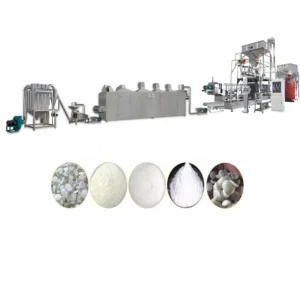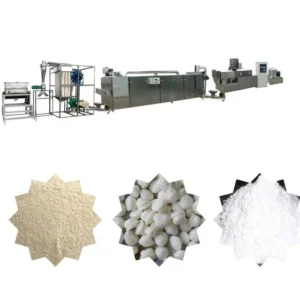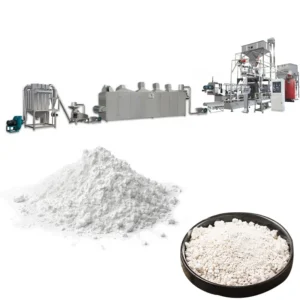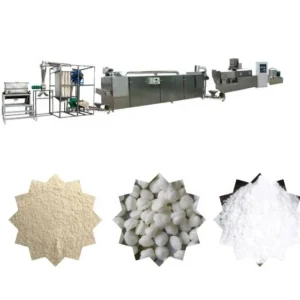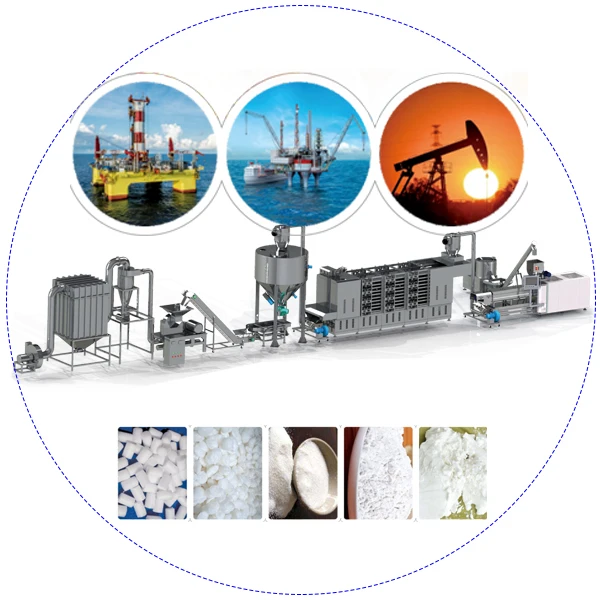




Modified Starch Processing Line, Twin-Screw Extruder, 45-200KW — engineered for starch modification from corn, cassava, potato and wheat sources with PLC and MCC automated control.
Screw configuration and die design are matched to your specific raw material and target modification grade, controlling gelatinisation, shear and expansion from extrusion through cooling and grinding. Line throughput is calculated station by station so cooling conveyors and pulse grinders keep pace with extruder output.
Layout, capacity documentation and a trial run on your starch source are completed in our testing workshop before shipment.
- CE and ISO certified, food-grade contact materials throughout
- Voltage configurable 220-440V tri-phase to site specification
- Complete turnkey scope from batching through packing
Description
Throughput-Matched Line Design — every station from mixing to packing is calculated against your specific starch source and target modification, preventing downstream bottlenecks that commonly limit output on single-vendor turnkey projects.
Technical Specifications
| Parameter | Value |
|---|---|
| Product Type | Modified Starch Processing Line |
| Extruder Type | Twin-screw extruder |
| Power Range | 45–200 kW |
| Output Capacity | 100–1500 kg/h (basis not stated in source — capacity depends on raw material type, moisture content, and product specification) |
| Voltage | 220–440 V, tri-phase (configurable) |
| Control System | Available with PLC and MCC control |
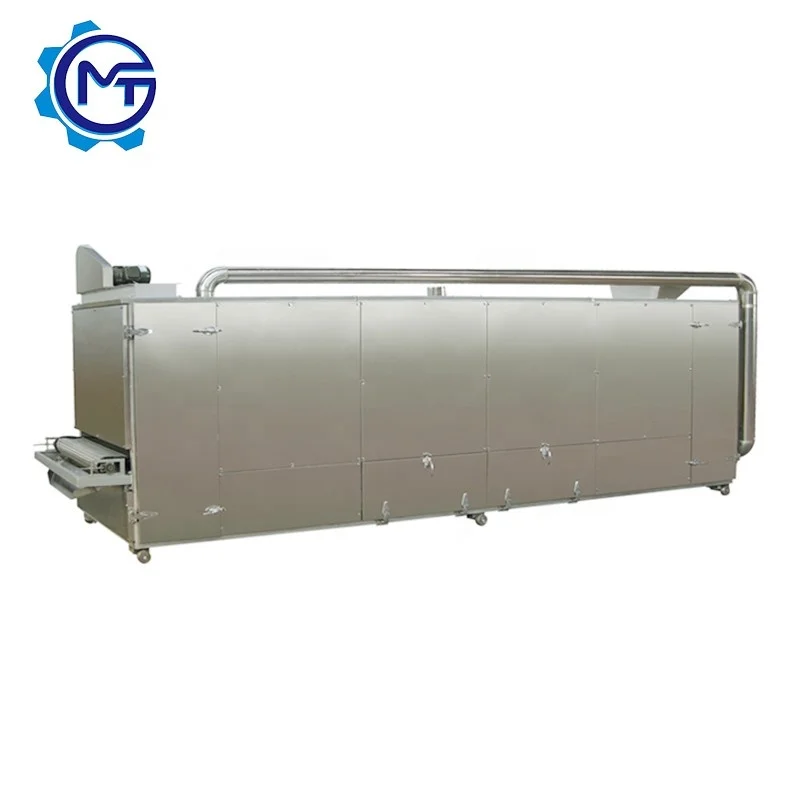
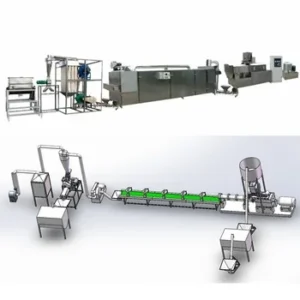
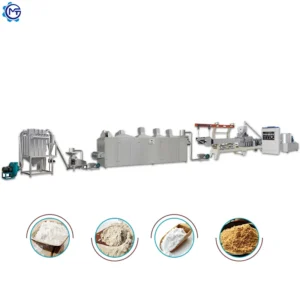
| Line Stations | Twin-screw extruder, cooling and air drying conveyor, pulse grinder with cyclone discharge and dust collector |
| Raw Materials | Corn flour, rice flour, soybean flour, cassava starch, other grain flours, additive materials |
| Fuel Options | Gas, diesel, electricity, steam |
| Contact Materials | Food-grade stainless steel |
| Assembly State | Complete line from batching to packing |
| Standards | CE certified, ISO certified |
Application Suitability
| Application | Material or Output |
|---|---|
| Food-grade modified starch production | Corn starch, cassava starch, potato starch for bakery, dairy, and sauce applications |
| Industrial modified starch for oil drilling | Corn flour and additive blends formulated for viscosity and thermal stability |
| Paper-making starch modification | Cassava and wheat starch processed for surface sizing and coating |
| Nutritional and infant formula ingredients | Pre-gelatinised rice and corn flour blends for instant food powders |
| Textile and pharmaceutical starch derivatives | Grain flours modified for specific functional properties |
What "1000 kg/h on Modified Starch" Actually Depends On
Capacity figures mean nothing until they are validated on your exact starch source and target modification specification.
I once spent three weeks commissioning a line for a pre-gelatinised starch plant down in the Pearl River Delta. The buyer ordered against a sample capacity sheet, but their actual cassava starch gelatinised at a noticeably different temperature than the corn flour we had tested with. Output on day one was roughly half the quoted figure, and the entire screw configuration had to be rebuilt. That single mismatch cost the buyer weeks of production time and forced an unplanned parts shipment. This is precisely why we run trial tests on your actual raw material before any Modified Starch Processing Line turnkey project leaves the factory [NEED_CITE: starch gelatinisation temperature variation by botanical source].
Screw Configuration and Die Design Matched to Your Starch
The twin-screw extruder sits at the heart of any modified starch line. Screw element arrangement — conveying, kneading, and reverse elements — determines shear intensity and residence time inside the barrel. A starch requiring high shear for cross-linking needs a very different screw profile than one destined for gentle pre-gelatinisation. Die aperture size and land length directly control the expansion ratio and density of the extrudate, which in turn governs how efficiently the downstream pulse grinder can achieve the target particle size.
Integrated Cooling and Grinding That Keeps Pace
After extrusion, the hot extrudate travels onto the cooling and air-drying conveyor where wind-knife airflow strips surface moisture without over-drying the core. Maintaining correct moisture here is essential: too wet, and the pulse grinder clogs; too dry, and colour degradation begins. The pulse grinder with cyclone discharge then reduces the cooled extrudate to a uniform powder while the dust collector keeps the production environment clean. On a Modified Starch Processing Line turnkey installation, these three stages must be throughput-matched so that no single station forces the others to idle or overflow [NEED_CITE: particle size distribution requirements for food-grade modified starch].
How Core Parameters Shape Your Output
The power range of 45–200 kW spans small pilot-scale lines up to high-volume production units. Selecting the correct motor size depends on the torque demand of your specific starch formulation — higher amylose materials and cross-linking reactions require more shear energy than simple pre-gelatinisation. Voltage configurability from 220 V to 440 V tri-phase means the electrical schematic can be locked to your site supply before production begins, avoiding the commissioning delays that arise when a motor is wound for the wrong frequency. The PLC and MCC control option gives operators repeatable recipe management: barrel temperature zones, screw speed, and feed rate are stored per product, reducing batch-to-batch variation. Fuel flexibility across gas, diesel, electricity, and steam lets the dryer be matched to whatever utility is cheapest or most reliable at the installation site. Food-grade stainless steel on all contact surfaces meets hygiene expectations for food and pharmaceutical starch grades.
The Cost of Skipping Raw-Material Validation
When a line is configured without testing the buyer’s actual starch, the consequences surface during commissioning and are expensive to correct. Screw elements may need complete re-arrangement, new dies machined, and dryer temperature profiles rebuilt from scratch. In some cases the grinder motor is undersized for the actual extrudate density, causing repeated overload trips. These issues do not just delay launch — they erode buyer confidence and push back revenue [NEED_CITE: common extrusion commissioning failure causes].
Why Source This Modified Starch Processing Line Turnkey Here
Complete line supply from a single manufacturer means throughput calculations are performed across every station rather than patched together from separate vendors. The in-house testing workshop runs your specific starch raw material before shipment, producing a trial run report that confirms achievable capacity and product quality. Screw and die configurations are documented and recorded against your raw material profile, so re-ordering wear parts is straightforward. Electrical schematics are confirmed with voltage, frequency, and control language matched to your facility before the panel is wired. CE and ISO documentation accompanies every shipment, supporting import clearance and local regulatory compliance [NEED_CITE: CE machinery directive requirements for food processing equipment].
Documentation & Verification
- Line layout and capacity calculation document matched to your starch raw material and target specification
- Trial run report generated on your actual starch sample before equipment leaves the factory
- Screw and die configuration record detailing element arrangement, barrel profile, and die geometry
- Electrical schematic confirming voltage, frequency, and PLC language for your site conditions
- CE declaration of conformity and ISO certificate for import and regulatory clearance
- Operation and maintenance manual covering all line stations from batching to packing
Installation, Commissioning & Support
- Foundation plan provided based on total line weight and station-by-station footprint
- Dedicated electrical circuit sized for the 45–200 kW extruder motor and dryer heating load
- Assembled line stations shipped with clear reassembly sequence and utility connection points
- First-run parameter setting on your starch raw material during on-site commissioning
- Operator training covering PLC recipe management, screw change procedures, and safety interlocks
- Wear parts list with recommended first-replacement intervals for screws, dies, and grinder blades
What We Need From Your Side
To size the line correctly, share the type and origin of your starch raw material, the target modification (pre-gelatinisation, cross-linking, acid-thinning, or other), and your required daily output. Provide the available workshop floor area and ceiling height so the layout can be drafted to fit. Confirm your local voltage, frequency, and preferred control language. If you have upstream batching equipment or downstream packing machines already in place, send their specifications so we can match the interface points. Finally, send a representative sample of your starch raw material — typically a few kilograms — so the testing workshop can validate capacity and product quality before quotation.
Frequently Asked Questions
Q: How is line capacity verified on my specific starch raw material before shipment?
A: We request a representative sample of your starch and run it through the twin-screw extruder in our testing workshop using the screw and die configuration proposed for your order. The trial run report documents actual throughput, product colour, gelatinisation degree, and particle size after grinding. Only when these results meet your specification do we finalise the line configuration and confirm delivery.
Q: How do you ensure throughput matching between the extruder, dryer, grinder, and packing stations?
A: Each station is sized against the verified output from your trial run. The cooling conveyor length and airflow are calculated to handle the extrudate volume, the pulse grinder motor and cyclone are selected for the target particle size at that throughput, and the packing station is matched to the grinder discharge rate. No station is allowed to become a bottleneck for the others.
Q: What voltage and control language configurations are available for my target market?
A: The line is configurable from 220 V to 440 V tri-phase, and frequency is confirmed before the electrical panel is built. PLC interface language and MCC labelling are set to your preferred language during the specification confirmation stage, ensuring operators can navigate recipes and alarms without translation barriers on day one.
Q: What does the on-site installation, commissioning schedule, and operator training process look like?
A: An engineer arrives after the line is positioned and utilities connected. Commissioning covers mechanical alignment, electrical verification, and a production run on your starch raw material. Operators are trained on PLC recipe selection, screw and die changeover, grinder blade replacement, and daily cleaning procedures. The schedule duration depends on line size and local site readiness.
Q: How are spare wear parts such as screws, dies, and grinder blades supplied and when should first replacement be planned?
A: A wear parts list is included in the documentation package, showing part numbers and recommended replacement intervals based on your starch type and operating hours. Screw elements and dies are manufactured in-house, so re-orders follow the recorded configuration. We advise planning the first spare screw set at the time of initial order so stock is on hand when production volume warrants it.
Related products
-
Pregelatinized Low-Cost Modified Starch Line – High-Efficiency Automated Starch Processing Machine
¥65.00 Select options This product has multiple variants. The options may be chosen on the product page -
Automatic Modified Tapioca Starch Production Line 304 Stainless Steel Flour Mill and Bakery Machine
¥30.00 Select options This product has multiple variants. The options may be chosen on the product page -
2025 New Design Modified Starch Big Capacity Industrial Use Food Additives Core Components Motor Bearing
¥50.00 Select options This product has multiple variants. The options may be chosen on the product page -
Twin-Screw Extrusion Line for Modified Starch. Producing Pregelatinized Adhesive & Food Grade Powder
¥65.00 Select options This product has multiple variants. The options may be chosen on the product page