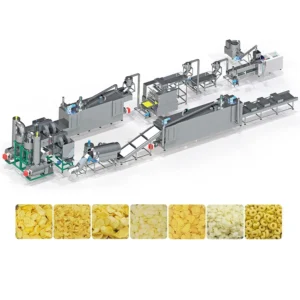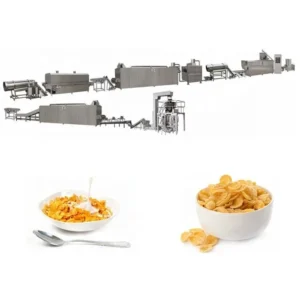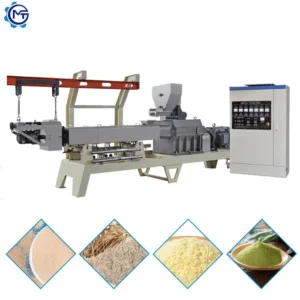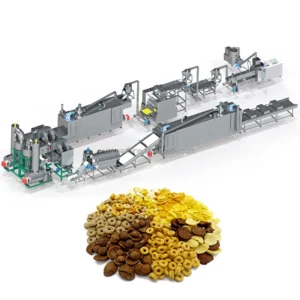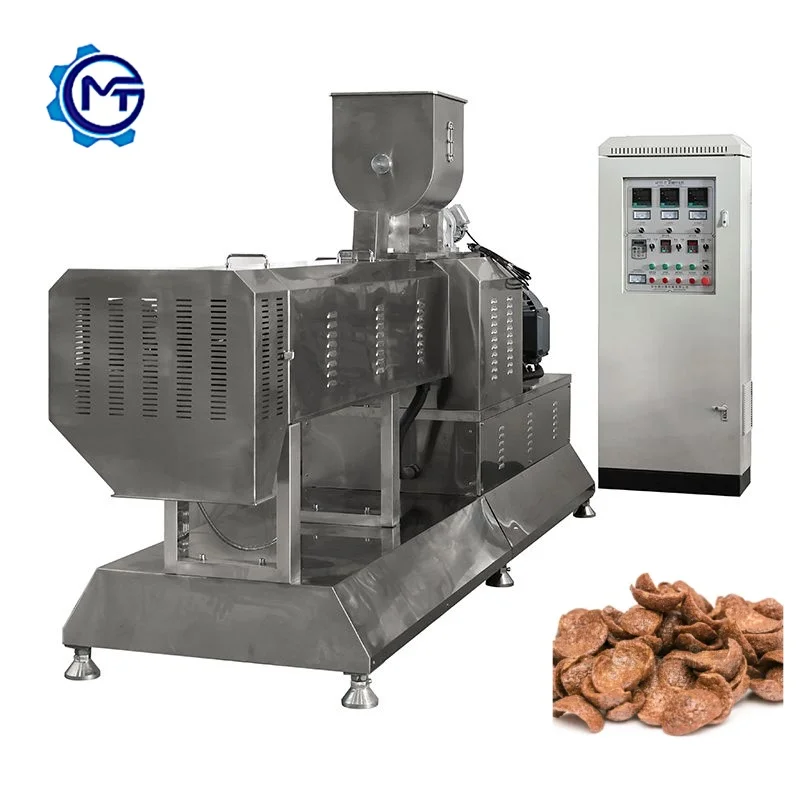
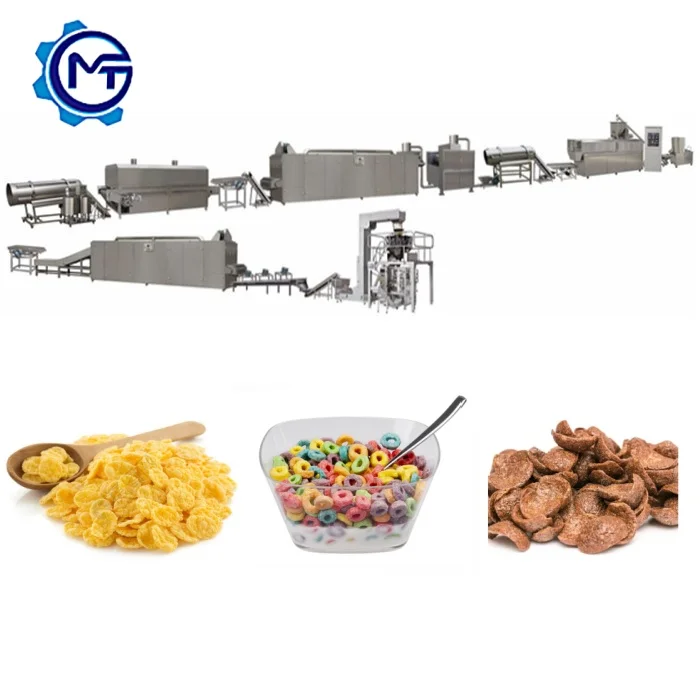
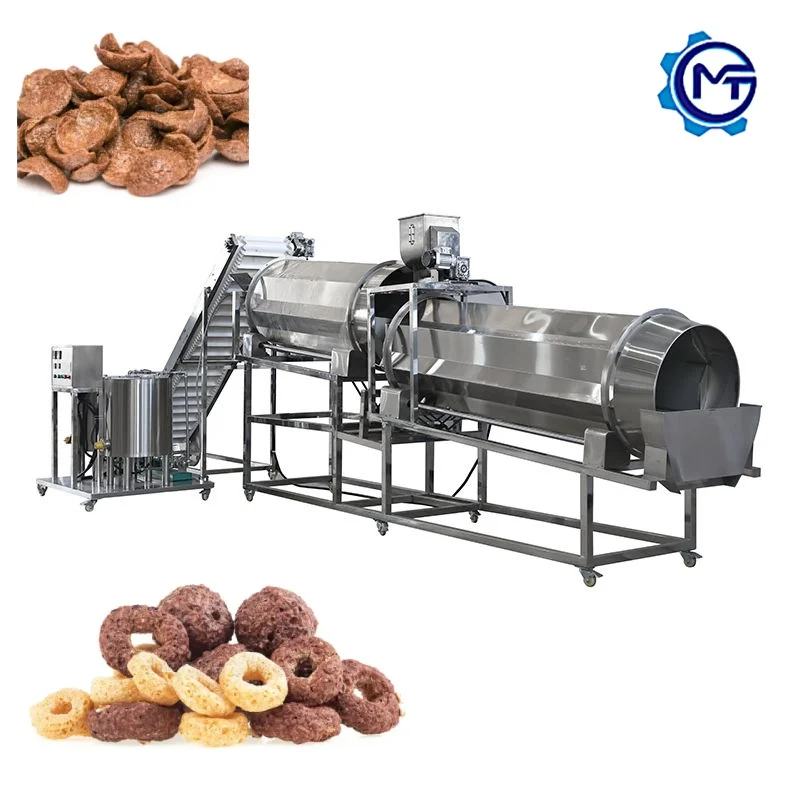
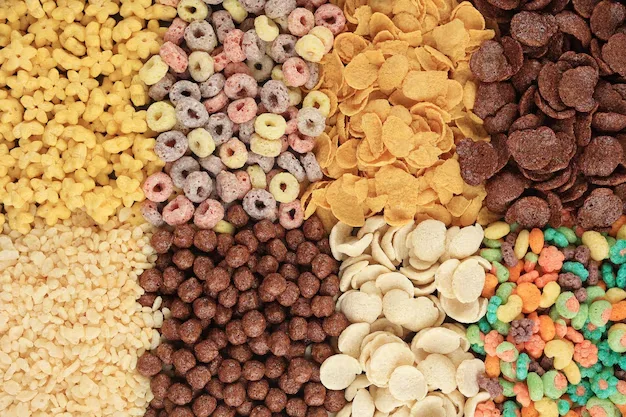
MT75 Twin Screw Breakfast Cereal Production Line, 210 kW Installed Power, PLC Control — engineered for complete corn flake and multi-grain cereal processing from mixing through packing. Designed for turnkey projects where throughput must match across extrusion, flaking, roasting and coating stations, with screw and die configuration specified to your grain formulation. Supported by in-house trial runs on your raw material before shipment, matched station capacity, and phased on-site commissioning.
Description
Matched Throughput Across Every Station — A breakfast cereal line is only as fast as its slowest dryer or roaster; this turnkey system balances extruder output with flaking, roasting, coating and packing capacity so the rated kg/hr figure actually holds on your production floor.
Technical Specifications
| Parameter | Value |
|---|---|
| Product Type | Twin Screw Breakfast Cereal & Corn Flakes Production Line |
| Available Models | MT70 / MT75 / MT85 |
| Installed Power | MT70: 160 kW; MT75: 210 kW; MT85: 190 kW |
| Power Consumption | MT70: 120 kW; MT75: 150 kW; MT85: 140 kW |
| Output Capacity | MT70: 150–200 kg/hr; MT75: 300–500 kg/hr; MT85: 300–400 kg/hr (basis to be confirmed) |
| Overall Dimensions (L×W×H) | MT70: 41 × 1.5 × 2.2 m; MT75: 45 × 1.5 × 3.5 m; MT85: 43 × 1.5 × 3.2 m |
| Screw Type | Twin screw |
| Control System | PLC and MCC line control |
| Heating Source (Dryer) | Gas / Electric / Steam configurable |
| Flaking Machinery | Hydraulic double-roller system, infrared sensor temperature control |
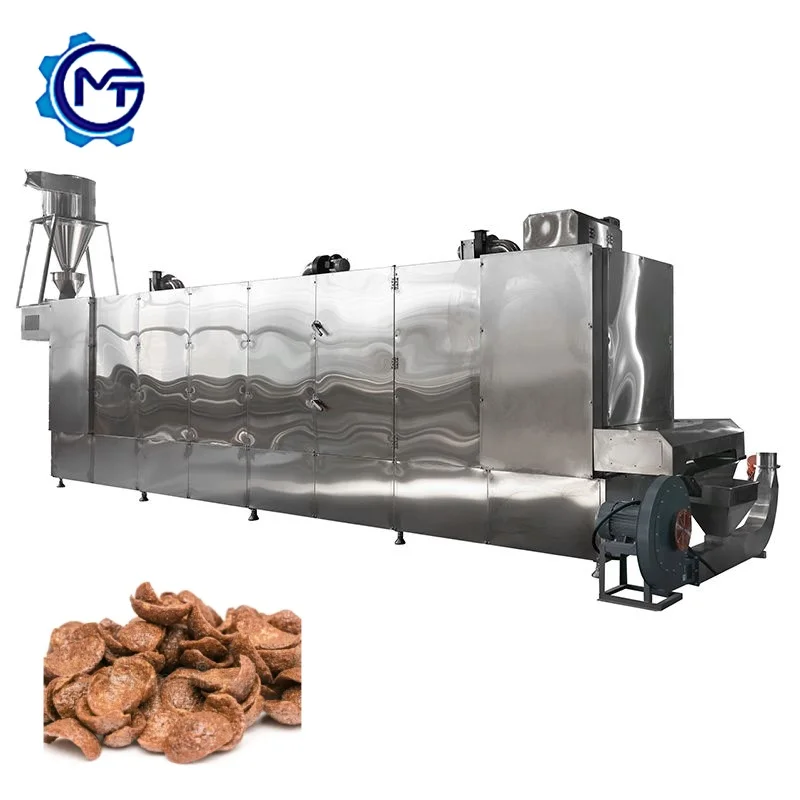
| Hot Air Roasting Oven | Vibrating pan, dual circulating fans, cyclone dust removal |
| Coating System | Double tumble sugar melting, elevator, coating drum, spraying nozzle |
| Raw Materials | Corn, rice, wheat, oat, barley powder |
| Lubrication | Automatic lubricating and cooling |
Application Suitability
| Application | Material or Output |
|---|---|
| Natural corn flake production | Corn grits and corn flour blends |
| Sugar-coated cereal manufacturing | Corn, rice, or wheat base with sugar syrup coating |
| Multi-grain breakfast cereal processing | Oat, barley, wheat, and rice powder mixtures |
| Shaped snack cereal production | Ball, tube, ring, fruit loop, star, wheel, flower, heart via die change |
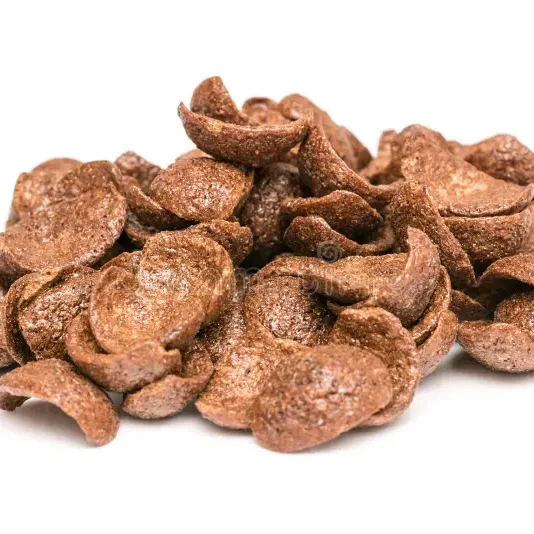
| Cocoa-blended puffed cereal runs | Cocoa powder mixed with corn or rice flour |
| Fortified nutrition cereal lines | Grain powder with added vitamin and mineral premix |
What "300 kg/hr" Means When the Raw Material Changes
Capacity figures are meaningless without a stated raw material basis and moisture content.
I once watched a breakfast cereal line get commissioned in Southeast Asia where the supplier quoted output on standard corn flour, but the buyer was running a cocoa-blend formulation. The expansion rate dropped, the flake density shifted, and the drying section could not keep pace. Four days of recalibration followed before the line stabilized. A breakfast cereal corn flakes production line turnkey should never be ordered on a single spec-sheet number [NEED_CITE: raw material formulation impact on extrusion throughput]. Every grain blend — corn, rice, wheat, oat, barley — carries different starch gelatinisation behaviour, and cocoa or fibre additions change shear response inside the barrel.
Throughput Matching from Hopper to Pack-Off
A breakfast cereal corn flakes production line turnkey project fails when stations are sized independently. The extruder may push product faster than the flaking rollers can flatten, or the roasting oven may bottleneck the entire run. This system is engineered as a single project: mixing capacity feeds the extruder at a controlled rate, the hydraulic double-roller flaker is matched to extruder discharge volume, and the hot air roasting oven with its dual circulating fans handles the downstream load without product backlog. The goal is a steady-state line where no single station forces the others to idle or surge.
Die Flexibility Without Line Rebuilds
Shape changes in cereal production often mean swapping dies at the extruder head. The twin-screw configuration on the MT75 and its sister models supports a range of die plates — ball, tube, ring, fruit loop, star, wheel, flower, heart — without requiring mechanical modifications to the barrel or cutting system. For a contractor building a multi-SKU cereal facility, this means one extrusion station can cover several product formats, reducing the capital footprint of the production hall. The die change itself is a routine maintenance task, not a line engineering event.
Reading the Power and Dimension Data
Installed power spans from 160 kW on the MT70 up to 210 kW on the MT75, reflecting motor size, barrel heating zones, and downstream equipment load. Actual consumption sits lower — 120 kW to 150 kW — because heating elements cycle and the main drive does not run at full torque continuously. Line lengths range from 41 m to 45 m, which matters for factory planning: ceiling height must accommodate the roaster exhaust and cyclone dust removal ducting, while floor space needs clear access on both sides for screw and die maintenance. The PLC and MCC control architecture separates machine-level logic from power distribution, which simplifies troubleshooting when a single station needs isolation during a run [NEED_CITE: MCC and PLC separation in food extrusion lines].
The Hidden Cost of Skipping a Pre-Shipment Trial
When a cereal line ships without a trial run on the buyer’s actual formulation, the first commissioning week becomes a product development exercise. Flake thickness drifts because the hydraulic roller pressure was set for a different starch profile. The roasting oven temperature curve needs adjustment because the moisture content entering the oven is higher than expected. Sugar coating adhesion suffers if the cereal surface texture does not match the syrup viscosity the coating drum was tuned for. These are not defects — they are tuning gaps that cost production days. Running the buyer’s raw material in the testing workshop before dispatch closes most of these gaps early [NEED_CITE: pre-shipment trial run standards for food extrusion equipment].
Why Procurement Should Be a Single-Source Decision
Sourcing extruders, dryers, flakers, and coating drums from separate vendors shifts the integration risk onto the buyer. When throughput does not balance, each vendor points to the next station as the bottleneck. This turnkey breakfast cereal corn flakes production line keeps all stations under one supplier responsibility. Screw and die configuration is specified to the buyer’s grain blend, not copied from a generic build. The multi-fuel dryer — configurable for gas, electric, or steam — matches local utility conditions rather than forcing a factory to adapt its infrastructure. Documentation covers the full line, not fragmented machine-by-machine paperwork, which matters when customs clearance requires a unified CE declaration.
Documentation & Verification
- Line layout drawing showing throughput matching across mixing, extrusion, flaking, roasting, and packing stations
- Screw and die configuration record matched to your grain formulation and target flake thickness
- Trial run report on your raw material conducted in the testing workshop before shipment
- Electrical schematic with confirmed voltage, frequency, and control language for your facility
- CE declaration of conformity and ISO certificate covering the complete line assembly
- Wear parts list with screw element and die plate specifications for first replacement orders
Installation, Commissioning & Support
- MT75 line requires a clear floor span of approximately 45 × 1.5 m with 3.5 m headroom for roaster ducting
- Power supply must match confirmed voltage and frequency; dedicated circuit rated for 210 kW installed load on MT75
- Equipment ships in modular sections for container loading; reassembly sequence provided in installation manual
- First-run parameter setting covers barrel temperature profile, roller gap, roaster temperature curve, and coating drum speed
- Operator training includes die change procedure, screw element inspection, and PLC fault code interpretation
- Spare screw elements, die plates, and roller sleeves stocked for initial operating period
What to Include in Your Inquiry
To configure a line that matches your production targets, share your primary grain formulation and any secondary ingredients such as cocoa powder or fibre additives. Specify your target daily output and the shift pattern you plan to run. Confirm the local voltage, frequency, and whether gas, electric, or steam is available for the dryer and roaster. If you are integrating this line into an existing facility, note the available floor dimensions and ceiling height so the layout can be adapted before quotation.
Frequently Asked Questions
Q: How is line capacity verified on my specific raw material formulation?
A: Before shipment, your grain blend is run through the extruder and downstream stations in the testing workshop. The trial produces actual flake samples at production speed, and the results — including throughput, flake thickness, and roasting profile — are documented in a report. This ensures the capacity figure is tied to your material, not a generic corn flour benchmark.
Q: What voltage, frequency, and control language options are confirmed before production?
A: The electrical schematic is finalized with your facility’s voltage and frequency before manufacturing begins. PLC interface language and MCC labeling are set to match your operator team. This prevents commissioning delays caused by mismatched motor ratings or unreadable HMI screens when the line arrives on site.
Q: How is throughput matched between the extruder, flaker, roaster, and coating stations?
A: Each station is sized based on the extruder’s verified output on your raw material. The hydraulic flaker roller speed, roaster pan vibration rate, and coating drum cycle are all calculated to handle the upstream discharge without accumulation or starvation. The line layout document shows these matched rates across every station.
Q: Can the line produce both natural and sugar-coated corn flakes on the same system?
A: Yes. The sugar coating section — comprising the double tumble melter, elevator, coating drum, and spraying nozzle — is an optional stage in the production flow. You can run natural flakes by bypassing the coating system, then switch to coated product by engaging it, without mechanical line changes.
Related products
-
Automatic Commercial Breakfast Wheat Circle Corn Flake Production Line
¥65,000.00 Add to cart -
MT Cocoa Flour Puffed Breakfast Cereal Production Line-High Large Capacity Multi-Fuel (Steam/Gas/Electric) New Shandong Origin
¥8,000.00 Select options This product has multiple variants. The options may be chosen on the product page -
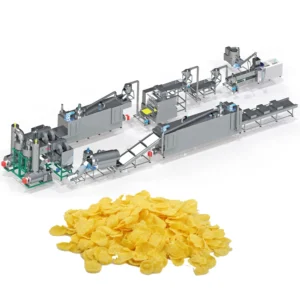
New Automatic Cornflakes Making Machine Oats Snack Food Chips Extruder Processing Line
¥30.00 Select options This product has multiple variants. The options may be chosen on the product page -
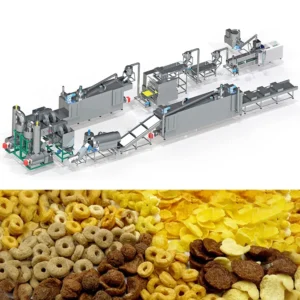
Automatic Instant Breakfast Cereals Snack Food Making Machine
¥10,000.00 Select options This product has multiple variants. The options may be chosen on the product page