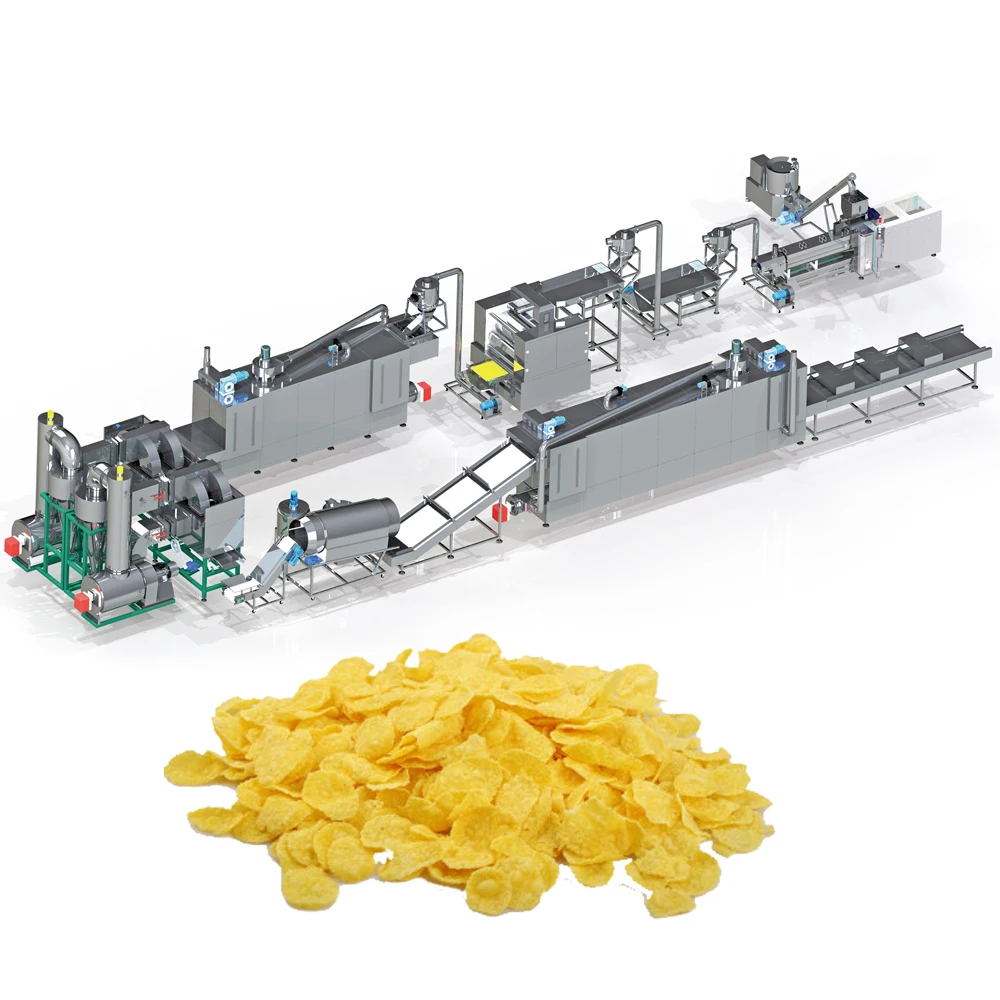
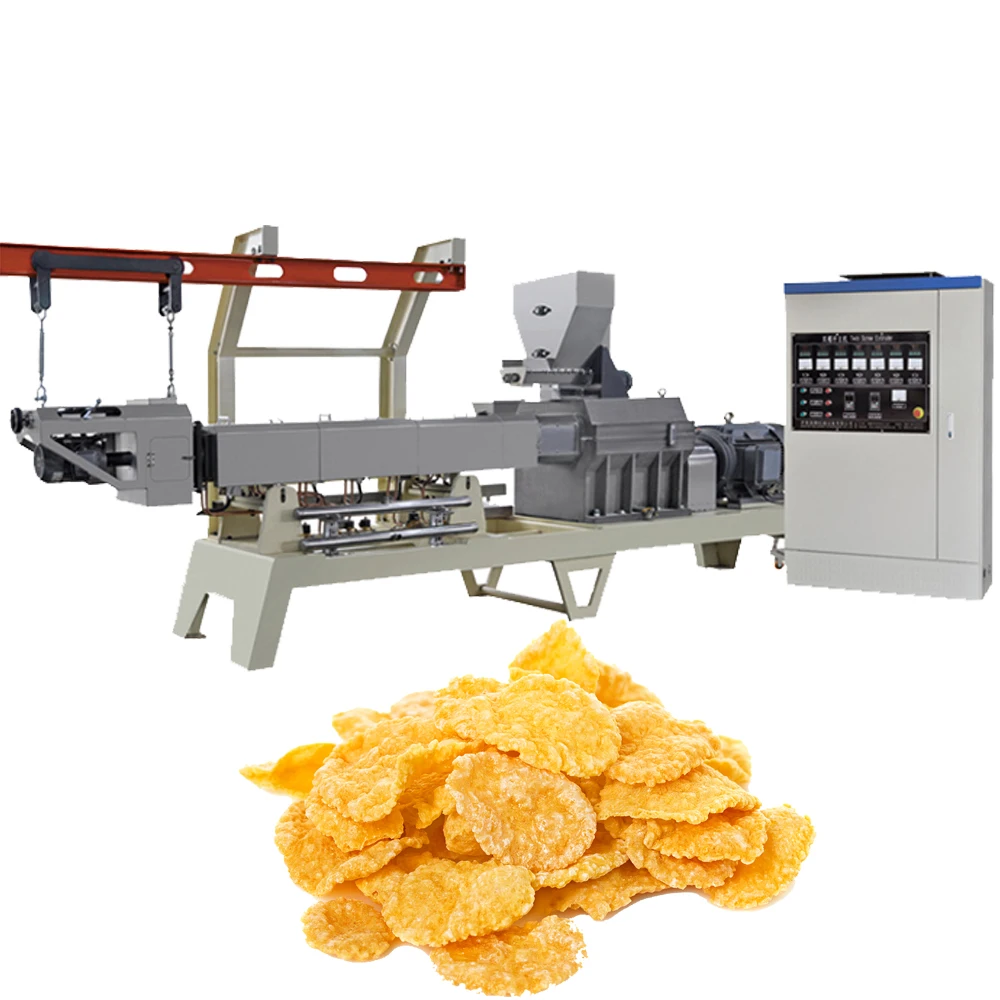
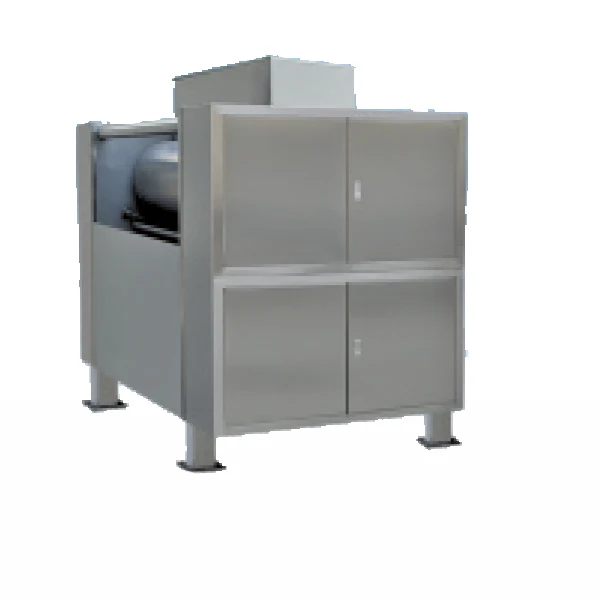


MT70 / MT85 / MT75 Corn Flakes Production Line, Twin Screw Extruder, PLC & MCC Control — engineered as a complete turnkey project from batching through extrusion, flaking, drying, hot-air roasting and packing.
- Throughput at every station is calculated and matched to your raw material formulation and target flake density, preventing bottlenecks between extruder, flaker and dryer.
- Line layout is designed to your factory footprint with utility planning for electrical, gas and ventilation, supported by in-house trial runs on your own recipe before shipment.
- Full documentation package includes capacity calculation, electrical schematic, screw and die configuration record, and wear parts list delivered with every line.
Description
Throughput-Matched Line Design — Every station from mixing to packing is calculated against your recipe moisture and target flake thickness, eliminating the common trap of an extruder running faster than the dryer can handle.
Technical Specifications
| Parameter | Value |
|---|---|
| Product Type | Corn Flakes Production Line with Twin Screw Extruder |
| Model Options | MT70 / MT85 / MT75 |
| Screw Type | Twin Screw |
| Installed Power | 160 kW (MT70) / 190 kW (MT85) / 210 kW (MT75) |
| Power Consumption | 120 kW (MT70) / 140 kW (MT85) / 150 kW (MT75) |
| Output Capacity | 150–200 kg/h (MT70) / 300–400 kg/h (MT85) / 300–500 kg/h (MT75) (basis not stated in source — confirm raw material type, moisture content and flake thickness) |
| Overall Dimensions (L×W×H) | 41×1.5×2.2 m (MT70) / 43×1.5×3.2 m (MT85) / 45×1.5×3.5 m (MT75) |
| Control System | PLC and MCC |
| Flaking Machine Drive | Double motors for separate roller driving, hydraulic system for double rollers |
| Flaking Machine Temperature Control | Infrared sensor |
| Dryer Heating Source | Gas / Electric |
| Roasting Oven | Hot air roasting with conciliation burner, two separate circulating fans, cyclone dust removal device |
| Coating System | Double tumble for sugar melting, elevator, coating drum, spraying nozzle |
| Lubrication | Automatic lubricating and cooling function |
Application Suitability
| Application | Material or Output |
|---|---|
| Natural corn flakes breakfast cereal | Corn grits and corn flour, toasted without coating |
| Sugar-coated corn flakes | Corn base with sugar syrup tumble coating and secondary drying |
| Multi-grain breakfast flakes | Blends of corn, rice, wheat, oat and barley flours |
| Extruded cereal snacks | Ball, tube, stick, ring, fruit loop, star, wheel, flower and heart shapes via die changes |
| Fortified breakfast cereal | Vitamin and mineral premix incorporated at batching stage |
Why Nominal Line Capacity Rarely Survives Contact With Your Actual Recipe
A rated throughput only matters if it holds on your specific grain blend at your target moisture and flake thickness.
I have watched corn flakes lines get installed in South Asian mills where the supplier quoted capacity on pure corn grits, only for the buyer to run a corn-oat-rice blend that behaves completely differently under the flaking rollers. The extruder pushes material through fine, but the flakes blister in the roasting oven and the dryer cannot keep pace. The entire corn flakes production line turnkey project stalls at half its promised output while everyone argues about whose fault it is [NEED_CITE: grain blend behaviour differences under extrusion and flaking]. This is why the corn flakes production line turnkey conversation must start with your exact formulation, not a generic datasheet.
Layout Planning That Accounts for Your Factory Floor
A corn flakes production line turnkey project involves more than placing machines in a row. The mixing station needs overhead clearance for raw material silos, the flaking machine requires a stable foundation to absorb roller vibration, and the roasting oven demands dedicated gas supply and exhaust ducting. We lay out every station against your actual building dimensions before any steel is cut, routing utilities — electrical, gas, ventilation, drainage — to match local infrastructure. The PLC cabinet is positioned where operators can monitor both the extruder barrel zones and the flaking roller gap simultaneously.
Throughput Matching Across Every Station
The extruder, flaker, dryer, coating drum and cooler must each handle the same mass flow rate at their specific stage of the process. Wet flakes leaving the flaking rollers carry more moisture than dry flakes entering the roasting oven, so the dryer must be sized for the upstream volume, not the final packed weight. When we configure a corn flakes production line turnkey solution, we calculate each station’s duty cycle against your raw material’s starting moisture and the target flake density, so no single machine becomes the constraint that holds back the rest [NEED_CITE: throughput calculation methodology for multi-stage cereal lines].
How Screw Geometry and Roller Pressure Shape the Final Flake
Twin screw extrusion for corn flakes operates at relatively low expansion compared to puffed snacks — the goal is partial gelatinisation of the starch matrix, not full puffing. The screw configuration and barrel temperature profile must deliver a dough-like extrudate that the flaking rollers can compress into a uniform sheet without tearing or sticking. The hydraulic double-roller system on the flaking machine allows independent pressure adjustment, while the infrared sensor monitors roller surface temperature in real time to prevent the starch from bonding to the steel. Die selection at the extruder determines the pellet shape entering the flaker, and pellet geometry directly influences how evenly the material spreads between the rollers. Moisture content at extrusion — typically controlled at the mixer — governs both the extrudate texture and the drying load downstream, making the batching system a critical variable in final flake quality.
The Cost of Skipping the Trial Run
Buyers who approve a line on paper specifications alone often discover problems only after installation. Floating feed sinks, kibble density misses the market specification, or corn flakes emerge from the roasting oven with uneven colour because the burner zones were calibrated on a different grain. Reworking screw configurations, roller gaps and oven temperatures on-site costs weeks of production time and burns through raw material while the line sits idle [NEED_CITE: typical commissioning delays when trial runs are skipped]. A trial run in the testing workshop on the buyer’s own corn blend, oat mix or barley formulation catches these mismatches before the machines leave the factory.
Why Project Buyers Source This Line Here
Complete lines from batching through extrusion, flaking, drying, roasting, coating and packing arrive from a single supplier, meaning throughput is calculated across every station rather than assembled from mismatched vendors. Screw configuration and die design are specified to the buyer’s raw material and target flake density, not copied from a generic build. The in-house testing workshop runs your actual formulation before shipment, producing a trial report that locks in process parameters. Twin screw expertise spans corn flakes, multi-grain cereals, pet food and aquatic feed, so the engineering team understands how different starches behave under heat and shear. Pre-sales layout design, on-site installation, commissioning and operator training are handled by the same engineers who built the line.
Documentation & Verification
- Line layout drawing and capacity calculation matched to your factory footprint and target throughput
- Screw and die configuration record specific to your corn, oat or multi-grain formulation
- Trial run report on your raw material conducted in the testing workshop before shipment
- Electrical schematic with voltage, frequency and PLC language confirmed for your market
- Operation and maintenance manual with wear parts list for screws, dies and flaking rollers
- CE declaration of conformity and ISO certificate included with shipping documents
Installation, Commissioning & Support
- Foundation requirements calculated for the flaking machine’s roller vibration and the 41–45 m line length
- Electrical supply specification covering 160–210 kW installed power, dedicated circuits for hydraulic and heating loads
- Phased installation schedule coordinating extruder placement, oven ducting and gas line connections
- First-run commissioning with parameter tuning on your raw material at the target flake thickness
- Operator training covering PLC interface navigation, screw configuration changes and roller gap adjustment
- Wear parts inventory plan for screws, dies and flaking rollers with replacement intervals documented
What We Need to Build Your Line Proposal
To configure a corn flakes line that actually runs at capacity on your floor, share your raw material formulation with percentages of corn, rice, wheat, oat or barley, your target flake thickness and final moisture specification, and your available factory dimensions including ceiling height. Confirm your local voltage and frequency, preferred PLC language, and whether you need gas or electric heating for the dryer. If you are installing alongside existing production equipment, let us know the upstream and downstream interfaces so we can plan the integration.
Frequently Asked Questions
Q: How is line capacity verified on my specific raw material and recipe before the machines ship?
A: We run your actual grain blend through the extruder, flaker and dryer in our in-house testing workshop. The trial records throughput, flake density and moisture at each station, and we adjust screw configuration, roller gap and oven temperature until the output meets your specification. You receive a trial run report before shipment confirming achievable capacity on your formulation.
Q: How do you match throughput between the extruder, flaker, dryer and coating drum to avoid bottlenecks?
A: Each station is sized against the mass flow rate at that stage, accounting for moisture loss through drying and weight gain through coating. We calculate duty cycles based on your raw material’s starting moisture and target flake density, so the dryer is not undersized for wet flakes and the coating drum can handle the full roasted output without backlog.
Q: What voltage, frequency and PLC language options are available for my target market?
A: Voltage and frequency are confirmed in writing before production begins, matched to your site’s electrical supply. The PLC interface can be configured in your preferred language, and all electrical schematics are provided with the shipment so your local electricians can handle future maintenance without ambiguity.
Q: What does on-site installation, commissioning and operator training include?
A: Our engineers oversee equipment placement, utility connections and first-run parameter tuning using your raw material. Operator training covers the PLC interface, screw and die changes, flaking roller adjustment, oven temperature control and routine maintenance. We stay on-site until the line consistently produces flakes meeting your density and moisture specification.
Q: How are spare wear parts supplied and what is the replacement schedule?
A: A wear parts list covering screws, dies and flaking rollers is included with your documentation, with replacement intervals based on your raw material’s abrasiveness. We supply replacement parts directly and can dispatch them against standing orders so that your first replacement arrives before the original components reach end of life.
Related products
-
Corn Flakes Breakfast Cereal Production Line Making Machine Automatic
¥8,000.00 Select options This product has multiple variants. The options may be chosen on the product page -
Kelloggs Corn Flakes Breakfast Cereal Normal Making Machine Breakfast Cereal Extruder Production Line
¥30,000.00 Select options This product has multiple variants. The options may be chosen on the product page -

Corn Flakes Production Line Breakfast Cereal Production Machine Line Corn Flake Making Machinery
¥59,800.00 Select options This product has multiple variants. The options may be chosen on the product page -

Best Price Corn Flakes Making Machine Breakfast Cereals Processing Line with Motor As Core Component
¥19,000.00 Select options This product has multiple variants. The options may be chosen on the product page