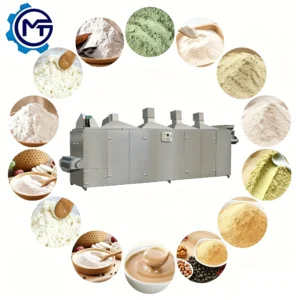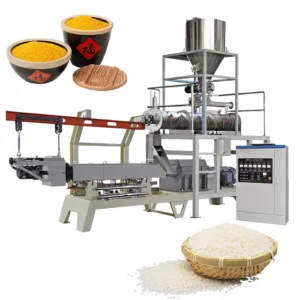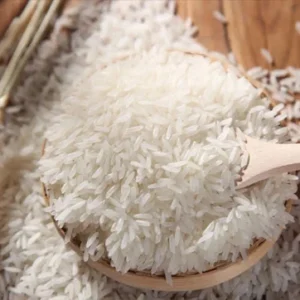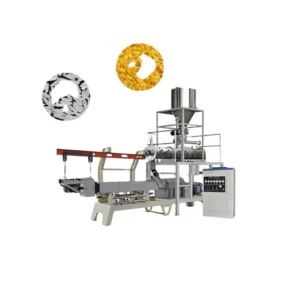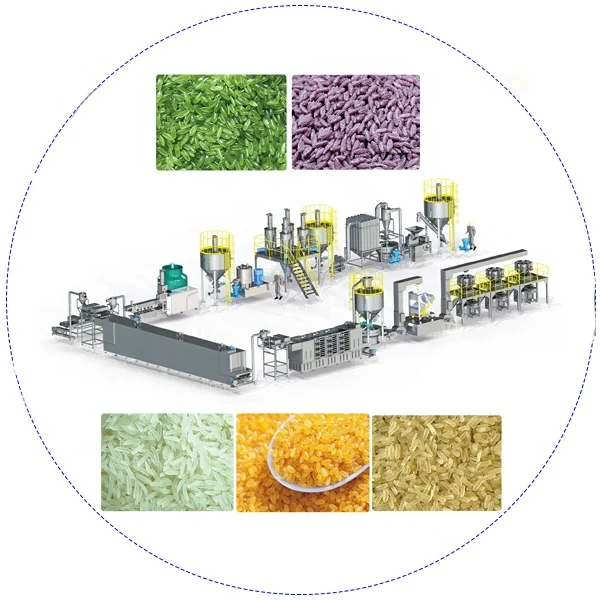


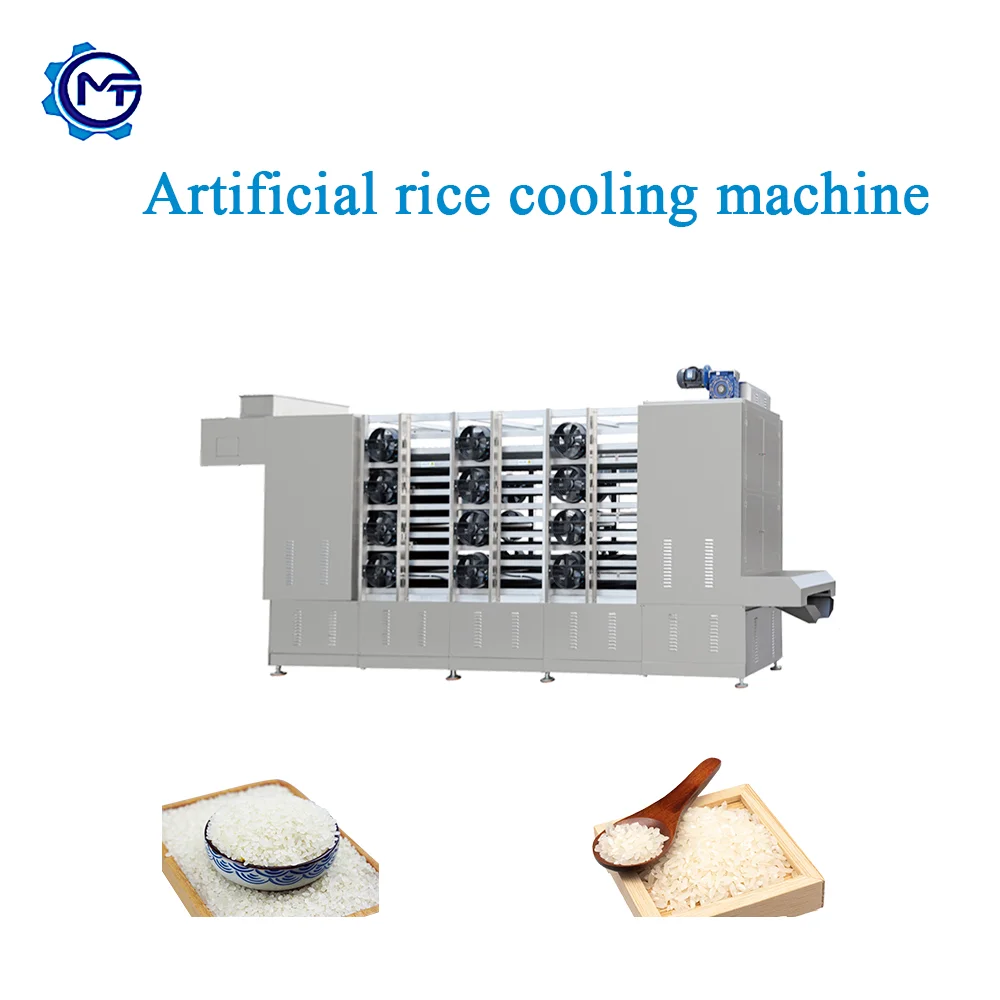


MT65, MT70, MT75, MT85, MT95 Fortified Rice Extrusion Production Line, Twin-Screw, Automated PLC Control — engineered as a complete turnkey layout where every station from mixing through extrusion, drying, roasting and packing is throughput-matched to eliminate bottlenecks across the line.
- Screw configuration and die design specified to your grain formulation and target kernel density
- Circulation drying oven with frequency-controlled mesh belt for uniform moisture reduction
- Automatic lubricating and cooling system for continuous extruder operation
In-house trial runs on your actual raw material validate output before shipment, supported by full line layout documentation and on-site commissioning.
Description
Layout-first throughput matching — Every station on the fortified rice extrusion production line is sized against your target output before a single component is fabricated, preventing the dryer or roaster from choking an otherwise capable extruder.
Technical Specifications
| Parameter | Value |
|---|---|
| Product Type | Fortified Rice Extrusion Production Line |
| Models Available | MT65 / MT70 / MT75 / MT85 / MT95 |
| Extruder Type | Twin-screw |
| Screw Feeding System | Single or double screw feeding system (selected by material) |
| Screw Material | Wear-resistant alloy (special tech manufacturing) |
| Speed Control | Frequency inverter (variable speed) |
| Lubrication System | Automatic lubricating and cooling |
| Control System | Automated control (frequency speed controlling) |
| Drying Oven Heating Source | Electric or gas |
| Drying Oven Feature | Circulation drying, mesh belt speed controlled by frequency motor |
| Production Procedure | Mixing → Extruding → Vibrating → Low-temperature drying → Cooling → High-temperature roasting → Cooling → Packing |
| Standards | CE, ISO |
Application Suitability
| Application | Material or Output |
|---|---|
| Fortified rice kernel production for nutrition programmes | Broken rice, rice bran, vitamin and mineral additives |
| Artificial rice reprocessing from grain by-products | Corn, millet, wheat, oats, buckwheat, bean formulations |
| Micro-nutrient enriched grain products for retail | Starch blends with fortified premix |
| Grain-based food manufacturing at scale | Multi-grain formulations incorporating rice and legumes |
What "300 kg/h on Fortified Rice" Leaves Out
Capacity figures are meaningless without the raw material formulation and moisture content attached to them.
When I quote a line capacity for grain-based extrusion, I always ask for the buyer’s exact recipe — the proportion of broken rice to starch binder, the mineral premix loading, and the target moisture at the die face. A recipe heavy in fine vitamin powder behaves completely differently from one dominated by coarse corn grits, and the same MT75 extruder will deliver a different throughput on each. That is why our trial workshop runs your actual blend before the production configuration is locked [NEED_CITE: material formulation impact on extruder throughput in grain processing].
How Screw Geometry Meets Grain Rheology
The twin-screw extruder on this line uses a modular screw configuration matched to the specific grain formulation you intend to run. The frequency inverter controlling screw speed allows the operator to adjust shear input in real time, compensating for batch-to-batch variation in starch content across different rice or millet sources. Getting this wrong on a fortified rice extrusion production line turnkey project means either under-gelatinised kernels that crumble in packaging or over-sheared mash that clogs the die.
Why Drying and Roasting Cannot Be an Afterthought
The low-temperature drying stage removes surface moisture while the high-temperature roasting stage develops the final kernel hardness and colour. Both ovens use a circulation airflow system with mesh belt speed controlled by a separate frequency motor, so residence time is independently adjustable. On a recent project for a Southeast Asian buyer, the premix viscosity ran higher than our standard trial material, and matching the drying curve to that specific formulation prevented kernel cracking that would have appeared only after the shipment arrived. A mismatched drying stage on a fortified rice extrusion production line turnkey installation turns a capable extruder into the most expensive bottleneck in the plant [NEED_CITE: drying curve alignment in multi-stage grain processing lines].
Reading the Numbers That Actually Matter
The screw material across the MT65 through MT95 range is a wear-resistant alloy manufactured with a proprietary process, which extends service intervals on abrasive mineral-fortified blends where standard tool steel would erode prematurely. The automatic lubricating and cooling system on the extruder gearbox maintains oil temperature during continuous shifts, a detail that separates lines designed for round-the-clock nutrition programme contracts from those built for intermittent pilot runs. Installed power ranges across the five models, so the electrical specification sheet must be confirmed against the buyer’s local grid — a 60 Hz site receiving a 50 Hz motor will see the extruder run at the wrong speed from day one. The single or double screw feeding system option addresses a real divergence in material behaviour: fine, vitamin-loaded powders bridge in single-screw feeders and require the positive displacement of a twin-screw system, while coarse broken rice flows freely through either.
The Hidden Cost of a Station-Sized Wrong
When the vibrating cooler is undersized relative to the extruder output, kernels pile up, stick together, and enter the drying oven as clumps rather than a uniform bed. The dryer then over-dries the exposed top layer while the buried layer remains damp, producing a mixed batch where some kernels shatter and others go mouldy in storage. I have seen lines where the roaster capacity was calculated from a catalogue figure rather than the buyer’s target kernel density, forcing the plant to run the extruder at half speed just to keep the downstream stations from flooding [NEED_CITE: throughput imbalance consequences in sequential food processing lines].
Why Source the Entire Line from One Supplier
Every station on the fortified rice extrusion production line — mixing, extruding, vibrating, drying, cooling, roasting, and packing — is throughput-matched under a single engineering team, so the drying oven belt width and the roaster residence chamber are calculated from the same extruder output figure rather than from separate vendor catalogues. Screw configuration and die design are recorded against the buyer’s specific raw material, and that record travels with the machine. The in-house testing workshop runs trial batches on the buyer’s actual formulation before shipment, producing a trial run report that locks the parameters before the line is crated. Pre-sales consultation covers layout design through to utility planning, and the same engineering group handles on-site commissioning, ensuring the person who sized the dryer is the person adjusting its belt speed on the factory floor.
Documentation & Verification
- Line layout and capacity calculation showing matched throughput at every station
- Trial run report produced on the buyer’s actual grain formulation before dispatch
- Screw and die configuration record matched to target kernel shape and density
- Electrical schematic with voltage and frequency confirmed against buyer’s local grid standard
- Machine specification sheet covering all five model tiers with installed and consumed power values
Installation, Commissioning & Support
- Foundation plan accounts for the extruder’s overall length up to 36 m including downstream drying and roasting ovens
- Dedicated electrical circuit sized to the installed power rating of the selected model with voltage confirmed pre-shipment
- Line ships in modular sections for container loading, reassembled on-site with alignment verified at each station junction
- First-run commissioning includes screw speed and drying belt frequency adjustment against the buyer’s live production recipe
- Operator training covers variable speed control operation, automatic lubrication monitoring, and die changeover procedure
- Wear parts list with reorder intervals for screw segments, die plates, and oven mesh belt sections
What We Need from You to Move Forward
To configure a line that holds its rated output on your actual material, please share your target grain formulation with premix ratios, the daily production volume you need to sustain, and your local voltage and frequency standard. If you have existing upstream milling or downstream packing equipment, let us know so the line interfaces are designed around those constraints. We also recommend sending a representative sample of your raw blend to our testing workshop so the trial run locks the screw and die configuration before the quotation is finalised.
Frequently Asked Questions
Q: How is line capacity verified against the buyer’s actual raw material and recipe formulation?
A: We run the buyer’s representative raw material sample through our in-house testing workshop before the production configuration is finalised. The trial run report records screw speed, barrel temperature profile, and die selection against the specific grain blend, so the capacity figure quoted is tied to that formulation rather than to a generic starch test.
Q: What layout and utility planning is included for phased installation?
A: The line layout document covers equipment placement, utility connection points, and phased installation sequencing. Electrical load distribution across the extruder, drying oven, and roaster is mapped to the buyer’s panel capacity, and the plan identifies which stations can be commissioned in stages if the plant build-out is phased.
Q: How is throughput balanced between the extruder, dryer, roaster, and packing station?
A: Every station is sized from the same target output figure during the layout stage. The drying oven mesh belt width, roaster chamber length, and packing line speed are all calculated against the extruder’s verified output on the buyer’s material, preventing any single station from forcing the rest of the line to run below capacity.
Q: What on-site commissioning and training support is provided after installation?
A: An engineer from the same team that designed the layout attends the commissioning. The visit covers extruder screw speed tuning, drying oven temperature profiling, and operator training on the frequency-controlled variable speed system. A wear parts schedule and maintenance intervals are reviewed before the team leaves site.
Q: How are voltage, frequency, and control system language confirmed before the line ships?
A: The electrical schematic and voltage confirmation document is agreed during the quotation stage, matching motors, heaters, and control panels to the buyer’s local grid standard. Control system language is specified at the same point, so the PLC interface and frequency inverter displays arrive in the operator’s working language.
Related products
-

Compact Automatic Baby Cereal Nutrition Powder Production Line with 500kg/h Capacity and PLC Control
¥9,500.00 Add to cart -

High Precision Automatic 500kg/h Baby Food Nutrition Powder Rice Extrusion Processing Line
¥9,500.00 Add to cart -

High Quality Automatic PLC Controlled 500kg/h Twin Screw Extruder Machine for Baby Rice Nutrition Powder
¥8,238.27 Add to cart -

High Productivity New Condition Safe Healthy and Nutritious Baby Food Meal Replacement Powder Production Line
¥30.00 Select options This product has multiple variants. The options may be chosen on the product page