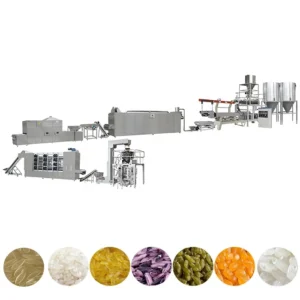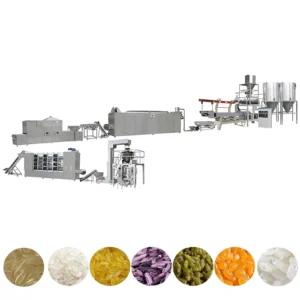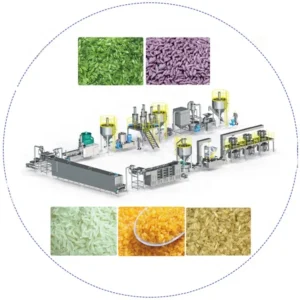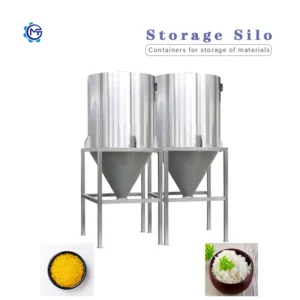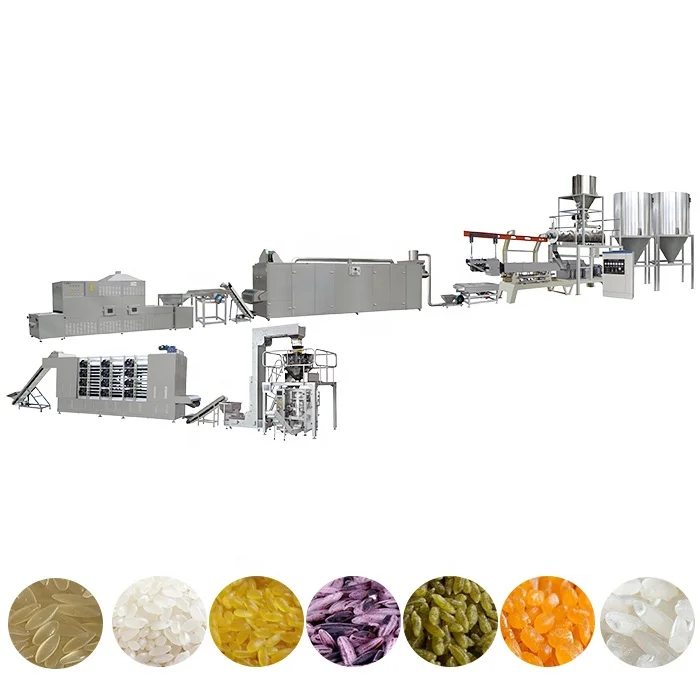
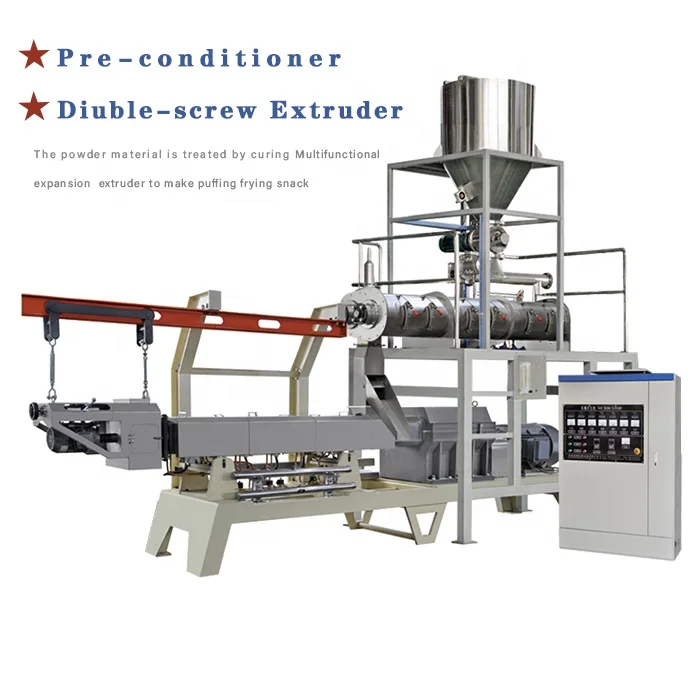
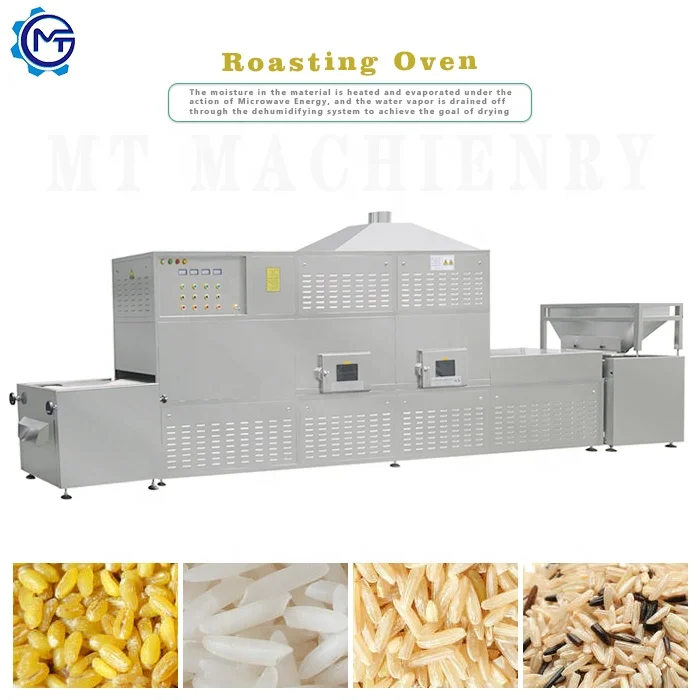
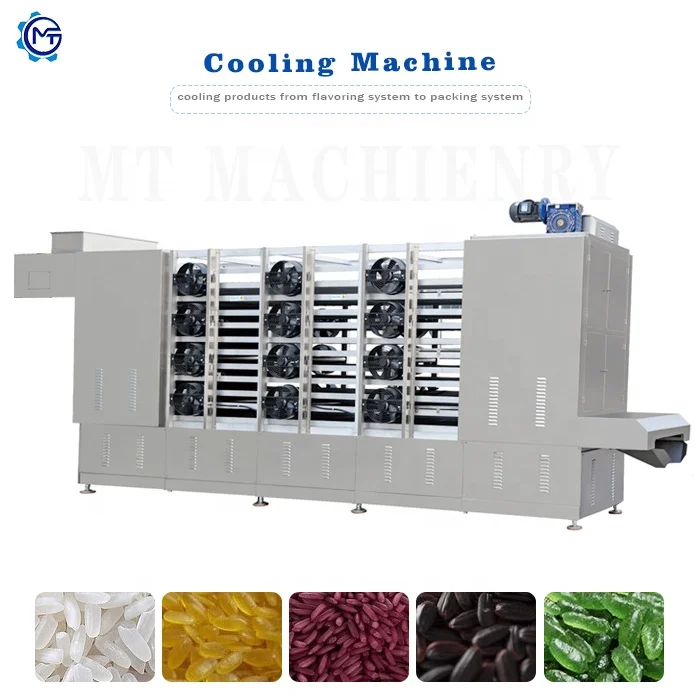
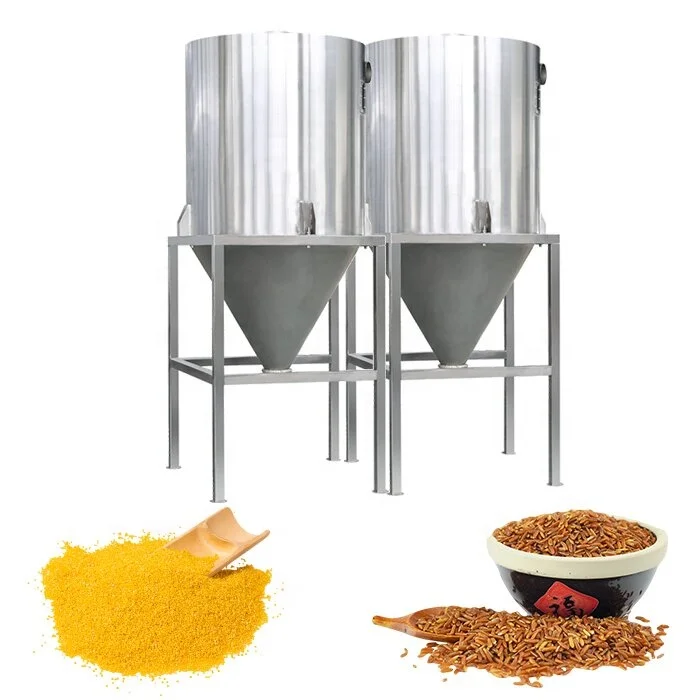
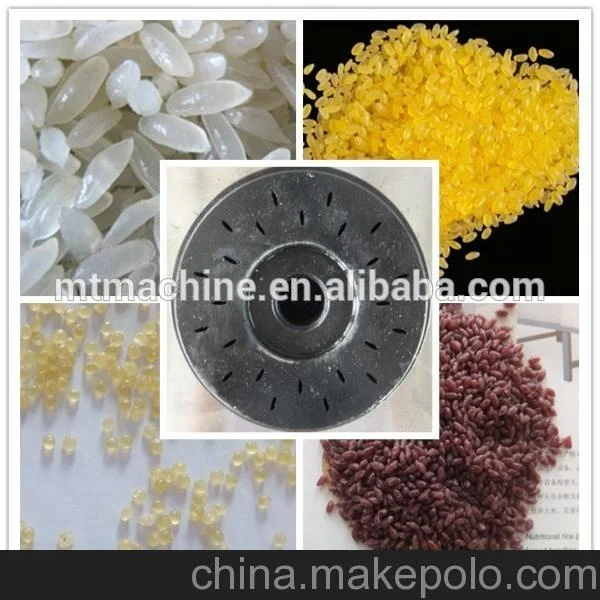
MT65 / MT70 / MT85 / MT75 / MT95 Fortified Rice Production Line, Twin-Screw Extrusion, Frequency Speed Control, Electric or Gas Drying — engineered for complete turnkey artificial rice kernel processing from mixing through extrusion, low-temperature drying, roasting and packing.
- Screw configuration and die design adapted to your specific raw material blend and target kernel density for consistent shape, texture and nutritional retention across formulations
- All stations throughput-matched under one supplier, with in-house trial runs on customer raw material validating output capacity and kernel quality before shipment
Description
Turnkey Line Integration — throughput matching from mixer through dryer to packing on every fortified rice production line turnkey project, with screw and die configuration validated on your raw material before shipment.
Technical Specifications
| Parameter | Value |
|---|---|
| Product Type | Fortified Rice Production Line |
| Models Available | MT65 / MT70 / MT85 / MT75 / MT95 |
| Screw Type | Twin-screw (single or double screw feeding system selectable) |
| Installed Power (MT65) | 85 kW |
| Power Consumption (MT65) | 60 kW |
| Output Capacity (MT65) | 80–100 kg/h (basis not stated in source — confirm raw material, moisture, formulation) |
| Overall Dimensions (MT65) | 28 × 1.2 × 2.2 m |
| Installed Power (MT70) | 120 kW |
| Power Consumption (MT70) | 85 kW |
| Output Capacity (MT70) | 100–120 kg/h (basis not stated in source — confirm raw material, moisture, formulation) |
| Overall Dimensions (MT70) | 30 × 1.5 × 2.2 m |
| Installed Power (MT85) | 235 kW |
| Power Consumption (MT85) | 165 kW |
| Output Capacity (MT85) | 200–300 kg/h (basis not stated in source — confirm raw material, moisture, formulation) |
| Overall Dimensions (MT85) | 34 × 3.5 × 4.3 m |
| Installed Power (MT75) | 180 kW |
| Power Consumption (MT75) | 135 kW |
| Output Capacity (MT75) | 300–500 kg/h (basis not stated in source — confirm raw material, moisture, formulation) |
| Overall Dimensions (MT75) | 32 × 3.5 × 4.3 m |
| Installed Power (MT95) | 260 kW |
| Power Consumption (MT95) | 195 kW |
| Output Capacity (MT95) | 800–1000 kg/h (basis not stated in source — confirm raw material, moisture, formulation) |
| Overall Dimensions (MT95) | 36 × 3.5 × 4.3 m |
| Control System | Frequency speed control with high automation |
| Lubrication | Automatic lubricating and cooling |
| Drying Oven Heating Source | Electric or gas |
| Drying Method | Circulation drying with mesh belt speed controlled by frequency motor |
| Line Stations | Mixing, Extruding, Vibrating, Low-temperature Drying, Cooling, High-temperature Roasting, Cooling, Packing |
| Raw Materials | Broken rice, rice, corn, millet, wheat, oats, buckwheat, bean, starch with vitamins and minerals as additives |
| Final Products | Artificial rice, fortified rice kernels |
| Standards | CE, ISO |
Application Suitability
| Application | Material or Output |
|---|---|
| Fortified food and nutrition programme production | Restructured rice kernels with added micro-nutrients from broken rice and rice bran |
| High-nutrition artificial rice for food aid projects | Multi-grain cereal blends including corn, millet, wheat and oats with vitamin and mineral premix |
| Rice processor value recovery | Broken rice and rice bran converted into nutritionally enhanced restructured kernels |
| Multi-grain cereal portfolio expansion | Fortified rice kernels blended into breakfast cereal and instant rice product lines |
Why Nominal Capacity Figures Fail on Real Formulations
Screw configuration and die design must match the buyer’s actual formulation viscosity and moisture content before capacity claims hold.
A fortified rice production line turnkey project quoted at a certain hourly output on a reference starch will underperform the moment the buyer introduces a high-fibre bran blend or a mineral premix that changes melt behaviour inside the barrel. I have watched lines stall at well below their nameplate rate because the screw pitch and compression ratio were set for pure rice flour, not the buyer’s actual recipe with added calcium and iron compounds. The extruder motor draws more current, the die pressure spikes, and kernel density drifts outside the target range the market expects. [NEED_CITE: starch gelatinisation behaviour under varying formulation loads]
Throughput Matching Across Every Station on the Line
A complete fortified rice production line turnkey project moves material through mixing, extruding, vibrating, low-temperature drying, cooling, high-temperature roasting, a second cooling stage, and finally packing. Each station must be sized so that the slowest link determines the actual line speed rather than a downstream bottleneck starving the extruder or an undersized dryer causing a backlog of wet kernels on the conveyor. Frequency-controlled mesh belt speed on the drying oven allows fine adjustment of residence time to match the output rate the extruder delivers on the buyer’s specific blend.
Screw Configuration as the Decisive Variable
Twin-screw extrusion in this application hinges on selecting the right element sequence — conveying, kneading, and reverse-flight sections — to control residence time and shear input for each recipe. A formulation heavy in oat bran demands a different compression profile than one built primarily on milled broken rice, and the die orifice diameter must be matched to the target kernel length and density. Every fortified rice production line turnkey project should begin with a documented screw and die configuration record based on trial runs using the buyer’s actual raw material, not a generic build copied from a previous installation. [NEED_CITE: twin-screw element arrangement and residence time distribution]
Reading the Specification Sheet for Production Reality
The installed power across the model range scales from 85 kW on the smallest unit to 260 kW on the largest, and power consumption figures sit predictably below those ceilings. These numbers matter when sizing transformer capacity and dedicated circuits at the installation site. The automatic lubricating and cooling system reduces unplanned barrel wear, particularly important when running abrasive mineral premixes that accelerate screw flight erosion. Circulation drying with mesh belt speed controlled by a frequency motor means moisture reduction can be tuned without altering the extruder throughput — a necessary adjustment when ambient humidity shifts between seasons. The overall dimensions, reaching up to 36 metres in line length, dictate workshop floor planning well before the equipment arrives.
The Hidden Cost of Skipping Pre-Shipment Validation
When a line ships without a trial run on the buyer’s formulation, the first weeks of production become an expensive development exercise. Kernels may sink instead of float during the cooking test that end users perform, or the surface texture may not accept the coating the buyer planned to apply. I have seen project timelines slip by weeks because the screw combination had to be reworked on-site, with the buyer absorbing raw material waste and idle labour costs while replacement screw elements were air-freighted from the factory. [NEED_CITE: cost impact of post-installation process rework in food extrusion]
Why Sourcing the Entire Line From One Supplier Matters
Throughput matching is only possible when the extruder, dryer, cooler, and packing station are specified together rather than assembled from separate vendors who each quote independently. The in-house testing workshop allows formulation trials before shipment, producing a documented trial run report that confirms kernel density, output rate, and surface quality on the buyer’s actual raw material. Electrical schematics and voltage confirmation are finalised during the design stage so that the control panel matches the buyer’s local power supply and preferred operating language. Pre-sales layout planning covers utility routing, phased installation scheduling, and commissioning sequences, reducing the gap between container arrival and steady production. On-site operator training and a documented wear parts list ensure that the first screw and die replacement happens on schedule rather than as an emergency.
Documentation & Verification
- Line layout drawing with station throughput calculations for your target kernel output
- Screw and die configuration record matched to your specific formulation blend
- Trial run report on your raw material confirming kernel density and moisture content
- Electrical schematic with voltage and frequency confirmed to your local power standard
- CE declaration of conformity and ISO certificate included with shipment documentation
- Operation and maintenance manual with wear parts list and replacement intervals
Installation, Commissioning & Support
- Floor plan review accounting for line lengths up to 36 metres and drying oven clearance requirements
- Dedicated circuit planning based on installed power ratings from 85 kW to 260 kW depending on model selected
- Phased assembly sequence coordinating extruder, dryer, and cooling conveyor alignment on site
- First-run parameter setting covering barrel temperature zones, screw speed, and die pressure for your formulation
- Operator training on frequency speed control interface and automatic lubrication system monitoring
- Wear parts supply plan covering screw elements, die plates, and dryer belt sections for scheduled replacement
What to Prepare Before Requesting a Quotation
Share your raw material composition, including the ratio of broken rice to multi-grain components and the type of vitamin and mineral premix you plan to add. Specify your target daily output and the kernel dimensions your market requires. Confirm your workshop voltage, frequency, and preferred control language, along with any upstream milling or downstream packing equipment already in place. If you can send a sample of your formulation for a pre-shipment trial run, the line configuration will be locked to your actual material behaviour rather than an assumed reference recipe.
Frequently Asked Questions
Q: How is output capacity verified on the buyer’s actual raw material formulation?
A: Before shipment, the buyer’s raw material blend is run through the extruder in the in-house testing workshop. The trial run report documents achieved output rate, kernel density, surface texture, and moisture content after drying. Any screw or die adjustments needed to meet the buyer’s target specification are made and recorded before the line is cleared for dispatch.
Q: How is throughput matched between the extruder, dryer, and packing station?
A: Each station is sized during the layout design stage based on the extruder output rate confirmed in the trial run. The circulation drying oven uses frequency-controlled mesh belt speed to adjust residence time, and the cooling conveyor capacity is matched to the dryer discharge rate so that no single machine creates a bottleneck.
Q: What voltage, frequency, and control language options are confirmed before production?
A: The electrical schematic and control panel configuration are finalised after the buyer confirms local voltage, frequency, and preferred interface language. This step is completed before production begins so that the frequency speed control system, motor ratings, and heater elements match the destination power supply without requiring on-site modification.
Q: Is a trial run on customer raw material performed before shipment?
A: Yes. The buyer sends a sample of the intended formulation to the testing workshop, where the line runs through the full sequence from mixing through drying. The trial run report covers output rate, kernel quality, and any screw or die configuration changes, giving the buyer documented confirmation before the equipment leaves the factory.
Q: What installation, commissioning, and operator training is included?
A: Engineers travel to the buyer’s site for equipment positioning, utility connection, and first-run commissioning. Operator training covers the control interface, screw speed and temperature adjustment, automatic lubrication system checks, and wear part replacement procedures. A maintenance schedule and spare parts list are handed over at project close.
Related products
-

High Precision Automatic 500kg/h Baby Food Nutrition Powder Rice Extrusion Processing Line
¥8,238.27 Add to cart -
Commercial Stainless Steel Baby Rice Powder Grinding Mixing Machine
¥8,238.27 Select options This product has multiple variants. The options may be chosen on the product page -
High Productivity New Condition Nutritious Baby Food Meal Replacement Powder Production Line
¥30.00 Select options This product has multiple variants. The options may be chosen on the product page -
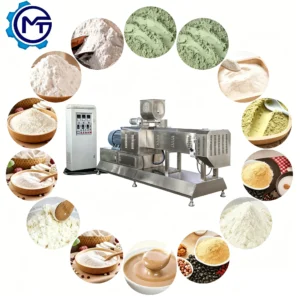
Fully Automatic Fortified Nutrition Powder Baby Food Production Line
¥8,238.27 Select options This product has multiple variants. The options may be chosen on the product page