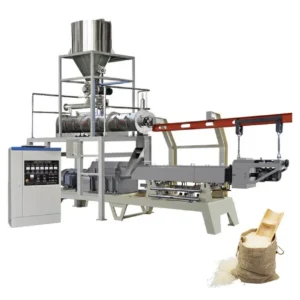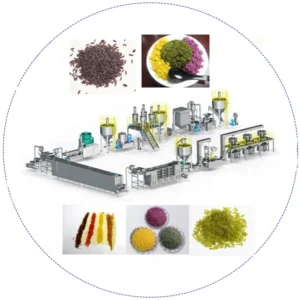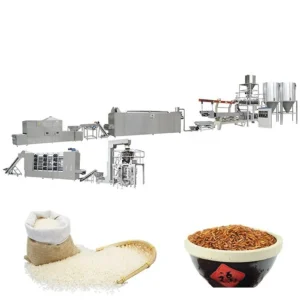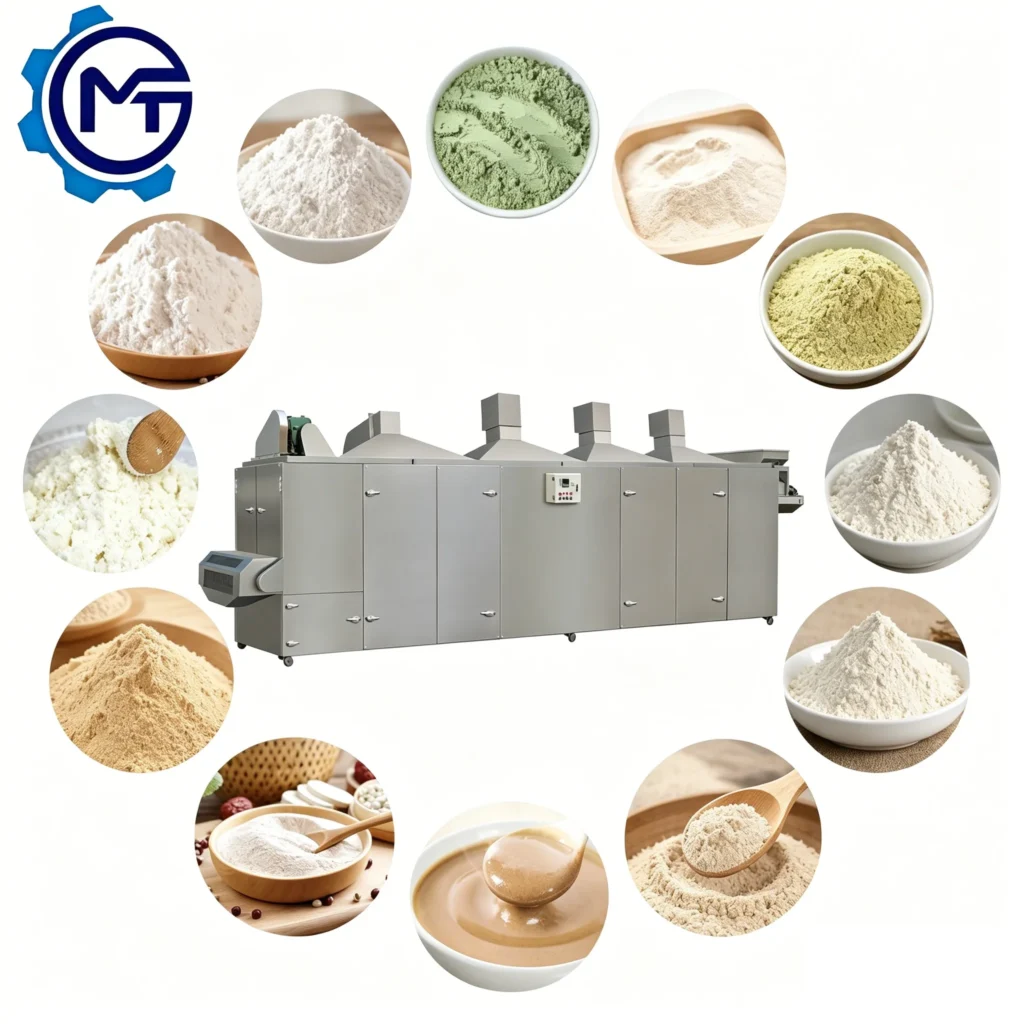
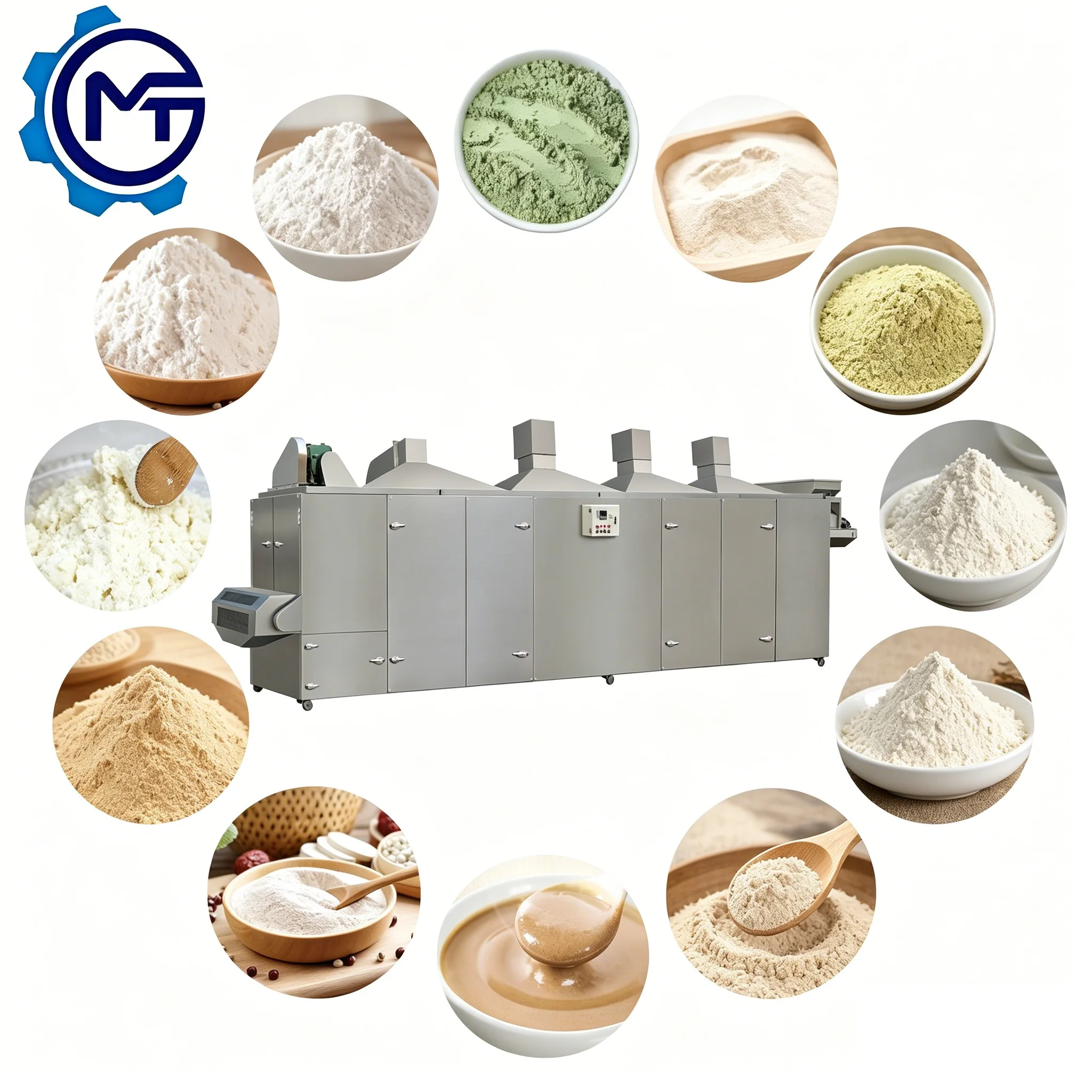
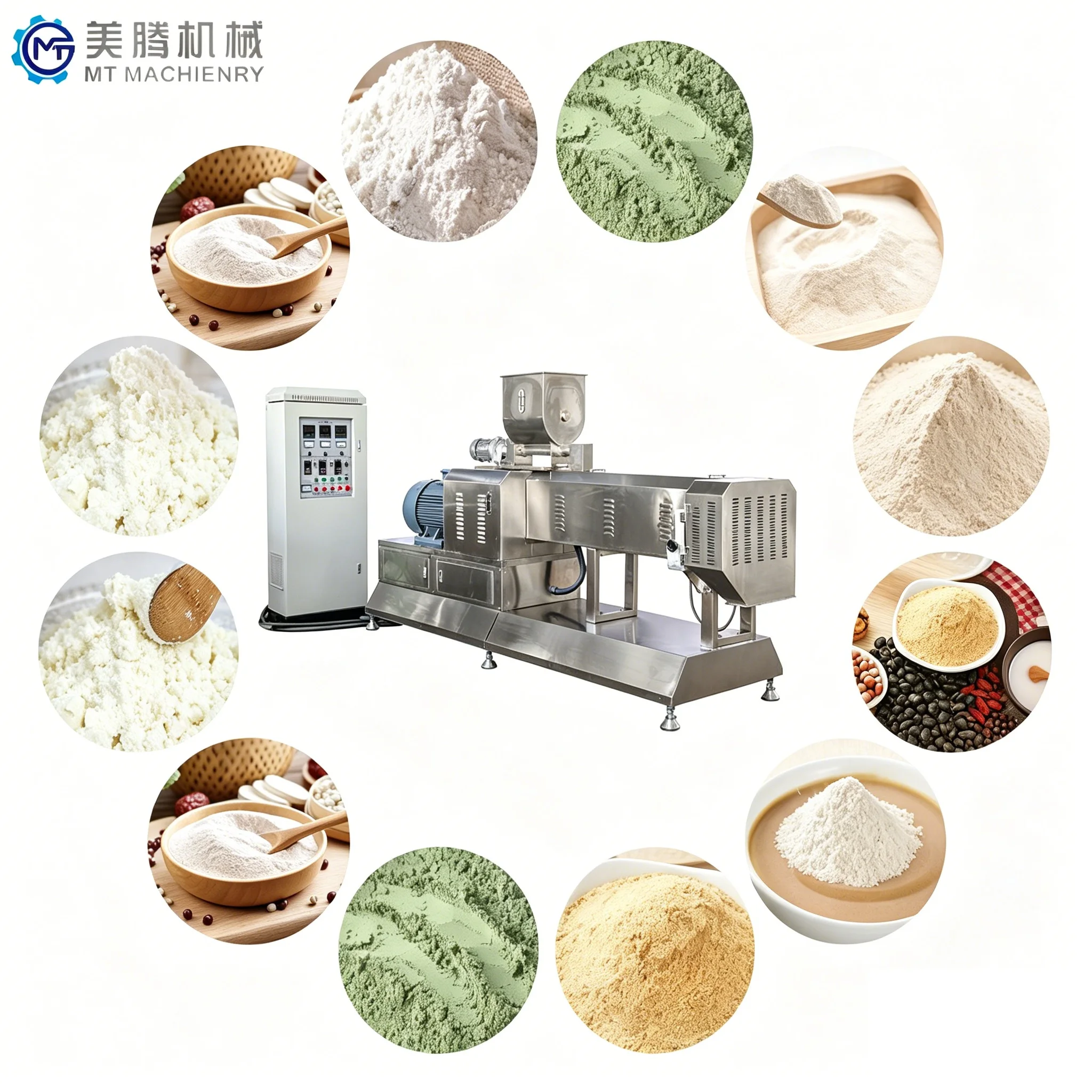

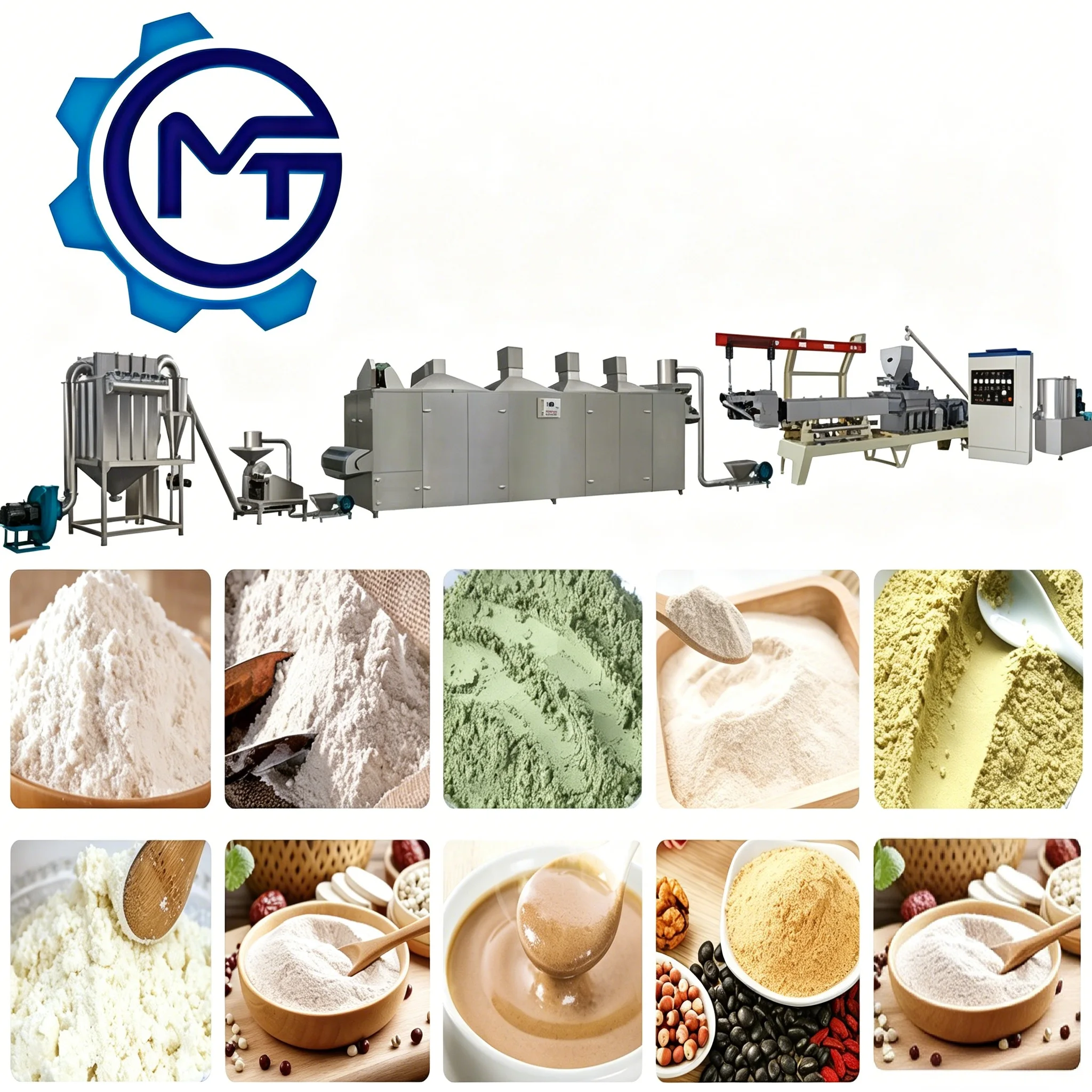


Nutrition Powder Processing Line, 200-500 kg/h, 304 Stainless Steel, PLC Control — engineered as a complete turnkey project from batching to packing. Every station is throughput-matched under one supplier, with utility planning and layout designed around your factory conditions. Heat source options include electric, gas, and steam to align with local infrastructure. Trial runs on your raw material are conducted before shipment to verify real-world output and formulation compatibility.
- Food-grade 304 stainless steel construction for hygiene and cleanability
- Full automatic operation with touch control panel for minimal operator training
- Flexible configuration for infant rice powder, multi-grain porridge, and nutrition formulations
We handle the entire line as one integrated project — from line layout and capacity calculation through on-site commissioning and operator training — so throughput is verified at every station before handover.
Description
Single Supplier, Matched Throughput — A complete nutrition powder processing line from batching to packing, engineered and tested under one roof to eliminate cross-station bottlenecks before the equipment reaches your floor.
Technical Specifications
| Parameter | Value |
|---|---|
| Product Type | Nutrition Powder Processing Line |
| Capacity | 200–500 kg/h (basis not stated in source — confirm raw material type / moisture content / formulation) |
| Construction Material | Food-Grade 304 Stainless Steel (all food-contact stations) |
| Control System | PLC with Touch Control Panel |
| Heat Source Options | Electric / Gas / Steam |
| Automation Level | Full Automatic |
| Assembly State | Complete Line (mixing, baking ovens, drying, supporting stations) |
| Warranty | 1 Year |
| After-Sales | Overseas Engineer Service Available |
Application Suitability
| Application | Material or Output |
|---|---|
| Infant rice powder production | Rice flour blended with milk powder and micronutrients |
| Multi-grain baby porridge manufacturing | Rice, corn, and bean composite formulations |
| Fortified nutrition powder lines | Cereal bases enriched with vitamins and minerals |
| Instant breakfast porridge processing | Pre-gelatinised grain mixtures requiring controlled hydration |
Why Nominal Capacity Means Nothing Without Your Raw Material
A rated output figure is only meaningful when tested on your exact formulation.
Every nutrition powder processing line turnkey project starts with a capacity claim, but what happens when your early indica rice and milk powder blend behaves differently from the standard corn grits the machine was tested on? Gelatinisation temperature shifts, moisture absorption changes, and sudden clumping at the die face can drop real throughput well below the brochure number. I once spent two full days on-site troubleshooting an infant rice powder line because the trial run had been done on the wrong grain — the screw profile and barrel temperature zones were completely mismatched to the actual recipe. Since then, I refuse to let a line ship without a documented trial on the buyer’s own raw material [NEED_CITE: raw material variability in extrusion processing].
Utility Planning Before the Foundation Is Poured
The nutrition powder processing line turnkey scope starts well before the first mixer arrives. Steam, gas, or electric heating — the choice depends on what your facility already has on tap. A line specified for electric heating in a region where industrial electricity tariffs run high will cost noticeably more per shift than one configured for steam, assuming your boiler has the spare capacity. Throughput matching between the mixing station, the extruder, the dryer, and the packing end means every unit is sized so that no single station forces the others to idle. That coordination happens on paper and in the control architecture long before steel hits concrete.
Phased Installation and the Commissioning Schedule
Rolling out a full line in phases keeps your existing production running while new capacity comes online. The PLC touch panel centralises every station — mixer timers, oven temperature zones, conveyor speeds — into one interface, so operators trained on one segment can transition to the next without learning a separate control language. Commissioning is sequenced: the mixing and batching system is validated first, then the extrusion and drying stages, and finally the flavouring and packing end. Each phase produces a sign-off report that feeds into the next [NEED_CITE: staged commissioning protocols for food processing lines].
Reading the Specs That Actually Matter on a Powder Line
Food-grade 304 stainless steel across all contact surfaces is non-negotiable for infant nutrition products, where hygiene audits will inspect every weld and seal. The choice between electric, gas, and steam heat sources determines your utility infrastructure — steam requires a boiler and condensate return, gas needs certified piping and ventilation, and electric demands dedicated high-amperage circuits. The PLC with touch control panel allows recipe storage, meaning changeover from a rice-based infant formula to a multi-grain porridge formulation involves loading a saved parameter set rather than manual recalibration of every zone. Full automatic operation covers material conveying, temperature ramping, and discharge sequencing, reducing the operator headcount needed per shift compared to semi-automatic configurations.
The Hidden Cost of Mismatched Station Capacity
When a dryer is undersized relative to the extruder output, semi-finished product piles up on the conveyor, losing moisture unevenly and creating density variation in the final powder. When the packing station cannot keep pace, the entire upstream line must throttle back, meaning you paid for capacity you cannot use. These bottlenecks rarely show up in a quotation that lists each machine independently — they surface only when the line runs as a single system under continuous production conditions. I have seen contractors discover this mismatch during the second week of commissioning, when real volumes replaced the conservative test batches [NEED_CITE: throughput balancing in multi-station food lines].
Why Procurement Through a Single Turnkey Supplier Matters
Every station on this infant rice powder line — from the batching mixer through the baking oven to the cooling conveyor — is engineered under one project scope, so throughput calculations are cross-referenced rather than estimated in isolation. The in-house testing workshop runs your specific grain and milk powder formulation before dispatch, producing a trial report that confirms gelatinisation behaviour, moisture profiles, and actual output. Screw configuration and die geometry are selected based on your raw material characteristics, not copied from a generic build. Electrical schematics and voltage specifications are confirmed for your destination market before production begins, preventing the commissioning delays that happen when a 380V machine arrives at a 415V facility.
Documentation & Verification
- Line layout and capacity calculation matched to your grain formulation and target moisture content
- Trial run report on your actual raw material conducted in the testing workshop before shipment
- Electrical schematic with voltage and frequency confirmed for your destination market
- Screw and die configuration record documenting the profile selected for your recipe
- Operation and maintenance manual covering every station from mixer to packing conveyor
- CE declaration of conformity and ISO certificate included with shipping documentation
Installation, Commissioning & Support
- Foundation and floor loading plan provided based on the complete line footprint and station weights
- Dedicated electrical circuits specified for the PLC panel and each heating zone’s amperage draw
- Overseas engineer dispatch for on-site assembly, belt alignment, and first-run parameter tuning
- Operator training on the touch control panel covering recipe loading, alarm response, and emergency stop procedures
- Wear parts list including oven belts, mixer seals, and conveyor bearings with recommended replacement intervals
- Scheduled maintenance checklist covering lubrication points, belt tension, and heating element inspection cycles
What We Need to Configure Your Line
Provide your primary grain type and any secondary ingredients such as milk powder or vitamin premix so the screw profile and barrel zones can be matched. Share your facility voltage, frequency, and available heat source so the electrical and thermal systems are built to spec. Confirm your workshop floor dimensions and ceiling height to ensure the dryer and cooling conveyor fit within your existing building envelope.
Frequently Asked Questions
Q: How is the 200–500 kg/h capacity verified before the line ships?
A: The capacity range is validated through a trial run using your actual raw material formulation in our in-house testing workshop. We document gelatinisation behaviour, moisture content at each station, and real throughput over a sustained run. The trial report accompanies the shipment, so you know exactly what output to expect when the line is commissioned on your floor.
Q: What voltage and control language are confirmed for my market?
A: Before production starts, we confirm your local voltage, frequency, and preferred control panel language. The electrical schematic is built to match those specifications, and the PLC touch interface is configured accordingly. This prevents the delays that occur when equipment arrives with incompatible power ratings or an interface the operators cannot read.
Q: How is throughput balanced across every station on the line?
A: Each station — mixer, extruder, dryer, cooler, and packing end — is sized based on the same capacity calculation rather than selected from independent catalogues. This means the dryer handles the full extruder output without backlog, and the packing station keeps pace without forcing upstream equipment to idle. The PLC monitors flow rates across all segments simultaneously.
Q: What does on-site commissioning and operator training include?
A: An overseas engineer supervises assembly, connects utilities, runs the first production batch, and fine-tunes PLC parameters against your actual output quality. Operators receive hands-on training on recipe changeover, alarm troubleshooting, and daily maintenance routines. A commissioning sign-off document is completed before the engineer departs.
Q: Which spare and wear parts are supplied with the initial delivery?
A: The shipment includes a wear parts list specific to your line configuration, covering items such as mixer seals, oven conveyor belts, and extruder screw tips. First-replacement components are packed alongside the main equipment so production can continue without waiting for international shipping when routine wear occurs.
Related products
-
New Automatic Nutritional Powder Making Machine for Baby Food Production Line
¥20.00 Select options This product has multiple variants. The options may be chosen on the product page -

High Precision Automatic 500kg/h Baby Food Nutrition Powder Rice Extrusion Processing Line
¥8,238.27 Add to cart -
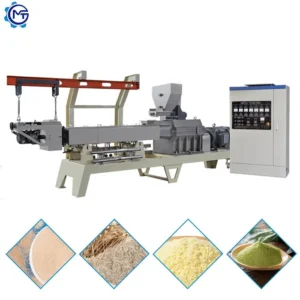
High Productivity New Condition Safe Healthy and Nutritious Baby Food Meal Replacement Powder Production Line
¥30.00 Select options This product has multiple variants. The options may be chosen on the product page -
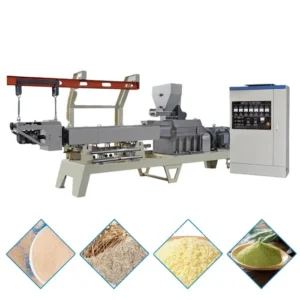
Industrial Instant Corn Paste Production Line Nutritional Powder Processing Equipment Meal Replacement Nutrition Powder Machine
¥65.00 Select options This product has multiple variants. The options may be chosen on the product page