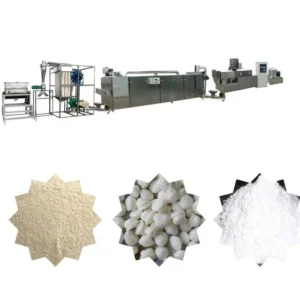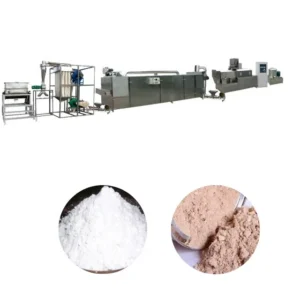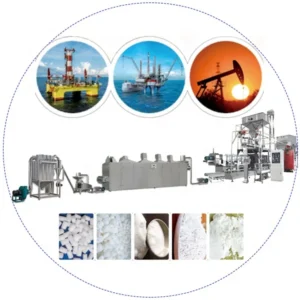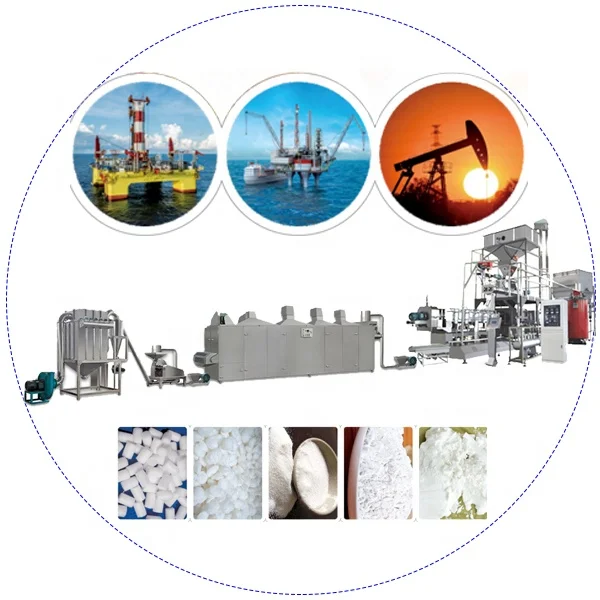


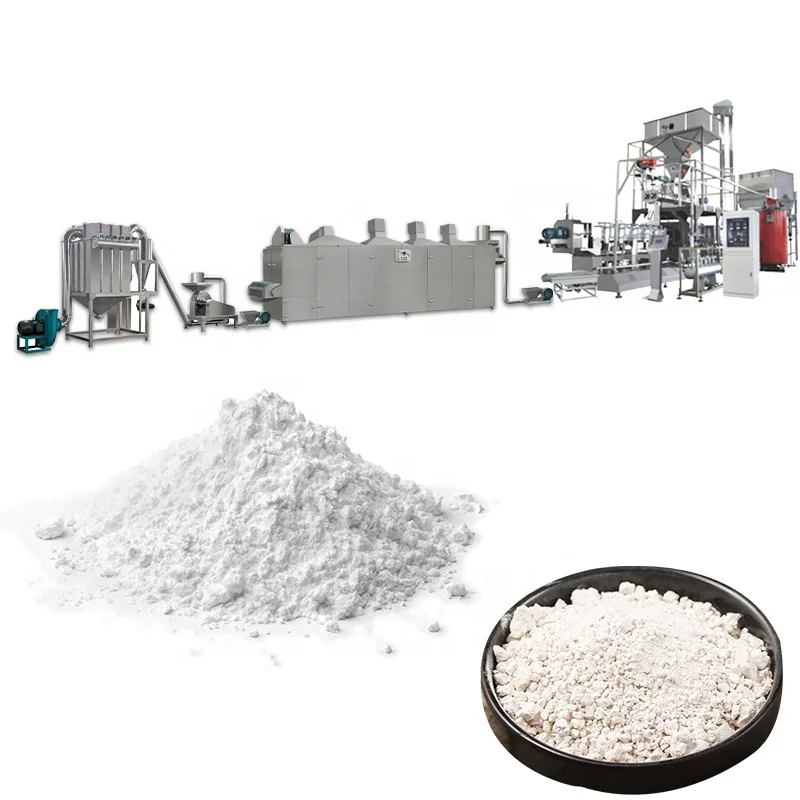
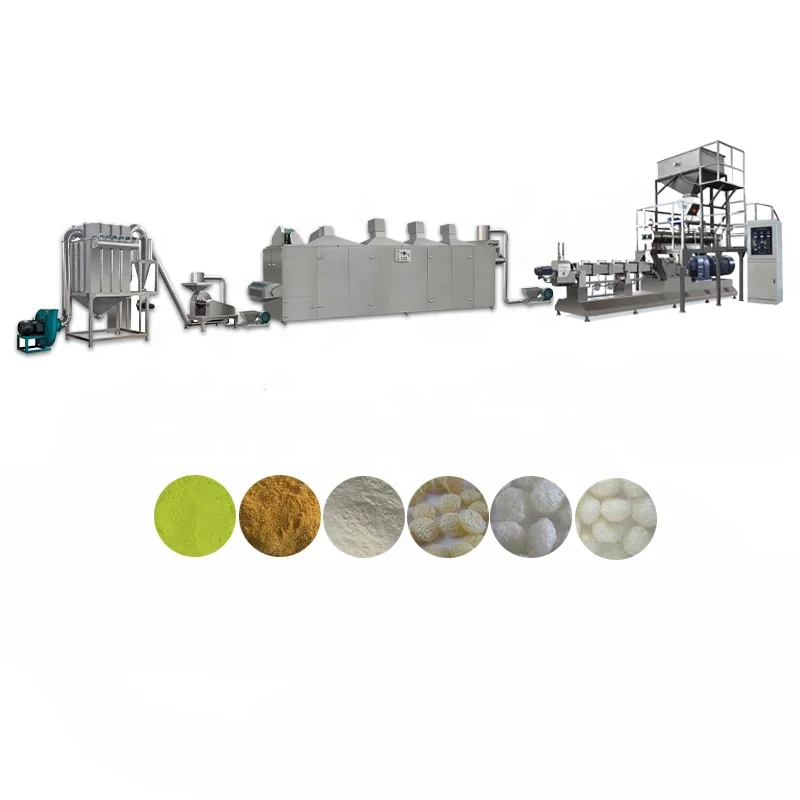

MT70 / MT85 / MT100 Modified Starch Processing Line, Twin-Screw Extruder, PLC Control — complete turnkey layout from batching to packing under a single supplier.
- Barrel temperature profile and screw configuration specified to your starch source and target modification degree, ensuring consistent gelatinisation and viscosity across batches.
- Line capacity, electrical schematic, and screw/die record validated through in-house trial runs on your raw material before shipment.
Description
Integrated Line Throughput Matching — every station from batching through extrusion to drying is sized so the modified starch processing line turnkey runs at steady state without bottlenecks, backed by a pre-shipment trial on the buyer’s actual starch formulation.
Technical Specifications
| Parameter | Value |
|---|---|
| Model | MT70 / MT85 / MT100 |
| Product Type | Modified Starch Processing Line (Twin-Screw Extrusion) |
| Extruder Configuration | Twin-screw, co-rotating |
| Screw Material | 38CrMoAl nitrided steel |
| Screw Diameter | 70 mm |
| Screw Length | 1520 mm |
| Barrel Temperature Control | Integrated closed-loop cooling |
| MT70 Installed Power | 160 kW |
| MT70 Power Consumption | 120 kW |
| MT70 Output | 150–200 kg/h (basis not stated in source — confirm raw material / moisture content) |
| MT70 Dimensions (L × W × H) | 41,000 × 1,500 × 2,200 mm |
| MT85 Installed Power | 190 kW |
| MT85 Power Consumption | 140 kW |
| MT85 Output | 300–400 kg/h (basis not stated in source — confirm raw material / moisture content) |
| MT85 Dimensions (L × W × H) | 43,000 × 1,500 × 3,200 mm |
| MT100 Installed Power | 210 kW |
| MT100 Power Consumption | 150 kW |
| MT100 Output | 300–500 kg/h (basis not stated in source — confirm raw material / moisture content) |
| MT100 Dimensions (L × W × H) | 45,000 × 1,500 × 3,500 mm |
| Voltage | 380V 50Hz Three Phase (configurable to 415V/60Hz, 220V/60Hz, etc.) |
| Control System | PLC and MCC available |
| Dryer Fuel Options | Gas, diesel, electricity, or steam |
| Contact Materials | Food-grade stainless steel (conveyors with PVC belt where applicable) |
| Standards | CE, ISO |
Application Suitability
| Application | Material or Output |
|---|---|
| Pregelatinised starch for instant food mixes | Corn starch, wheat starch, cassava starch blends |
| Modified starch for textile sizing | Corn and wheat flour at specified amylose ratios |
| Cross-linked starch for paper coating | Raw starch with reagent pre-treatment before extrusion |
| Nutritional carrier starch for infant formula base | Food-grade corn or wheat starch at controlled moisture |
| Industrial adhesive starch for corrugated board | Blended grain starches with viscosity target specifications |
What the Nameplate Output Ignores on a Modified Starch Processing Line Turnkey
Your real starch blend and its moisture content determine what the line actually produces, not the number on the quotation sheet.
I spent half a month re-tuning a pregelatinised starch line in Southeast Asia because the customer added cassava flour to a formulation we had only tested with pure corn starch. The gelatinisation temperature shifted, the expansion profile collapsed, and the screw combination we had specified could not hold the target viscosity. A modified starch processing line turnkey that has never run your exact raw material is a line running on assumptions [NEED_CITE: starch gelatinisation behaviour differences between corn, wheat, and cassava sources].
Throughput Sizing Across Every Station
On a starch extrusion project, the extruder barrel sets the pace, but the dryer and cooler decide whether that pace is sustainable. An MT85 pushing 300–400 kg/h (basis to be confirmed against your starch source) into an undersized dryer means the material leaves with residual moisture, leading to caking in storage. Our layout calculation matches each station to the next so material flow stays continuous, and we document the balance in a line capacity sheet before production starts.
Screw and Die Configuration Stated Upfront
The twin-screw assembly in a modified starch processing line turnkey is not a fixed part — it is a variable that changes with every formulation. Barrel section heating zones, screw element pitch, and die aperture all shift when you move from a low-amylose corn starch to a high-amylose variant or introduce a reagent for cross-linking. We record the screw and die configuration as a standalone document tied to your raw material test, so replacements match the production baseline [NEED_CITE: twin-screw element configuration impact on starch modification degree].
Reading the Power and Dimension Data
The installed power figures — 160 kW for MT70, 190 kW for MT85, 210 kW for MT100 — represent total connected load across the main drive, heating rings, and auxiliary motors. Actual power consumption runs lower, between 120 kW and 150 kW depending on model, because the heating zones cycle on and off once barrel temperature reaches steady state. The line lengths, ranging from 41 to 45 metres, account for the full footprint from mixer through extruder, dryer, cooler, and packing station. Buyers planning floor layout should add clearance on both sides of the extruder barrel for screw extraction during maintenance, which typically requires at least two metres of open space.
The Cost of Skipping the Raw Material Trial
A line configured on generic starch data will reach the site and produce material that fails the buyer’s specification — wrong gelatinisation degree, off-target viscosity, or poor cold-water solubility. Rework then means shipping new screw elements, adjusting die geometry remotely, and scheduling a second visit from the commissioning engineer. All of this adds time and cost after the line is already on the factory floor, when changes are most expensive [NEED_CITE: cost of post-installation extruder reconfiguration versus pre-shipment trial runs].
Why Source the Full Line from One Supplier
The layout and capacity calculation is produced in-house, not outsourced to a third-party engineering firm, so throughput assumptions stay consistent from inquiry to installation. The in-house testing workshop runs trial batches on the buyer’s actual starch blend before the extruder leaves the factory, catching formulation mismatches early. Voltage and frequency are confirmed against the buyer’s site power supply — whether 380V/50Hz or 415V/60Hz — before the electrical cabinet is wired. Screw and die configurations are documented per formulation, making wear part reorders straightforward. Dryer fuel selection aligns with site utility availability, so a plant with steam infrastructure does not end up with an electric dryer by default.
Documentation & Verification
- Line layout and throughput balance calculation for your starch type and target modification
- Screw and die configuration record tied to your raw material trial batch
- Trial run report on your actual starch formulation before shipment
- Electrical schematic with voltage and frequency matched to your site supply
- Factory acceptance test record with barrel temperature and motor load data
- CE declaration of conformity and ISO certificate for customs and regulatory filing
Installation, Commissioning & Support
- Floor plan marking based on line length from 41 to 45 metres with utility drop points
- Dedicated circuit sizing for installed power up to 210 kW at confirmed voltage and phase
- Extruder barrel assembly on-site with alignment check and cooling circuit pressure test
- First-run parameter setting using trial report data as the starting baseline
- Operator training covering PLC interface, barrel zone tuning, and screw extraction procedure
- Wear parts list including screw elements, die plates, and heating rings with reorder codes
What to Include with Your Inquiry
Share the specific starch source or blend you intend to process, the target modification type (pregelatinisation, cross-linking, oxidation), and the daily output volume your downstream packing or storage can handle. Confirm your site voltage, frequency, and available dryer fuel so the modified starch processing line turnkey arrives ready for connection. If you already operate upstream batching or downstream packing equipment, provide interface dimensions and control protocol details so we match the integration points in the layout.
Frequently Asked Questions
Q: How is line capacity verified against my specific starch raw material and moisture content?
A: We run a trial batch in the in-house testing workshop using your actual starch blend at your stated moisture level. The trial report documents gelatinisation degree, expansion ratio, and output rate under controlled conditions. The line configuration is then locked to those results before production begins, so capacity figures are tied to your material, not a generic starch assumption.
Q: How do you match throughput between the extruder, dryer, and downstream packing to avoid bottlenecks?
A: Each station is sized using a line layout and capacity calculation that accounts for material residence time in the dryer, cooling conveyor length, and packing speed. The throughput balance document shows matched flow rates across every station, preventing situations where the extruder runs faster than the dryer can handle or the cooler cannot discharge in time.
Q: What does the phased installation and commissioning schedule look like for a complete turnkey line?
A: Installation follows a sequence from foundation and utility preparation through mechanical assembly, electrical connection, no-load testing, and loaded production trials. The commissioning engineer uses the pre-shipment trial report as the parameter baseline, shortening the on-site tuning period. Operator training runs alongside the loaded trials so your team is running the line independently before the engineer departs.
Q: Can the line voltage, frequency, and control language be configured for my country’s electrical standard?
A: Yes. The electrical specification is confirmed during the quotation stage and documented in the schematic before the cabinet is wired. Available options include 380V/50Hz, 415V/60Hz, 220V/60Hz, and other site-specific standards. The PLC interface language is set to match your operator team’s requirement.
Q: What operator training is included, and how are wear parts such as screws and dies supplied after commissioning?
A: Training covers daily operation, barrel temperature adjustment, screw extraction for cleaning, and die plate replacement. A wear parts list with part numbers for screw elements, dies, and heating rings is included in the documentation package, allowing direct reorder without reverse-engineering dimensions.
Related products
-
Automatic Modified Tapioca Starch Production Line 304 Stainless Steel Flour Mill and Bakery Machine
¥30.00 Select options This product has multiple variants. The options may be chosen on the product page -
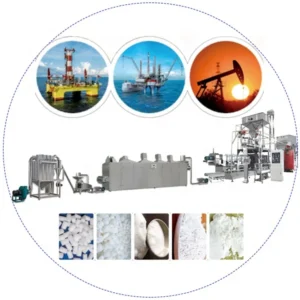
Pre-gelatinized Starch Production Line – Modified Starch Integrated Puffing Equipment
¥65.00 Select options This product has multiple variants. The options may be chosen on the product page -
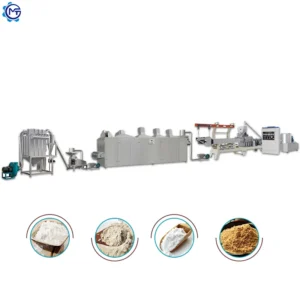
Automatic Deep Processing Machine – Food Grade Modified & Pregelatinized Starch Manufacturing Line
¥65.00 Select options This product has multiple variants. The options may be chosen on the product page -
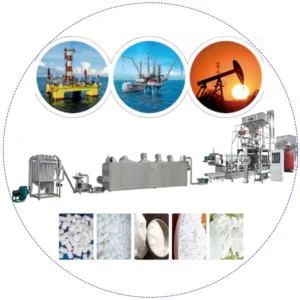
Cassava & Pregelatinized Corn Starch Extrusion Equipment – CE Certified Industrial Twin-Screw Modified Starch Line
¥65.00 Select options This product has multiple variants. The options may be chosen on the product page