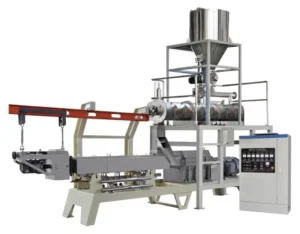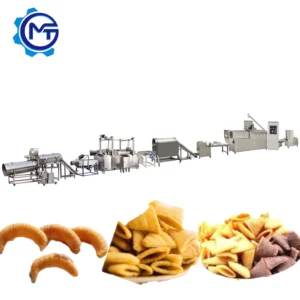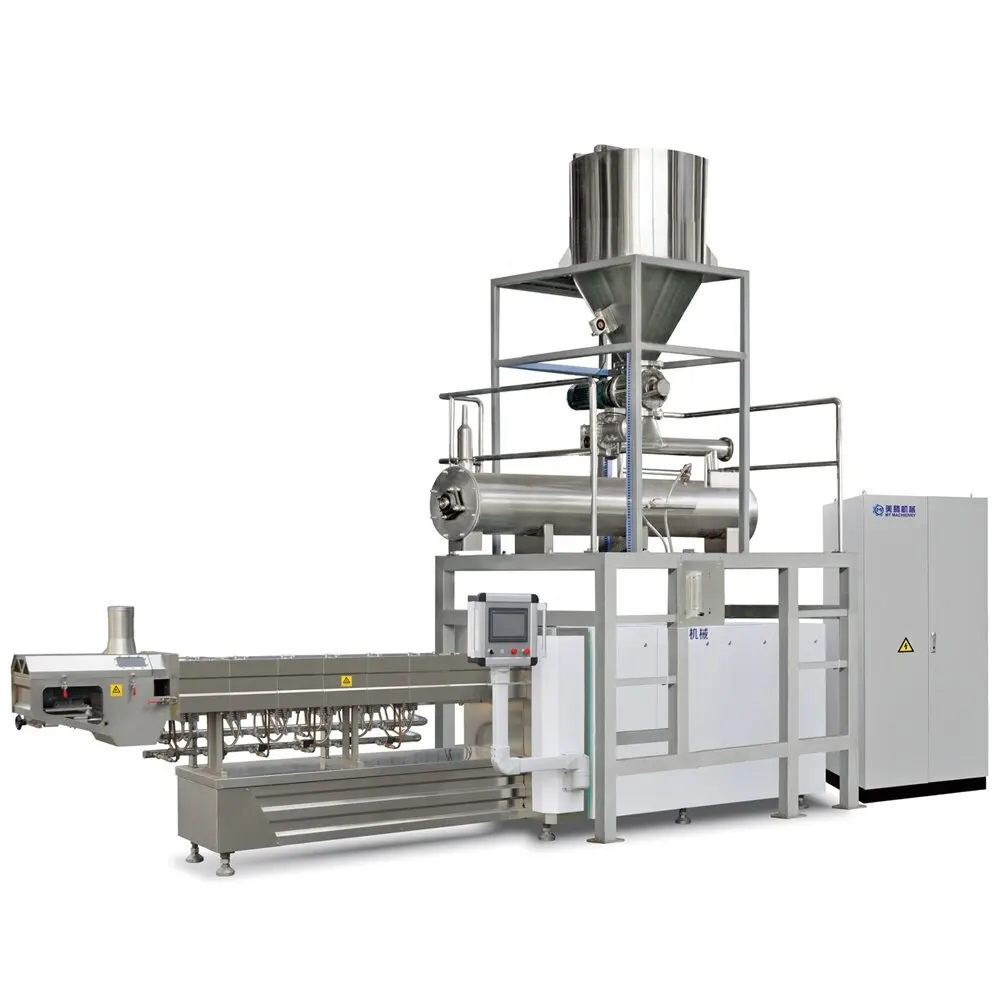

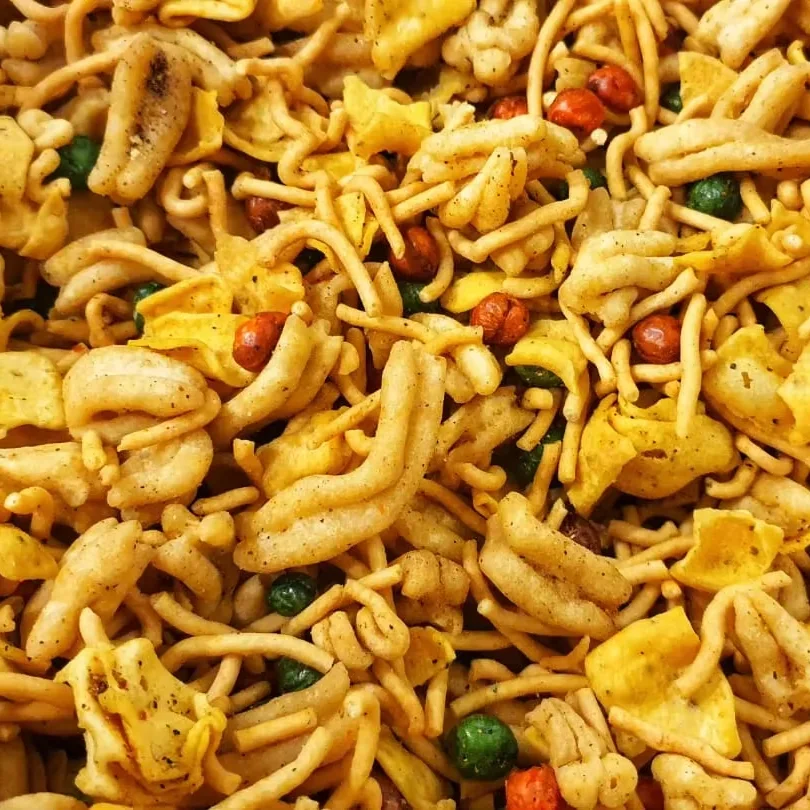


- In-house testing workshop validates your formulation before shipment, ensuring the line performs as quoted on your actual raw material.
Description
Throughput Matched Across Stations — Every extruder, fryer, and coating drum on this line is sized against your actual recipe and moisture content, not catalog theory.
Technical Specifications
| Parameter | Value |
|---|---|
| Product Type | Twin Screw Food Extrusion and Frying Line |
| Output Capacity | 150–200 kg/h (basis not stated in source — confirm raw material, moisture, product format) |
| Screw Configuration | Twin-screw, geometry matched to target expansion and oil uptake |
| Control Architecture | Automatic integrated panel; available with PLC or MCC control |
| Contact Material | Food-grade stainless steel across wet and hot zones |
| Line Stations | Automatic feeding, extruding, molding, conveying, frying, de-oiling, seasoning, packing (station list subject to line scope confirmation) |
| Electrical Supply | Voltage and frequency configurable to destination market |
| Standards | CE and ISO certified (per manufacturer documentation) |
Application Suitability
| Application | Material or Output |
|---|---|
| Nimko fried pasta snacks | Wheat flour, semolina, or chickpea-flour blends at controlled moisture |
| Kurkure-style extruded curls | Corn meal, rice flour, and spice-inclusive formulations |
| Fried pasta pellets and shapes | Durum semolina sheets cut into ribbons, shells, or tubes |
| Puffed and crispy snack variants | Blends incorporating lentil, chickpea, or multi-grain bases |
Why "150 kg/h" Means Nothing Until the Fryer Catches Up
A line rated for 150–200 kg/h at the extruder will bottleneck the moment frying or de-oiling capacity falls short on your specific dough viscosity and oil temperature.
I spent years on installation crews across Latin America, and the most common commissioning delay was never the extruder itself — it was the mismatch downstream. One pasta snack project ran fine on wheat flour at the factory trial, then the buyer switched to a chickpea blend on-site. Expansion dropped, oil absorption spiked, and the fryer could not keep pace because the product density had changed entirely. It took a week of die changes and barrel temperature profiling to recover stable throughput [NEED_CITE: impact of raw material substitution on extrusion throughput and downstream matching]. When you evaluate a fried pasta snacks & Kurkure production line turnkey, the real question is whether every station was calculated together or just stacked from separate catalogs.
Station-by-Station Throughput Alignment
A fried pasta snacks & Kurkure production line turnkey only performs when feeding rate, screw speed, fryer belt length, and seasoning drum diameter are calculated as one system. If the extruder pushes more mass than the fryer can dehydrate in the required residence time, product exits undercooked or over-oiled. We match each station to the others based on your target moisture reduction and final oil content, not on nominal motor ratings alone.
Screw and Die Specification Against Your Recipe
The twin-screw configuration is selected after reviewing your raw material particle size, starch content, and target expansion ratio. Die geometry controls the cross-section and wall thickness of every piece, which in turn determines how much oil the product absorbs during frying. A pasta shell and a Kurkure curl demand entirely different screw element sequences and die apertures. We document the chosen configuration so you can reorder wear parts and replicate results across production runs [NEED_CITE: twin-screw element sequencing for varying starch and protein matrices].
Reading the Specs That Actually Matter
Screw type directly determines what formulations the line can handle. Twin-screw extruders tolerate higher moisture and wider ingredient ranges than single-screw designs, which matters when you introduce chickpea or lentil flour into a traditional wheat base. The control system choice between PLC and MCC affects how operators manage barrel temperature zones and feeder speed — PLC allows recipe storage and batch recall, while MCC provides simpler relay-based logic for markets where maintenance technicians are more familiar with contactor panels. Food-grade stainless steel across contact zones is non-negotiable for export snack markets, and the voltage and frequency configuration must match your facility before the control cabinet is wired, not after it arrives on-site.
The Cost of Ignoring Configuration Details
When extruder output exceeds fryer capacity, operators compensate by raising oil temperature, which degrades oil quality and shortens replacement intervals. When die selection is generic rather than matched to the product, texture and bulk density drift outside the range that packaging equipment can handle — leading to broken pieces, inconsistent fill weights, and rejected bags [NEED_CITE: effects of die mismatch on bulk density and packing accuracy]. These problems do not appear during a factory trial on standard corn meal; they surface weeks into production on the buyer’s actual recipe.
What This Line Delivers Beyond Hardware
Every station from batching through packing is specified under one supplier, so throughput is calculated across the full chain rather than assembled from independent vendors. Screw configuration and die design are documented against your raw material and target product density before production begins. The testing workshop runs trial production on your actual formulation before the line ships, catching formulation issues at the factory instead of during commissioning. Twin-screw expertise covers pasta snacks, Kurkure curls, and multi-grain variants from the same platform. Pre-sales consultation continues through layout design, phased installation, operator training, and wear part scheduling.
Documentation & Verification
- Line layout drawing with throughput calculation showing matched station capacity
- Trial run report on your raw material conducted in the testing workshop before shipment
- Screw and die configuration record matched to your target product density and expansion
- Electrical schematic confirming voltage, frequency, and control language before cabinet wiring
- Factory test record documenting steady-state run on agreed formulation
- CE declaration of conformity and ISO certificate included with shipping documentation
Installation, Commissioning & Support
- Foundation plan provided with load points for extruder, fryer, and conveyor frames
- Dedicated power circuit sized for total connected load across all line motors and heating zones
- Modular station design allows phased delivery, extrusion first with frying and packing following
- First-run parameter logging on your formulation during on-site commissioning
- Operator training covering screw speed, barrel temperature, and fryer belt speed adjustment
- Wear parts list covering screws, dies, and fryer belt links with reorder lead times
What We Need to Size Your Line
Provide your primary raw materials and any planned formulation variants, along with target moisture content at each stage. Share your facility voltage and frequency, available floor area, and ceiling height so we can plan conveyor runs and exhaust ducting. If you operate existing upstream mixers or downstream packing machines, send their throughput data so we can confirm interface points. Tell us whether you need trial production on your formulation before shipment.
Frequently Asked Questions
Q: How is line throughput verified on my raw material before shipment?
A: We run trial production in our testing workshop using your exact formulation, measuring output rate, expansion ratio, and oil uptake at steady state. The trial run report documents screw speed, barrel temperatures, and die selection so you can compare results against your target specification before the line leaves the factory.
Q: How do you ensure extrusion output matches frying and coating capacity without bottlenecks?
A: Each station is calculated against the others based on your formulation’s moisture reduction curve and target oil content. The capacity calculation document shows mass flow at every transfer point, so you can see that the fryer belt length and seasoning drum volume are proportioned to the extruder’s confirmed output on your recipe.
Q: What does the turnkey installation schedule and operator training look like on site?
A: Phased installation begins with extruder and conveyor placement, followed by fryer and seasoning stations. Commissioning includes first-run parameter logging on your formulation. Operators receive hands-on training covering screw configuration changes, temperature zone adjustment, and fryer belt speed tuning during supervised production runs.
Q: Can the line be phased — extrusion first, frying and packing later — without redesign?
A: Yes. Station interfaces are defined during layout planning, so conveyor endpoints and electrical junction boxes are positioned for future connection. Adding the frying and packing modules later requires only mechanical coupling and circuit extension, not control system reprogramming or structural modification.
Q: What utility planning is required for the full line footprint?
A: We provide a utility schedule listing electrical load per station, exhaust airflow for fryer ventilation, and compressed air points for pneumatic gates. Steam requirements are specified if your fryer uses indirect heating. This allows your facility contractor to prepare circuits and ductwork before equipment arrives.
Related products
-
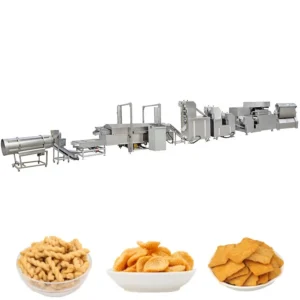
Frying Crispy 3D Corn Bugles Pellets Fried Chips Snacks Food Machine Production Line Bugles Making Extruder
¥100.00 Select options This product has multiple variants. The options may be chosen on the product page -
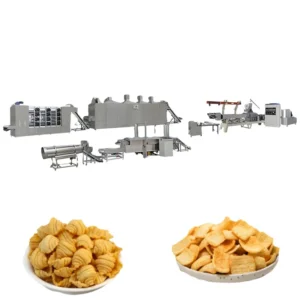
Automatic Fried Crispy Bugles Snacks Food Making Machines Wheat Flour Sala Food Extruder
¥100.00 Select options This product has multiple variants. The options may be chosen on the product page -
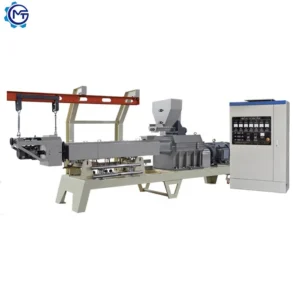
Industrial Fully Automatic Stainless Steel Deep Fried Line – Snack Factory Miscellaneous Grains Special Processing Equipment
¥65.00 Select options This product has multiple variants. The options may be chosen on the product page -

New Automatic Bugles Puff Snack Production Line Price Corn Chips Making Machine Fried Maize Machine High Productivity Large
¥8,570.00 Select options This product has multiple variants. The options may be chosen on the product page