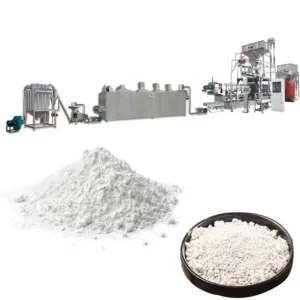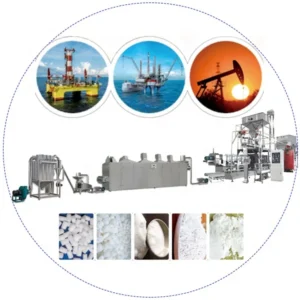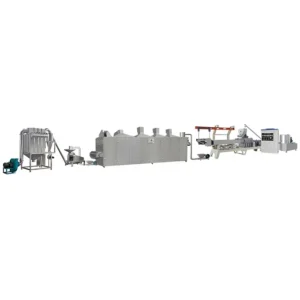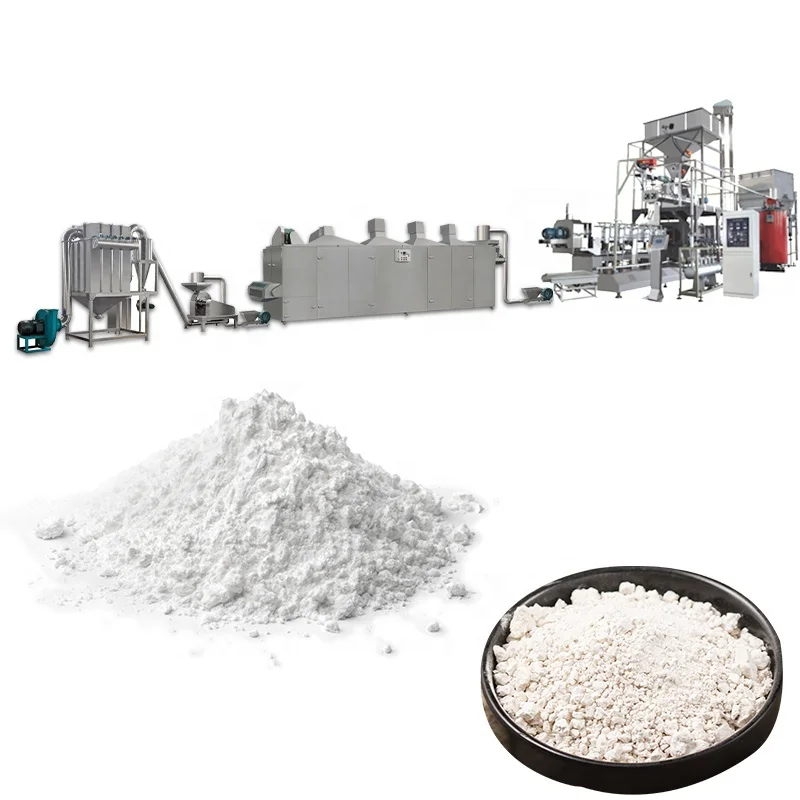


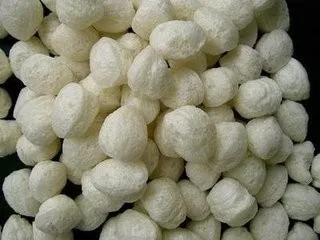

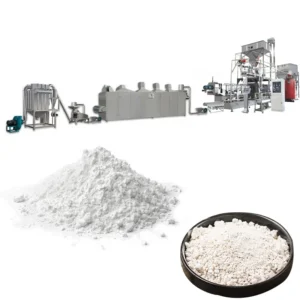
Modified Starch Processing Line, Twin Screw, PLC Control — engineered for continuous gelatinisation of wheat, corn and potato starch with matched throughput across mixing, extrusion, drying, conditioning and grinding stations.
- Screw configuration and die design matched to your raw material and target gelatinisation degree, with energy options in electricity, gas, diesel or steam to fit site utilities.
- In-house testing workshop runs your exact feedstock before shipment, delivering a trial report that documents actual output and product quality against specification.
Description
Single-Supplier Integration — Throughput balanced from mixer to grinder so every station on the modified starch processing line keeps pace with your twin-screw extruder output.
Technical Specifications
| Parameter | Value |
|---|---|
| Product Type | Modified Starch Processing Line |
| Screw Type | Twin screw |
| Capacity Range | 80-500 kg/h (basis not stated in source — confirm raw material type, moisture content and product specification) |
| Frame Material | Stainless steel 201 |
| Contact Material | Food grade stainless steel 304 |
| Energy Source Options | Electricity / Gas / Diesel / Steam |
| Rated Power (Electricity) | approx. 100 kW |
| Rated Power (Gas / Diesel) | approx. 50-60 kW |
| Motor Brand | Siemens (made in China) or China top brand |
| Inverter | Delixi or Delta |
| Control System | PLC (source value — verify against manufacturer catalog) |
| Mixer Motor | 4.0 kW |
| Mixer Output | 3.0-4.0 kg/time |
| Mixer Dimensions | 1.2 × 0.9 × 1.4 m |
| Screw Conveyor Motor | 1.1 kW |
| Screw Conveyor Output | 0-150 kg/h |
| Screw Conveyor Dimensions | 2.5 × 0.6 × 2.3 m |
| Voltage & Frequency | Three phases 380V/50Hz, Single phase 220V/50Hz (customizable to local voltage) |
| Certification | CE |
| Warranty | One year with lifetime technical guidance support |
Application Suitability
| Application | Material or Output |
|---|---|
| Oilfield drilling fluid additive | Pregelatinized starch from corn or wheat flour meeting API viscosity and stability requirements |
| Food-grade modified starch | Potato, corn or wheat starch for sauces, bakery and convenience food formulations |
| Industrial starch conversion | Denatured or pregelatinized starch for paper sizing, textile warp and adhesive applications |
Why Nominal Capacity Numbers Mislead Starch Buyers
A capacity figure without raw material context tells you almost nothing about real-world output on your feedstock.
In starch extrusion, the gap between a brochure number and what the line actually holds on your specific flour or starch is often substantial. I once set up a pregelatinized starch line where the trial on corn starch ran fine, but the buyer switched to a cassava blend on site for drilling fluid grade product — screw speed and steam injection had to be completely reworked, adding weeks to commissioning [NEED_CITE: raw material variability in starch gelatinisation processes]. A modified starch processing line turnkey project only delivers when the supplier tests your actual feedstock before the equipment leaves the factory.
Screw Geometry as the Control Point
The twin-screw configuration in this modified starch processing line is not a fixed build. Screw elements and die geometry are specified against your raw material — whether wheat flour, corn starch or potato starch — and your target gelatinisation degree. The intermeshing screw profile controls residence time, shear rate and thermal history, which together determine the viscosity profile and cold-water solubility of the finished starch.
Matching Every Station to the Extruder
A line where the dryer cannot keep pace with the extruder forces you to throttle output, and a grinder undersized for your target particle distribution creates a backlog that backs up through the entire process. This modified starch processing line turnkey configuration balances mixer batch output, screw conveyor feed rate, extruder throughput, dryer evaporation capacity and grinder throughput so no single station constrains the others [NEED_CITE: throughput balancing in continuous food processing lines].
Reading the Specification Sheet for Starch Extrusion
The twin-screw design gives you adjustable shear and residence time across the barrel zones, which matters when shifting between pregelatinized starch for drilling mud and modified starch for food applications — the former demands consistent cold-water viscosity while the latter targets specific gelatinisation degrees. Food-grade stainless steel 304 on all contact surfaces prevents iron contamination that can discolour light starch products and violate food safety standards. The PLC control system, once verified against your requirements, allows repeatable batch-to-batch parameter storage, so an operator can recall the exact screw speed, barrel temperature profile and moisture addition rate that produced acceptable product during the trial run. Multiple energy source options — electricity, gas, diesel or steam — let you match the line to site utility infrastructure rather than forcing costly electrical upgrades.
The Cost of Underspecifying a Starch Line
When a buyer sources the extruder from one vendor and the dryer from another, mismatched throughput is almost guaranteed — the dryer either chokes the line or runs half-empty, wasting energy. I have seen lines where the grinder was selected for a coarser particle size than the buyer needed, forcing a second pass that halved effective output and raised product temperature enough to degrade starch functionality [NEED_CITE: thermal degradation thresholds in modified starch grinding].
What Differentiates This Procurement Path
Screw configuration and die design are documented specifically for your raw material and target product specification, not copied from a generic build. The in-house testing workshop runs your actual feedstock through the complete line before shipment, producing a trial run report that records output, gelatinisation degree and process parameters. Every station — mixer, extruder, dryer, conditioning unit and grinder — comes from one supplier, so throughput is matched rather than assembled from mismatched vendors. Electrical schematics confirm voltage, frequency and control language against your site conditions before production begins, avoiding commissioning delays [NEED_CITE: common causes of delayed commissioning in overseas equipment installations]. CE certification is maintained across the line, supporting customs clearance and regulatory compliance in your destination market.
Documentation & Verification
- Line layout and capacity calculation matched to your starch type and target moisture content
- Screw and die configuration record for your specific gelatinisation degree target
- Trial run report on your raw material documenting actual output and product quality
- Electrical schematic with voltage and frequency confirmation before production starts
- Operation and maintenance manual covering every station from mixer to grinder
Installation, Commissioning & Support
- Site utility assessment confirms three-phase 380V/50Hz or custom voltage before dispatch
- Foundation plan accounts for mixer, extruder and dryer footprint and vibration isolation
- Twin-screw extruder barrel alignment verified on site after transport and reassembly
- Dryer energy source configured to your available fuel — electricity, gas, diesel or steam
- PLC parameter recall set up for your specific starch recipe during commissioning
- Wear parts list including screw elements, dies and grinder screens provided at handover
Preparing Your Inquiry
To scope this modified starch processing line turnkey project accurately, share your raw material type and typical moisture content, your target product specification such as API-grade viscosity or food-grade gelatinisation degree, and your required hourly output on that feedstock. Include your site voltage and frequency, the control language your operators need, and whether you can send a sample batch for an in-house trial run before shipment.
Frequently Asked Questions
Q: How is line capacity verified on my specific starch raw material?
A: We run your actual feedstock — corn, wheat or potato starch at your stated moisture — through the complete line in our testing workshop before shipment. The trial run report documents real output, product quality and process parameters, so you know what the line produces on your material, not on a generic benchmark.
Q: What screw configuration suits pregelatinized starch versus other modified types?
A: Pregelatinized starch for drilling fluid requires screw elements and die geometry that maximise gelatinisation while maintaining consistent cold-water viscosity. Other modified starches may need different shear profiles. We specify screw configuration based on your target product and validate it during the in-house trial run on your raw material.
Q: How do you confirm voltage, frequency and control language before shipping?
A: Electrical schematics are reviewed and confirmed with you before production begins. This covers phase configuration, voltage and frequency to match your site supply, plus PLC interface language so your operators can run the line from day one without translation delays.
Q: What does the in-house trial run include?
A: Your raw material is processed through every station — mixing, extrusion, drying, conditioning and grinding — under documented parameters. You receive a trial run report recording actual throughput, product specification results and the process settings that achieved them, giving you a baseline before the line arrives at your facility.
Q: How do you prevent dryer or grinder bottlenecks?
A: Every station is sourced from us as a single supplier, so mixer batch output, extruder throughput, dryer evaporation rate and grinder capacity are calculated together during line design. This ensures no individual station constrains the process, and the capacity calculation document shows the matched figures for your specific product.
Related products
-
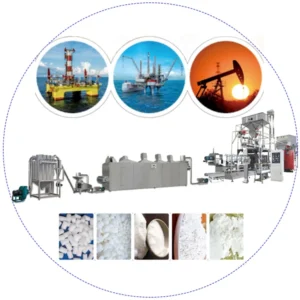
New Automatic Modified Starch Puffing Production Line – Long Service Life Pregelatinized Starch Equipment
¥65.00 Select options This product has multiple variants. The options may be chosen on the product page -
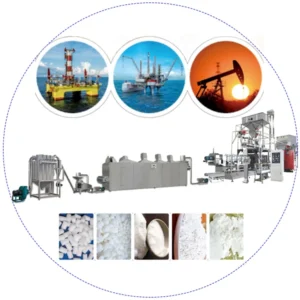
Modified and Pregelatinized Starch Processing Equipment – Pregelatinized Corn Cassava Modified Starch Puffing Machine
¥65.00 Select options This product has multiple variants. The options may be chosen on the product page -
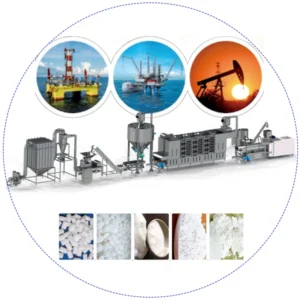
Big Capacity Modified Starch Production Line Making Machine
¥30.00 Select options This product has multiple variants. The options may be chosen on the product page -
API Standard Pregelatinized Starch Line for Oilfield Drilling Fluid. High Yield Modified Starch Equipment
¥65.00 Select options This product has multiple variants. The options may be chosen on the product page