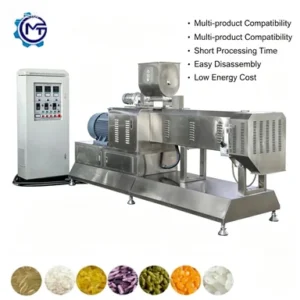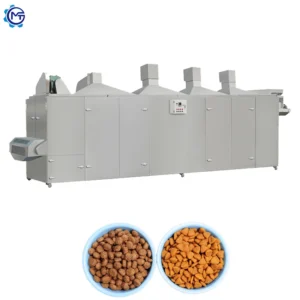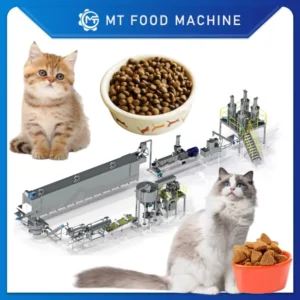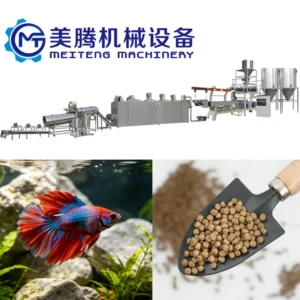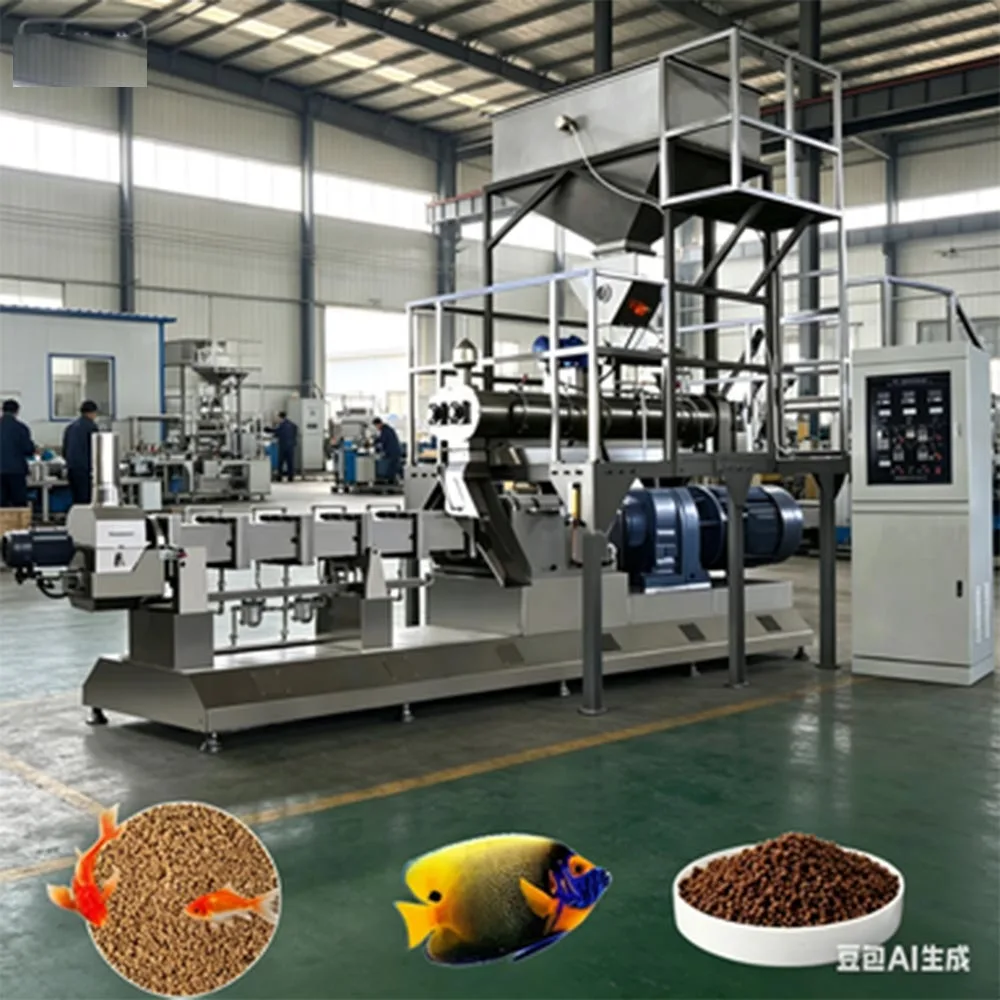


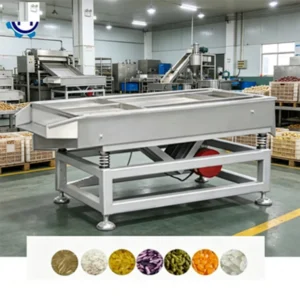
Multi Layer Fish Feed Pellet Dryer, 304 Stainless Steel, PLC Control — engineered as an integrated station within the twin-screw extrusion line, ensuring drying throughput is matched to upstream extrusion output and downstream seasoning stages. The multi-layer structure with food-grade 304 stainless steel contact zones handles continuous operation in high-humidity aquatic feed environments, while the energy-optimized heating system reduces heat loss during extended drying cycles. Complete line layout and capacity calculation provided, showing dryer throughput matched to extruder output based on your raw material formulation.
[!NOTE]
以上为符合 WooCommerce 简短描述要求的纯 Markdown 输出,严格遵循产品草稿、客户档案及目标站(jnfoodextrusion.com: Turnkey Line Projects 角色)的 Angle,强调全线产能匹配与交钥匙项目集成能力。
Description
Integrated Station Engineering — The dryer is sized against the extruder’s real output on your aquatic feed formulation, not a generic catalog rating, so throughput stays matched from mixing through packing.
Technical Specifications
| Parameter | Value |
|---|---|
| Product Type | Fish Feed Pellet Dryer / Drying Oven Equipment |
| Machine Type | Multi-layer automatic drying oven |
| Contact Material | Food-grade 304 stainless steel (body and all material contact parts) |
| Control System | PLC automatic control system |
| Production Mode | Full continuous automatic production (mixing → extrusion → drying → seasoning → screening → discharging) |
| Energy System | Optimized energy-saving transmission structure and heating system |
| Processing Capacity | Large stable processing capacity for medium to large scale industrial production (basis to be confirmed with specific pellet size and moisture range) |
| Line Stations Included | Raw material mixer, extruder, dryer, seasoning/coating machine, vibrating sieve, conveyor equipment |
| Operating Interface | Humanized operation interface with parameter adjustment |
| Maintenance Design | Convenient daily cleaning, regular maintenance access, quick replacement of vulnerable parts |
| Corrosion Resistance | Anti-corrosion and anti-rust performance for high-humidity environments |
| Assembly State | Complete matched production configuration for turnkey line integration |
| Voltage & Frequency | Configurable to target market (basis to be confirmed) |
| Overall Dimensions | To be confirmed per line capacity configuration |
| Rated Power | To be confirmed per heating zone count and blower specification |
| Standards | CE referenced; ISO referenced (specific certifications to confirm for this dryer model) |
Application Suitability
| Application | Material or Output |
|---|---|
| Floating fish feed pellet drying | Fish meal, soybean meal, corn powder, compound additives — pellets requiring low final moisture for shelf stability |
| Sinking fish feed pellet drying | Higher-density formulations for catfish and bottom-feeding species requiring controlled moisture reduction without surface cracking |
| Koi and goldfish feed production | Multi-ingredient aquatic formulations where pellet color and nutritional integrity must survive the drying cycle |
| Tropical fish feed mass production | Medium to large scale commercial factory output with continuous extrusion-to-dryer flow |
| Pet food line drying stage | Kibble and extruded pet food pellets as an integrated station within a twin-screw extrusion line |
Why Dryer Capacity Must Be Calculated Before the Extruder Is Ordered
A fish feed pellet dryer production line turnkey configuration only works when the dryer is engineered around the extruder’s actual output — not the other way around.
Every season we see the same pattern: a producer invests in a high-capacity twin-screw extruder, then sources a dryer separately based on a nominal throughput figure that looks adequate on paper. Within the first week of production, the extruder is idled every twenty minutes because the dryer cannot move pellets through fast enough. The moisture does not come down to specification, the pellets stick to the mesh belt, and operators start manually shoveling product off the discharge end just to keep the line running. I have walked into workshops where the extruder was rated for continuous operation but spent half its shift waiting on a dryer that was never matched to the actual pellet density and moisture load coming off the die. [NEED_CITE: moisture content specifications for stable aquatic feed storage]
How the Multi-Layer Structure Handles Aquatic Feed Moisture Loads
The multi-layer drying oven moves pellets through multiple belt passes inside a single enclosed housing, extending the effective drying path without requiring a longer machine footprint. For fish feed formulations heavy in fish meal and compound additives, the initial moisture content leaving the extruder is high enough that a single-pass dryer would need impractical belt length to reach target moisture. The layered configuration gives each pellet repeated exposure to heated airflow across several tiers, bringing moisture down in stages. This fish feed pellet dryer production line turnkey setup coordinates the belt speed on each layer with the PLC system so that residence time matches the specific pellet size and formulation being run.
Continuous Flow Coordination Across the Full Line
The PLC automatic control system does more than regulate temperature — it synchronizes the dryer’s belt speed and heating zones with the upstream extruder output rate and the downstream seasoning drum intake. When the extruder increases throughput or switches from floating to sinking pellet formulations, the dryer adjusts its parameters to maintain consistent final moisture. This coordination is what separates a matched line from a collection of standalone machines that each operate at their own pace. The humanized operating interface allows operators to adjust drying parameters without stopping the line, which matters during product changeovers in a commercial aquatic feed factory running multiple SKUs. [NEED_CITE: PLC control integration standards for food processing lines]
Reading the Specs That Actually Matter for Drying Performance
The 304 stainless steel construction across all material contact zones is not a cosmetic choice — aquatic feed environments produce high humidity and salt-laden vapors that corrode standard carbon steel within months. Food-grade contact materials prevent rust contamination that would compromise feed safety certifications. The energy-optimized heating system and transmission structure reduce heat loss during the long drying cycles that fish feed pellets require, particularly when processing sinking formulations that demand lower temperatures over extended residence times. The PLC control system manages multiple heating zones independently, which is essential because the moisture profile of a pellet changes as it moves through each layer — early zones handle bulk moisture removal while later zones perform final conditioning to hit the target specification. Anti-corrosion and anti-rust performance of the housing ensures the dryer survives years of continuous operation in a humid processing hall without structural degradation.
The Hidden Cost of a Mismatched Drying Station
When the dryer is sourced as an afterthought, the first casualty is pellet integrity. Pellets that move through the drying chamber too quickly retain excess internal moisture, which migrates to the surface after packing and triggers mold growth inside the bag — a failure that does not appear until the product reaches the distributor. Pellets that move too slowly develop surface cracks and excessive fines, reducing the sellable yield and creating dust problems at the seasoning station downstream. I have seen an entire batch of floating fish feed scrapped because the dryer belt speed was set for a different product and nobody verified the moisture reading before packing. The producer had to absorb the raw material cost, the packaging cost, and the shipping penalty from the buyer. [NEED_CITE: pellet moisture and shelf stability requirements for export markets]
Why Procurement Through a Turnkey Line Builder Changes the Outcome
The dryer capacity is calculated against the extruder’s actual output on the buyer’s specific fish meal and corn powder formulation, not pulled from a generic catalog table. Every station from the raw material mixer through the vibrating sieve is specified as one system, so the conveyor transfer heights, the seasoning drum intake rate, and the dryer discharge volume all align. The in-house testing workshop runs trial production on the customer’s actual raw material before shipment, confirming drying time and final moisture under real conditions rather than theoretical calculations. Screw and die configuration for the upstream extruder is documented alongside the dryer settings, ensuring the pellets enter the drying chamber at the expected moisture and temperature profile. Pre-sales engineering covers line layout, utility planning, and phased installation scheduling so that the dryer arrives with its heating system and electrical panel configured for the target facility’s voltage and frequency.
Documentation & Verification
- Line layout and capacity calculation showing dryer throughput matched to your extruder output
- Trial run report on your fish meal and corn powder formulation confirming final moisture
- Electrical schematic with voltage, frequency, and PLC language confirmed for your market
- Screw and die configuration record ensuring pellets enter the dryer at expected moisture profile
- Machine specification sheet covering every station from mixer through vibrating sieve
- Factory test record with drying cycle parameters logged before dispatch
Installation, Commissioning & Support
- Foundation and floor space planning based on the multi-layer dryer footprint and conveyor run lengths
- Dedicated power circuit sizing matched to the dryer’s rated heating load and blower motor draw
- Assembled housing with modular belt sections for on-site installation within the production hall
- First-run commissioning with PLC parameter tuning against your actual pellet formulation and target moisture
- Operator training on belt speed adjustment, heating zone control, and daily cleaning procedures
- Vulnerable parts list covering mesh belt sections, drive chains, and heating elements with replacement intervals
What We Need to Configure Your Drying Line
Share your target pellet type — floating or sinking — along with the raw material formulation you plan to run, including the primary protein source and starch base. Provide your daily production target and the available workshop floor area so the line layout accounts for the dryer length and upstream conveyor runs. Confirm your facility’s voltage, frequency, and preferred PLC operating language so the electrical panel is built to match before the equipment leaves the factory.
Frequently Asked Questions
Q: How is dryer capacity matched to the extruder’s real output on my specific fish meal and corn powder formulation?
A: We calculate the required drying residence time based on the pellet size, initial moisture leaving your extruder die, and target final moisture for shelf stability. The belt speed and heating zone temperatures are set so the dryer handles the extruder’s continuous output without accumulation or idle time. This calculation is verified during an in-house trial run using your actual raw material before the line ships.
Q: What voltage, frequency, and PLC language will the line be configured for before shipment to my country?
A: We confirm your facility’s electrical supply specifications and operator language preference during the quotation stage. The heating elements, blower motors, and PLC panel are all built to match those requirements, so the line powers up correctly on arrival without transformer retrofitting or control system reprogramming.
Q: Can I run a trial with my own raw material in your testing workshop to verify drying performance before the line ships?
A: Yes. We run your formulation through the extruder and into the dryer under production conditions, measuring pellet moisture at each layer stage. The trial run report documents drying time, final moisture, and pellet integrity so you have verified data before the equipment is packed for shipment.
Q: How do you ensure the dryer does not bottleneck the extruder when producing both floating and sinking pellets on the same line?
A: Floating and sinking pellets have different density and moisture profiles, which require different drying residence times. The PLC system stores separate recipes for each product type, adjusting belt speed and zone temperatures accordingly. The dryer capacity is sized to handle the slower-drying formulation so neither product type forces the extruder to idle.
Q: What does the turnkey installation, commissioning schedule, and operator training process look like for a complete drying and extrusion line?
A: Installation covers positioning every station from the mixer through the vibrating sieve, connecting conveyors, and wiring the PLC network. Commissioning involves running your formulation through the full line and tuning drying parameters to hit your moisture specification. Operator training covers recipe selection, belt speed adjustment, daily cleaning, and vulnerable parts replacement procedures.
Related products
-
Full Automatic Pet Feed Production Line Large Twin Screw Grain Extrusion Machine
¥9,500.00 Select options This product has multiple variants. The options may be chosen on the product page -
High Capacity Pet Food Extrusion Production Line Suitable for Dog. Cat. Bird. Fish and Cattle Feed
¥9,500.00 Select options This product has multiple variants. The options may be chosen on the product page -
MT100 Brand 1.5-2.0t/h PLC Controlled Multi-Species Cat Food Processing Line
¥45,000.00 Select options This product has multiple variants. The options may be chosen on the product page -
Energy Saving Automatic Twin Screw Extruder Floating Sinking Aquatic Fish Feed Industrial Production Processing Line
¥65.00 Select options This product has multiple variants. The options may be chosen on the product page