

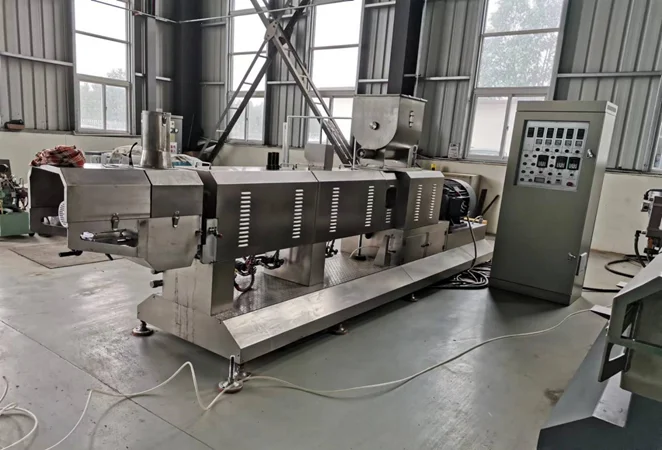
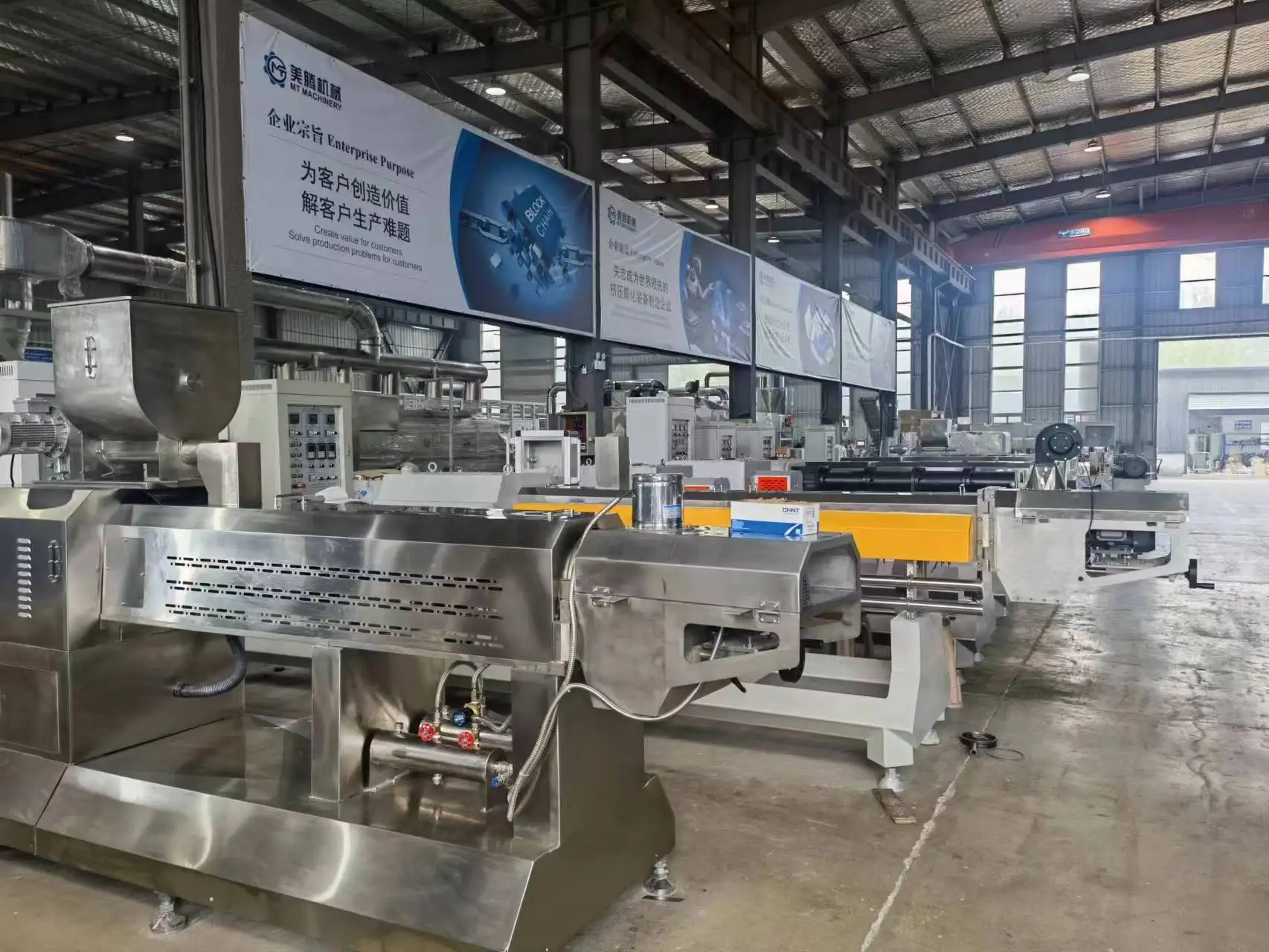
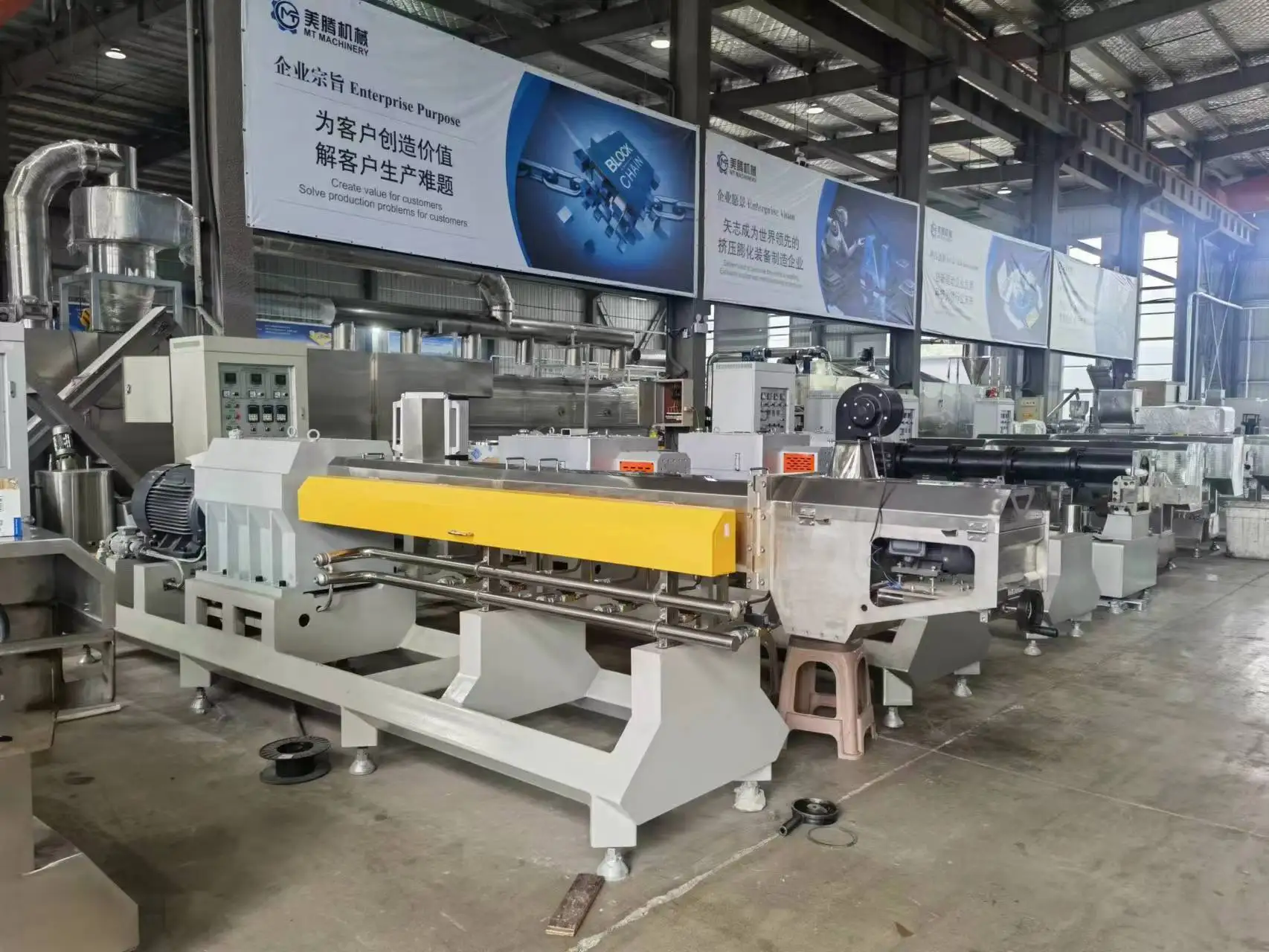
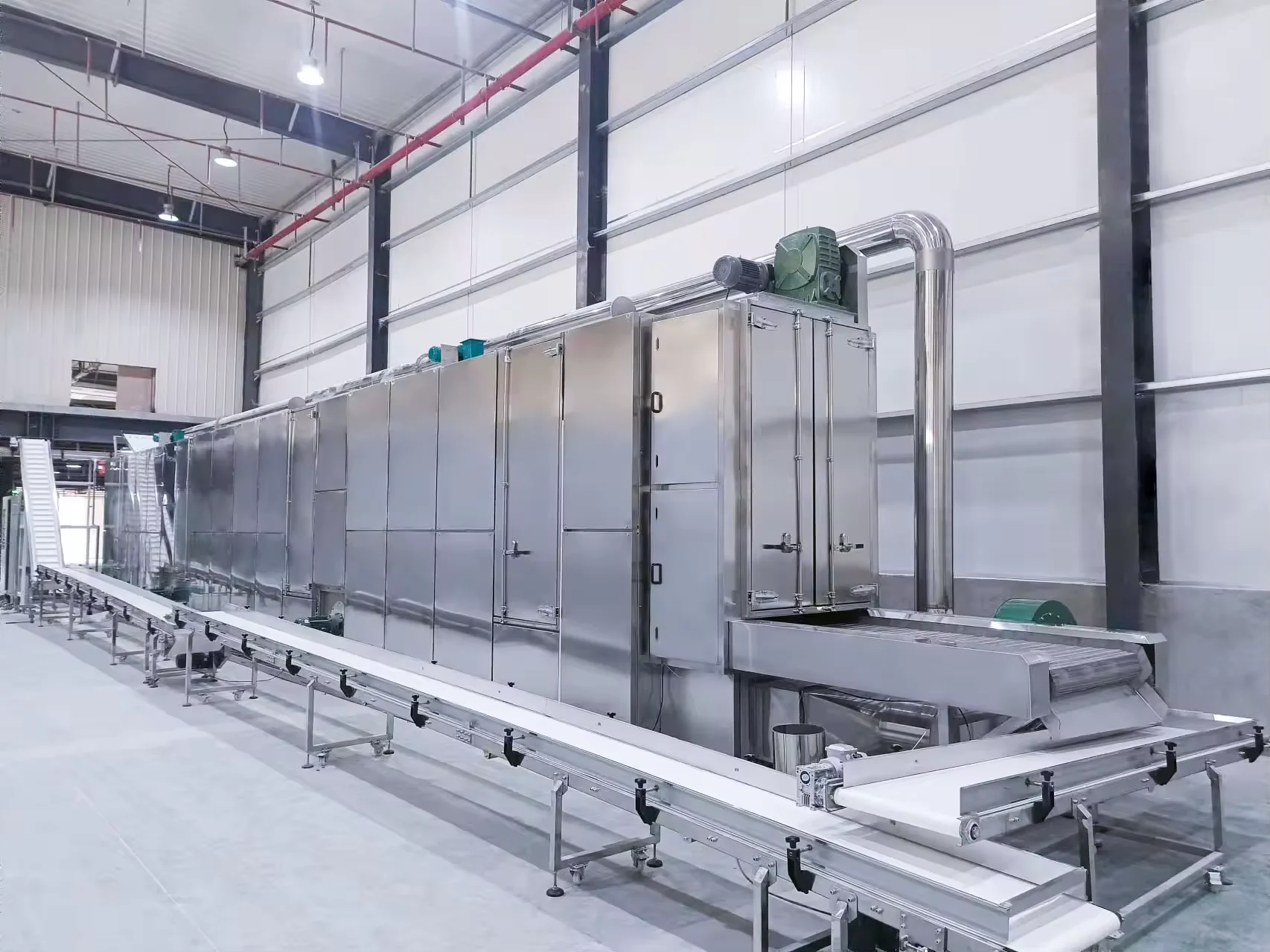
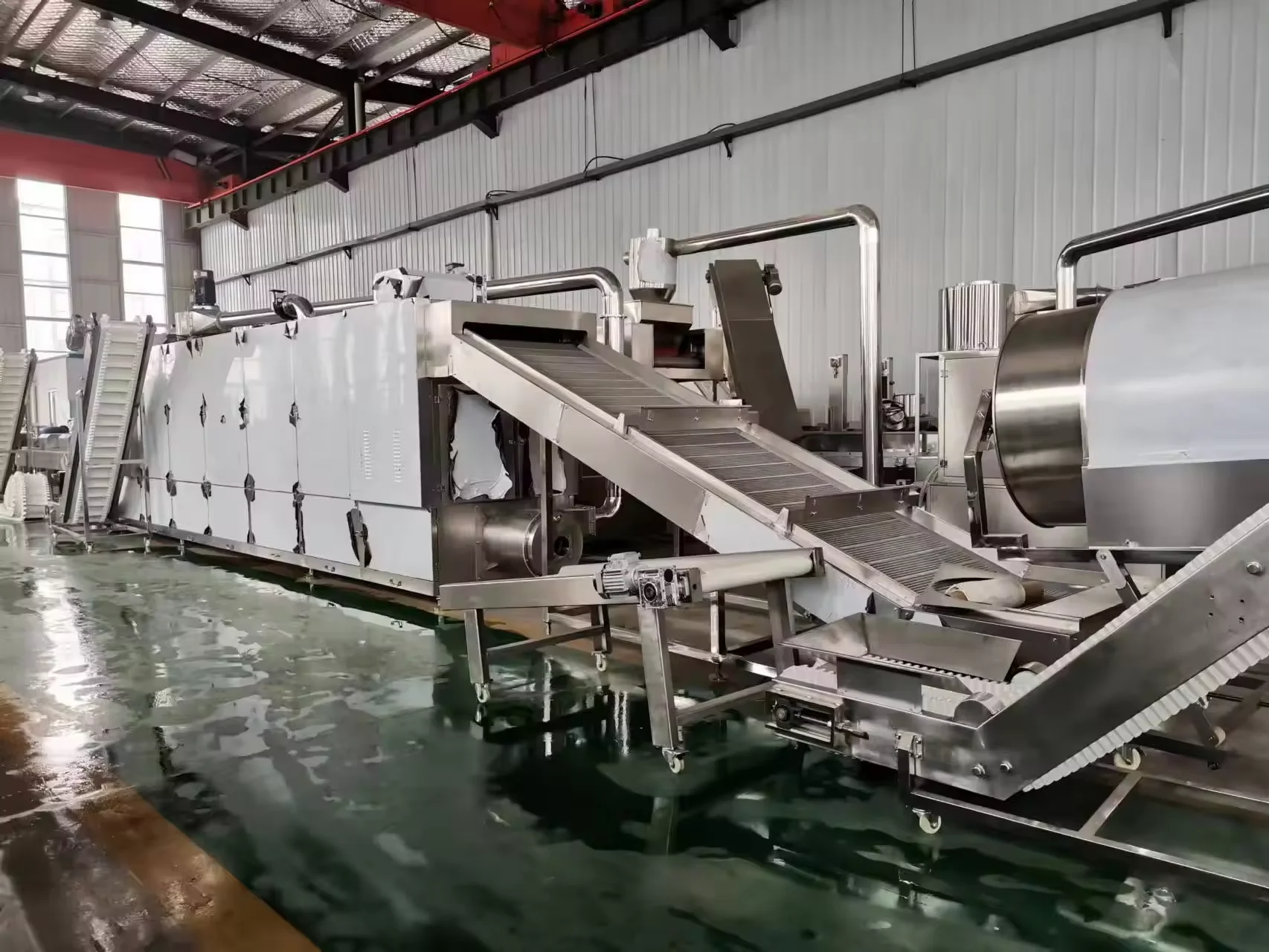
Puffed Snack Food Production Line, Twin-Screw Extrusion, PLC Control — engineered as a complete turnkey system with matched throughput from mixing and extruding through drying and flavoring. Screw configuration and die design are specified to your raw material and target snack format, controlling expansion, density, and texture for puffed corn, rice, and core-filled products. Dryer length and layer adjust to each product’s moisture profile, while the flavoring station supports sugar, oil, and powder seasoning. Every line undergoes in-house trial runs on your actual raw material before shipment, with full documentation covering layout, capacity calculation, and electrical schematics confirmed to your facility standard.
Description
Balanced Throughput Across Stations — Every section of this puffed snack food production line turnkey project is sized so that the extruder, dryer, and flavoring drum pass material at the same rate, eliminating the mid-line pile-ups that cause moisture damage and product waste.
Technical Specifications
| Parameter | Value |
|---|---|
| Product Type | Puffed Snack Food Extrusion Line |
| Screw Type | Twin-screw (double screw) |
| Line Stations | Mixing, Extruding, Shaping, Cutting, Drying, Flavoring (one-pass) |
| Control System | Automatic (PLC/MCC details to be confirmed) |
| Dryer Configuration | Customizable length and layer |
| Flavoring System | Semi-automatic or automatic; sugar, oil, and powder seasoning |
| Extruder Capability | Puffed snacks, fried snacks, artificial rice via screw/die changes |
| Output Capacity | To be confirmed against raw material and product specification |
| Voltage & Frequency | Configurable to target market electrical standard |
| Die Configuration | Interchangeable; shapes and sizes freely selectable |
| Warranty | 24 months, lifetime service |
| Assembly State | Full line, turnkey |
| Language Options | English operation, service, and maintenance manuals |
| Installation | Overseas dispatch of 1–2 engineers for commissioning and training |
Application Suitability
| Application | Material or Output |
|---|---|
| Puffed corn snacks | Maize grits, corn flour blends |
| Puffed rice snacks | Rice flour, broken rice |
| Core-filled snacks | Grain base with cream or chocolate filling |
| Artificial rice | Rice flour, starch, and fortified nutrient premix |
| Fried snack products | Pellet feedstock for secondary frying |
| Grain-based expanded foods | Blends of wheat, oat, millet, and similar cereals |
Why "Nominal Capacity" Often Fails on the Factory Floor
A puffed snack food production line turnkey is only as reliable as its slowest matched station.
I have stood on factory floors where the extruder pushes out product faster than the dryer can handle, and the result is never extra profit. It is a conveyor belt loaded with warm, moist product that begins to collapse under its own weight before it ever reaches the seasoning drum. Sizing each station to the actual moisture curve and density target of your raw material matters far more than the headline capacity number on a quotation. [NEED_CITE: impact of moisture retention on extruded snack density and shelf stability]
Matching Shear Profile to Snack Architecture
The twin-screw extruder at the heart of this line uses interchangeable screw elements and die plates configured around your specific grain base. Corn grits, rice flour, and multigrain blends each demand a different shear and residence time sequence inside the barrel. The configuration is recorded per project so that the mechanical energy input aligns with the starch gelatinisation window of your raw material, rather than forcing a generic build onto a product it was never designed to handle.
One-Pass Line Flow Without Mid-Stream Accumulation
This puffed snack food production line turnkey moves product through mixing, extruding, shaping, cutting, drying, and flavoring in a single continuous pass. The dryer length and layer count are selected based on the moisture exit profile of your particular snack format, and the flavoring drum is sized to the same throughput rate as the upstream stations. When one section runs faster than the next, product accumulates, absorbs ambient humidity, and loses the crispness that defines the category. [NEED_CITE: continuous extrusion line throughput balancing principles]
Reading the Specs That Actually Shape the Product
Twin-screw extrusion gives operators independent control over shear and conveyance, which is critical when switching between a low-density corn puff and a denser artificial rice pellet on the same platform. Interchangeable dies allow the line to shift product shape and size without replacing the extruder barrel assembly. The dryer’s customizable length and layer arrangement determines how gently moisture is drawn from the product core — too fast and the outer shell case-hardens while the interior stays damp, too slow and the line loses pace. Control system options, whether PLC or MCC, affect how repeatable those parameters remain across production shifts and operator changes. A semi-automatic flavoring setup works for operations running one or two seasoning profiles daily, while the automatic option keeps powder and oil ratios steady when SKU changes happen multiple times per shift.
The Hidden Cost of an Undersized Downstream Section
When the flavoring drum cannot keep pace with the extruder, operators either slow the whole line down or let product queue up on the belt. In both cases, the outcome is lost margin. Slowing the extruder wastes the thermal energy already invested in the barrel. Letting product pile up invites moisture reabsorption that no amount of re-drying can fully reverse. These are not theoretical failures — they show up as off-spec shipments and customer complaints about stale or soft product reaching the shelf. [NEED_CITE: consequences of extrusion line bottlenecking on product quality]
Why Buyers Keep This Project Under One Supplier
Sourcing the extruder, dryer, and flavoring system from separate vendors means no single party owns the throughput calculation across the full line. Here, the line layout and capacity calculation document covers every station, so the throughput match is verified before steel is cut. Screw and die configurations are selected against your raw material in the testing workshop, not copied from a generic reference build. The in-house trial run on your actual material means product development begins before the equipment leaves the factory, not after your team is standing in front of a running line searching for the right moisture setting. Documentation including the electrical schematic is confirmed to your facility’s voltage and frequency before production starts, reducing the commissioning window on site. [NEED_CITE: turnkey project documentation requirements for food extrusion lines]
Documentation & Verification
- Line layout confirming throughput balance across mixing, extruding, drying, and flavoring stations
- Trial run report on buyer’s raw material from the in-house testing workshop
- Screw and die configuration record matched to target snack texture and density
- Electrical schematic with voltage and frequency confirmed to buyer’s facility standard
- CE declaration of conformity and ISO certificate for the line scope
- Wear parts list covering screws, dies, and dryer belt sections
Installation, Commissioning & Support
- Foundation and utility layout provided based on confirmed line footprint and station spacing
- Power supply and dedicated circuit requirements matched to the confirmed voltage and frequency standard
- Equipment shipped in station modules with assembly sequence documentation for site reconnection
- First-run parameter setting on buyer’s raw material during on-site commissioning by dispatched engineers
- Operator training covering twin-screw element changes, die swaps, and dryer temperature zoning
- Wear parts inventory recommendation based on screw and die configuration for the buyer’s product range
- Scheduled maintenance intervals outlined in the English-language operation and maintenance manual
What We Need to Configure Your Line
To build an accurate layout and capacity calculation, share the grain base or blend you plan to run, the target snack format, and the daily output volume you need to sustain. Your facility’s voltage and frequency standard, available floor space, and ceiling height determine how the dryer and conveying sections are arranged. If you are integrating this line with existing upstream batching or downstream packing equipment, let us know the connection points so throughput stays synchronized end to end.
Frequently Asked Questions
Q: How is line capacity verified on my specific raw material before shipment?
A: We run your actual raw material through the extruder and dryer in our in-house testing workshop before the line ships. The trial run report documents the achievable throughput, product density, and moisture exit profile under real conditions, so you see verified output figures rather than nominal estimates detached from your ingredient specification.
Q: How is throughput balanced between stations to prevent bottlenecks?
A: Each station — extruder, dryer, flavoring drum — is sized using a line layout and capacity calculation that accounts for your product’s moisture curve and density target. The dryer length and layer count are adjusted so that its pass-through rate matches the extruder output, preventing product accumulation on the conveyor between sections.
Q: What voltage, frequency, and control language options are confirmed before production?
A: The electrical schematic and control system configuration are confirmed against your facility’s power standard and preferred operating language before manufacturing begins. Whether you require PLC or MCC control, the panel labeling, manual language, and HMI interface are aligned to your operator team’s requirements prior to dispatch.
Q: How is the screw and die configuration selected for my target snack?
A: The screw element arrangement and die plate geometry are chosen based on your raw material’s starch content, moisture level, and the target snack texture. A configuration record is produced for your project and validated during the in-house trial run, ensuring the mechanical and thermal profile inside the barrel matches your product specification.
Q: What does on-site installation and commissioning include?
A: One to two engineers are dispatched to your facility to oversee station assembly, utility connection, and first-run parameter tuning on your raw material. Operator training covers screw and die changes, dryer zone adjustment, and flavoring system calibration, with English-language maintenance manuals and a recommended wear parts list provided for ongoing operation.
Related products
-

Automatic Corn Flake Processing Line Corn Coco Pops Breakfast Cereals Snacks Making Machinery
¥7,500.00 Select options This product has multiple variants. The options may be chosen on the product page -

Automatic Rice Crispies Extruder Machine/Chocolate Corn Flakes Extrusion Plant/wheat Flaking Snacks Production Line
¥8,500.00 Select options This product has multiple variants. The options may be chosen on the product page -

Hot Sale Corn Snack Extruder Puffed Snacks Production Machine Corn Puffs Making Machine
¥20,000.00 Select options This product has multiple variants. The options may be chosen on the product page -

Automatic Puffed Food Snack Machine Electric Corn Puffs Snacks Making Machinery New Condition Flavorful Puff Snack Production
¥7,550.00 Select options This product has multiple variants. The options may be chosen on the product page


