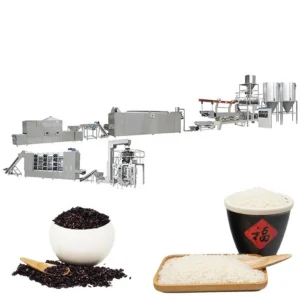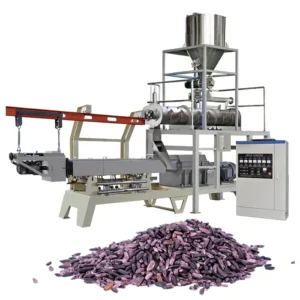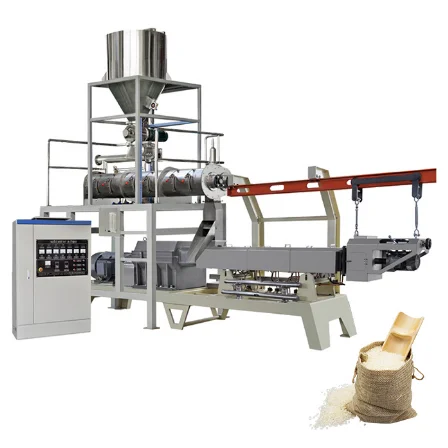


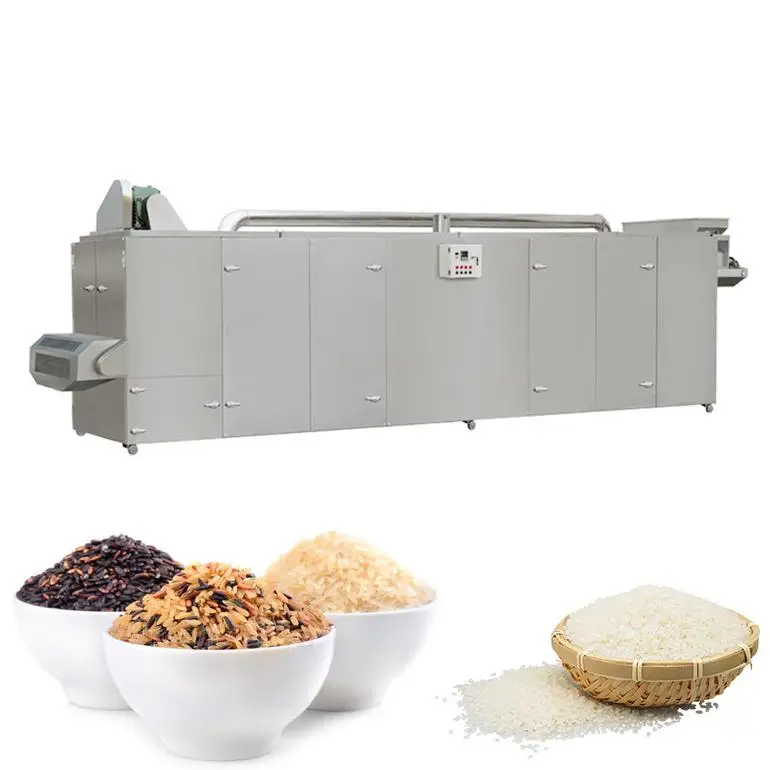
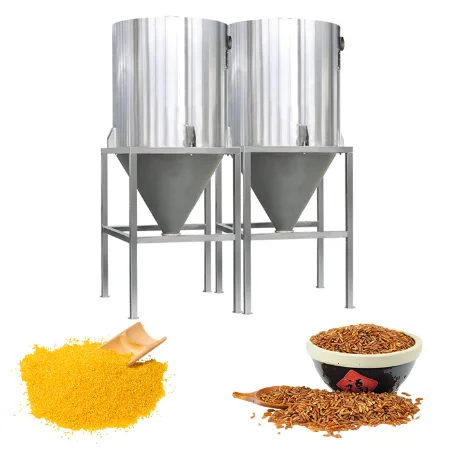

MT65 Artificial Rice Processing Line, Twin-Screw Extruder, 85 kW Installed Power — configured as a complete turnkey project from batching through packing with throughput matched at every station. Screw and die geometry is specified to the buyer’s grain formulation, targeting precise gelatinisation and kernel density across the MT65 through MT95 series. Frequency-controlled extruder and dryer speeds synchronize the full chain, while electric or gas heating adapts to local utility planning. Line layout, capacity calculation, and in-house trial runs on customer raw materials validate output before shipment.
- Five-model series covering small to large-scale production
- Full procedure: mixing, extruding, drying, roasting, cooling, packing
- Voltage, frequency, and control language confirmed pre-production
- CE certified with complete electrical schematics and documentation support
Description
Throughput-Matched Integration — Every station from batching through packing is capacity-calculated against the extruder output so the Artificial Rice Processing Line runs without bottlenecks or idle stations.
Technical Specifications
| Parameter | Value |
|---|---|
| Product Type | Artificial Rice Processing Line / Nutritional Fortified Rice Extruder |
| Extruder Series | MT65, MT70, MT75, MT85, MT95 |
| Screw Configuration | Twin-screw extrusion (single-screw feeding option available for specific materials) |
| MT65 Installed Power | 85 kW |
| MT65 Power Consumption | 60 kW |
| MT65 Capacity | 80–100 kg/hr (basis to be confirmed) |
| MT65 Dimensions | 28 × 1.2 × 2.2 m |
| MT70 Installed Power | 120 kW |
| MT70 Power Consumption | 85 kW |
| MT70 Capacity | 100–120 kg/hr (basis to be confirmed) |
| MT70 Dimensions | 30 × 1.5 × 2.2 m |
| MT75 Installed Power | 180 kW |
| MT75 Power Consumption | 135 kW |
| MT75 Capacity | 300–500 kg/hr (basis to be confirmed) |
| MT75 Dimensions | 32 × 3.5 × 4.3 m |
| MT85 Installed Power | 235 kW |
| MT85 Power Consumption | 165 kW |
| MT85 Capacity | 200–300 kg/hr (basis to be confirmed) |
| MT85 Dimensions | 34 × 3.5 × 4.3 m |
| MT95 Installed Power | 260 kW |
| MT95 Power Consumption | 195 kW |
| MT95 Capacity | 800–1000 kg/hr (basis to be confirmed) |
| MT95 Dimensions | 36 × 3.5 × 4.3 m |
| Control System | Frequency speed controlling, high automation |
| Lubrication | Automatic lubricating and cooling system |
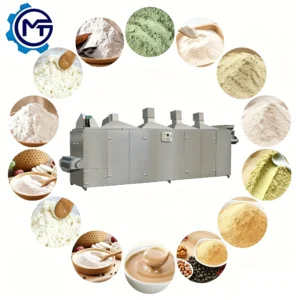
| Dryer Heating Source | Electric or gas (configurable to local utility) |
| Dryer Feature | Circulation drying with mesh belt speed controlled by frequency motor |
| Production Procedure | Mixing → Extruding → Vibrating → Low-temperature drying → Cooling → High-temperature roasting → Cooling → Packing |
| Standards | CE (since 2014), ISO certified |
Application Suitability
| Application | Material or Output |
|---|---|
| Nutritional fortified rice kernels for institutional feeding programmes | Broken rice, rice bran, corn, millet blended with vitamin and mineral premixes |
| Reconstituted artificial rice from grain by-products | Broken rice and starch with optional fortification additives |
| Fortified rice for government nutrition and school meal projects | Wheat, oats, buckwheat, bean flour combined with micro-nutrient supplements |
| Value-added grain products for commercial retail markets | Corn, millet, and mixed grain formulations shaped into uniform rice kernels |
Why "80–100 kg/hr" Tells You Almost Nothing About Your Actual Output
The rated capacity of any fortified rice extruder is only meaningful once your raw material formula and moisture content are locked in.
I once shipped a line to a West African buyer producing fortified rice flour. The screw profile we had dialled in back at the workshop during a test on our standard formula could not hold gelatinisation temperature when their actual blend came through — higher fibre content than anything we had run locally. We spent two weeks re-profiling the barrel zones on-site before throughput stabilised. That is why every Artificial Rice Processing Line we quote now starts with a physical sample of the buyer’s formula, not just a spec sheet. Without that trial data, capacity numbers remain a starting point for negotiation rather than a production guarantee [NEED_CITE: importance of raw material testing in extrusion line specification].
How Station Matching Prevents the Bottleneck Trap
An extruder running at full output means nothing if the downstream dryer cannot keep pace. On this line, every station — mixing, extruding, vibrating, low-temperature drying, cooling, high-temperature roasting, cooling, and packing — is capacity-calculated against the selected extruder model. The dryer mesh belt runs on a frequency-controlled motor so its speed can be synchronised with extruder throughput adjustments. When the whole Artificial Rice Processing Line is designed as one integrated project rather than assembled from separate vendors, no single unit sits idle while another chokes the flow.
Utility Planning Before the First Drawing Is Signed
Local voltage, frequency, and gas availability dictate more than just the electrical cabinet. The dryer on this line is available with electric or gas heating, and that choice changes the utility infrastructure the factory must prepare before the equipment arrives. I have seen contractors in regions with unstable grid supply discover after commissioning that their electric dryer tripped breakers at full load — a problem that would have been caught during the pre-design utility survey. Confirming these details early means the electrical schematic and control language match the destination market from day one [NEED_CITE: voltage and frequency standards by export market].
Reading the Extruder Series for Your Production Target
The five-model series — MT65 through MT95 — spans a wide output range, but selecting the right unit depends on more than peak throughput. The twin-screw configuration handles a broader range of raw material particle sizes and moisture levels than a single-screw alternative, which matters when your formula includes fibrous additives or coarse grain fractions. Barrel length-to-diameter ratio across the series increases with machine size, giving larger models longer residence time for complete starch gelatinisation — critical when fortification premixes must be evenly distributed through the kernel matrix. The automatic lubricating and cooling system across all models reduces unplanned downtime during extended production runs, while frequency speed controlling allows fine-tuning of screw RPM to match different material viscosities without mechanical changeovers.
The Hidden Cost of Specifying Stations in Isolation
When the extruder, dryer, and packing end are sourced from separate suppliers, nobody is responsible for the gaps between them. An undersized dryer forces the extruder operator to reduce feed rate, cutting actual output well below the nameplate rating. A vibrating screen that cannot handle peak extruder discharge causes material backup and inconsistent kernel separation. These mismatches rarely show up during factory acceptance tests run on individual machines — they emerge during the first week of continuous production on-site, when the buyer is already committed to delivery schedules and cannot afford line stoppages [NEED_CITE: throughput mismatch consequences in multi-vendor food processing lines].
Why Procurement as One Project Changes the Outcome
Every station on this line is configured by one supplier, which means throughput calculations, electrical schematics, and mechanical interfaces are reconciled before fabrication begins. The in-house testing workshop runs your actual raw material formulation through the selected extruder and die combination before shipment, so screw configuration and barrel temperature profiles are validated rather than guessed. Electrical schematics are prepared with confirmed voltage and frequency for the destination market. On-site installation follows a phased schedule that sequences utility connections, mechanical assembly, and control system integration so commissioning does not stall waiting for a missing component. Operator training covers the full production chain — not just one machine — ensuring the crew understands how adjustments at the mixer propagate through extrusion, drying, and roasting. CE and ISO certification documentation supports import compliance and institutional project audits.
Documentation & Verification
- Line layout and capacity calculation showing throughput matching between all stations
- Trial run report on your raw material formula conducted before dispatch
- Screw and die configuration record matched to your target kernel specification
- Electrical schematic with voltage and frequency confirmed for destination market
- Factory test record documenting machine performance prior to crating
- Operation and maintenance manual covering full production procedure chain
Installation, Commissioning & Support
- Foundation and floor space planning based on selected model dimensions up to 36 × 3.5 × 4.3 m
- Dedicated power circuit sizing per installed power ratings up to 260 kW
- Phased mechanical assembly with utility connection sequencing for electric or gas dryer
- Frequency-controlled drive calibration across extruder and dryer mesh belt during commissioning
- Operator training on full mixing-through-packing chain including control system language
- Wear parts inventory list covering screws, dies, and dryer belt sections for first replacement cycle
What to Prepare Before Requesting a Quote
To size the line accurately, share your raw material formula including grain types, fortification additive ratios, and target moisture content. Confirm the local voltage, frequency, and whether gas supply is available for the dryer heating source. Provide your workshop floor dimensions and ceiling height so the layout can be drafted to fit the available footprint without compromising maintenance access around the extruder barrel and drying sections.
Frequently Asked Questions
Q: How is line throughput matched across extruder, dryer, and packing stations to prevent bottlenecks?
A: Each station is capacity-calculated against the selected extruder model during the layout phase. The dryer mesh belt and packing conveyor run on frequency-controlled motors, allowing synchronised speed adjustment. Throughput matching is documented in the line layout and verified during the in-house trial run on your actual raw material before shipment.
Q: What utility requirements need confirming before the line design is finalised?
A: Local voltage and frequency must be confirmed so the electrical cabinet and motor specifications match the destination grid. Gas availability determines whether the dryer uses electric or gas heating. These details are locked in before the electrical schematic is drawn, preventing commissioning delays caused by mismatched power supply.
Q: Can a trial run be performed on my raw material formulation before shipment?
A: Yes. The in-house testing workshop runs your actual formula through the selected extruder with the specified screw and die configuration. The trial run report documents gelatinisation behaviour, kernel shape, density, and throughput — giving you production data before the line leaves the factory rather than discovering issues during on-site commissioning.
Q: What is the phased installation and commissioning schedule for the complete line?
A: Installation follows a sequenced approach: foundation preparation and utility rough-in, mechanical assembly of each station, electrical and control system connection, then individual station testing before full-line integration. Commissioning includes parameter setting, trial production on your material, and operator training covering the complete production procedure from mixing through packing.
Q: How are operators trained and what ongoing maintenance support is provided after commissioning?
A: Training covers the full production chain including control system operation, screw speed and temperature adjustments, dryer belt speed synchronisation, and daily maintenance routines. A wear parts list is provided with the line, covering screws, dies, and dryer belt sections. Ongoing maintenance support is available for troubleshooting and component replacement as production scales up.
Related products
-

High Productivity New Condition Safe Healthy and Nutritious Baby Food Meal Replacement Powder Production Line
¥30.00 Select options This product has multiple variants. The options may be chosen on the product page -

Industrial Automatic 500kg/h Baby Cereal Nutrition Powder Extruder Manufacturing Process Line
¥8,238.27 Add to cart -
Automatic Iron Fortified Baby Rice Cereal Nutrition Powder Making Machine 500kg/h PLC Controlled
¥8,238.27 Add to cart -
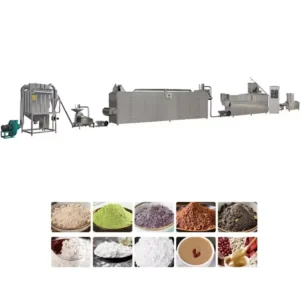
Healthy Baby Food Production Line Nutritional Powder Equipment for Baby Food Supplements for Flour Processing Machinery
¥8,500.00 Select options This product has multiple variants. The options may be chosen on the product page