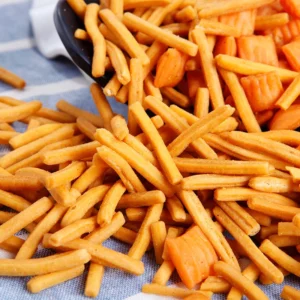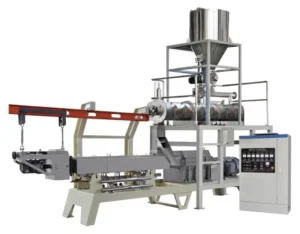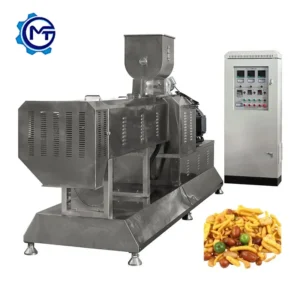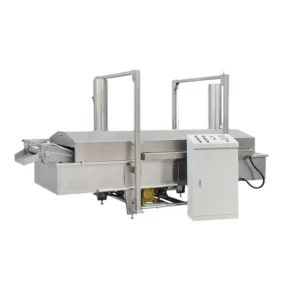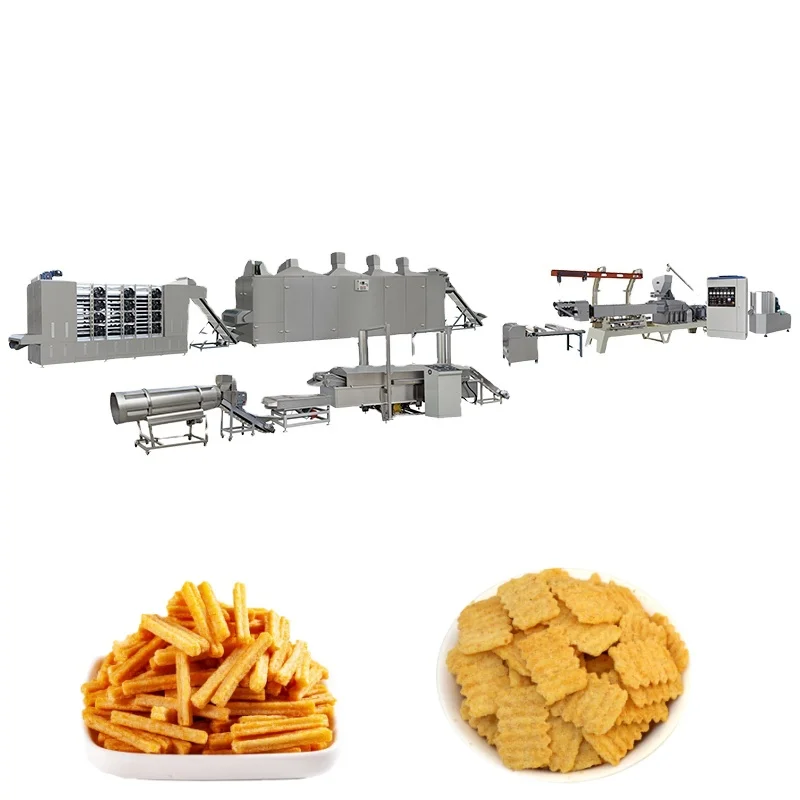


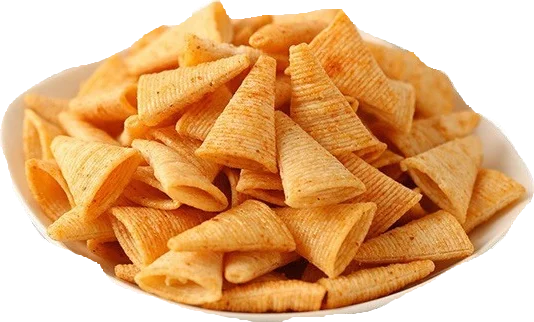
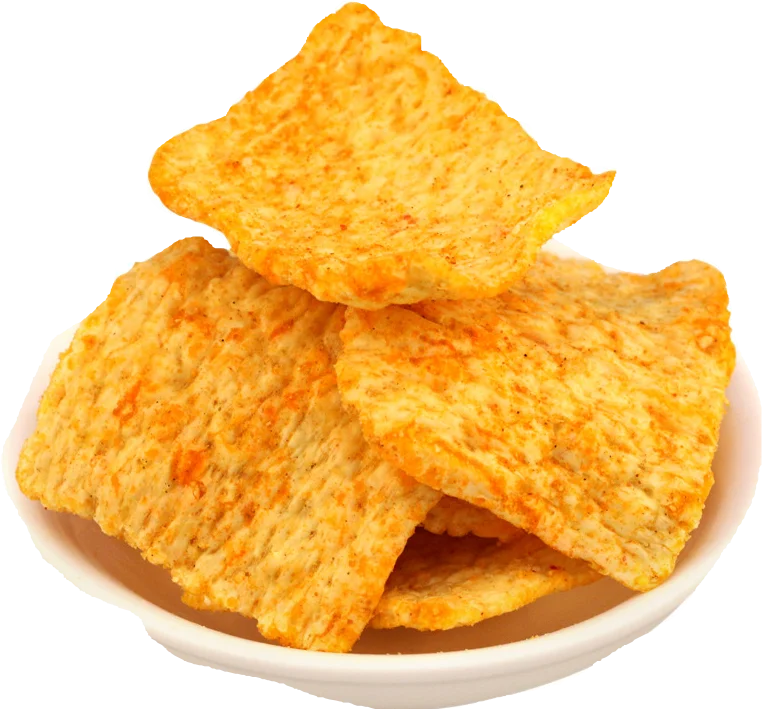

MT-65/70/85/75/95 Fried Bugles Chips Production Line, Twin-Screw Extrusion, Gas/Electric/Diesel Heating — configured from batching through frying, flavouring and packing as one throughput-matched system. Screw modules and interchangeable dies handle corn flour, wheat flour and potato starch for bugles, tortilla chips, shells and tube formats, with voltage and frequency confirmed to your facility before production. Trial runs on your actual raw material run in our testing workshop before shipment, with full line layout and capacity documentation provided.
- Multiple die and roller shapes on one extrusion platform
- Fryer with 600 mm stainless steel belt and automatic temperature control
- PLC and MCC control with operator training at commissioning
Description
Throughput-Matched Line Design — Every station from the mixer through the fryer to packing is calculated against the same raw material baseline so the rated output holds beyond the quotation stage.
Technical Specifications
| Parameter | Value |
|---|---|
| Product Type | Fried Bugles Chips Production Line |
| Available Models | MT-65, MT-70, MT-85, MT-75, MT-95 |
| Screw Type | Twin-screw, co-rotating sectional modules |
| Main Motor Power | MT-65: 100 kW / MT-70: 130 kW / MT-85: 180 kW / MT-75: 185 kW / MT-95: 280 kW |
| Output Capacity | MT-65: 120–150 kg/h (basis to be confirmed) / MT-70: 200–250 kg/h (basis to be confirmed) / MT-85: 300–500 kg/h (basis to be confirmed) / MT-75: 400–500 kg/h (basis to be confirmed) / MT-95: 800–1000 kg/h (basis to be confirmed) |
| Cutter Power | 1.47 kW |
| Mixer Power Options | 4 kW / 7.5 kW / 15 kW |
| Fryer Belt Width | 600 mm stainless steel mesh |
| Fryer Heating Options | Electricity / Fuel gas / Diesel |
| Drying Method Options | Gas / Electric / Diesel heating |
| Voltage & Frequency | Configurable (e.g., 3ph 380V 50Hz, 3ph 415V 60Hz, 3ph 220V 60Hz) |
| Control System | Available with PLC or MCC control (to be confirmed at inquiry) |
| Die Configuration | Interchangeable dies for bugles, shells, screws, tubes, waves, sticks, diamond chips, pillow shapes |
| Warranty | 1 year complete line, lifetime maintenance service |
Application Suitability
| Application | Material or Output |
|---|---|
| Fried bugles and cone-shaped snacks | Corn flour, potato starch blends |
| Tortilla-style triangular chips (doritos format) | Corn powder, wheat flour mixtures |
| 2D/3D pellet-based fried snacks (shells, screws, tubes, waves) | Corn starch, potato powder, rice flour |
| Corn chips and wavy fried crisps | Corn flour, wheat flour |
| Pillow-shaped and diamond-cut fried snacks | Potato starch, corn starch formulations |
What a Nominal Capacity Figure Actually Hides
The rated number on a quotation only matters if it was measured on your exact raw material at your target moisture content.
I have walked onto shop floors where a freshly installed fried snack line sat idle because the extruder pushed out more semi-formed product than the fryer belt could carry. The half-shaped dough sat on the conveyor cooling and skinning over before it ever reached the hot oil, producing chips with uneven colour and a hard bite. The nominal capacity had been quoted on a generic wheat flour recipe, not on the buyer’s high-starch corn blend that expanded differently under shear. A fried bugles chips production line turnkey project needs every station verified against the same formulation before the first crate leaves the factory [NEED_CITE: throughput matching between extruder and downstream fryer stations].
How Screw Modules Shape the Dough Before It Reaches the Die
The co-rotating twin-screw extruder in this line uses sectional screw modules rather than a single fixed screw. Forward-transport elements push the dough toward the die, while reverse elements create residence time for starch gelatinisation and moisture reduction inside the barrel. A fried bugles chips production line turnkey setup lets the screw profile be rebuilt when you switch from a corn-heavy recipe to a potato-starch blend, keeping expansion and density within the range your market expects.
Why the Fryer Belt Width Matters More Than Tank Volume
A 600 mm stainless steel mesh belt carries product through the oil in a single layer, which is the only way to achieve consistent colour and moisture across the full batch. When the belt speed and oil temperature are linked through the control system, the line can adjust fry time in real response to the extruder output rate. This prevents the situation where product piles up at the fryer infeed and fries unevenly because the earlier station is running faster than the later one [NEED_CITE: continuous fryer belt speed and temperature control in snack extrusion].
Reading the Power and Die Numbers Against Your Target Format
The main motor power range — from 100 kW on the MT-65 to 280 kW on the MT-95 — reflects the shear energy available inside the barrel, which directly determines how completely starch gelatinises before the dough exits the die. Higher motor power supports higher moisture recipes that need more thermal energy to cook through, as well as denser shapes like thick-walled tubes. The interchangeable die set covers bugles, shells, screws, waves, pillow shapes, and flat chips, meaning a single extruder barrel can produce the full range by swapping die plates and adjusting the cutter speed at 1.47 kW. Cutter dimension at 2500×600×1100 mm gives enough conveyor length between the die face and the fryer infeed to let the formed pieces stabilise before entering the oil. Mixer power options at 4 kW, 7.5 kW, and 15 kW allow the batching station to be matched to the line capacity so that flour and starch blends are homogeneous before they enter the extruder hopper, which is where inconsistent feeding usually begins.
When Stations Are Sized Independently, the Bottleneck Wins
A fryer quoted with generous tank volume but a narrow belt will still bottleneck a high-output extruder, because only the belt width determines how much product fries in a single pass. I have seen lines where the downstream flavouring drum could not keep pace, forcing the operator to slow the entire line and lose the rated capacity. The result is a fried bugles chips production line turnkey installation that never reaches the numbers on the original proposal, and no single vendor takes responsibility for the gap between stations [NEED_CITE: bottleneck caused by unmatched station throughput in snack lines].
Why the Turnkey Approach Works for This Line
The complete line from batching through extrusion, frying, de-oiling, flavouring, cooling, and packing comes from one supplier, so throughput calculations at every station use the same raw material baseline. Screw configuration and die selection are specified to the buyer’s target product and formulation rather than copied from a generic reference build. An in-house testing workshop runs trial production on the buyer’s actual raw material before shipment, confirming expansion, density, and fry behaviour while there is still time to adjust. Voltage and frequency are confirmed to the buyer’s facility standard before production begins, avoiding commissioning delays caused by wrong motor windings or transformer mismatches. Pre-sales engineering covers line layout, utility planning, and phased installation scheduling so that the fried bugles chips production line turnkey project integrates with the existing facility rather than arriving as a surprise.
Documentation & Verification
- Line layout drawing showing station spacing and throughput calculation for your target output
- Screw and die configuration record matched to your raw material and chip shape
- Trial run report from the in-house testing workshop using your supplied formulation
- Electrical schematic with confirmed voltage, frequency, and control language for your facility
- CE declaration of conformity covering the full assembled line for export markets
- Wear parts list with recommended first-replacement spare quantities
Installation, Commissioning & Support
- Foundation and floor loading plan based on overall line dimensions and fryer weight distribution
- Dedicated power circuit sized to the selected main motor, up to 280 kW on the MT-95
- Station-by-station assembly sequence from mixer through packing with alignment checkpoints
- First-run parameter setting for barrel temperature, screw speed, fryer belt speed, and oil temperature
- Operator training covering die changes, cutter adjustment, and fryer cleaning cycles
- Spare screw elements, die plates, and fryer belt sections supplied with the initial shipment
Before You Request a Quotation
Send the specific raw material formulation you intend to run, including starch-to-flour ratio and target moisture content at the extruder infeed. Confirm your local voltage and frequency standard along with the preferred control language for the HMI. If you have an existing upstream mixer or downstream packing system, share the interface dimensions and throughput so the new line can be matched at the connection points.
Frequently Asked Questions
Q: How is the output capacity verified against my raw material and recipe?
A: Before shipment, the line runs a trial in the in-house testing workshop using your exact raw material blend. The trial measures extruder throughput, fryer belt loading, and final product density. Results are documented in a trial run report so you can confirm the capacity holds on your formulation, not just on a generic reference recipe.
Q: How do you prevent throughput mismatches between the extruder and fryer?
A: Every station is calculated against the same raw material baseline during the layout phase. The fryer belt width and speed are sized to carry the full extruder output in a single layer. If your recipe produces a higher expansion ratio, the fryer station is recalculated accordingly before the line is built.
Q: What does the commissioning schedule look like for a complete fried snack line?
A: Installation follows a phased sequence from the mixer through to packing, with alignment and utility checks at each station. Commissioning includes parameter setting for barrel zones, die pressure, cutter timing, and fryer temperature. Operator training runs alongside production trials so your team is confident before the engineer leaves site.
Q: Can voltage and control language be confirmed before production starts?
A: Voltage, frequency, and HMI language are confirmed during the specification stage and written into the electrical schematic before manufacturing begins. This avoids the common problem of arriving on site with motor windings or control panels that do not match the local power supply or operator preference.
Q: Which spare wear parts come with the line, and how are replacements handled?
A: The initial shipment includes free wearing parts such as screw elements and die plates. A recommended two to three years of additional spares is provided as a separate list. Replacement screw modules and fryer belt sections are manufactured to the same specifications and can be shipped on standard lead times.
Related products
-
New Fully Automatic Large Capacity 304 Stainless Steel Savory Frying Snack Production Line Crisp Bugles Chips Processing Machine
¥30.00 Select options This product has multiple variants. The options may be chosen on the product page -
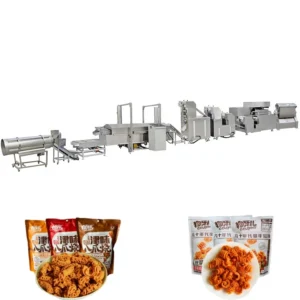
Puffed Octopus Snack Processing Line – Full-Automatic Fried Octopus Production Machinery
¥65.00 Select options This product has multiple variants. The options may be chosen on the product page -
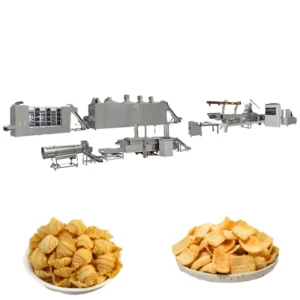
Hot Selling Puffed Ball Snacks Food Processing Line Fried Snacks Processing Line Corn Puff Snacks Machine
¥100.00 Select options This product has multiple variants. The options may be chosen on the product page -
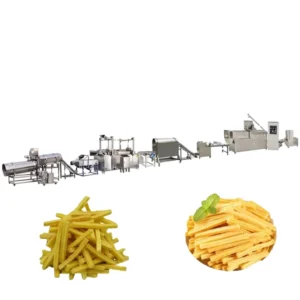
High-Yield Automated Fried Snack Production Line – Double Screw Salad Strips & Millet Crust Making Equipment
¥65.00 Select options This product has multiple variants. The options may be chosen on the product page