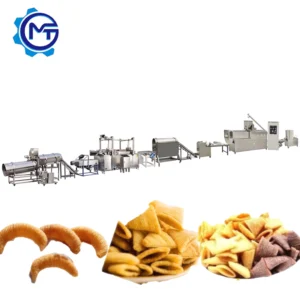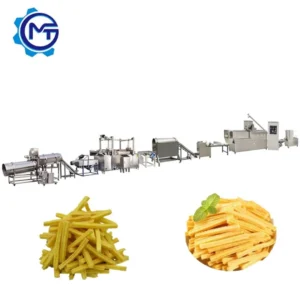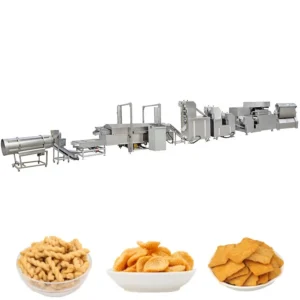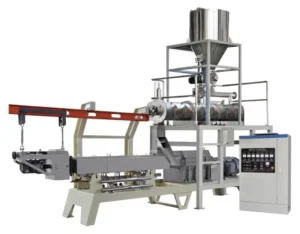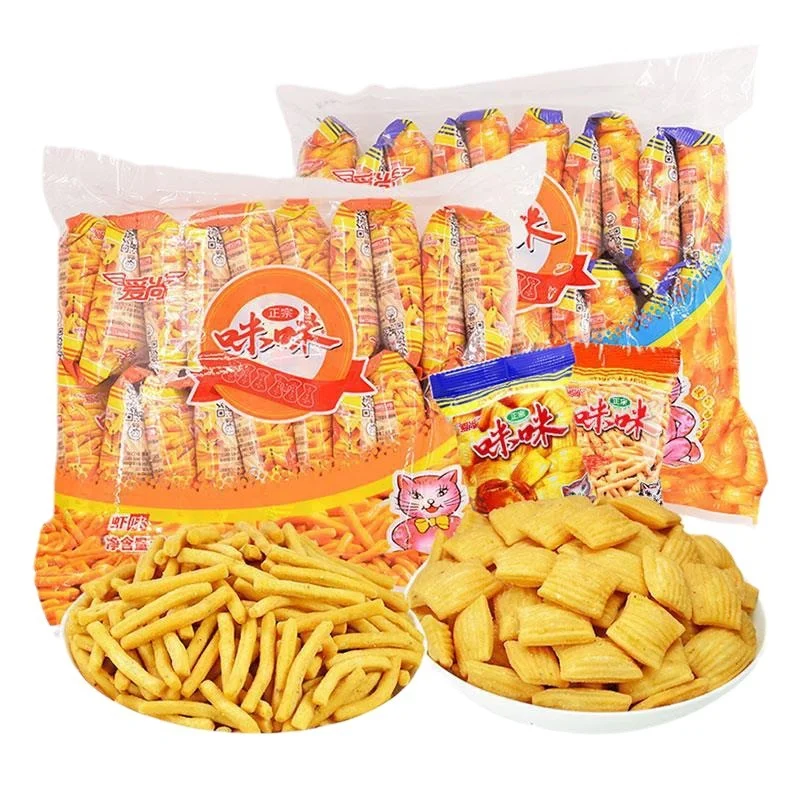


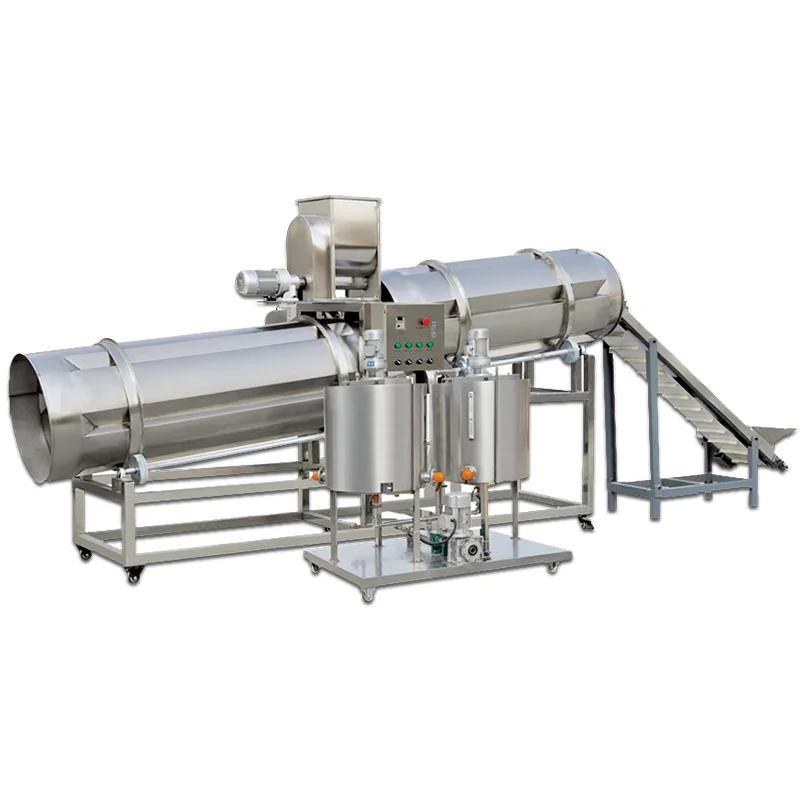
Continuous Deep Fryer, 60 kW Heating, 320 L Oil Capacity, PLC Control — designed as one throughput-matched station in a complete snack extrusion line. Double-layer mesh belt clamps product to prevent floating, ensuring uniform fry time and consistent colour, while continuous oil circulation filtration reduces acid value and extends oil service life. Frequency-controlled stepless belt speed adjusts frying time to match different product densities and moisture levels. Engineered under a single supplier with matched throughput from extrusion through frying to flavouring and packing, supported by in-house trial runs on your raw material before shipment.
Description
Turnkey Line Integration — A continuous deep fryer specified not as an isolated unit but as a throughput-matched station within a complete snack extrusion line from batching to packing under one supplier.
Technical Specifications
| Parameter | Value |
|---|---|
| Product Type | Continuous Deep Fryer for Snack Production Lines |
| Heating Method | Electricity / Gas |
| Heating Tube Power | 60 kW |
| Oil Capacity | 320 L |
| Control System | PLC |
| Voltage & Frequency | 380V / 50Hz |
| Drive Power | 2.6 kW |
| Net Weight | 2000 kg |
| Overall Dimensions (L×W×H) | 6700 × 2200 × 1200 mm |
| Output Capacity | 100–1000 kg/h (basis not stated in source — confirm product type / moisture / oil temperature) |
| Material | Food-grade 304 Stainless Steel |
| Mesh Belt | Upper and lower double-layer, frequency conversion stepless speed regulation |
| Oil Filtration | Continuous circulation filtration system |
| Slag Discharge | Bottom slag discharge system |
| Lifting System | Automatic lifting of upper hood and mesh belt for cleaning |
| Warranty | 1 Year (core components: 1 Year) |
| Assembly State | Fully assembled |
| Machinery Test Report | Provided |
| Video Outgoing Inspection | Provided |
Application Suitability
| Application | Material or Output |
|---|---|
| Extruded Pellet Chips | 2D/3D pellet snacks fried to target expansion and crispness |
| Fried Puffed Snacks | Corn-based or rice-based extrudates requiring uniform oil immersion |
| Bugles and Hollow Shapes | Delicate geometries clamped by double-layer belt to prevent distortion |
| Continuous Snack Lines | Throughput-matched station between extruder/former and de-oiling drum |
Why a Nameplate Fryer Rating Can Derail an Entire Snack Line
The fryer must be sized to the extruder’s real output on your raw material, not its brochure figure.
I spent years running test batches in the workshop before that lesson became policy. On one Fried Snacks Making Machine project in the Middle East, the buyer ordered a line based on catalogue capacity. The local potato variety had a higher moisture content than the test standard. The extruder pushed product through fine, but the fryer could not evaporate the extra water fast enough. Fried chips left the oil belt above moisture spec, and the de-oiling stage had nothing it could fix. The whole continuous frying machine turnkey snack production line ran at half its expected rate because a single station was undersized. That gap between nameplate and reality is where most snack line disappointments start. [NEED_CITE: moisture content variance in regional potato and grain cultivars]
Throughput Matching Across Every Station
A fryer does not operate alone. It sits between the extruder or pellet former upstream and the de-oiling, flavouring and packing stages downstream. If any one of those stations runs slower than the others, the entire continuous frying machine turnkey snack production line throttles to that bottleneck. Line layouts should calculate frying residence time against the actual mass flow leaving the extruder on the buyer’s specific flour blend or starch base, adjusting belt speed and oil volume accordingly.
Oil Management and Product Consistency
Continuous oil circulation filtration removes fine particulates that would otherwise carbonise, raise the acid value and shorten oil service life. For a plant running multiple shifts, the difference between filtered and unfiltered oil shows up in both per-unit frying cost and colour uniformity across batches. The bottom slag discharge system pulls heavier debris away without interrupting the belt, keeping the fry zone clean through long production windows. [NEED_CITE: acid value progression in continuously filtered versus static frying oil]
Reading the Specification Sheet for What It Actually Means
The 320-litre oil capacity sets the thermal mass available to absorb the cold product load; a smaller bath would see temperature dips every time a dense belt of pellets enters, leading to uneven expansion. The 60 kW heating tube rating, whether electric or gas-fired, defines recovery speed between those dips. Frequency-controlled stepless belt speed gives operators a way to tune frying time from a few seconds for thin chips to longer dwell for dense pellet formats, without mechanical gear changes. Food-grade 304 stainless steel throughout the contact zone meets hygiene expectations in export markets and withstands the caustic wash-downs that continuous snack lines require daily.
What Happens When the Fryer Is Specified in Isolation
Buyers sometimes source the fryer from a different vendor than the extruder and the coating drum. When those machines arrive on site, the belt widths do not align, the product transfer chutes need custom fabrication, and the PLC systems cannot handshake. Downtime during commissioning stretches into weeks while the contractor fabricates adapters and rewrites control logic. The hidden cost is not the adapter plate itself but the idle extruder and the delayed first shipment to distributors. [NEED_CITE: integration delays in multi-vendor food processing lines]
Why Sourcing the Whole Line Under One Supplier Changes the Equation
Every station is sized against the same throughput calculation, so the continuous frying machine turnkey snack production line arrives with belt widths, transfer heights and control protocols already matched. Screw configuration and die design on the extruder are specified to the buyer’s raw material, and the fryer oil temperature and belt speed are set to match that exact product density. An in-house testing workshop runs the buyer’s flour or starch blend through the full sequence before shipment, generating a trial run report that confirms yield, colour and moisture. Electrical schematics are drawn to the buyer’s confirmed voltage and frequency before steel is cut. Wear parts lists cover mesh belt segments, heating tubes and filtration elements, so the first replacement set ships with the line rather than arriving on an emergency air freight weeks later.
Documentation & Verification
- Line layout and capacity calculation matching fryer throughput to extruder output on your raw material
- Trial run report on your flour or starch blend conducted in the testing workshop before dispatch
- Electrical schematic confirming voltage, frequency and control language to your local supply
- Screw and die configuration record linked to the fryer belt speed and oil temperature setting
- CE declaration of conformity covering the full integrated line, not just individual machines
- Wear parts list with first-replacement stock recommendation for mesh belt segments and heating tubes
Installation, Commissioning & Support
- Floor plan reserves 6700 × 2200 mm footprint plus service clearance for the fully assembled fryer
- Dedicated 380V / 50Hz circuit sized for the 60 kW heating load plus 2.6 kW drive motor
- Machine arrives fully assembled; hood and belt are lifted by the automatic system for first inspection
- PLC parameters set during commissioning to match the trial run report on your raw material
- Operator training covers belt speed adjustment, oil filtration cycle and slag discharge intervals
- First-year spare set includes mesh belt segments, heating tubes and filtration media
Preparing Your Line Inquiry
A useful enquiry specifies the raw material composition, the target chip or pellet format, and the daily output you need the finished line to sustain. Include your workshop ceiling height, local voltage and frequency, and the control language your operators read. If you already run upstream or downstream equipment from another supplier, list those machines so transfer points can be designed around them. State whether you want a trial run on your raw material in the testing workshop before the line ships.
Frequently Asked Questions
Q: How is fryer capacity matched to extruder output on my specific raw material and product format?
A: We calculate the mass flow leaving the extruder on your flour or starch blend, then set oil volume, heating power and belt speed so the fryer sustains that flow at target moisture. A trial run in the testing workshop confirms the match before the line ships.
Q: What voltage, frequency and control language are confirmed before production begins?
A: We request your site supply specification and operator language during the layout phase. The electrical schematic and PLC interface are drawn to those values before steel is cut, so the 380V / 50Hz default is only a starting point.
Q: Can a trial run on my raw material be performed in the testing workshop before shipment?
A: Yes. You send a sample of your actual flour, starch or pellet base. We run it through the extruder and the continuous fryer, record colour, moisture and yield, and include the report with the shipment documentation.
Q: What is the lead time, and how does it align with the rest of the line’s production schedule?
A: The fryer is built on the same schedule as the extruder, dryer and coating stations in your line. Coordinated production means every station ships together, avoiding partial installations waiting on a delayed component.
Q: Which spare wear parts should I stock for the first year of operation?
A: Mesh belt segments, heating tubes and filtration elements see the most wear. The wear parts list provided with your line specifies the quantities we recommend keeping on site to avoid unplanned stops during the first twelve months.
Related products
-
Doritos Chips Making Extruder Fried Corn Bugles Crispy Chips Process Machine Frying Salad Sticks Pellet Snacks Production Line
¥100.00 Select options This product has multiple variants. The options may be chosen on the product page -

Electric Heating Fried Puffed Food Production Line – Salad Sticks Making Equipment
¥65.00 Select options This product has multiple variants. The options may be chosen on the product page -
Industrial Wheat Flour Snacks Processing Equipment – Stainless Steel Fried Food Production Line
¥65.00 Select options This product has multiple variants. The options may be chosen on the product page -
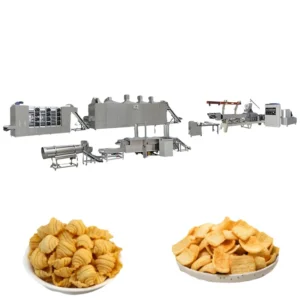
New Doritos Chips Frying Equipment Machine Automatic Tortilla Corn Chips Making Line Portable High Productivity
¥100.00 Select options This product has multiple variants. The options may be chosen on the product page