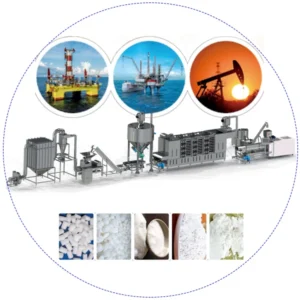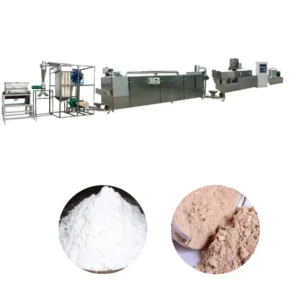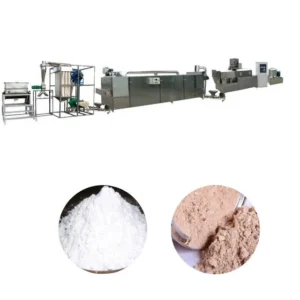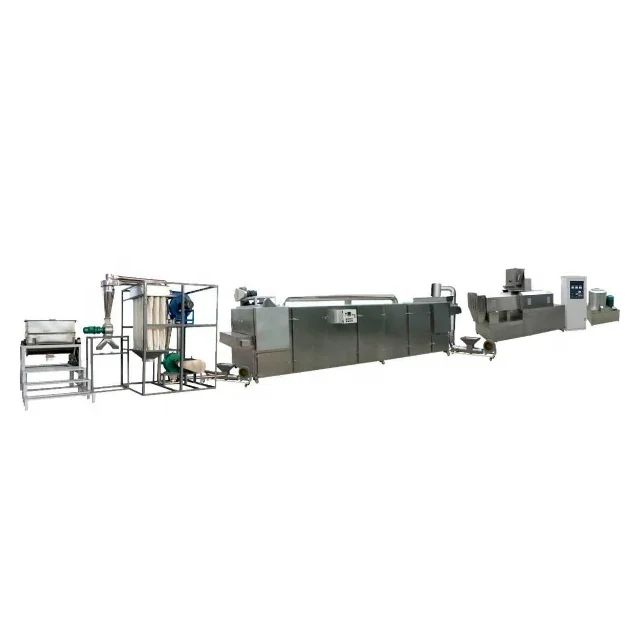


Modified Starch Processing Line, Twin-Screw Extrusion, 45-200 kW — complete turnkey system from batching through extrusion, cooling, grinding and packing with throughput matched across every station.
- Twin-screw configuration specified to your grain flour formulation and target starch gelatinisation degree, with die design controlling expansion and density
- Pulse grinder with cyclone discharge and dust collector ensures consistent particle size for food-grade, oil drilling or papermaking applications
Trial runs on your raw material in our testing workshop validate output before shipment, with full line layout and capacity documentation provided.
Description
Single-supplier turnkey engineering — throughput matched across batching, extrusion, cooling and grinding so no station chokes the modified starch processing line turnkey project.
Technical Specifications
| Parameter | Value |
|---|---|
| Product Type | Modified Starch Processing Line (Twin-Screw Extrusion) |
| Screw Configuration | Twin-screw, profile specified to raw material |
| Output Capacity | 100-1500 kg/h (basis to be confirmed — depends on starch source, moisture, and target modification) |
| Drive Power | 45-200 kW (basis not stated in source — confirm if per extruder or full line) |
| Operating Voltage | 220-440V, tri-phase (frequency to be confirmed for target market) |
| Contact Materials | Food-grade stainless steel (304); PVC on select conveyors |
| Line Stations | Twin-screw extruder, cooling conveyor, pulse grinder |
| Thermal Source Options | Gas, diesel, electricity, steam (selection required at quotation stage) |
| Control System | PLC / MCC configuration available (scope to be confirmed) |
| Compliance | CE, ISO |
Application Suitability
| Application | Material or Output |
|---|---|
| Food-grade modified starch | Corn flour, rice flour — thickeners and stabilisers for sauces, bakery and dairy |
| Oil drilling fluid additives | Modified starch from grain flours — viscosity control agents for drilling mud |
| Papermaking-grade starch | Corn and other grain flours — surface sizing and coating binders |
| Pre-gelatinised starch blends | Soybean flour, rice flour — instant food and nutritional formula bases |
What "Nominal Capacity" Leaves Out on a Modified Starch Processing Line Turnkey
A capacity figure means nothing until it is proven on your exact starch formulation.
Buyers routinely receive a modified starch processing line turnkey quotation stating a round-number output, only to discover after installation that the extruder cannot sustain that throughput on their specific raw material. Corn starch, tapioca starch and rice flour each demand a different screw profile, barrel temperature curve and moisture addition rate. When these variables are wrong, gelatinisation collapses, the product burns inside the barrel or exits under-processed, and the entire line sits idle while remote troubleshooting drags on [NEED_CITE: typical commissioning delays from untested raw material profiles]. I watched this happen first-hand when a Southeast Asian buyer switched from corn to tapioca starch on an identical setup — the gelatinisation degree dropped sharply, and it took a full week of remote adjustments to temperature curves and screw element sequencing to recover the specification. Running a trial on your actual raw material before the line ships is the only way to prevent this.
How Screw Sequencing Controls Starch Modification
The twin-screw extruder is the core of the modified starch processing line turnkey system. Starch granules must pass through distinct shear, hydration and thermal zones inside the barrel in a controlled sequence. Forward-flight elements push material steadily, while kneading blocks generate the shear needed to rupture granule structure and initiate gelatinisation. The ratio and placement of these elements determine whether the output reaches the target degree of modification or exits partially raw. Every screw configuration is documented against your raw material and target starch specification so the build can be replicated or adjusted in future production runs.
Why Downstream Sizing Decides Line Viability
An extruder running at full output means little if the cooling conveyor cannot remove heat fast enough or the pulse grinder cannot accept the feed rate. On this modified starch processing line turnkey project, the cooling conveyor uses low-power wind-knife air drying to bring starch temperature down without degrading colour or inducing retrogradation. The pulse grinder is fitted with a cyclone discharge and dust collector to hold particle size consistent across batches. If any downstream station is undersized, the extruder must be throttled back, and the quoted capacity becomes theoretical [NEED_CITE: throughput bottlenecks in starch extrusion lines]. Matching throughput at every station — extruder, dryer, grinder, packing — under a single supplier removes this mismatch risk.
Reading the Specification Sheet for Production Impact
Motor power in the 45-200 kW range reflects the mechanical energy available for shear inside the barrel; higher-amylose starches such as corn typically demand more torque than waxy varieties. The choice between gas, diesel, electricity and steam for thermal supply affects both operating cost and temperature response — steam gives faster ramp control for sensitive gelatinisation windows, while electric heating suits markets where gas infrastructure is limited. Contact surfaces in 304 stainless steel meet food-grade requirements for starch destined to bakery, dairy and infant nutrition applications, whereas PVC conveyor sections are specified where product temperature is already low. Voltage at 220-440V tri-phase must be locked to the buyer’s local grid before production; a 50 Hz motor on a 60 Hz supply will overspeed the screw, altering residence time and ruining the starch profile [NEED_CITE: industrial motor frequency mismatch consequences].
The Hidden Cost of a Generic Screw Build
A screw and die configuration copied from a standard template might produce acceptable starch on the supplier’s test material and fail entirely on yours. When kneading block placement is wrong for a high-amylose corn flour, the material receives insufficient shear and exits with low gelatinisation — downstream, the grinder produces an off-spec particle distribution and the end customer rejects the batch. The buyer then faces weeks of remote adjustments, replacement screw element shipments, and lost production time, all of which could have been avoided with a pre-shipment trial on the actual formulation [NEED_CITE: cost of post-installation reconfiguration on extrusion lines].
Why Buyers Consolidate This Line Under One Supplier
Sourcing the extruder, dryer, grinder and packing station from separate vendors places the burden of throughput matching on the buyer. A single-supplier modified starch processing line turnkey scope means every station is sized against the same capacity calculation and raw material profile. The screw configuration is recorded specifically for your starch formulation rather than lifted from a generic library. An in-house testing workshop allows trial runs on your shipped raw material before the line leaves the factory, producing a documented test report that travels with the shipment. Electrical schematics are confirmed for your market’s voltage and frequency before metal is cut. Pre-sales consultation carries through to on-site installation, commissioning and operator training, so the team that designed the line is the same team that starts it up.
Documentation & Verification
- Line layout and capacity calculation matched to your starch raw material and target specification
- Screw and die configuration record written for your formulation, not a generic template
- Trial run report on your raw material produced in the testing workshop before dispatch
- Electrical schematic with voltage, frequency and control language confirmed for your market
- CE declaration of conformity and ISO certificate for customs and regulatory clearance
Installation, Commissioning & Support
- Foundation plan accounts for extruder mass and pulse grinder vibration isolation requirements
- Dedicated electrical circuit sized to confirmed kW draw and local tri-phase voltage
- Extruder barrel and screw elements assembled on-site after container transport
- First-run parameter logging covers barrel temperature profile, screw speed and moisture dosing
- Operator training includes screw element inspection and replacement sequencing
- Wear parts list covers screws, dies and grinder screens with reorder codes
What We Need from You to Prepare a Line Proposal
To scope a modified starch processing line turnkey project accurately, share your starch source material (corn, tapioca, rice, soybean or a blend), the target modification type and end-use specification, and your intended daily output in kilograms. Confirm the local voltage, frequency and available thermal fuel so the dryer and motor can be specified correctly. Let us know whether you can ship a raw material sample for a pre-build trial in our testing workshop, and whether you have existing upstream batching or downstream packing equipment that the new line must integrate with.
Frequently Asked Questions
Q: How is output capacity verified on my specific starch raw material?
A: Capacity is confirmed by running your actual raw material in our testing workshop before the line ships. We measure throughput, gelatinisation degree and particle size at the grinder output, then document the results in a trial run report. The quoted figure reflects performance on your formulation, not a generic benchmark.
Q: How is the screw and die configuration determined for my modified starch?
A: We map the screw element sequence — forward-flight, kneading and reverse sections — to the shear and residence time your starch requires for the target modification. Die geometry is matched to the desired output density. The full configuration is recorded and supplied with the line for future reference or adjustment.
Q: What voltage, frequency and control language are confirmed before production?
A: We request your local grid specification and preferred control language during the proposal stage. The electrical schematic and motor nameplate are then locked to those values before fabrication, so commissioning is not delayed by a frequency or voltage mismatch on arrival.
Q: Can I send my raw material for a trial run before the line ships?
A: Yes. Shipping a representative sample of your starch source to our testing workshop allows us to run the extruder on your formulation, verify gelatinisation and modification targets, and adjust screw sequencing if needed — all before the production line leaves the factory.
Q: How are downstream stations sized to avoid bottlenecking the extruder?
A: The cooling conveyor, pulse grinder and packing station are each specified against the same throughput calculation as the extruder. We confirm that the grinder’s cyclone capacity and the conveyor’s cooling rate can accept the extruder’s peak output, preventing any single station from forcing the line to run below its rated speed.
Related products
-
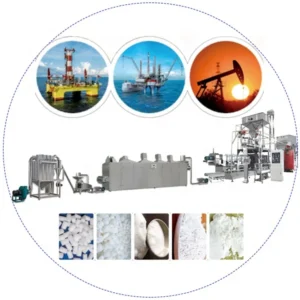
Pre-gelatinized Starch Production Line – Modified Starch Integrated Puffing Equipment
¥65.00 Select options This product has multiple variants. The options may be chosen on the product page -
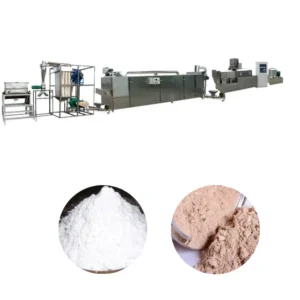
Modified Starch Production Line Modified Starch Processing Line Modified Starch Extruder
¥8,580.00 Select options This product has multiple variants. The options may be chosen on the product page -
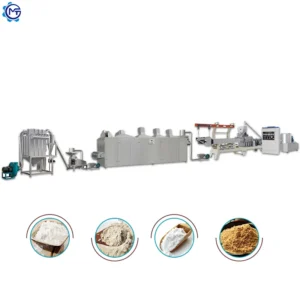
Automatic Deep Processing Machine – Food Grade Modified & Pregelatinized Starch Manufacturing Line
¥65.00 Select options This product has multiple variants. The options may be chosen on the product page -
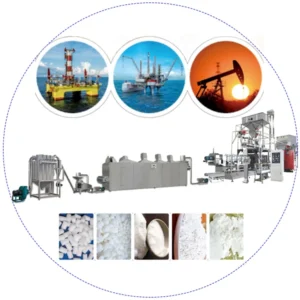
Modified and Pregelatinized Starch Processing Equipment – Pregelatinized Corn Cassava Modified Starch Puffing Machine
¥65.00 Select options This product has multiple variants. The options may be chosen on the product page