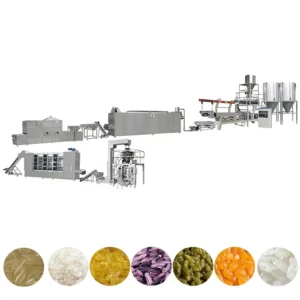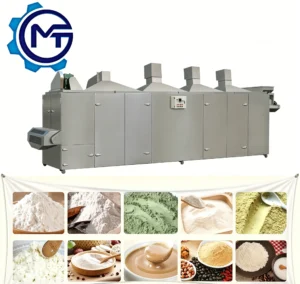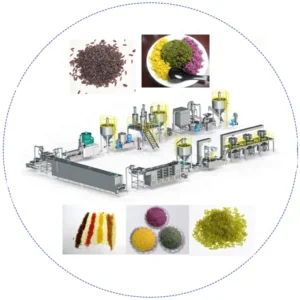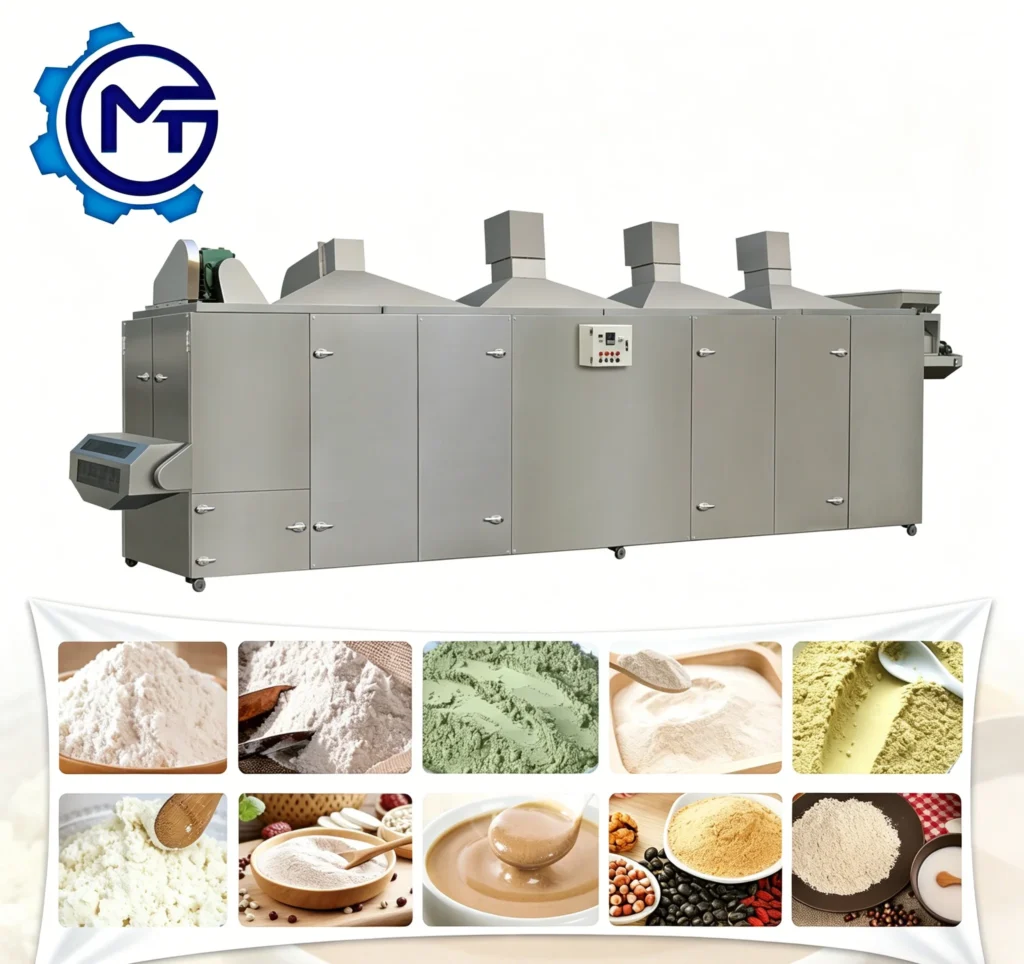


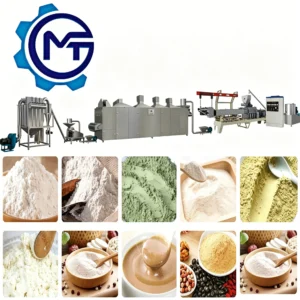
Baby Food Nutrition Powder Processing Line, 200–500 kg/h, Full 304 Stainless Steel, Touch Control Panel — configured as a complete turnkey project from batching through extrusion, drying, and packing, with every station’s throughput matched to eliminate bottlenecks common when assembling equipment from separate vendors.
- Screw configuration, barrel temperature profile, and die design are specified to your raw material — rice, corn, beans, or blended grains — ensuring target gelatinisation and powder density are achieved consistently.
- Flexible heat source options (electric, gas, steam) adapt to your factory utility conditions, while the digital control system delivers repeatable recipe execution across batches.
In-house testing workshop validates your formulation before shipment, with on-site installation, commissioning, and operator training included to secure stable production from day one.
Description
End-to-End Line Matching — Every station from batching to packing is throughput-balanced to your target output on your actual grain formulation, not assembled from mismatched standalone units.
Technical Specifications
| Parameter | Value |
|---|---|
| Product Type | Baby Food Nutrition Powder Processing Line |
| Output Capacity | 200–500 kg/h (basis not stated in source — confirm raw material, moisture, and formulation) |
| Construction Material | Food-grade 304 stainless steel |
| Control System | Touch control panel with digital system |
| Heat Source Options | Electric / Gas / Steam |
| Automation Level | Full automatic |
| Line Stations | Mixers, baking ovens |
| Warranty | 1 year |
| After-Sales Support | Overseas engineer service available |
Application Suitability
| Application | Material or Output |
|---|---|
| Infant nutrition powder production | Rice, corn, and blended grain formulations |
| Multi-grain porridge powder | Beans, oats, and mixed cereal grains |
| Fortified baby food powder | Grain bases with added vitamin and mineral premixes |
| Instant weaning food | Corn, rice, and legume blends |
Why Nominal Capacity Figures Mislead Nutrition Powder Buyers
A baby food nutrition powder processing line turnkey quoted at a fixed hourly output rarely holds that number once your specific grain blend and moisture content enter the barrel.
Capacity must be verified on your actual formulation, not on a standard test flour.
I have stood in a Middle Eastern facility watching a nutrition powder line stall at barely half its quoted throughput because the buyer’s recipe included whey protein isolate — an ingredient that changes gelatinisation behaviour entirely compared to plain rice flour. The extruder was not wrong; it was simply configured for a different raw material. [NEED_CITE: starch gelatinisation behaviour in high-protein grain blends] When the formulation changes, the screw profile, barrel temperature zones, and die geometry all need to shift accordingly. A line that performs well on one recipe can produce inconsistent particle density on another, and no amount of post-installation tuning fully compensates for a configuration that was never matched to the buyer’s actual ingredients.
How Screw Profile and Barrel Zones Shape Powder Consistency
The texture and solubility of a baby food nutrition powder processing line turnkey output depend directly on how shear force and heat are distributed inside the barrel. A screw configuration designed for pure rice will generate a different residence time and gelatinisation profile than one built for a corn-bean blend. The digital touch control panel allows operators to lock in barrel temperature settings per recipe, so batch-to-batch variation stays within specification once the correct parameters are established during trial runs.
Why Heat Source Selection Affects More Than Your Utility Bill
Choosing between electric, gas, and steam heating is not just a cost decision — it changes how quickly barrel zones reach set-point temperature and how they recover after a feed interruption. Steam systems respond faster to load changes but require a boiler room and condensate return loop. Electric heating gives precise zone-by-zone control with simpler installation, while gas-fired systems suit regions where electricity tariffs make resistive heating expensive. The correct choice depends on your factory’s existing utility infrastructure and local energy pricing. [NEED_CITE: industrial extrusion heat source comparison for food processing]
Reading the Specs That Actually Matter for Grain Powder Lines
The food-grade 304 stainless steel contact surfaces prevent metallic contamination across every station that touches the product — a non-negotiable requirement for infant food certification in most import markets. The full-automatic control system with a digital touch panel reduces operator-dependent variation: once a recipe’s moisture level, barrel temperature profile, and screw speed are saved, the line reproduces them without manual adjustment between batches. Output capacity rated at 200–500 kg/h is a useful planning range, but the real throughput you achieve depends on your grain blend density, target moisture content, and the fineness of the final powder grind. Line stations including mixers and baking ovens must be capacity-matched so that the mixer output, extruder throughput, and drying capacity all align — a bottleneck at any single station drags the entire line below its potential.
The Hidden Cost of Skipping Pre-Shipment Trial Runs
Buyers who accept a line without a factory trial run on their own raw material often spend their first two weeks of production doing what should have been done before shipment — adjusting screw elements, re-profiling die openings, and re-mapping barrel temperatures. [NEED_CITE: commissioning delays caused by untested raw material compatibility] I once watched a four-day on-site troubleshooting session that could have been resolved in a single afternoon back at the testing workshop, simply because the buyer’s formulation had not been run before the machine left the factory floor. Downtime during commissioning costs far more than the shipping fee for a sample of your raw material.
What Makes This Line Different from Assembling Separate Stations
Sourcing a mixer from one vendor, an extruder from another, and a dryer from a third creates throughput gaps that only become visible during production. This baby food nutrition powder processing line turnkey configuration is built so that every station — from ingredient batching through mixing, extrusion, drying, and packing — is sized to the same target output. Screw configuration and die geometry are specified against your grain formulation, not copied from a generic template. Our in-house testing workshop runs your actual raw material before the line ships, producing a trial run report that locks in the process parameters. The digital control system stores these settings for repeatable batch execution. Documentation including line layout, electrical schematics, and capacity calculations is prepared for your specific installation rather than pulled from a generic library. Overseas engineer service is available for on-site commissioning and operator training once the line arrives.
Documentation & Verification
- Line layout drawing with throughput matching verified across mixing, extrusion, drying, and packing stations
- Trial run report generated on your grain formulation before dispatch from the testing workshop
- Electrical schematic and voltage specification confirmed against your facility’s local power supply
- Screw and die configuration record matched to your target powder texture and solubility
- Operation and maintenance manual with wear parts list specific to your line configuration
Installation, Commissioning & Support
- Foundation and floor space planning based on the full line footprint including mixer, extruder, and oven stations
- Electrical connection points and dedicated circuit requirements verified against your local voltage and frequency
- Pre-assembled modules arrive with matched interfaces, reducing on-site alignment time between stations
- First-run parameter tuning performed on your grain formulation by the commissioning engineer
- Operator training covers digital touch panel recipe storage, barrel temperature management, and screw speed adjustment
- Wear parts list and recommended spare inventory provided for screws, dies, and seals
What to Prepare Before Requesting a Quotation
To configure a baby food nutrition powder processing line turnkey system that matches your production target, we need your grain formulation including the percentage breakdown of rice, corn, beans, or other ingredients, along with any added protein or vitamin premixes. Share your target daily output in kilograms, your factory’s available floor space and ceiling height, and your local voltage and frequency standard. If you have existing upstream or downstream equipment that this line must integrate with, provide the model and throughput data. Sending a representative sample of your raw material for a pre-shipment trial run allows us to lock in process parameters before the equipment leaves our workshop.
Frequently Asked Questions
Q: How is the 200–500 kg/h capacity verified against my specific raw material and formulation?
A: We run your actual grain blend — including any whey protein, vitamin premix, or legume additions — through the extruder in our testing workshop. The trial run establishes real throughput, barrel temperature profile, and screw speed. We provide a written report with these locked parameters, so the capacity figure you plan around is based on your recipe, not a generic test flour.
Q: What voltage, frequency, and control language will be confirmed before production begins?
A: Before any component is built, we confirm your facility’s voltage, phase, and frequency, then configure motors and control panels accordingly. The digital touch panel language is set to match your operators’ preference. Electrical schematics reflecting these specifications are included in your documentation package for local electrician review.
Q: How is throughput matched between mixing, extrusion, drying, and packing stations?
A: Each station is sized during the line design phase to the same target output. The mixer batch cycle time, extruder feed rate, oven belt speed, and packing head capacity are all calculated together so that no single station forces the others to idle or overflow. The line layout document shows these matched values.
Q: Can I send my raw material for a trial run before the line is shipped?
A: Yes — sending a sample of your grain formulation to our testing workshop is a standard step in our process. We run it through the configured extruder, record the process parameters, and send you a trial run report. This eliminates on-site guesswork during commissioning and ensures the line produces your target powder specification from the first production shift.
Q: What does on-site installation, commissioning, and operator training include?
A: Our engineer travels to your facility to supervise station alignment, electrical hookup verification, and first-run tuning on your grain formulation. Operators are trained on the digital touch panel, recipe storage, barrel temperature adjustment, and routine screw and die inspection. A wear parts list with replacement intervals is reviewed with your maintenance team before departure.
Related products
-

High Precision Automatic 500kg/h Baby Food Nutrition Powder Rice Extrusion Processing Line
¥8,238.27 Add to cart -
Organic Gluten Free Baby Rice Nutrition Powder Automatic 500kg/h Production Processing Line
¥8,238.27 Add to cart -

Automatic Iron Fortified Baby Rice Cereal Nutrition Powder Making Machine 500kg/h PLC Controlled
¥8,238.27 Add to cart -
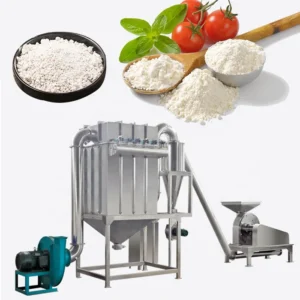
New Automatic Nutritional Powder Making Machine for Baby Food Production Line
¥20.00 Select options This product has multiple variants. The options may be chosen on the product page