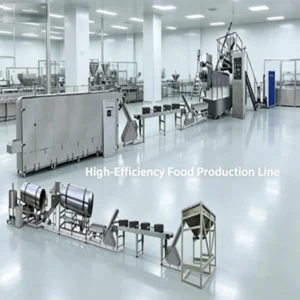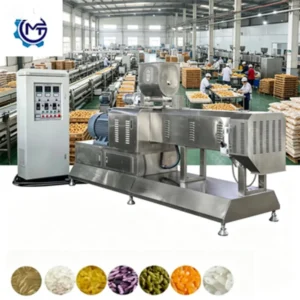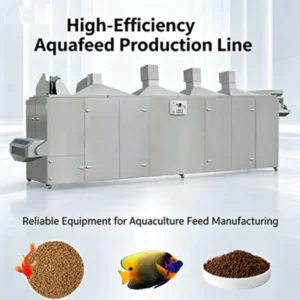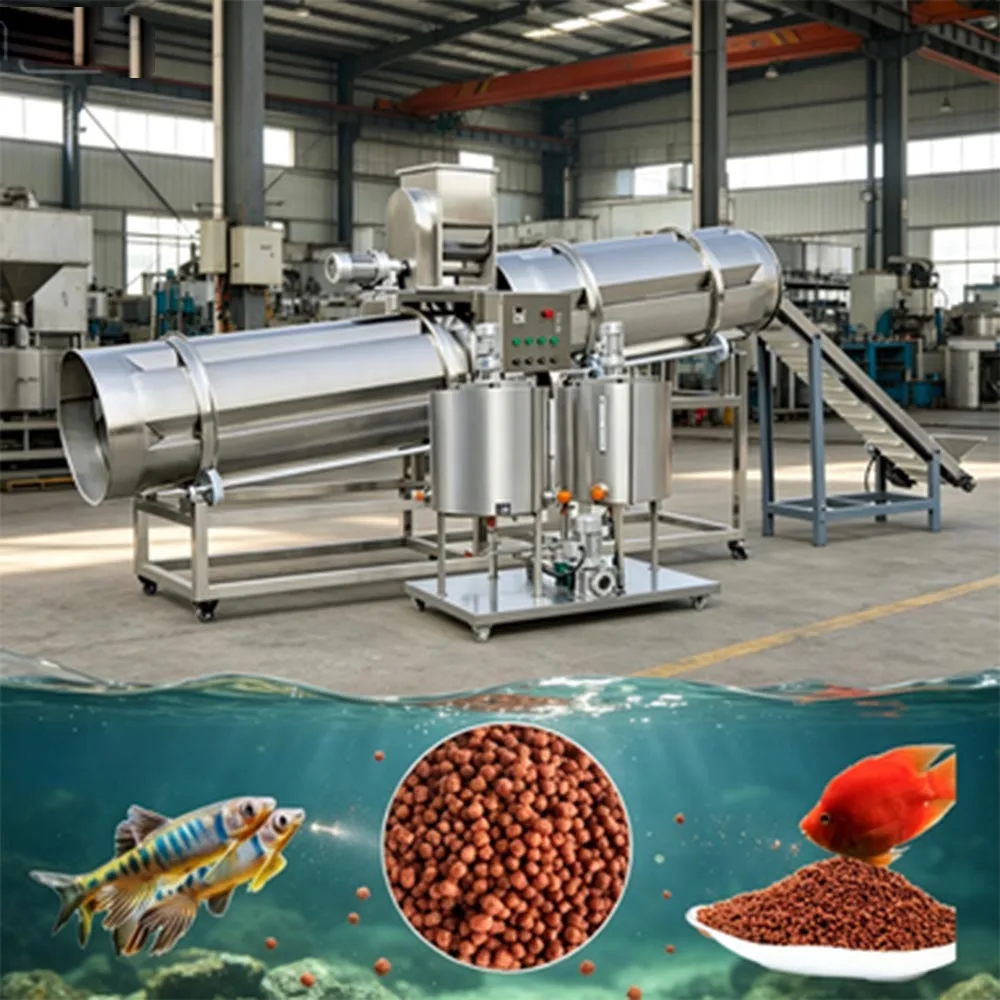
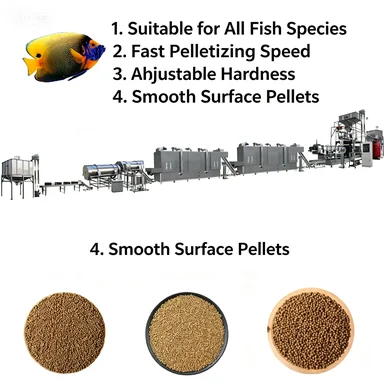
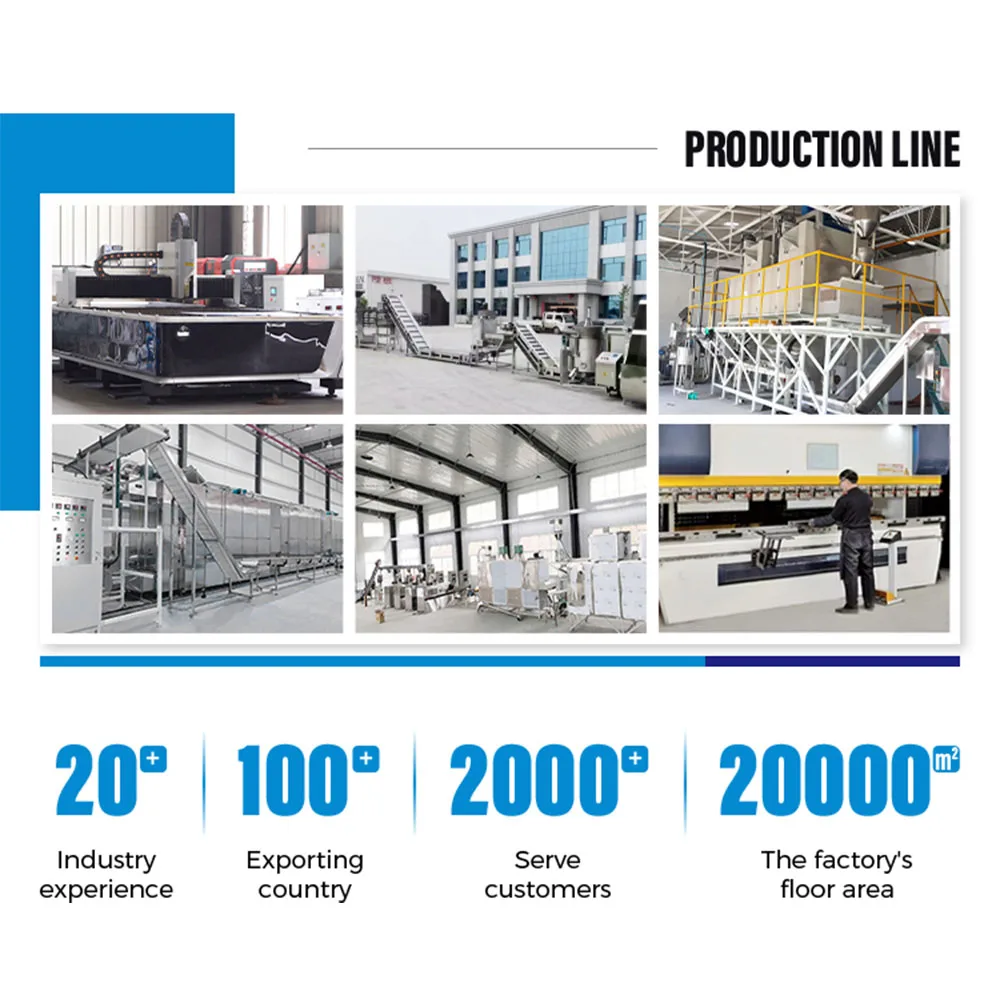
Twin Screw Aquatic Fish Feed Extrusion Production Line, 304 Stainless Steel, PLC Control — engineered for floating and sinking pellet manufacturing with screw configuration and die design matched to your raw material and target buoyancy.
- Throughput-matched stations from mixing through extrusion, drying, coating, and screening eliminate bottlenecks across the line
- Full continuous automation with intelligent PLC control ensures consistent pellet size, hardness, and density
One-supplier turnkey delivery includes in-house trial runs on your exact formulation before shipment, with complete line layout and capacity documentation.
Description
Turnkey throughput matching — every station from batching to packing is sized to the extruder’s actual output on your raw material, not to a catalog number.
Technical Specifications
| Parameter | Value |
|---|---|
| Product Type | Twin Screw Aquatic Fish Feed Extrusion Production Line |
| Extruder Type | Twin Screw |
| Control System | Intelligent PLC automatic control system |
| Construction Material | Food grade 304 stainless steel (machine body and material contact parts) |
| Output Capacity | Rated capacity subject to confirmation based on specific pellet size and formulation (basis to be confirmed) |
| Pellet Types | Floating and sinking fish feed pellets |
| Adjustable Parameters | Pellet size, hardness, buoyancy |
| Raw Materials Processed | Fish meal, soybean meal, corn powder, compound additives |
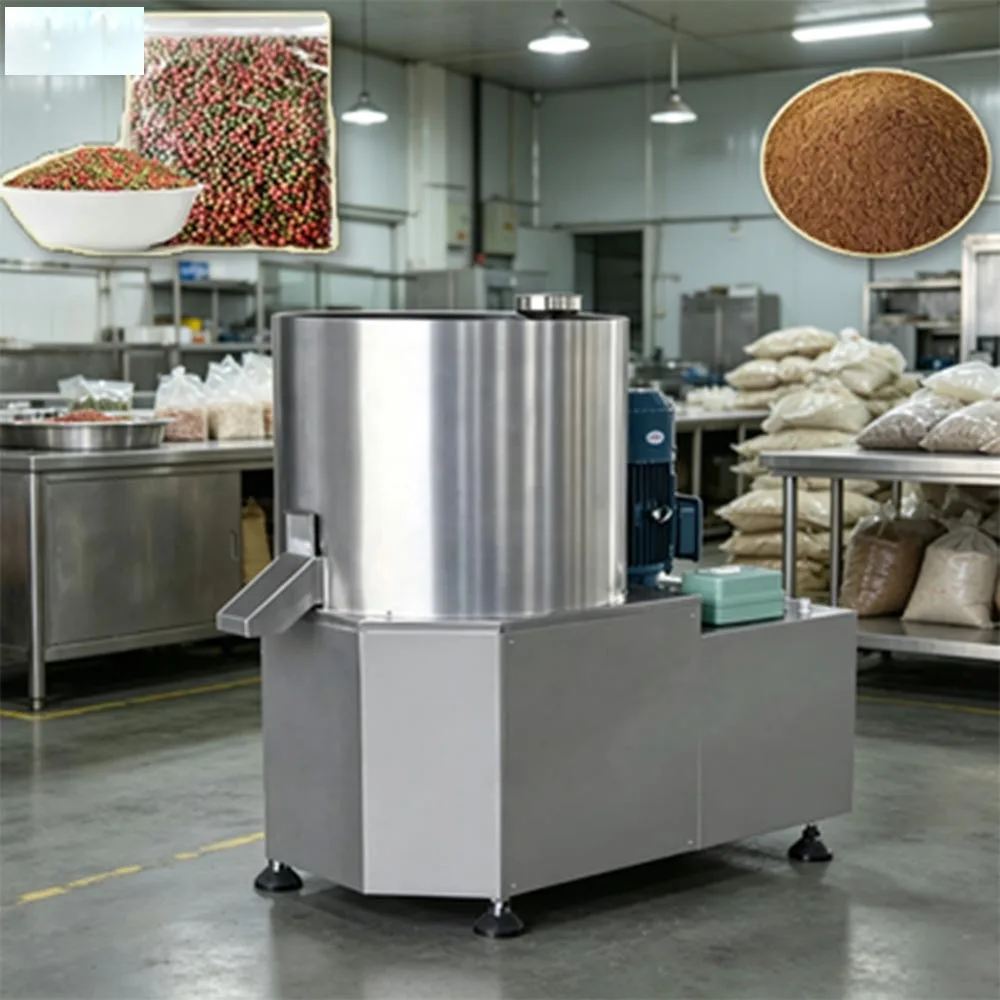
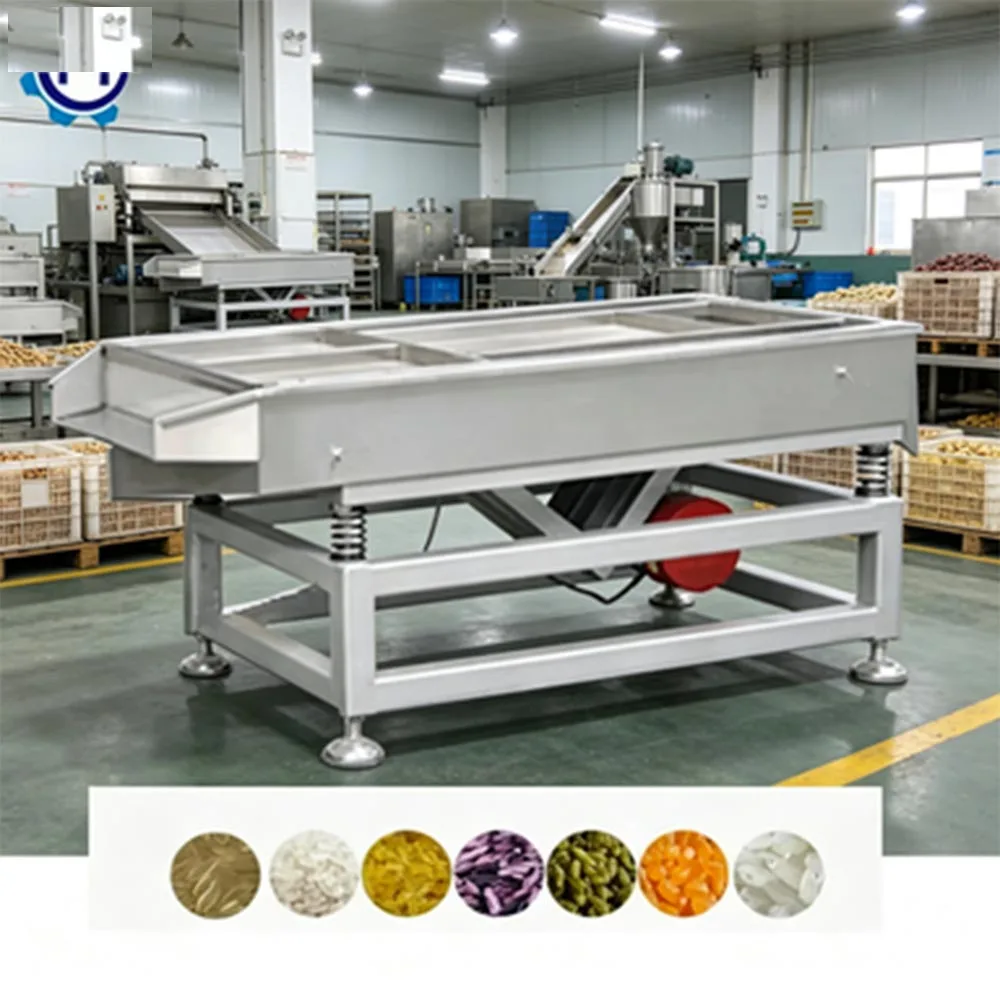
| Line Stations | Raw material mixer, extruder, dryer, seasoning coating machine, vibrating sieve, conveyor equipment |
| Automation Level | Full continuous automatic production (mixing → extrusion → drying → seasoning → screening → finished product discharging) |
| Energy Features | Optimized energy saving transmission structure and heating system |
| Maintenance Design | Humanized operation interface, quick replacement of vulnerable parts |
| Target Scale | Medium to large scale industrial commercial fish feed mass production |
Application Suitability
| Application | Material or Output |
|---|---|
| Koi and goldfish floating pellet production | Corn powder and soybean meal blends with low fish meal ratios |
| Tropical fish sinking pellet production | High fish meal and compound additive formulations |
| Freshwater aquaculture feed for catfish and tilapia | Grain-based formulations with variable protein content |
| Commercial feed mill mass production | Continuous mixed formulations across floating and sinking specifications |
| Ornamental fish specialty feed lines | Pigment-enhanced formulations with precise density control |
What "Rated Capacity" Leaves Out When Your Raw Material Changes the Rules
The extruder only delivers its catalog output if your formulation behaves the way the test formulation did.
I have stood beside twin screw extruders that were sold on a number — say a certain kilogram-per-hour figure — only to watch the actual throughput drop sharply when the buyer’s fish meal ratio was higher than what the factory tested with. The starch content in corn powder drives expansion and buoyancy. When you shift the protein-to-starch balance, the barrel temperature profile, screw configuration, and die geometry all need to change, or the pellet density drifts outside what your market expects. Floating pellets start sinking. Sinking pellets come out too light. The aquatic fish feed production line turnkey package only works when every parameter has been matched to what you will actually run [NEED_CITE: starch gelatinisation behaviour in high-protein extrusion formulations].
How Screw Configuration Decides Whether Your Pellets Float or Sink
The buoyancy of an aquatic feed pellet is not set by the die alone. It comes from the interaction between screw element arrangement, barrel temperature zones, and the moisture content of your mix at the feed throat. A twin screw configuration gives operators the ability to swap conveying elements, kneading blocks, and reverse-flight sections to change residence time and shear intensity. For floating pellets aimed at koi and goldfish markets, the screw combination must generate enough expansion so the pellet traps air cells inside. For sinking pellets used in catfish or shrimp farming, the same extruder needs a different screw profile that compresses the dough more tightly before it exits the die. This is why an aquatic fish feed production line turnkey project must begin with your specific formulation, not a generic build.
Throughput Matching Across Every Station in the Line
An extruder that produces consistently is only valuable if the dryer can remove moisture fast enough and the coating drum can season every pellet evenly. I have seen lines where the extruder ran well but the dryer became the bottleneck, forcing the operator to slow the entire line down. In this aquatic fish feed production line turnkey configuration, the mixer output, conveyor speed, dryer belt length and temperature zones, seasoning drum volume, and vibrating sieve area are all calculated against the extruder’s verified throughput on your material. When one station falls behind, the whole line loses output. When one station is oversized, you pay for capacity you never use [NEED_CITE: throughput balancing methodology in multi-station extrusion lines].
Reading the Specifications That Actually Matter
The twin screw design is central to aquatic feed because it handles a wider range of raw material compositions than a single screw, particularly when fish meal or high-fat additives are present. The PLC automatic control system matters for batch-to-batch consistency: barrel temperature zones, screw speed, and feeder rate are all held within set parameters so that pellet density does not drift during a long production run. Food grade 304 stainless steel on all material contact surfaces is not just a hygiene requirement — it prevents corrosion from the salt and mineral content common in aquatic feed formulations. The adjustable parameters for pellet size, hardness, and buoyancy are achieved through die plate changes and screw speed adjustments, giving a single line the range to produce multiple product specifications without major reconfiguration.
The Hidden Cost of Skipping a Trial Run on Your Material
Buyers sometimes accept a line based on a video of it running someone else’s formulation. The risk is that your raw material has different gelatinisation behaviour, different fat absorption, or different fibre content — and the screw configuration shipped with the machine does not account for any of that. The result is weeks of on-site troubleshooting after installation, with your production schedule burning cash while engineers adjust parameters that should have been set before the machine left the factory [NEED_CITE: common commissioning delays from untested raw material formulations]. The cost is not just the engineer’s time. It is the delayed market entry, the wasted raw material during trial-and-error runs, and the loss of buyer confidence when your first shipments do not meet the pellet density specification your customers expect.
Why Sourcing the Complete Line from One Supplier Changes the Commissioning Experience
Every station in this line — mixer, extruder, dryer, coating drum, vibrating sieve, conveyors — is specified by the same engineering team, which means throughput calculations are done once for the entire system rather than negotiated between separate vendors. The screw configuration and die design are matched to your raw material and target pellet buoyancy before production begins, not copied from a standard template. An in-house testing workshop allows trial runs on your actual formulation, so the parameters are documented and verified before the equipment ships. The PLC control system is configured with your local voltage, frequency, and preferred operator language before the crate is closed. Pre-sales consultation, on-site installation, commissioning, and ongoing maintenance are handled by the same team that built the line, so there is no gap between the people who sold it and the people who make it work.
Documentation & Verification
- Line layout and capacity calculation showing throughput matching across mixer, extruder, dryer, and coating stations
- Screw and die configuration record specific to your raw material and target pellet buoyancy
- Trial run report conducted on your formulation in the in-house testing workshop before shipment
- Electrical schematic with voltage, frequency, and control language confirmed for your facility
- CE declaration of conformity and ISO certificate included with shipping documentation
- Operation and maintenance manual with wear parts list and replacement intervals
Installation, Commissioning & Support
- Foundation and floor space planning based on the full line footprint from mixer to packing station
- Dedicated electrical circuit sized to the PLC-controlled extruder motor and dryer heating load
- Equipment shipped in modular sections for field assembly and alignment on your workshop floor
- First-run commissioning with screw speed, barrel temperature, and feeder rate calibrated to your formulation
- Operator training covering die changes, screw element swaps, and buoyancy adjustment procedures
- Wear parts inventory including screws, dies, and dryer belt sections stocked for your first replacement cycle
What We Need to Build Your Line
Share your target pellet specifications — floating or sinking, diameter range, and protein content — along with the raw material formulation you plan to run. Let us know your daily output target, available workshop dimensions, and local voltage and frequency so we can size every station correctly. If you have existing upstream or downstream equipment that the new line must integrate with, send the interface details so we can match conveyor heights and control signals. We will propose a line configuration, run your material in the testing workshop, and deliver a quotation with documented capacity data.
Frequently Asked Questions
Q: How is line capacity verified against my specific raw material formulation and pellet size?
A: We run your exact formulation through the extruder in our in-house testing workshop before the line ships. The trial measures actual throughput, pellet density, expansion ratio, and buoyancy on your material. A written report documents the screw configuration, barrel temperature profile, and die geometry that produced acceptable pellets, so you start commissioning with proven parameters rather than guessing on the factory floor.
Q: What screw configuration and die design will be specified for floating versus sinking pellet targets?
A: Floating pellets require a screw combination that maximizes expansion through specific kneading block placement and higher barrel temperatures, trapping air cells inside each pellet. Sinking pellets need a denser compression profile with reverse-flight elements and lower moisture at the die. The die hole diameter and face-cut geometry are matched to your target pellet size. Both configurations are tested on your raw material before final specification.
Q: How are upstream and downstream stations matched to extruder throughput?
A: The mixer batch size and cycle time are calculated so raw material arrives at the extruder hopper faster than it is consumed. The dryer belt length and temperature zones are sized to remove moisture at the extruder’s verified output rate. The coating drum volume and seasoning spray rate are matched to the same throughput. Each station’s capacity is documented in the line layout calculation.
Q: What voltage, frequency, and control language options are confirmed before commissioning?
A: Before production begins, we confirm your facility’s voltage and frequency — whether 380V/50Hz, 440V/60Hz, or another standard — and configure all motors, heaters, and the PLC control system accordingly. The HMI operator interface is set to your preferred language. The electrical schematic reflects these choices and is included in your documentation package so your local electricians can plan the connection.
Related products
-
2-3t/h High Capacity Multi-Species Fish Feed Processing Line to Produce Fish Food
¥55,000.00 Select options This product has multiple variants. The options may be chosen on the product page -
MT100 Brand 1.5-2.0t/h PLC Controlled Multi-Species Cat Food Processing Line
¥45,000.00 Select options This product has multiple variants. The options may be chosen on the product page -
MT High Capacity Pet Food Extrusion Production Line for Dogs Cats Birds Fish Cattle and More (150kg/h-3T/h)
¥35,000.00 Select options This product has multiple variants. The options may be chosen on the product page -
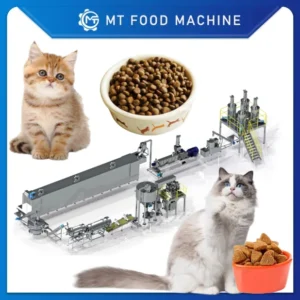
MT135 Brand 2.5-3.0t/h PLC Controlled Multi-Species Cat Food Processing Line
¥55,000.00 Select options This product has multiple variants. The options may be chosen on the product page