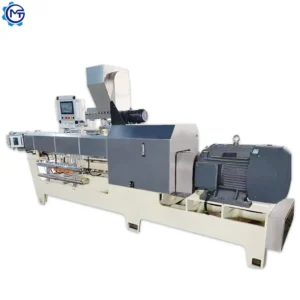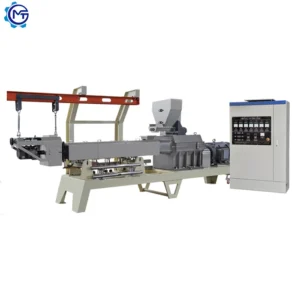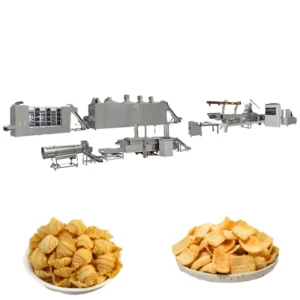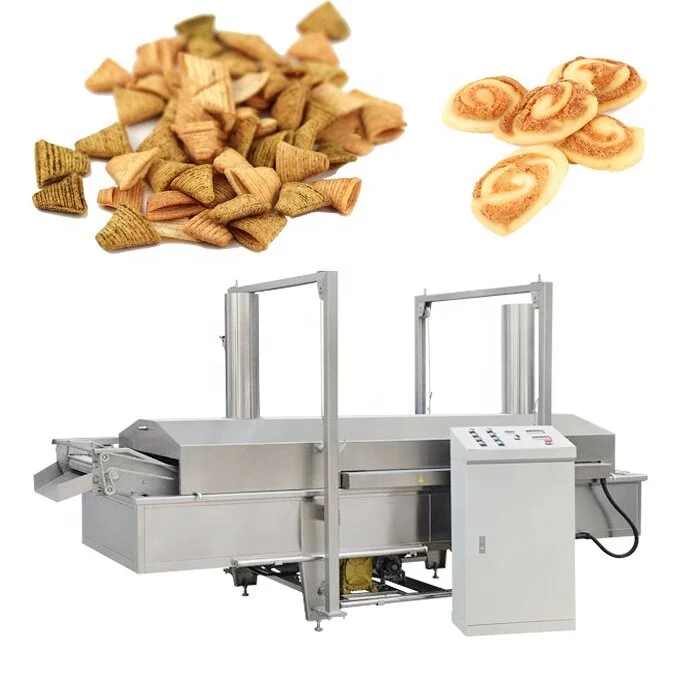


MT65 / MT70 / MT70c / MT75 Twin Screw Extruder, 22–55 kW, Fried Snack Chips Line — configured for corn flour formulations targeting Nacho, tortilla, and Doritos-style chip formats. Screw geometry and die profile are matched to your raw material and target chip density, with throughput balanced across extrusion, frying, and double-drum flavoring stations. PLC and MCC control with Siemens motors and automatic gearbox lubrication ensures stable continuous runs. Complete line layout, in-house trial runs on your raw material before shipment, and on-site commissioning with operator training included.
Description
Matched Throughput Across Stations — the twin screw extruder, fryer, and flavoring drums are sized to the same output envelope, so no single station chokes the line when you run your actual corn flour formulation.
Technical Specifications
| Parameter | Value |
|---|---|
| Product Type | Twin Screw Extruder for Fried Snack Chips Production Line |
| Model | MT65 / MT70 / MT70c / MT75 |
| Screw Type | Twin screw |
| Screw Material | Alloy (38CrMoAl), nitriding process |
| Main Power | 22 kW (MT65) / 30 kW (MT70) / 45 kW (MT70c) / 55 kW (MT75) |
| Real Power | 22 kW (MT65) / 30 kW (MT70) / 55 kW (MT70c) / 55 kW (MT75) |
| Output Capacity | 100–150 kg/h (MT65) / 150–200 kg/h (MT70) / 200–250 kg/h (MT70c) / 200–300 kg/h (MT75) (basis not stated in source — confirm raw material, moisture content, and product format) |
| Main Motor | Siemens |
| Gearbox | Automatic lubrication function |
| Feeding System | Food-grade stainless steel twin screw feeding machine |
| Cutting System | Cutting knife fixed in die head seat, rotary cutting by V-belt drive |
| Control System | Speed-adjusted converter on feeding, extrusion, and cutting systems |
| Cooling | Increased radiator on driving part for forced cooling |
| Line Stations | Mixing → Twin screw extrusion → Shaping → Hot-air expansion → Frying → Flavoring |
| Fryer Energy Options | Electric / diesel / gas |
| Certification | CE, ISO |
Application Suitability
| Application | Material or Output |
|---|---|
| Nacho and tortilla chip production | Corn flour with controlled moisture for sheet extrusion and frying |
| Doritos-style triangular fried chips | Corn-based dough extruded, shaped, and fried to target crunch density |
| Puffed extruded snack formats requiring post-frying | Corn grits or corn powder blended for specific starch gelatinisation |
| Snack line capacity expansion | Integration with existing batching or packing infrastructure |
What Happens When the Fryer Cannot Keep Up With the Extruder
A fried snack chips production line turnkey only works when every station is sized to the same throughput — otherwise the quoted capacity is theoretical.
On a project I worked on in West Africa, the snack producer sourced an extruder from one vendor and a fryer from another. The extruder pushed sheeted chips faster than the fryer could handle, so the belt backed up, chips stuck together, and oil temperature dropped with each overload batch. The operator spent most of the shift clearing jams instead of running product. Throughput matching is not a brochure exercise — it determines whether the line produces what was promised [NEED_CITE: throughput balancing in multi-station snack processing lines].
Screw Configuration and Die Design for Corn Flour Behaviour
Corn flour behaves very differently from corn grits or corn starch blends under shear and heat. The gelatinisation window shifts depending on particle size and moisture content entering the barrel. A fried snack chips production line turnkey must specify screw element arrangement — kneading blocks, reverse elements, and conveying sections — around the buyer’s actual formulation, not a generic setup. Die geometry then controls sheet thickness and surface texture, both of which determine how the chip behaves in hot oil.
Why Trial Runs on Your Raw Material Matter Before Shipment
I once set up a Doritos-style line where the standard test used clean corn flour, but the buyer’s local supply included cassava starch blended in. The starch structure caused uneven bubble formation during extrusion, and every chip fractured during frying. The line sat idle for two weeks while we reconfigured the screw profile and die. A trial run on the buyer’s exact raw material in the testing workshop catches these issues before the machines leave the factory, so product development begins before installation — not after [NEED_CITE: raw material variability impact on extrusion snack lines].
Reading the Specification Sheet Against Your Production Reality
The main motor range spans from 22 kW on the MT65 to 55 kW on the MT75, but motor rating alone does not tell you how much energy transfers into the dough. Barrel temperature profile, screw speed, and feed rate together determine shear energy and residence time. The speed-adjusted converter on feeding, extrusion, and cutting systems lets the operator fine-tune these three variables independently — critical when switching between chip formats or adjusting for moisture variation in incoming corn flour. The gearbox with automatic lubrication function reduces unplanned stops during long production runs, and the increased radiator on the driving part provides forced cooling that protects bearings under continuous high-load conditions. The Siemens main motor offers predictable torque curves and widely available spare parts across most export markets [NEED_CITE: motor availability and maintenance standards in food processing machinery].
The Hidden Cost of a Generic Build
When screw and die configuration is copied from a generic template rather than matched to your corn flour and target chip density, the consequences show up gradually. Chips may puff unevenly, absorb too much oil, or break during conveying to the flavoring drums. The fryer then runs below capacity because the upstream product does not meet spec, and the double-drum flavoring system sits half-empty. These losses compound across every shift, and most producers blame the operator before checking whether the extruder was configured for their material [NEED_CITE: extrusion screw configuration and product consistency].
Why Procurement Here Differs
The complete line — mixing, twin screw extrusion, shaping, hot-air expansion, frying, and double-drum flavoring with conveyor and sprayer — comes from one supplier, which means throughput is calculated across every station rather than assembled from mismatched quotes. Screw configuration and die design are specified to the buyer’s corn flour formulation, not borrowed from a default catalogue. The in-house testing workshop allows trial runs on customer raw material before shipment. The PLC/MCC control architecture with Siemens main motor and automatic gearbox lubrication supports stable, continuous operation on a fried snack chips production line turnkey. Pre-sales consultation covers line layout and utility planning, and on-site installation includes operator training and wear parts briefing.
Documentation & Verification
- Line layout and capacity calculation showing throughput match across extruder, fryer, and flavoring stations
- Screw and die configuration record matched to your corn flour formulation and chip density target
- Trial run report on customer raw material conducted in the testing workshop before shipment
- Electrical schematic with voltage and frequency confirmation for your target market
- CE declaration of conformity and ISO certificate
- Wear parts list covering screws, dies, and cutting knives
Installation, Commissioning & Support
- Foundation plan accounts for the 22,000–33,000 mm overall line length and fryer utility connections
- Electrical panel requires dedicated circuit matching confirmed voltage, frequency, and control language
- Line ships in sectioned modules for container loading and reassembly on site
- First run includes screw speed calibration, barrel temperature profiling, and fryer oil temperature mapping
- Operator training covers feed rate adjustment, cutting knife replacement, and automatic gearbox lubrication checks
- Spare wear parts shipment arranged before first scheduled screw and die replacement cycle
Before You Request a Quotation
Provide your corn flour specification sheet including particle size distribution and moisture content at arrival. Share your target chip format — Nacho, tortilla, or Doritos-style — along with daily output expectations and shift pattern. Confirm your workshop floor dimensions, ceiling height, and local voltage and frequency standards so the electrical package is built correctly from the start. If you have existing batching or packing equipment, include model details so the line integrates without redundant stations.
Frequently Asked Questions
Q: How is line throughput verified across extruder, fryer, and flavoring stations to prevent bottlenecks?
A: Each station is sized using capacity calculations based on the same raw material and product format. The layout document shows mass flow balance from mixing through extrusion, hot-air expansion, frying, and into the double-drum flavoring system, so no single station restricts the line below the quoted range.
Q: What raw material and moisture conditions are assumed when quoting output capacity?
A: Output figures in the specification sheet are listed by model without a stated basis. Before quotation, we request your corn flour moisture content and formulation so the capacity is recalculated for your actual material and confirmed in the trial run report.
Q: Can a trial run be conducted on our specific corn flour formulation before shipment?
A: Yes. The in-house testing workshop runs your raw material through the configured extruder, allowing us to verify screw and die performance, chip texture, and expansion behaviour before the line is packed for dispatch.
Q: How are voltage, frequency, and control language confirmed for our target market before production?
A: The electrical schematic is prepared after confirming your site supply specifications. The control panel labeling, HMI language, and motor winding configuration are set to match your local standards and operator requirements before assembly begins.
Q: What does on-site installation, commissioning, and operator training look like for a complete fried chip line?
A: Engineers supervise module reassembly, utility hookup, and first-run parameter setting. Operator training covers feeding system adjustment, extruder screw speed control, fryer temperature management, and flavoring drum operation, followed by a wear parts briefing covering replacement intervals for screws, dies, and cutting knives.
Related products
-
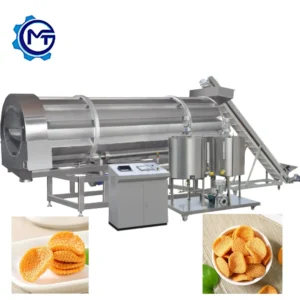
Automatic Rice Crust Chips Making Machine Bugles Pizza Rolls Fried Snack Food Processing Line Machine
¥8,570.00 Select options This product has multiple variants. The options may be chosen on the product page -
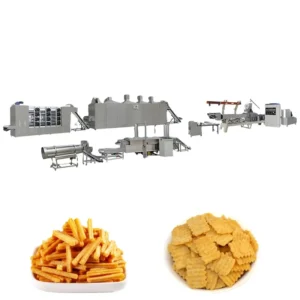
Fried Bugles Chips Production Line Fried Doritos Tortilla Snack Food Extruder
¥100.00 Select options This product has multiple variants. The options may be chosen on the product page -
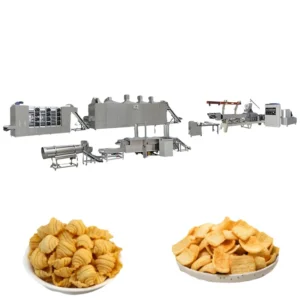
New Doritos Chips Frying Equipment Machine Automatic Tortilla Corn Chips Making Line Portable High Productivity
¥100.00 Select options This product has multiple variants. The options may be chosen on the product page -
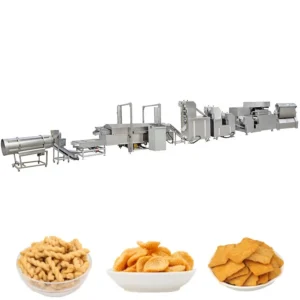
Frying Crispy 3D Corn Bugles Pellets Fried Chips Snacks Food Machine Production Line Bugles Making Extruder
¥100.00 Select options This product has multiple variants. The options may be chosen on the product page