

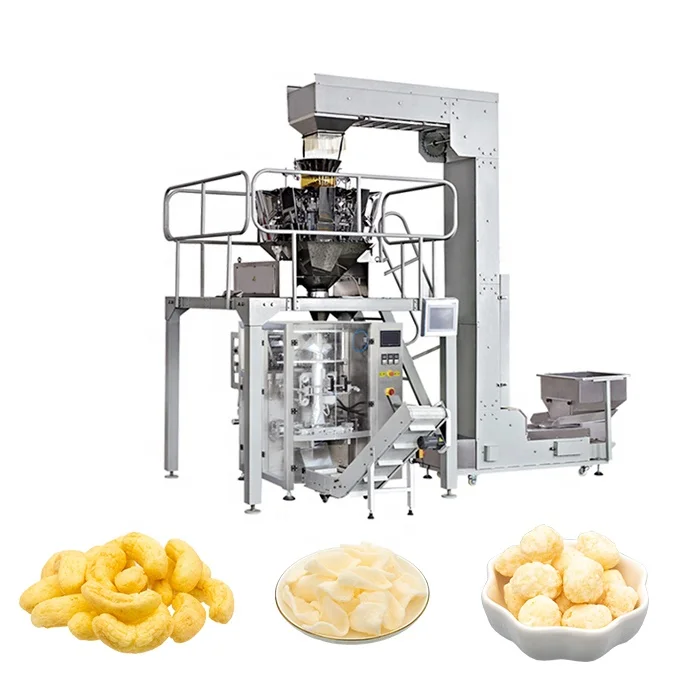
Twin Screw Puffed Snack Food Extrusion Line, 380V/50Hz, Food-Grade SS304 — delivers matched throughput across mixing, extrusion, cooling, roasting and packing stations for corn chips, rice puffs and core-filled snacks. Screw configuration and die design are specified to your raw material and target density, with interchangeable moulds for multiple product formats. Energy options include electricity, gas, diesel or steam per station. – In-house trial runs on your raw material before shipment confirm output and texture. – Line layout and capacity calculation provided for every station to eliminate bottlenecks. – Pre-sales consultation through on-site installation, commissioning and operator training.
Description
Integrated Throughput Matching — Every station from batching to packing is calculated against your actual recipe moisture and target chip density, not assembled from standalone units that create hidden bottlenecks.
Technical Specifications
| Parameter | Value |
|---|---|
| Product Type | Twin Screw Puffed Snack Food Extrusion Line |
| Extruder Configuration | Double screw (twin-screw) |
| Rated Power | ~100 kW (electric heating variant); ~50–60 kW (gas/diesel heating variant) (basis not stated in source — confirm product variant and heating method) |
| Voltage & Frequency | Three phase 380 V / 50 Hz; Single phase 220 V / 50 Hz (customizable to local voltage) |
| Construction Material | Food-grade stainless steel 201 / 304 |
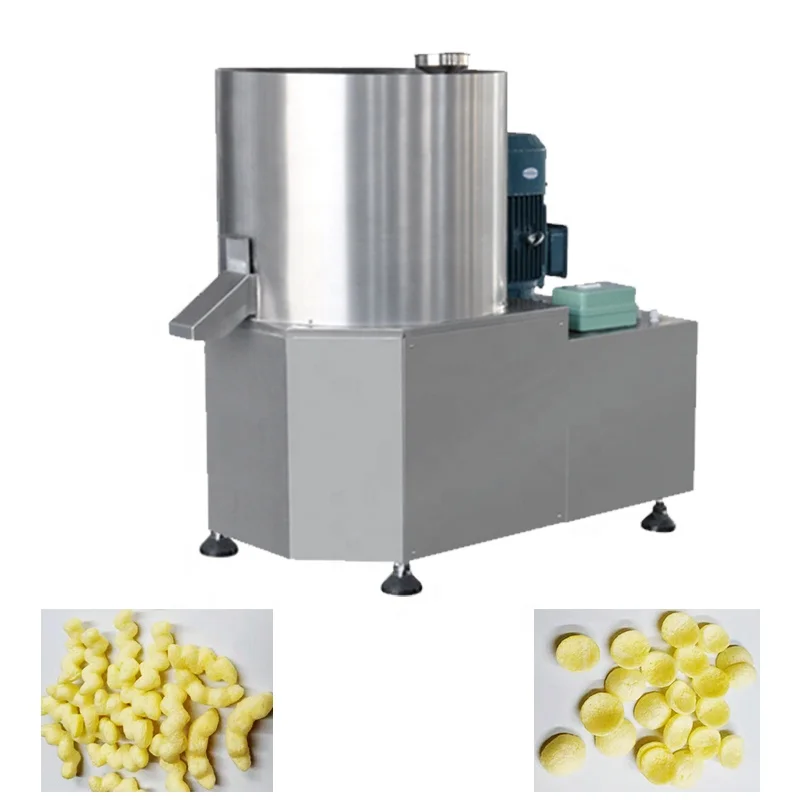
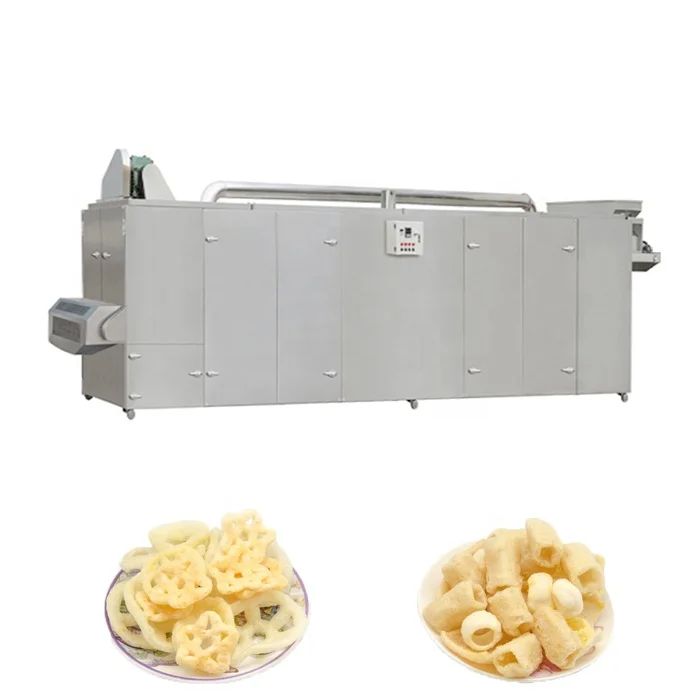
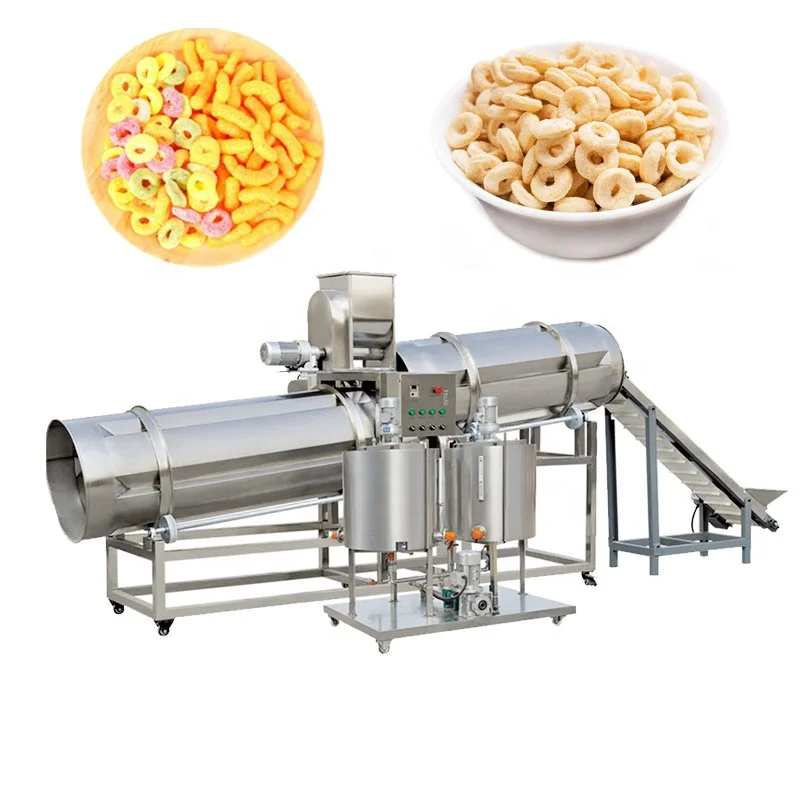
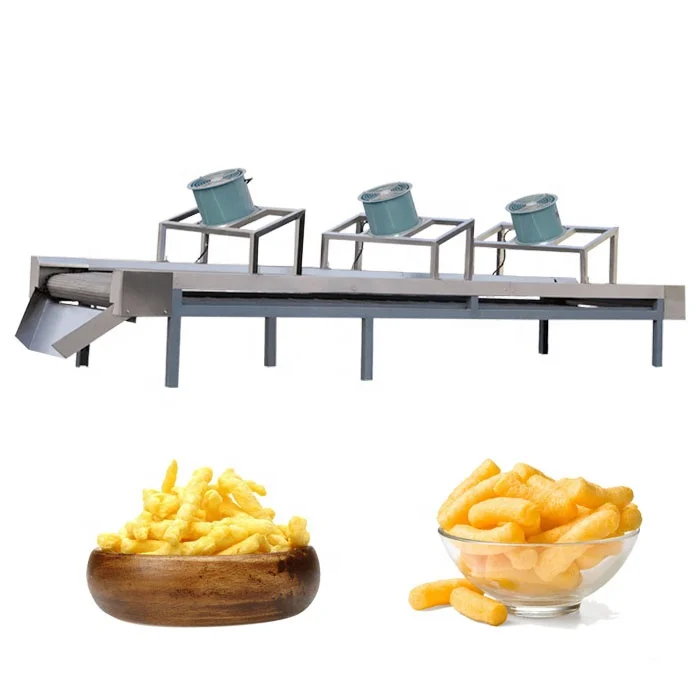
| Line Stations | Mixer → Extruder → Vibrate cooler → Roasting / drying → Flavoring → Packing |
| Output Capacity | Basis to be confirmed (dependent on raw material, moisture content, and target product format) |
| Die / Mould Options | Interchangeable moulds for multiple shapes (core-filled, sheet, pillow, rice cake formats) |
| Raw Materials | Rice, millet, brown rice, buckwheat, wheat, maize, corn and other cereals; can be fortified with vitamins, proteins and minerals |
| Energy Options | Electricity / gas / diesel / steam (selectable per machine station) |
| Electrical Components | Siemens (China) or domestic top-brand motors; Delixi or Delta inverters (source value — verify against manufacturer catalog) |
| Control System | Basis to be confirmed (PLC / MCC / inverter brand and HMI language) |
| Standards | CE, ISO (certificates available on request) |
Application Suitability
| Application | Material or Output |
|---|---|
| Puffed corn chip production | Maize grits, corn flour blends |
| Rice puff and rice cake extrusion | Rice flour, brown rice, millet |
| Core-filled snack production | Cereal base with chocolate or cream filling |
| Fortified nutritional snacks | Wheat, buckwheat blended with vitamin and mineral premix |
| Small-scale startup snack lines | Mixed cereal formulations across multiple format changes |
Why the Rated Capacity Number Is Only Half the Story
A twin screw snack food extrusion production line turnkey only delivers its quoted throughput when the screw profile, die geometry, and dryer capacity are all matched to your specific recipe and moisture window.
I once watched a breakfast cereal line stall at half its nameplate output because the buyer’s formula included a heavy share of whole wheat flour, and the extruder was configured with a generic screw build suited only to pure corn grits. The expansion rate collapsed, the downstream dryer could not keep up with the wetter output, and the entire shift rhythm broke down. When the dryer is oversized but the extruder is misconfigured, or vice versa, the bottleneck simply moves rather than disappears [NEED_CITE: throughput matching principles in sequential food processing lines]. That is why the first thing I request after receiving an inquiry is the buyer’s actual formulation and a sample of the raw material for a bench trial, before any capacity number enters the proposal.
Line-Wide Capacity Synchronization
A snack extrusion line is only as fast as its slowest station. When the extruder pushes product into a dryer that cannot remove moisture quickly enough, the belt backs up, the product over-dries or under-dries, and operators start manually adjusting belt speed to compensate. This twin screw snack food extrusion production line turnkey addresses that by sizing every station — mixer batch cycle, extruder screw speed, vibrating cooler dwell time, roasting or drying pass-through rate, and flavoring drum residence — from the same target output figure. The result is a continuous flow where no single station forces the next one to idle or rush.
Screw and Die Configuration Against Raw Material
The twin-screw extruder at the heart of this line is not built from a standard parts kit. The screw element sequence — conveying, kneading, reverse-pitch, and metering sections — is assembled based on the starch content, protein level, and particle size of the buyer’s flour blend. Die aperture and land length are then selected to control expansion ratio and cell structure. A high-fiber whole-grain recipe demands a different compression profile than a pure maize grit formulation, and the die must be matched accordingly. Getting this right in the testing workshop before shipment prevents weeks of on-site trial and error after installation [NEED_CITE: screw configuration impact on extrudate density and expansion].
Reading the Specifications That Matter
The rated power split between electric heating (~100 kW) and gas/diesel heating (~50–60 kW) is not simply an energy preference — it dictates the thermal response profile of the barrel zones. Electric heating offers tighter zone-by-zone temperature control, which matters when processing heat-sensitive fortified blends where vitamin degradation must be minimized. Gas or diesel heating, on the other hand, delivers faster heat recovery in high-throughput roasting stations and is often preferred where industrial electricity tariffs are steep. The food-grade stainless steel 201/304 contact surfaces ensure compliance with hygiene standards across both wet mixing and high-temperature extrusion zones. Voltage customization (380 V three-phase or 220 V single-phase, plus local variants) prevents the common commissioning delay that occurs when a control panel arrives wired for a frequency the local grid does not support.
The Cost of Ignoring Configuration Details
When a line is ordered on price and catalog capacity alone, the consequences surface after installation. A screw built for corn grits will choke on a buckwheat-heavy blend, producing uneven puffs that fail the buyer’s own quality spec. A dryer that is too short for the actual moisture load leaves the product soggy inside the packaging, triggering mold complaints within weeks. Unconfirmed voltage and control language mean the electrician on site cannot energize the panel without a return visit from the supplier’s engineer, adding downtime and travel costs that were never budgeted [NEED_CITE: common causes of post-installation downtime in food extrusion projects]. These are not theoretical risks — they are the most frequent issues I see raised in post-commissioning service calls.
Why Procure This Line Here
Every station in this twin screw snack food extrusion production line turnkey is sourced and sized under one supplier, eliminating the finger-pointing that happens when a mixer vendor blames the extruder vendor for a throughput gap. The screw and die configuration is documented against the buyer’s raw material sample, not copied from a generic catalog build. An in-house testing workshop allows trial runs on the buyer’s actual formulation before the line ships, so product development happens on our floor, not yours. Electrical schematics, voltage confirmation, and HMI language are verified during the pre-shipment review, reducing on-site commissioning surprises. Pre-sales consultation carries through to on-site installation, operator training, and ongoing wear parts supply.
Documentation & Verification
- Line layout with capacity calculation matched to your cereal blend and target chip format
- Screw and die configuration record tied to your raw material trial results
- Electrical schematic confirming voltage, frequency, and control language for your market
- Factory test record documenting output on your actual raw material before dispatch
- CE declaration of conformity and ISO certificate for customs and regulatory clearance
- Wear parts list with reorder codes for screws, dies, and barrel liners
Installation, Commissioning & Support
- Foundation and floor plan issued based on actual station footprint and ~100 kW total connected load
- Dedicated three-phase 380 V / 50 Hz circuit requirements confirmed before panel build
- Extruder barrel and screw elements shipped disassembled for site reassembly and alignment check
- First-run parameter setting including barrel zone temperatures, screw speed, and die clearance
- Operator training covering mould changeover, screw cleaning, and emergency stop procedures
- Spare screw elements and die plates supplied with initial shipment for first replacement cycle
What to Prepare Before Requesting a Quotation
To size this twin screw snack food extrusion production line turnkey accurately, share your target product format (corn chip, rice puff, core-filled pillow), the primary cereal or flour blend with approximate moisture content, and the daily or hourly output target. Confirm your workshop floor dimensions and ceiling height, the local voltage and frequency standard, and the preferred HMI language. If you have existing upstream or downstream equipment you intend to keep in the flow, provide the model and capacity so the new line can be matched to it.
Frequently Asked Questions
Q: How is the actual line capacity verified before shipment?
A: We run your raw material through the extruder in our testing workshop using the proposed screw and die configuration. The trial run report documents throughput, expansion ratio, and product density against your target specification, so the capacity figure in the proposal reflects your recipe, not a generic benchmark.
Q: How do you match voltage and control language to my factory?
A: During the specification confirmation stage, we collect your local voltage, frequency, and preferred HMI language. The electrical schematic and panel build are then adjusted accordingly, and the control cabinet is tested at the correct frequency before packing to avoid commissioning delays.
Q: How is the screw configuration decided for my formulation?
A: We analyze your raw material’s starch, protein, and fiber content along with particle size and moisture level. The screw element sequence — conveying, kneading, and metering sections — is then assembled and validated during the in-house trial run to achieve the target expansion and texture.
Q: What prevents dryer or flavoring bottlenecks after the extruder?
A: Each downstream station is sized based on the extruder’s verified output at your recipe’s moisture content. The dryer pass-through rate, cooler dwell time, and flavoring drum capacity are calculated together so no single station restricts the line’s continuous flow.
Q: Can I send my raw material for a trial run before ordering?
A: Yes. Sending a representative sample of your flour blend or cereal mix allows us to conduct a trial run in the testing workshop. The results form the basis of the screw configuration, die selection, and capacity guarantee included in the final proposal.
Related products
-

Puff Corn Extruder Machine Puffed Core Filled Snack Food Production Line Machine
¥8,500.00 Select options This product has multiple variants. The options may be chosen on the product page -

Puffed Snacks Seasoning Flavor Machine Twin Screw Corn Puffing Food Making Extruder Equipment
¥8,355.00 Select options This product has multiple variants. The options may be chosen on the product page -

Hot Sale Corn Snack Extruder Puffed Snacks Production Machine Corn Puffs Making Machine
¥20,000.00 Select options This product has multiple variants. The options may be chosen on the product page -

Automatic Puffed Food Snack Machine Electric Corn Puffs Snacks Making Machinery New Condition Flavorful Puff Snack Production
¥7,550.00 Select options This product has multiple variants. The options may be chosen on the product page

