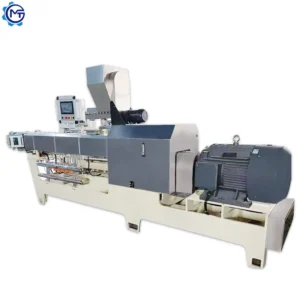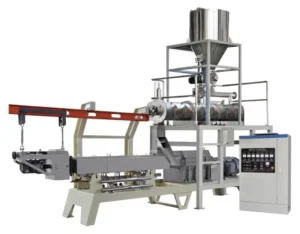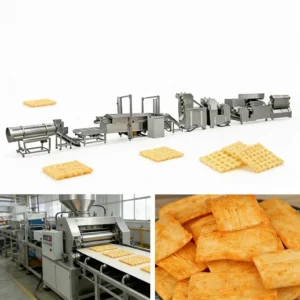


Continuous Frying Machine for Snack Production Line, 380V, PLC Control, 60 kW Heating — designed for fried corn chips, bugles, and puffed maize snacks with double-layer mesh belt and stepless frequency speed regulation.
Throughput matching across extrusion, frying, and packing stations ensures the continuous fryer integrates into a complete turnkey project without bottleneck risk. Oil filtration, automated lifting, and food-grade 304 stainless steel construction support stable unattended production runs.
In-house testing workshop trial runs on customer raw material before shipment, with line layout and capacity calculation confirming matched output at every station.
Description
Integrated Project Execution — Throughput between extrusion, frying, and packing is calculated as one system rather than sourced from separate equipment vendors and assembled on site.
Technical Specifications
| Parameter | Value |
|---|---|
| Product Type | Continuous Frying Machine for Snack Production Line |
| Applicable Industries | Food & Beverage Factory, Food & Beverage Shops |
| Power Source | Electric / Gas (configurable) |
| Voltage | 380V / 50Hz |
| Heating Tube Power | 60 kW |
| Drive Power | 2.6 kW |
| Oil Capacity | 320 L |
| Overall Dimensions (L×W×H) | 6700 × 2200 × 1200 mm |
| Weight | 2000 kg |
| Capacity | 100–1000 kg/h (basis to be confirmed) |
| Control System | PLC |
| Construction Material | Food-grade 304 Stainless Steel |
| Belt System | Upper and lower double-layer mesh belt, frequency conversion stepless speed regulation |
| Oil Filtration | Continuous oil circulation filtration system |
| Lifting System | Automatic lifting system for upper hood and mesh belt |
| Slag Discharge | Bottom slag discharge system |
| Key Features | Fully assembled, continuous oil filtration, automated lifting and slag discharge |
Application Suitability
| Application | Material or Output |
|---|---|
| Fried corn chip production | Corn grits and corn flour blends formed into triangle or shell shapes |
| Bugles and horn snack processing | Extruded corn-based dough expanded through frying |
| Fried maize snack lines | Maize flour pellets or direct-extruded shapes |
| Puffed snack finishing | Extruded pellets, 2D and 3D shapes requiring oil frying for final texture |
Why the Frying Station Defines the Entire Snack Line Output
A fryer that cannot absorb the extruder’s full output caps the line regardless of upstream capacity.
I worked on a project last year where a snack producer in the Middle East had a twin-screw extruder rated well above their target output, yet the line never reached that number. The bottleneck was not the extruder or the dryer — it was the fryer, which had been specified by belt width alone without calculating the oil recovery time needed between product loads. When the frying chips making machine production line runs corn-based dough at high moisture, the oil temperature drops sharply with each batch, and recovery time dictates real throughput. [NEED_CITE: thermal recovery requirements for continuous industrial fryers processing high-moisture extruded snacks] This mismatch only appears after installation, when the line is supposed to be running at full rate and the fryer cannot keep up.
Oil Temperature Stability and Product Consistency
The frying chips making machine production line depends on stable oil temperature to produce chips with uniform colour, texture, and oil absorption. The 60 kW heating tube power in this continuous fryer is sized to recover temperature quickly after product enters the oil bath. When corn dough pieces drop into 320 L of oil, the thermal mass must be sufficient to hold the setpoint within a narrow band. If the temperature oscillates, some pieces absorb excess oil while others remain under-cooked inside, creating inconsistent product that fails quality checks at packing.
Double-Layer Mesh Belt and Frying Time Precision
The upper and lower double-layer mesh belt with frequency conversion stepless speed regulation controls exactly how long each piece stays submerged in oil. For bugles and corn chips, frying time determines the final moisture content and crunch. The stepless drive means the operator can adjust belt speed in fine increments rather than fixed steps, matching the fryer residence time to the exact expansion and moisture target of the product format being run that day. [NEED_CITE: continuous frying belt speed control methods for extruded snack formats]
Throughput Matching Across Extrusion, Frying, and Packing
When a frying chips making machine production line is designed as a turnkey project, every station must pass the same mass flow. The extruder produces wet extrudate at a given rate; the fryer must accept that rate while maintaining oil temperature; the cooling conveyor must handle fried product without pile-up. If any station is undersized, the entire line slows to match the weakest link. The line layout and capacity calculation document should show the throughput at each station based on the buyer’s actual raw material formulation and target product specification, not generic catalogue figures.
Specifying a Fryer Without Matching the Extruder Output
I have seen snack lines where the extruder was chosen first and the fryer added later as an afterthought, specified only by oil tank volume. When the line started up, the extruder produced more wet product per hour than the fryer could process at the required oil temperature, forcing the operator to slow the extruder down. The quoted line capacity was never reached, and the producer spent months trying to adjust screw speed and feed rate to compensate. [NEED_CITE: production line throughput mismatch consequences in snack food manufacturing] A turnkey project approach calculates the fryer capacity from the extruder output, not the other way around.
Why Procurement Through a Single Line Supplier Changes the Outcome
The extruder, fryer, dryer, and packing station are configured together so that throughput is calculated across every station rather than assumed from individual machine ratings. Screw configuration and die design are specified to the buyer’s raw material and target chip density before frying, ensuring the extrudate entering the fryer has the correct moisture and expansion profile. The in-house testing workshop runs the buyer’s actual corn flour or grits formulation through the extruder and fryer before shipment, verifying that the frying chips making machine production line produces the target texture and colour on real material. Electrical schematics are confirmed against the buyer’s local voltage and frequency standard, and the PLC control language is set before the line leaves the factory.
Documentation & Verification
- Line layout drawing showing throughput match between extruder, fryer, and packing stations
- Trial run report on your actual corn flour or grits formulation before dispatch
- Electrical schematic with voltage and frequency confirmed to your local supply standard
- Screw and die configuration record matched to your target chip density before frying
- Operation and maintenance manual with frying temperature and belt speed parameters
Installation, Commissioning & Support
- Floor plan and utility layout provided for the 6700 × 2200 mm fryer footprint and drainage requirements
- Power connection specified for 380V / 50Hz with dedicated 60 kW circuit for heating tubes
- Machine arrives fully assembled; oil fill, belt alignment, and PLC calibration completed on site
- First production run supervised with temperature and belt speed parameters recorded for your product format
- Operator training covers oil filtration system maintenance, slag discharge procedure, and daily cleaning cycle
- Wear parts list includes mesh belt sections, heating elements, and filtration media with replacement intervals
Before You Request a Quotation
To configure a frying chips making machine production line that matches your production target, the key inputs are your raw material formulation (corn flour type, fat content, moisture), your target chip format and weight per piece, and your local voltage and frequency standard. If you have an existing extruder upstream, its model and current output rate determine the fryer sizing. Workshop trial runs on your actual material are available before the line is built.
Frequently Asked Questions
Q: How is line throughput verified across extrusion, frying, and packing stations to prevent bottlenecks?
A: A capacity calculation is prepared during the proposal stage showing the mass flow at each station — extruder output, fryer absorption rate at your oil temperature setpoint, cooling conveyor speed, and packing rate. Each figure is based on your raw material formulation, not generic catalogue data. The trial run in the testing workshop then confirms these numbers on your actual material before the line ships.
Q: What is the basis for the stated capacity range, and how is it recalculated for a specific formulation?
A: The 100–1000 kg/h range is a general indicator and depends on product format, moisture content of the extrudate entering the fryer, oil temperature, and belt speed. For your specific corn flour or grits formulation, the capacity is recalculated based on the oil recovery time and the belt residence time needed to reach your target final moisture. The confirmed figure is documented in the trial run report.
Q: What voltage, frequency, and control language options are confirmed before production begins?
A: The standard configuration is 380V / 50Hz, but voltage and frequency are confirmed against your local supply standard during the specification stage. The PLC interface language is set to your preference — English, Spanish, Arabic, or other options — and the electrical schematic is updated to reflect your site conditions before the control panel is wired.
Q: How are installation phasing and operator training planned for a complete turnkey project?
A: The installation schedule covers foundation preparation, utility connections for the 60 kW heating circuit, machine positioning, oil filling, and sequential commissioning from extruder through fryer to packing. Operator training is conducted during the first production runs and covers PLC operation, oil filtration maintenance, belt speed adjustment, and daily cleaning procedures specific to your product format.
Q: What spare wear parts list and documentation package are provided with the line at shipment?
A: The shipment includes a wear parts list identifying mesh belt sections, heating elements, filtration media, and seals with part numbers and recommended replacement intervals. The documentation package contains the line layout, machine specification sheet, screw and die configuration record, electrical schematic, trial run report, operation manual, CE declaration of conformity, and packing photographs for customs clearance.
Related products
-
High-Yield Automated Fried Snack Production Line – Double Screw Salad Strips & Millet Crust Making Equipment
¥65.00 Select options This product has multiple variants. The options may be chosen on the product page -
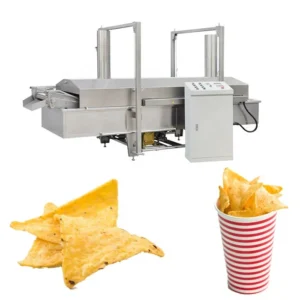
New Fully Automatic Large Capacity 304 Stainless Steel Savory Frying Snack Production Line Crisp Bugles Chips Processing Machine
¥30.00 Select options This product has multiple variants. The options may be chosen on the product page -
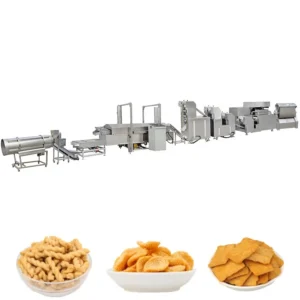
Electric Heating Fried Puffed Food Production Line – Salad Sticks Making Equipment
¥65.00 Select options This product has multiple variants. The options may be chosen on the product page -
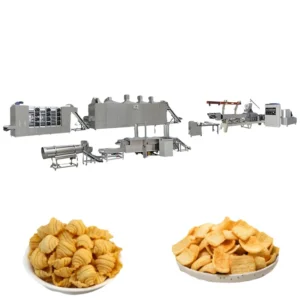
New Doritos Chips Frying Equipment Machine Automatic Tortilla Corn Chips Making Line Portable High Productivity
¥100.00 Select options This product has multiple variants. The options may be chosen on the product page