

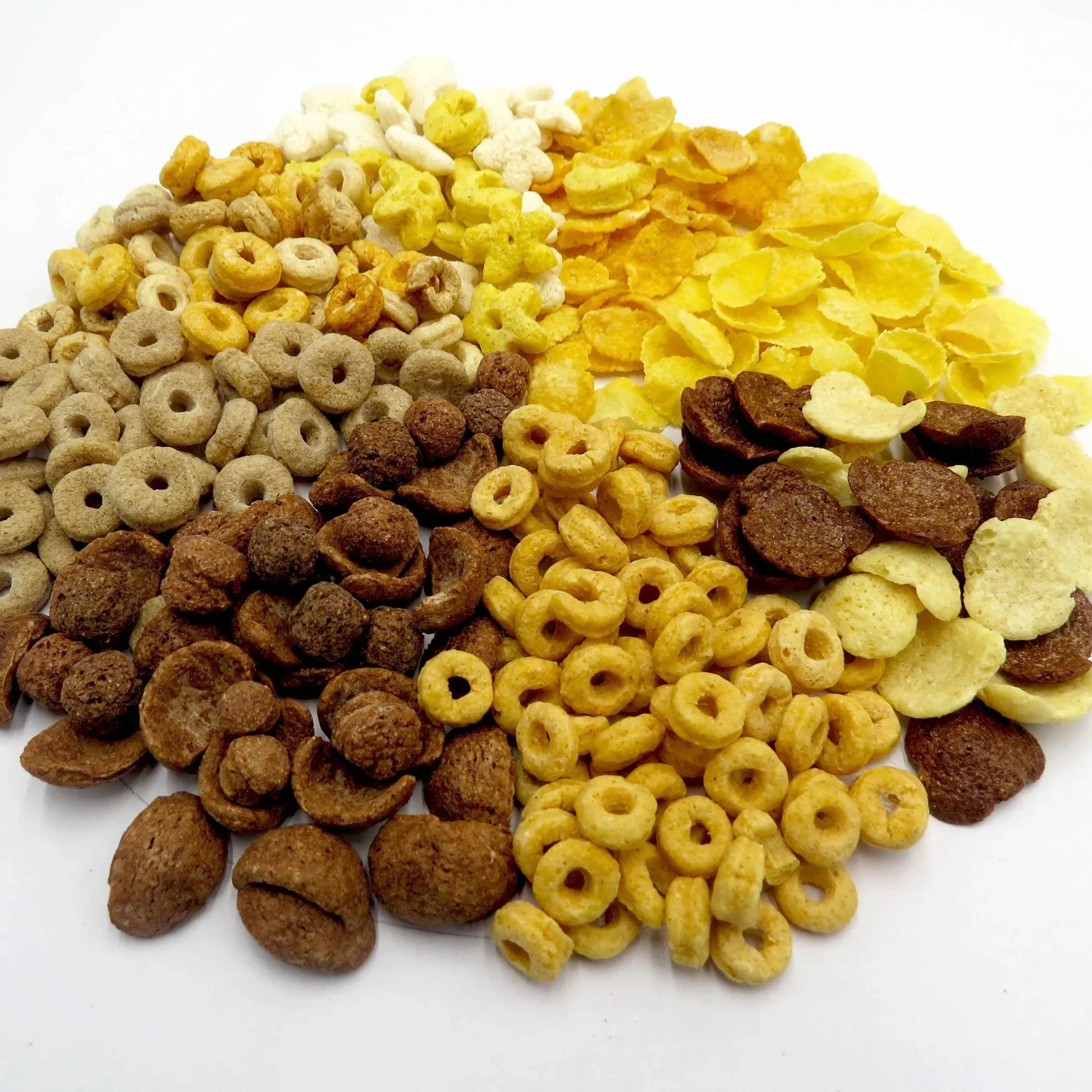
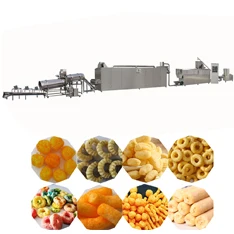
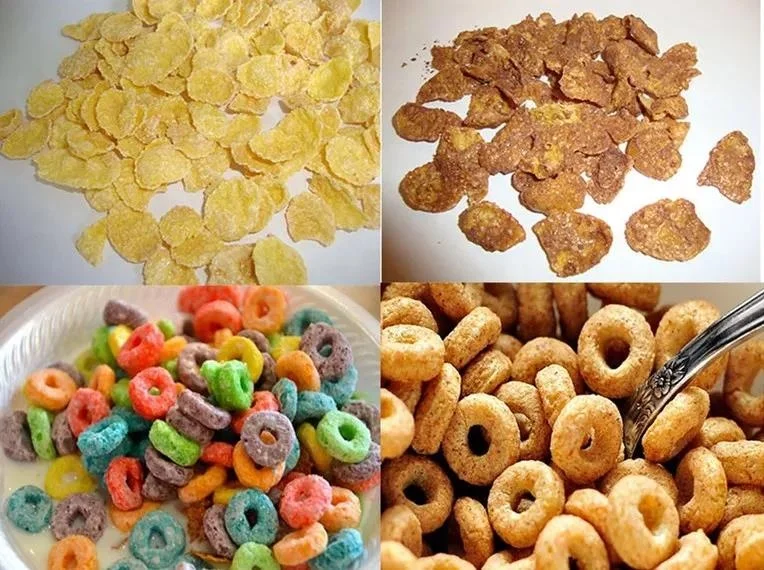
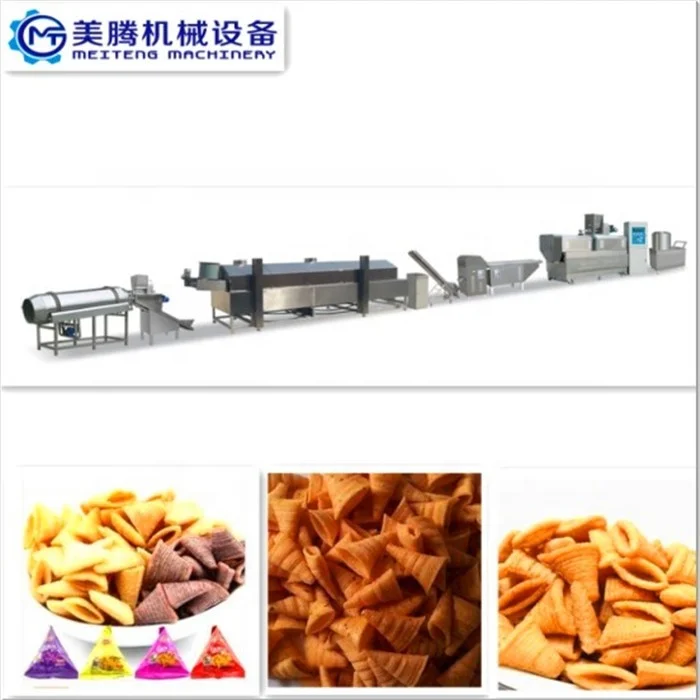
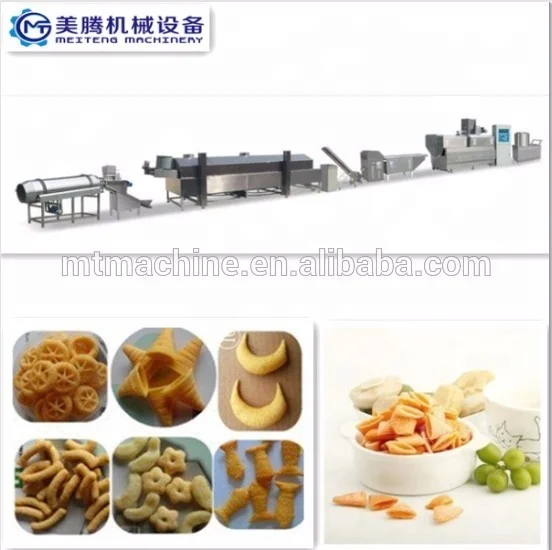
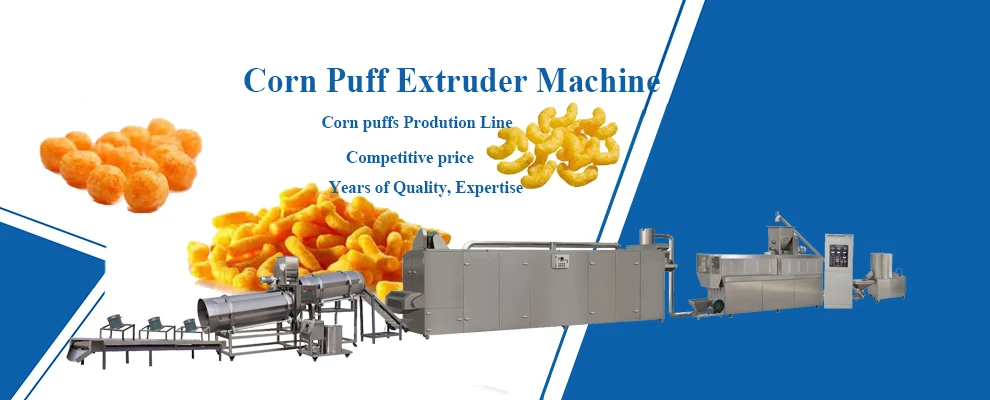
MT65 / MT70 / MT85 Corn Flakes Extrusion Production Line, twin-screw, PLC and MCC control — configured from batching through extrusion, multilayer oven drying, seasoning, and packing as one throughput-matched turnkey system.
- Screw configuration and die design specified to your raw material and target flake density, with 0–200 °C adjustable multilayer electric oven for uniform toasting
- Core injection capability for peanut butter or chocolate filling, 2–20 cm adjustable cut length, supporting corn flakes, rice crispies, and wheat flaking formats
- Line layout and capacity calculation provided to verify throughput match across every station before shipment
- In-house trial run on customer raw material confirms product texture and output prior to delivery
Description
Throughput-Matched Layout — Every station from the batching mixer to the packing scale is balanced on a single line drawing so the extruder never starves the oven or floods the flaking rolls.
Technical Specifications
| Parameter | Value |
|---|---|
| Model | MT65 / MT70 / MT85 |
| Product Type | Corn Flakes & Rice Crispies Extrusion Production Line |
| Screw Type | Twin-screw |
| Output Capacity (MT65) | 100–150 kg/h (basis to be confirmed) |
| Output Capacity (MT70) | 150–200 kg/h (basis to be confirmed) |
| Output Capacity (MT85) | 200–350 kg/h (basis to be confirmed) |
| Installed Power (MT65) | 86.35 kW |
| Installed Power (MT70) | 90.75 kW |
| Installed Power (MT85) | 121.06 kW |
| Power Consumption (MT65) | 55 kW |
| Power Consumption (MT70) | 57 kW |
| Power Consumption (MT85) | 85 kW |
| Overall Dimensions (MT65) | 21,000 × 1,200 × 2,200 mm |
| Overall Dimensions (MT70) | 23,000 × 1,500 × 2,200 mm |
| Overall Dimensions (MT85) | 28,000 × 3,500 × 4,300 mm |
| Control System | PLC and MCC |
| Oven Type | Electric multilayer (3 / 5 / 7-layer), 0–200 °C adjustable, stainless steel mesh belt |
| Cutting Range | 2 cm–20 cm adjustable |
| Core Injection | Peanut butter, chocolate sauce, and similar viscous fillings |
| Raw Materials | Corn flour, rice flour, wheat flour, grain flour |
| Seasoning Options | Octagonal drum, cylinder drum, single-roller, double-roller; oil and sugar spraying |
| Standards | CE (since 2014), ISO certified |
Application Suitability
| Application | Material or Output |
|---|---|
| Corn flakes production | Corn flour, grits, sugar, malt syrup |
| Chocolate-coated corn flakes | Corn flakes base with chocolate enrobing |
| Rice crispies and puffed rice | Rice flour, rice grits |
| Wheat flaking and bran snacks | Wheat flour, wheat bran blends |
| Core-filled sandwich snacks | Peanut butter, chocolate sauce injected into extruded tubes |
| Nutritional breakfast cereals | Multi-grain flour blends with vitamin premix |
Why a Turnkey Corn Flakes Extrusion Production Line Solves the Bottleneck Problem
A rated throughput only matters when every station on the floor can sustain it together.
I have watched lines stall not because the extruder was undersized, but because the dryer could not keep up with the moisture load coming off a high-hydration corn dough. On a project in the Gulf region, the flaking rolls slipped on material that was still too wet from an under-dimensioned oven, and the line sat idle while we re-balanced the drying time and roll gap. That corn flakes extrusion production line turnkey approach — where one supplier sizes every conveyor, oven layer, and seasoning drum against the same throughput target — removes the finger-pointing between vendors when the line does not run at nameplate speed [NEED_CITE: line balancing principles in continuous food extrusion].
Screw Configuration Dictates Flake Texture Before the Oven Ever Starts
The twin-screw extruder on this line uses a screw profile and die geometry set to the buyer’s specific flour blend and target flake density. A high-amylose corn flour requires a different shear history than a rice-wheat mix, and the barrel temperature zones are mapped accordingly. Getting the gelatinisation window right at the die face determines whether the pellet expands into a light crisp or a dense, hard piece that the flaking rolls cannot flatten evenly.
Multilayer Oven Design Controls Moisture Uniformity Across the Full Belt Width
The electric multilayer oven runs at 0–200 °C with a stainless steel mesh belt available in 3-layer, 5-layer, or 7-layer configurations. More layers give longer residence time without increasing the footprint — a practical advantage when workshop ceiling height is limited. Uniform drying across the belt width prevents the edge pellets from over-toasting while the center pellets still carry too much moisture into the flaking stage [NEED_CITE: thermal uniformity standards in food drying equipment].
Reading the Power and Footprint Numbers in Context
The MT65 draws 55 kW in operation across a 21-meter line length, while the MT85 pulls 85 kW along a 28-meter layout that stands over 4 meters tall. That height difference reflects the larger oven and elevator assemblies needed to handle higher volumes. Installed power figures sit above running consumption because start-up torque on the extruder drive and oven heating elements peaks during the initial heat-up cycle. Buyers planning the electrical feed should size the dedicated circuit around installed power, not running average, to avoid tripping breakers during cold starts. The PLC and MCC control manages these load transitions automatically, but the upstream transformer and switchgear must still carry the peak demand.
What Happens When Extruder Output and Oven Capacity Are Mismatched
An oven that cannot remove moisture fast enough forces the line to slow the extruder, cutting actual output below the rated figure. Wet pellets entering the flaking rolls produce ragged, uneven flakes that break during toasting and seasoning. Over time, sticky residue builds on the mesh belt and the roll surfaces, increasing unplanned downtime for cleaning. These are not warranty claims — they are layout errors that show up on the first production day [NEED_CITE: throughput mismatch consequences in cereal processing].
Why Sourcing the Complete Line From One Supplier Changes the Outcome
Throughput matching across every station means the mixer batch cycle, extruder feed rate, oven belt speed, and seasoning drum rotation are all calculated against the same target output before metal is cut. Screw configuration and die design are recorded against the buyer’s raw material sample, not copied from a generic catalog build. The in-house testing workshop runs the buyer’s actual flour blend before shipment, so texture and density adjustments happen at the factory, not on the customer’s floor weeks after delivery. Electrical schematics confirm voltage, frequency, and control language before production begins — a step that avoids rewiring on site in regions where supply voltage differs from the original quote assumption. Pre-sales layout design through on-site commissioning and operator training stays with one engineering team, so knowledge of the line carries from the first drawing to the first production run.
Documentation & Verification
- Line layout showing throughput match at every station from mixer to packing scale
- Screw and die configuration record tied to your specific flour blend
- Trial run report on your raw material produced in the testing workshop before dispatch
- Electrical schematic confirming voltage, frequency, and PLC language for your site
- CE declaration of conformity and ISO certificate for customs and local compliance
Installation, Commissioning & Support
- MT85 footprint requires a clear 28-meter floor span with 4.3-meter ceiling clearance
- Dedicated circuit sized to installed power rating, with isolated earth for PLC cabinet
- Oven arrives in modular sections; mesh belt tensioned and aligned during on-site assembly
- First production run includes screw speed, barrel zone, and oven temperature tuning
- Operator training covers PLC fault screens, belt tracking, and die changeover procedure
- Wear parts list includes screw elements, die inserts, and oven belt replacement sections
What We Need to Configure Your Line
Share your target product format — whether traditional corn flakes, rice crispies, or a core-filled variant — along with the flour blend and any premix additions you plan to run. Confirm your workshop ceiling height and available floor length so the oven layer count and elevator routing fit the building. Specify local voltage, frequency, and preferred control language so the MCC and PLC panels arrive ready to power on.
Frequently Asked Questions
Q: How is line capacity verified on my specific raw material and product format before shipment?
A: We run your actual flour blend through the extruder in our in-house testing workshop before the line ships. The trial produces real product samples and generates a written report covering screw speed, barrel temperatures, moisture content at the die, and flake density. Adjustments to screw configuration or die geometry are made during this stage so the line arrives already tuned to your recipe.
Q: How do you ensure throughput is matched between the extruder, oven, and seasoning stations?
A: Every station is sized during the layout phase against a single throughput target derived from your raw material and product specification. The oven layer count and belt speed are calculated to handle the moisture load from the extruder, and the seasoning drum volume is matched to the output rate. This prevents any single station from becoming a bottleneck that drags down the full line.
Q: What voltage, frequency, and control language options are confirmed before production?
A: We confirm your site voltage, frequency, and preferred PLC display language during the specification review stage, before any panel is wired. The electrical schematic is issued for your approval so the MCC and control cabinet arrive configured for your local power supply and operator language, avoiding rewiring or reprogramming delays during commissioning.
Q: How is screw configuration and die design selected for my target flake density and texture?
A: The screw element sequence and die opening are chosen based on your flour type, amylose content, and the density your market expects. High-amylose corn flour needs a different shear profile than a rice-wheat blend. We record the configuration in the machine documentation so future replacement screw sets reproduce the same product texture consistently across production batches.
Q: What does the on-site installation, commissioning, and operator training process include?
A: Our engineers oversee mechanical assembly, belt alignment, and electrical connection on your floor. Commissioning covers extruder ramp-up, oven temperature profiling, flaking roll gap setting, and seasoning drum calibration. Operator training addresses the PLC interface, routine maintenance intervals, die changeover, and fault response so your team can run independently from the first production shift.
Related products
-

Automatic High Productivity Puffed Corn Snacks Extruder Production Equipment New Condition Puff Snack Food Making Machine
¥11,050.00 Select options This product has multiple variants. The options may be chosen on the product page -

Puffed Snacks Seasoning Flavor Machine Twin Screw Corn Puffing Food Making Extruder Equipment
¥8,355.00 Select options This product has multiple variants. The options may be chosen on the product page -

Automatic Rice Crispies Extruder Machine/Chocolate Corn Flakes Extrusion Plant/wheat Flaking Snacks Production Line
¥8,500.00 Select options This product has multiple variants. The options may be chosen on the product page -

Stainless Steel Corn Puff Cake Making Machine Corn Snack Food Machines Top Selling Snacks Machine
¥8,560.00 Select options This product has multiple variants. The options may be chosen on the product page


