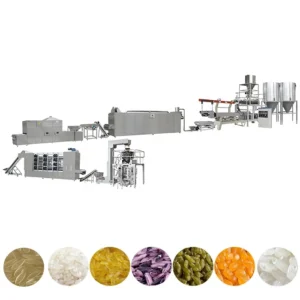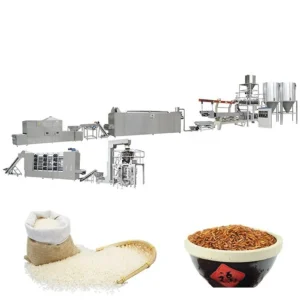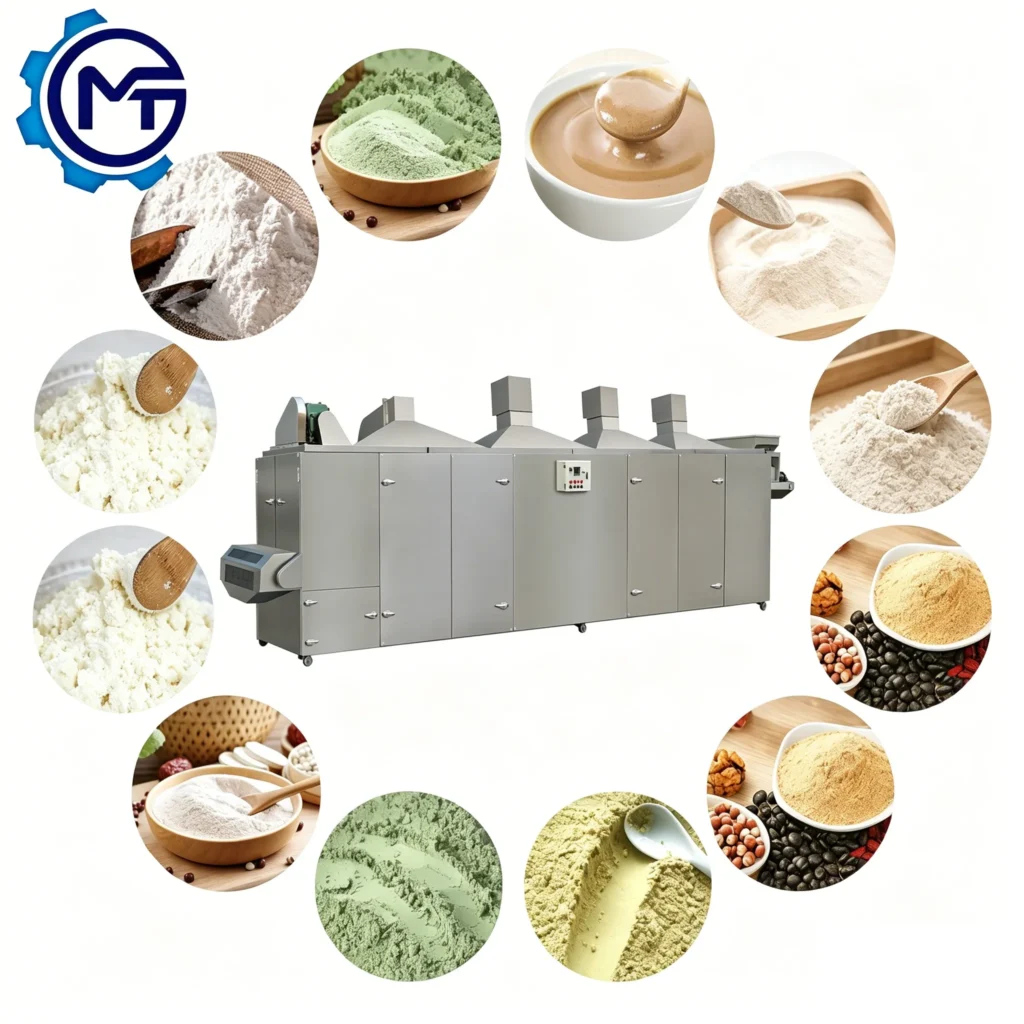


Nutritional Powder Processing Line, Full Automatic PLC Control, Food-Grade 304 Stainless Steel — engineered as a turnkey project from batching through extrusion, drying, and packing.
Designed for infant nutrition and grain-based powder production, this line matches throughput across every station to eliminate bottlenecks, with screw configuration and die design specified to your raw material formulation.
- Flexible heat source options (electric, gas, steam) adapted to factory utility conditions
- Multi-grain versatility covering rice, corn, beans, and diverse grain blends
Trial runs on your actual raw material are completed in our testing workshop before shipment, with full documentation provided.
Description
Integrated throughput engineering — every station from batching through extrusion to packing is calculated against the same raw material formulation, preventing the dryer bottleneck that fragments lines assembled from separate vendors.
Technical Specifications
| Parameter | Value |
|---|---|
| Product Type | Nutritional Powder Processing Line |
| Output Capacity | 200–500 kg/h (basis not stated in source — confirm raw material / moisture / formulation) |
| Construction Material | Food-Grade 304 Stainless Steel |
| Control System | Touch Control Panel with Digital System (PLC) |
| Heat Source Options | Electric / Gas / Steam |
| Raw Materials Processed | Rice, Corn, Beans, Various Grains |
| Automation Level | Full Automatic |
| Warranty | 1 Year |
| After-Sales Service | Overseas Engineer Service Available |
| Line Stations | Baking Ovens, Mixers, Extruder (full station list to be confirmed) |
Application Suitability
| Application | Material or Output |
|---|---|
| Infant nutrition powder production | Rice and multi-grain formulations for baby food |
| Rice cereal and porridge processing | Corn, rice, and blended grain bases |
| Fortified nutritional powder manufacturing | Bean-enriched and vitamin-fortified grain blends |
Why "500 kg/h" Means Nothing Without the Formulation
Capacity on a nutritional powder processing line turnkey is only valid when tied to the exact grain blend, moisture content, and target particle size you will actually run.
I learned this the hard way in Jinan. We configured a line rated for rice-based infant cereal, ran successful trials on standard rice flour, and shipped. The buyer in the Middle East substituted thirty percent bean flour into the mix. The gelatinisation temperature shifted, the extruder barrel pressure climbed, and output dropped below 300 kg/h. The line was not broken — it was simply tuned for the wrong recipe [NEED_CITE: starch gelatinisation temperature variation across grain types]. That failure now drives our insistence on testing with your actual raw material before any equipment leaves the workshop.
Turnkey Layout That Eliminates Station Mismatch
The most frequent failure in nutritional powder lines is not the extruder itself — it is the dryer or packing station that cannot keep pace. When a nutritional powder processing line turnkey is assembled from separate vendors, throughput numbers rarely align. The extruder may deliver 400 kg/h while the oven handles only 250 kg/h, forcing the entire line to idle or overflow. Our layout calculation starts with your target output and works backward through every station, sizing the mixer, extruder, dryer, and packing conveyor to the same validated throughput.
Phased Installation and Utility Planning
Greenfield facilities rarely have all utilities ready on day one. A nutritional powder processing line turnkey can be configured for phased commissioning — extruder and mixer installed first, dryer and packing added once steam or gas lines are operational. Each phase requires its own utility checklist: electrical load for the extruder motor, steam pressure for the oven, compressed air for pneumatic valves. We map these requirements against your factory’s available infrastructure [NEED_CITE: industrial utility planning for food processing facilities], so commissioning delays from missing connections are avoided before the first container arrives.
Reading the Specs That Actually Matter
The touch control panel with PLC digital system is not just a display — it stores recipe parameters including barrel temperature zones, screw speed, and feed rate, allowing operators to recall validated settings for each grain formulation without manual recalibration. Food-grade 304 stainless steel across contact surfaces prevents corrosion from acidic grain components and withstands the caustic wash-down cycles that food safety audits require. The flexible heat source options — electric, gas, or steam — determine your operating cost structure for the next decade; choosing wrong means either overpaying for electricity where gas is cheap, or installing a boiler you do not need. These are not optional upgrades — they are foundational decisions that must be confirmed before production begins.
The Hidden Cost of Skipping the Trial Run
Buyers who waive the pre-shipment trial run to save two weeks often lose two months on-site. Without a test on your specific rice-and-bean blend, the screw configuration and die design remain generic guesses. When the line finally starts in your factory, the powder density may fall outside specification, the gelatinisation may be incomplete, and the extruder may surge unpredictably. Correcting these issues requires shipping replacement screw elements and dies internationally — a process measured in weeks, not days [NEED_CITE: lead times for extruder wear parts shipped internationally]. The trial run in our testing workshop catches these mismatches before the line is crated.
Why Procure This Line Here
Every station on this nutritional powder processing line turnkey is engineered under one supplier, so the mixer capacity, extruder throughput, dryer residence time, and packing speed are calculated as a single system rather than negotiated across four purchase orders. The screw configuration and die design are specified to your grain formulation, not copied from a generic build — we adjust pitch, compression ratio, and die aperture based on trial run data from your actual raw material. Pre-sales consultation extends through on-site installation and commissioning, with operator training covering recipe recall on the PLC panel, screw element replacement procedures, and daily sanitation protocols. The in-house testing workshop validates your formulation before shipment, producing a trial run report that documents throughput, product density, and moisture content on your specific blend.
Documentation & Verification
- Line layout drawing with throughput matched across mixer, extruder, dryer, and packing stations
- Trial run report documenting output and powder density on your specific grain formulation
- Electrical schematic with voltage and frequency confirmed for your target market
- Screw and die configuration record matched to your raw material and target particle size
- CE declaration of conformity and ISO certificate for customs and regulatory clearance
Installation, Commissioning & Support
- Foundation requirements calculated from the extruder motor weight and vibration profile for your specific line configuration
- Dedicated electrical circuit sized to the rated power of the extruder, dryer, and all auxiliary motors combined
- Equipment shipped in modular sections with assembly sequence documented for your installation crew
- First-run parameter tuning on your grain blend conducted by our engineer during on-site commissioning
- Operator training covering PLC recipe storage, screw element inspection, and daily sanitation procedures
- Wear parts list with recommended spare screw elements and dies for your first twelve months of production
What We Need to Configure Your Line
Provide your grain formulation with percentages for each component, target daily output in finished powder weight, and the moisture content you expect at the extruder inlet. Share your factory floor dimensions including ceiling height and column spacing, along with available voltage, frequency, and whether steam, gas, or electric heating is preferred. Specify the HMI language your operators require and whether the line must integrate with existing upstream batching or downstream packing equipment.
Frequently Asked Questions
Q: How is the output capacity verified, and on which raw material formulation?
A: The 200–500 kg/h range is a nominal specification. Actual throughput depends on your grain blend, moisture content, and target powder density. We verify capacity during a trial run on your specific formulation in our testing workshop, and the trial run report documents the validated output before the line ships.
Q: What is the full station list, and how is throughput matched between stations?
A: The line includes mixing, extrusion, drying, and packing stations. Throughput is calculated backward from your target output so each station handles the same validated volume. The layout document shows the capacity of every station against your formulation.
Q: Can the line be configured for phased installation?
A: Yes. We separate the line into phases — typically extruder and mixer first, then dryer and packing — with a utility checklist for each phase. This lets you commission equipment as your factory infrastructure becomes available without storing idle machines on-site.
Q: Is a trial run on our grain formulation possible before shipment?
A: Yes, and we require it. You send a sample of your actual raw material to our testing workshop. We configure the screw elements and die, run the extruder, and document throughput, product density, moisture, and gelatinisation completeness in a trial run report you receive before shipment.
Q: What voltage, frequency, and HMI language options are confirmed before production?
A: We confirm voltage, frequency, and plug type for your target market during the specification stage. The PLC touch panel language is set to your operator preference. These details are locked in the electrical schematic before manufacturing begins so no rewiring is needed on-site.
Related products
-

Full Automatic Complete Baby Food Nutrition Powder Porridge Processing Production Line for Infant Nutrition Factory
¥9,500.00 Add to cart -
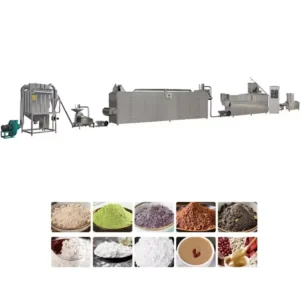
Healthy Baby Food Production Line Nutritional Powder Equipment for Baby Food Supplements for Flour Processing Machinery
¥8,500.00 Select options This product has multiple variants. The options may be chosen on the product page -
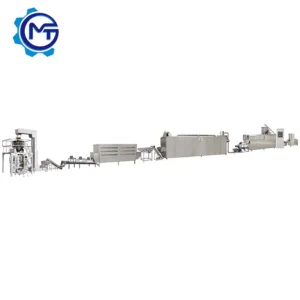
Automatic Nutritional Powder Making Machine Safe Rice Cereal for Babies
¥30.00 Select options This product has multiple variants. The options may be chosen on the product page -
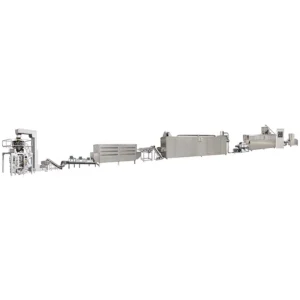
High Productivity New Condition Nutritious Baby Food Meal Replacement Powder Production Line
¥30.00 Select options This product has multiple variants. The options may be chosen on the product page