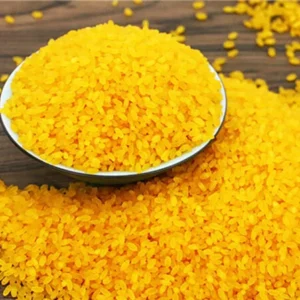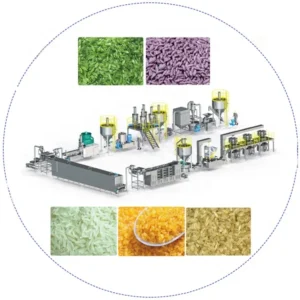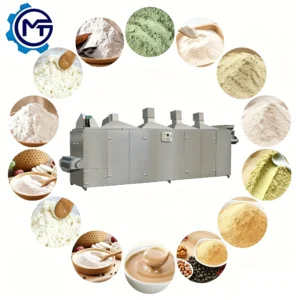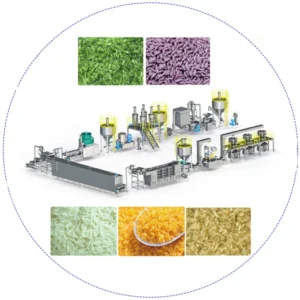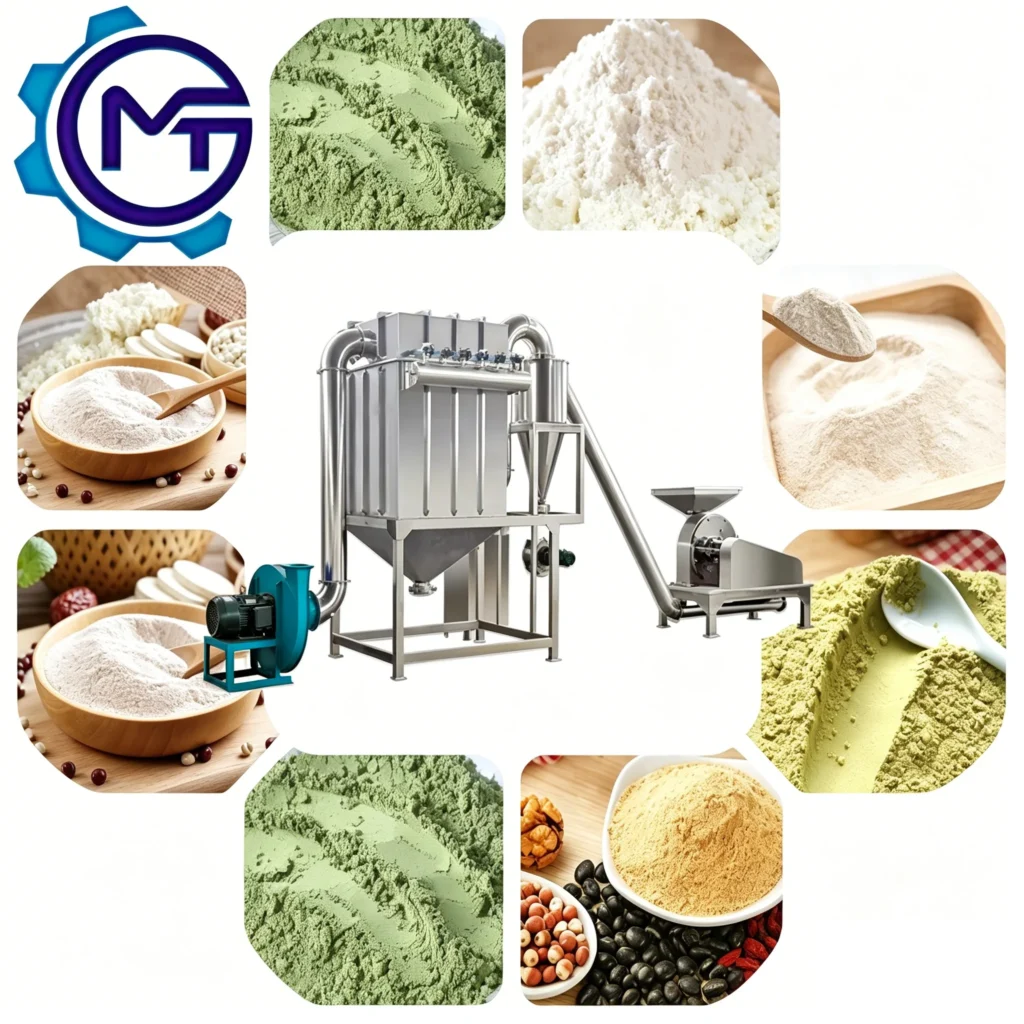
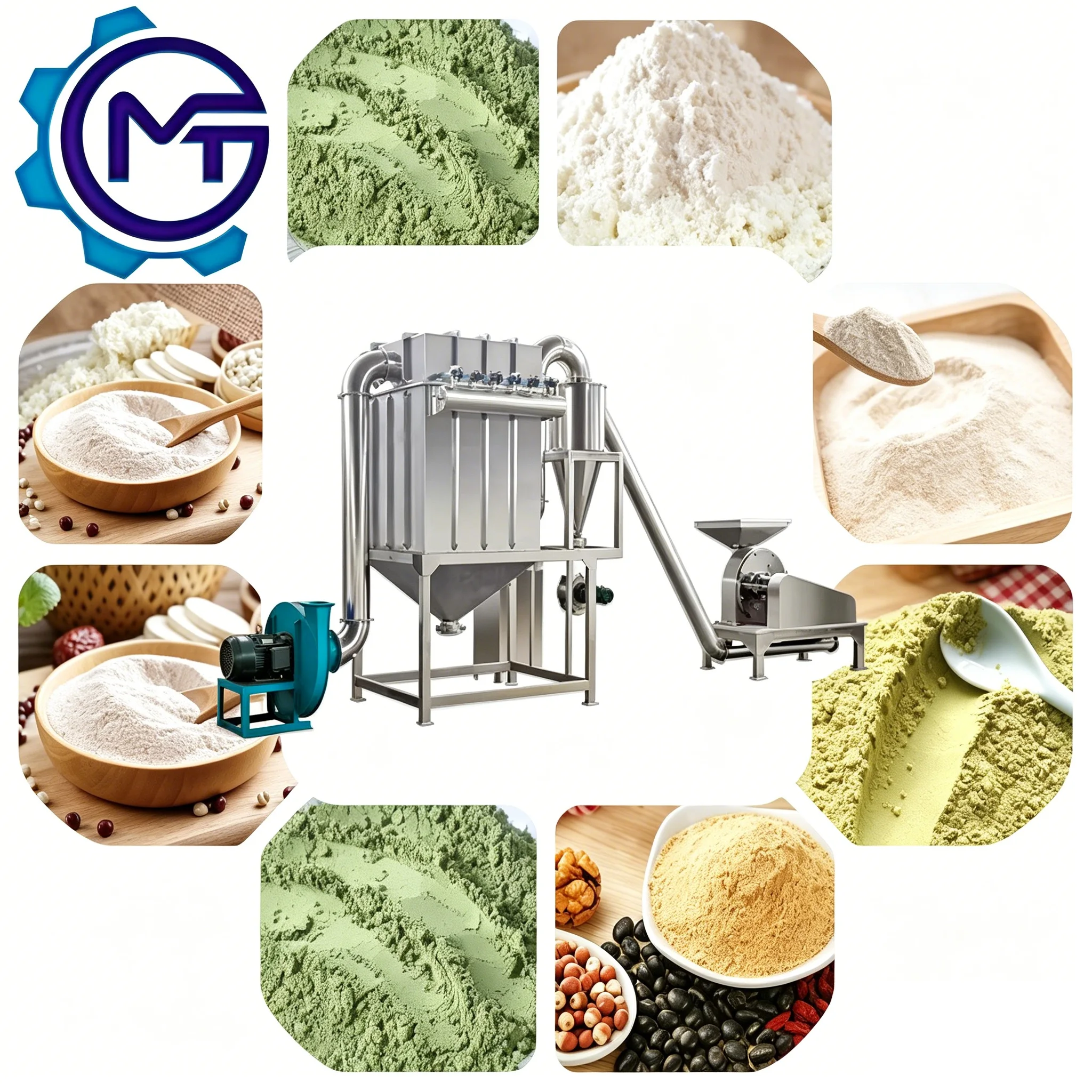
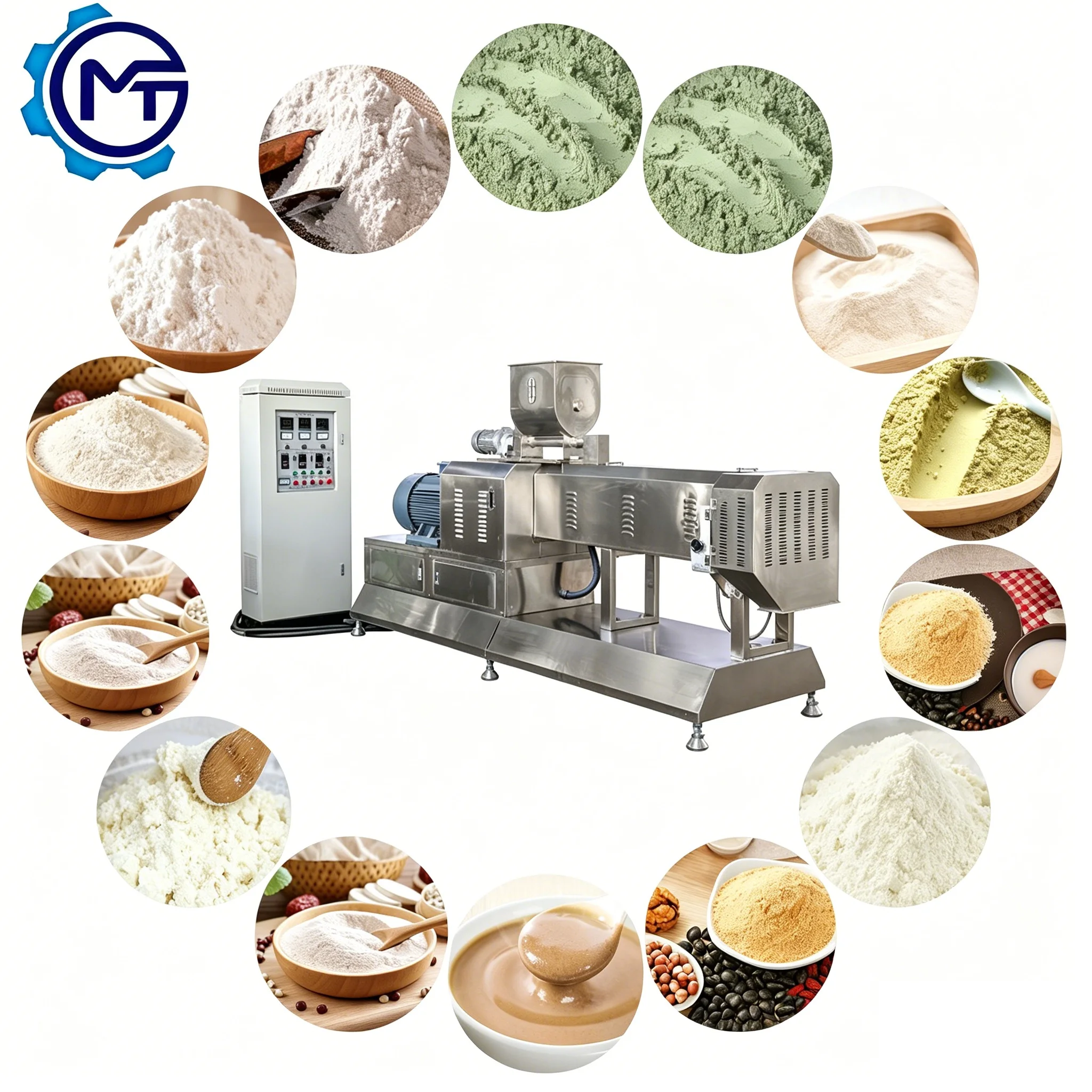
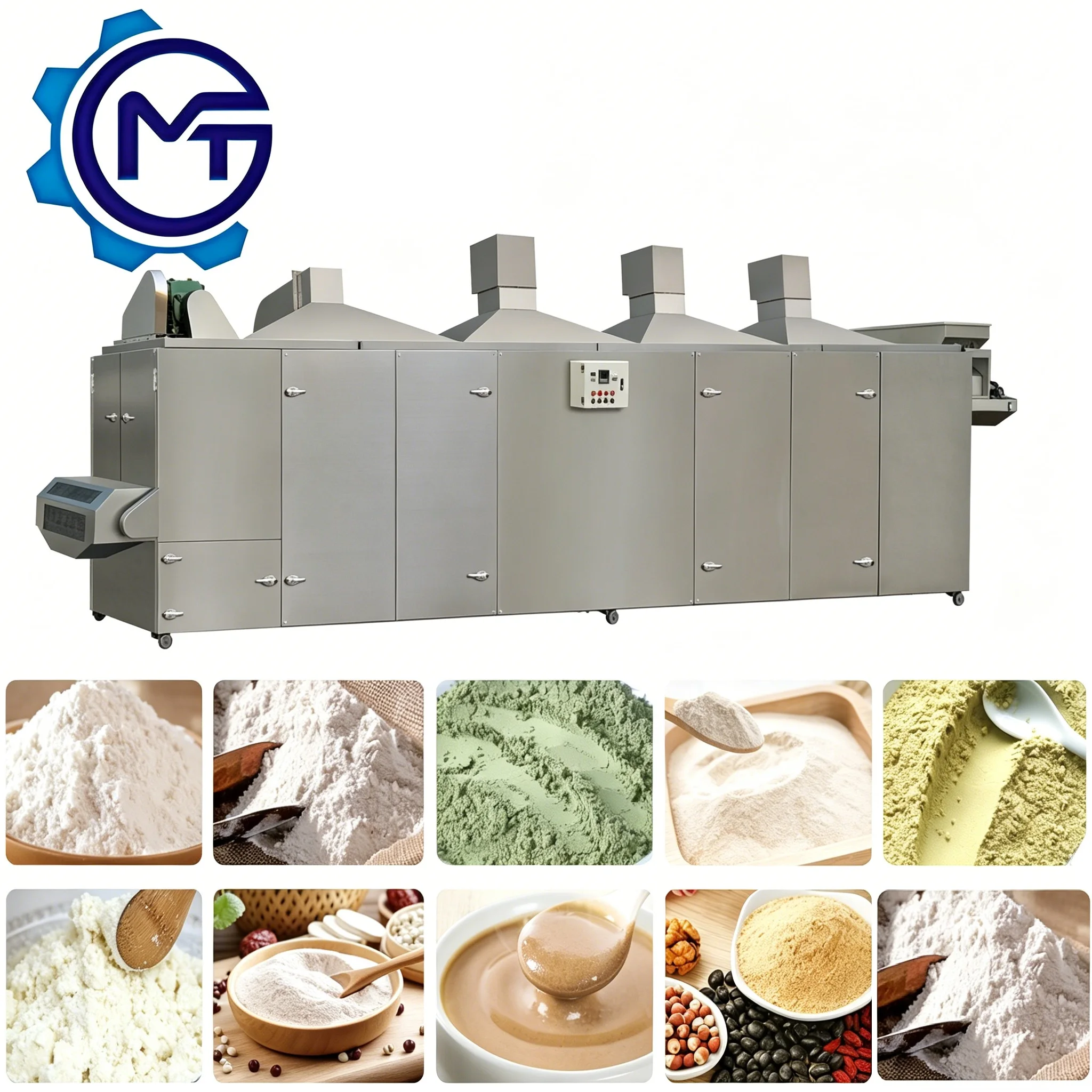
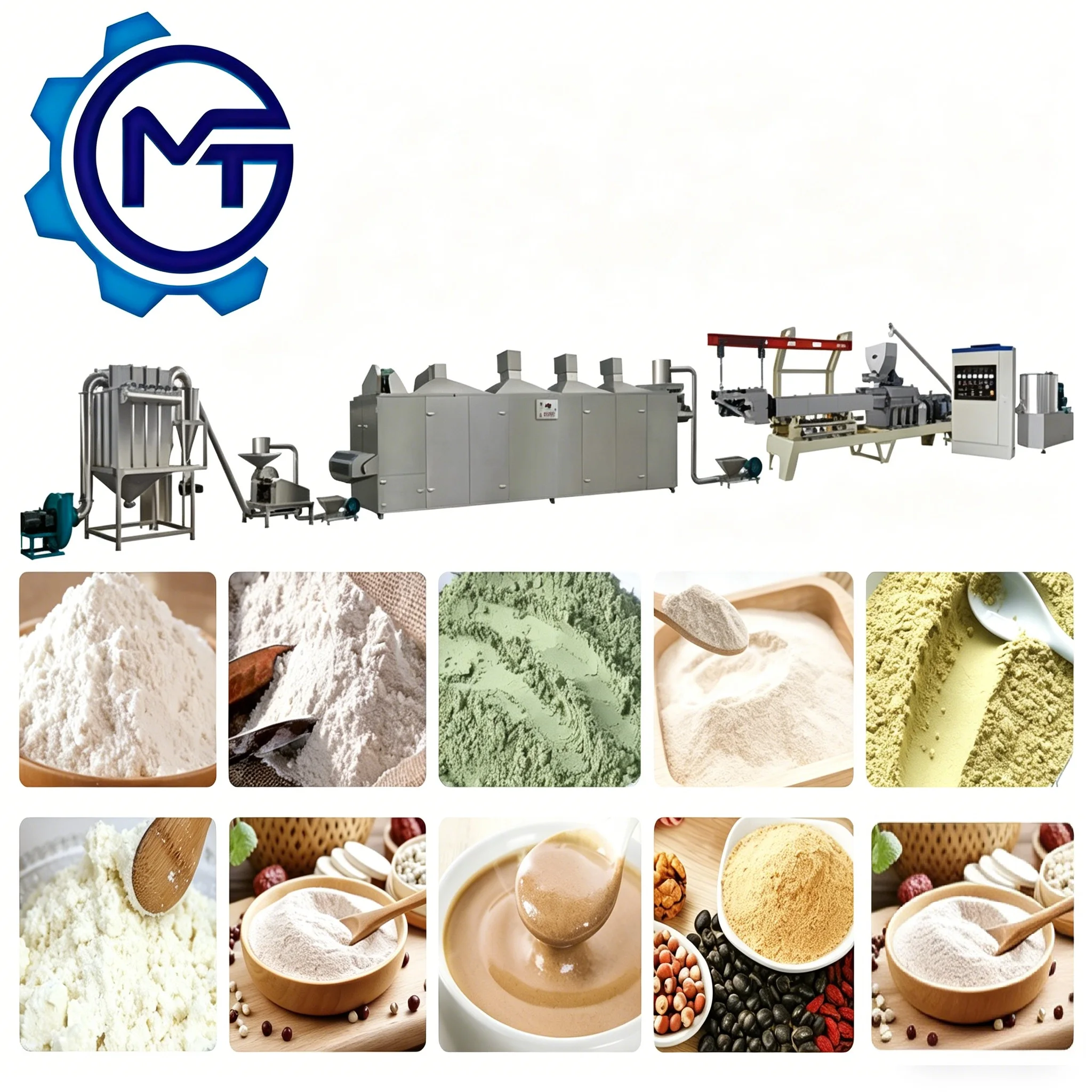
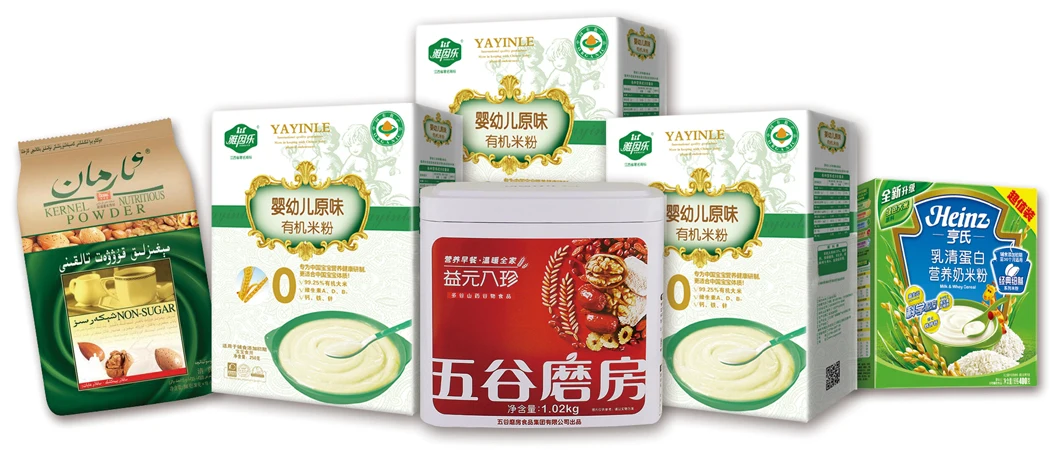
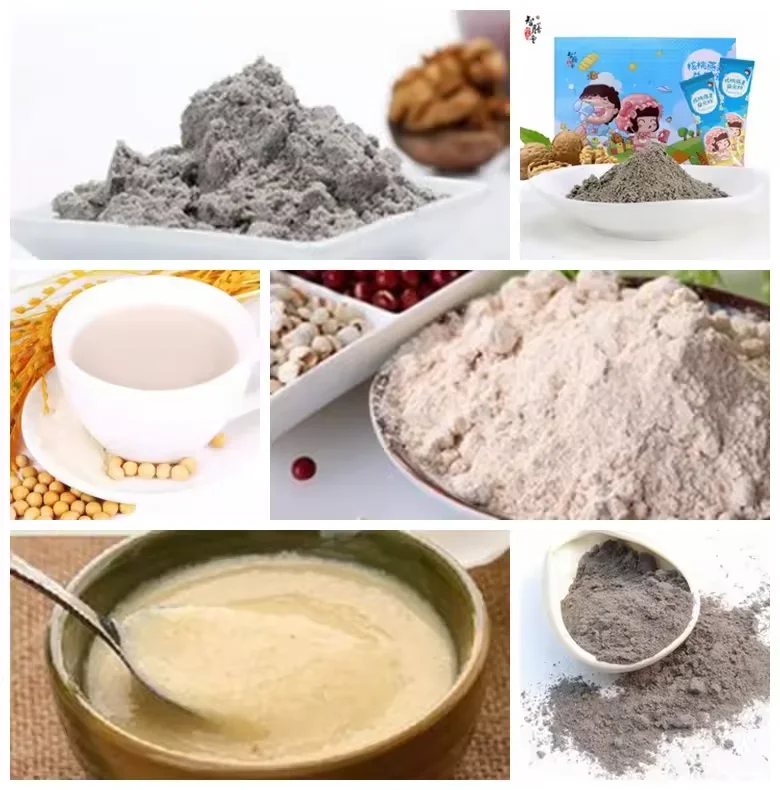
Nutrition Powder Processing Line, 200-500 kg/h, PLC Control, Food-Grade 304 SS — configured for rice, corn, bean, and multi-grain blends across infant cereal and fortified powder applications.
Twin-screw extrusion with screw configuration and die design matched to your grain formulation and target powder density, supported by flexible heat source options for drying. Full line layout calculates throughput station-by-station so batching, extrusion, drying, and packing stay balanced.
Trial runs on your raw material in our in-house testing workshop verify capacity and product spec before shipment.
- Record ID: 6179
Description
Throughput Matched Across Every Station — The line is configured from batching to packing so that mixers, extruders, dryers, and coating drums operate at synchronized capacities, preventing any single station from bottlenecking your nutrition powder output.
Technical Specifications
| Parameter | Value |
|---|---|
| Product Type | Nutrition Powder Processing Line |
| Output Capacity | 200–500 kg/h (basis not stated in source — confirm raw material type, moisture content, and formulation) |
| Construction Material | Food-grade 304 stainless steel at product contact points |
| Control System | PLC with touch control panel and digital interface |
| Heat Source Options | Electric / Gas / Steam (configurable to factory utility environment) |
| Processing Compatibility | Rice, corn, beans, various grains and grain blends |
| Line Stations | Batching and mixing, extrusion, baking and drying, conveying, packing (full station list confirmed at quotation) |
| Electrical Configuration | Voltage and frequency confirmed per buyer’s facility before production |
| Warranty | 1 year |
| After-Sales Support | Overseas engineer service available |
| Certification | CE and ISO compliant (factory-wide) |
Application Suitability
| Application | Material or Output |
|---|---|
| Iron-fortified baby rice cereal | Rice flour blended with iron compounds and vitamins |
| Infant nutrition base powder | Multi-grain formulations with added whey protein and micronutrients |
| Grain-based porridge mixes | Corn, rice, oat, and bean blends for instant hot cereal |
| Fortified nutritional powder for aid programmes | Maize and soy blends meeting NGO specification requirements |
| Multi-grain health drink base | Combinations of rice, millet, sorghum, and legume flours |
What "500 kg/h" Means When Your Formulation Changes the Rules
Capacity figures only matter when they are tied to the exact grain blend and moisture level you will actually run.
A nutrition powder processing line turnkey quoted at a flat rate rarely accounts for what happens when a buyer introduces whey protein isolates, lipid-coated vitamin premixes, or high-fiber bran into a standard rice base. Gelatinization temperatures shift. Expansion ratios drop. The extruder barrel that ran smoothly on plain corn grits begins surging or choking. I have watched a European infant cereal line stall for three days during commissioning because the trial ran on standard rice flour while the customer’s real recipe contained 18% whey protein and trace minerals — every thermal zone needed recalibration [NEED_CITE: starch gelatinization behavior under protein-enriched extrusion conditions]. Running the buyer’s actual formulation in the testing workshop before shipment collapses this risk.
Barrel Zones and Screw Profiles Built Around Your Grain Blend
A nutrition powder processing line turnkey must treat screw configuration as a variable, not a fixed catalogue entry. Rice flour gelatinizes at a different temperature window than corn grits, and bean flour introduces fiber that changes shear requirements inside the barrel. Each segment of the screw — feed zone, compression zone, metering zone — is selected based on the buyer’s raw material particle size and starch content. Die aperture and land length are then matched to the target powder density and rehydration behavior the market expects.
Thermal Management from Extrusion Through Drying
Moisture entering the dryer directly affects how much energy is consumed and how long material must dwell to reach safe storage levels. Electric, gas, or steam heat sources are selected based on what the buyer’s facility actually supplies, rather than defaulting to a single option. Temperature profiling across the dryer stages prevents case-hardening — where the outer layer of a particle dries too fast and traps moisture inside — which would otherwise shorten shelf life and invite microbial growth [NEED_CITE: drying kinetics of extruded cereal particles]. The PLC coordinates extruder barrel heating zones with dryer inlet temperatures so that both stations respond together when feed rate changes.
Reading the Specs That Actually Determine Line Behavior
Output capacity of 200–500 kg/h is a range, and where your line lands within it depends on formulation moisture, target bulk density, and screw speed. A high-protein infant formula powder requiring low expansion will move through the extruder more slowly than a simple rice cereal, reducing effective throughput. The food-grade 304 stainless steel construction at all contact points ensures that acidic vitamin premixes and iron fortificants do not corrode barrel interiors or contaminate product batches over time. PLC control with a touch panel gives operators the ability to save and recall recipes, so a Monday morning startup on baby rice cereal uses the same parameters as the previous Friday’s run. Heat source flexibility — electric, gas, or steam — means the drying station adapts to local utility costs and availability rather than forcing a buyer to install new infrastructure. The 1-year warranty covers the full line, and overseas engineer service is available for commissioning.
The Cost of Skipping the Trial Run
When a line ships without a trial on the buyer’s real formulation, the first weeks of production become an expensive experiment. Screw combinations must be swapped, barrel temperatures adjusted zone by zone, and dryer dwell times recalibrated — all while raw material is consumed and product is held in quarantine. In some cases the extruder motor is undersized for the viscosity of a protein-heavy blend, requiring a physical component change that delays launch by weeks [NEED_CITE: motor load variation with high-protein extrusion feeds]. A documented trial run before dispatch eliminates this cascade.
Why Source This Line Here
Throughput at every station — mixer, extruder, dryer, flavoring drum, cooler, packer — is calculated together so no single unit throttles the rest. Screw configuration and die design are specified against the buyer’s grain blend and target powder characteristics, not pulled from a generic template. The in-house testing workshop allows trial runs on the customer’s actual raw material, generating a documented report before any crate is sealed. Twin-screw expertise covers the full range from infant cereal to fortified aid-programme powders, so the same engineering team handles different formulation challenges. Pre-sales consultation covers line layout, utility planning, and phased installation scheduling so that the buyer’s construction timeline aligns with equipment delivery.
Documentation & Verification
- Line layout and capacity calculation based on your grain formulation and target output
- Screw and die configuration record matched to your specific product density and expansion ratio
- Electrical schematic with confirmed voltage, frequency, and control language before production
- Trial run report on your raw material completed in the testing workshop before dispatch
- CE declaration of conformity and ISO certificate included with shipping documentation
- Operation and maintenance manual with wear parts list and recommended replacement intervals
Installation, Commissioning & Support
- Foundation and floor space layout provided based on the confirmed PLC cabinet and dryer footprint
- Dedicated power circuit requirements specified per the extruder motor rating and heating system choice
- Line arrives in modular sections for staged assembly aligned with your facility readiness
- First startup includes parameter tuning on your actual grain blend and fortificant mix
- Operator training covers PLC recipe storage, screw changes, and dryer temperature adjustment
- Wear parts list identifies screws, dies, and dryer belts with recommended stocking quantities
What We Need to Size Your Line Correctly
Provide your target formulation — including grain types, protein or fiber additives, and fortificant percentages — along with the moisture content of your incoming raw material. Share your facility’s available voltage, frequency, and whether electric, gas, or steam heat is preferred for drying. Let us know your daily production target and available floor space so the layout can be drafted around your existing upstream and downstream equipment. If you can send a sample of your raw material, we will run it through the testing workshop and lock the parameters before production begins.
Frequently Asked Questions
Q: How is line capacity verified against my specific grain formulation and moisture content?
A: Your raw material is run through the in-house testing workshop using the intended screw configuration and barrel temperature profile. The trial generates a documented report covering actual throughput, expansion ratio, moisture reduction through the dryer, and final powder density. Capacity is confirmed on your formulation, not quoted from a generic benchmark.
Q: What is the full station list from batching to packing, and how is throughput matched?
A: The nutrition powder processing line turnkey includes batching and mixing, twin-screw extrusion, drying, milling or grinding, and packing stations. Each station is sized so its maximum throughput aligns with the others, preventing bottlenecks. Throughput matching is calculated during the layout phase based on your confirmed formulation and target output rate.
Q: How are screw configuration and barrel temperature set for rice, corn, and multi-grain blends?
A: Screw segments are selected based on the starch-to-protein ratio and fiber content of your grain blend. Barrel heating zones are profiled to match the gelatinization window of your specific formulation. Die design controls expansion and particle density. All parameters are recorded and provided to you for recipe consistency across production runs.
Q: Can I send my raw material for a trial run before shipment, and what does the report cover?
A: Yes. The testing workshop runs your actual formulation through the extruder and dryer under production-like conditions. The report documents screw configuration used, barrel zone temperatures, motor load, throughput achieved, moisture content at dryer exit, and final powder characteristics. Parameters are locked before the line is packed for dispatch.
Related products
-

Fully Automatic 500kg/h Baby Cereal Nutrition Powder Extrusion Drying Line with PLC Control
¥9,500.00 Add to cart -
High Productivity New Condition Safe Healthy and Nutritious Baby Food Meal Replacement Powder Production Line
¥30.00 Select options This product has multiple variants. The options may be chosen on the product page -

High Quality Automatic PLC Controlled 500kg/h Twin Screw Extruder Machine for Baby Rice Nutrition Powder
¥8,238.27 Add to cart -

Automatic Iron Fortified Baby Rice Cereal Nutrition Powder Making Machine 500kg/h PLC Controlled
¥8,238.27 Add to cart