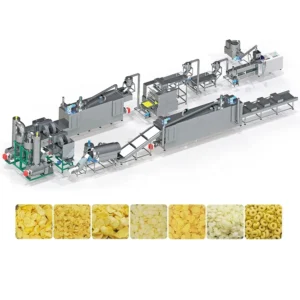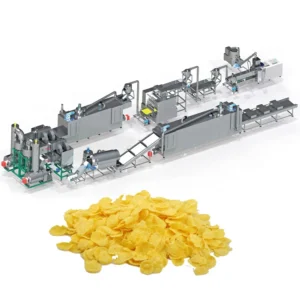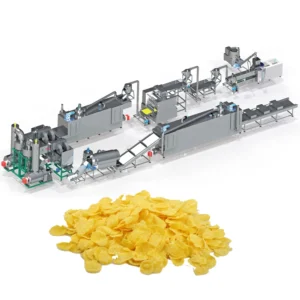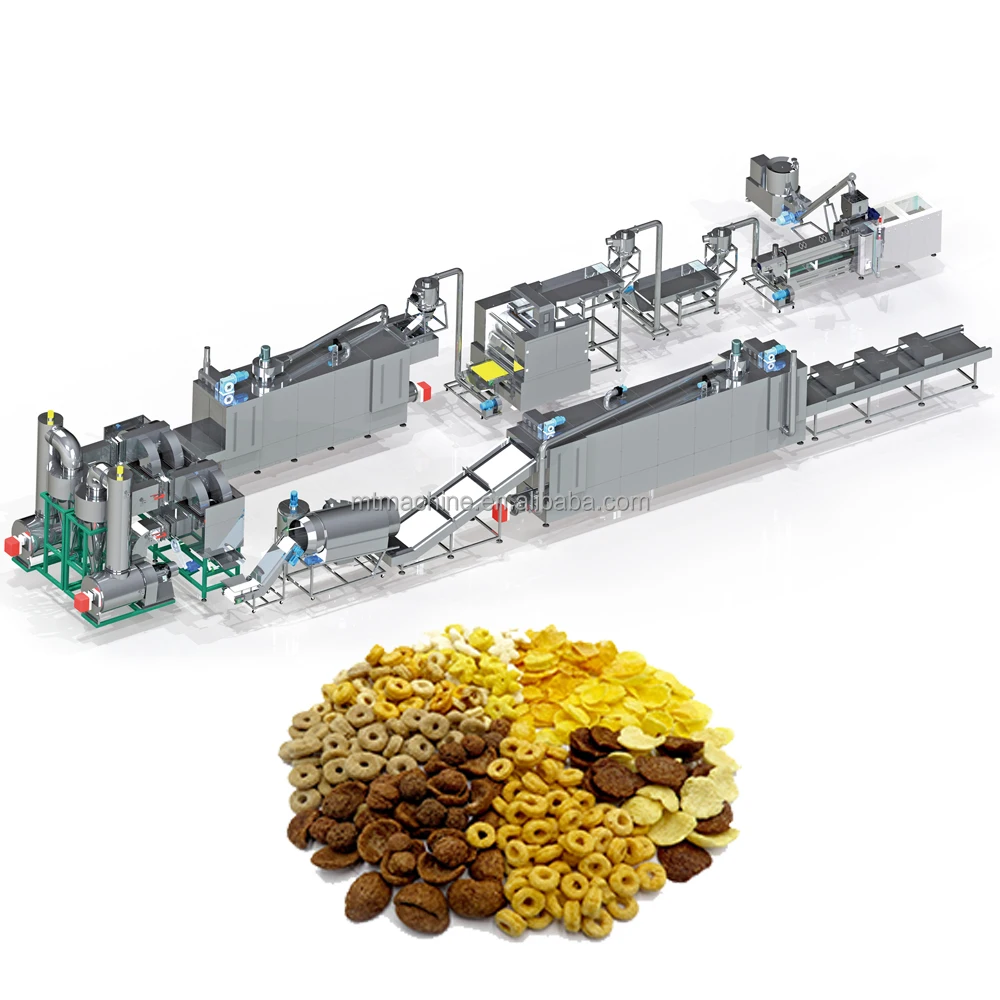
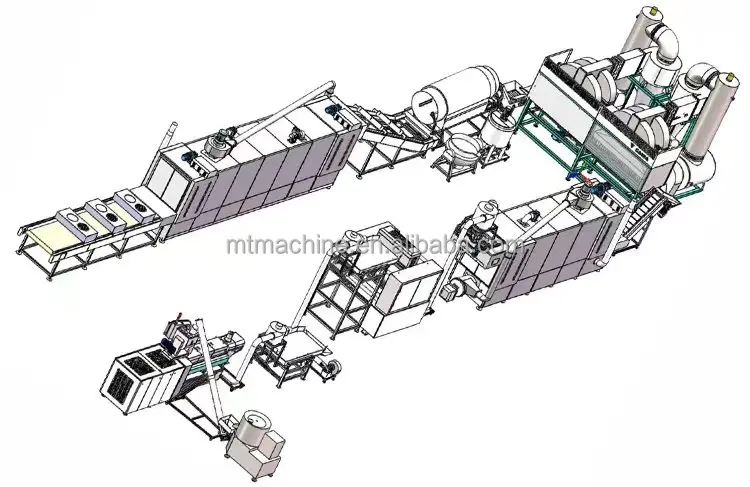
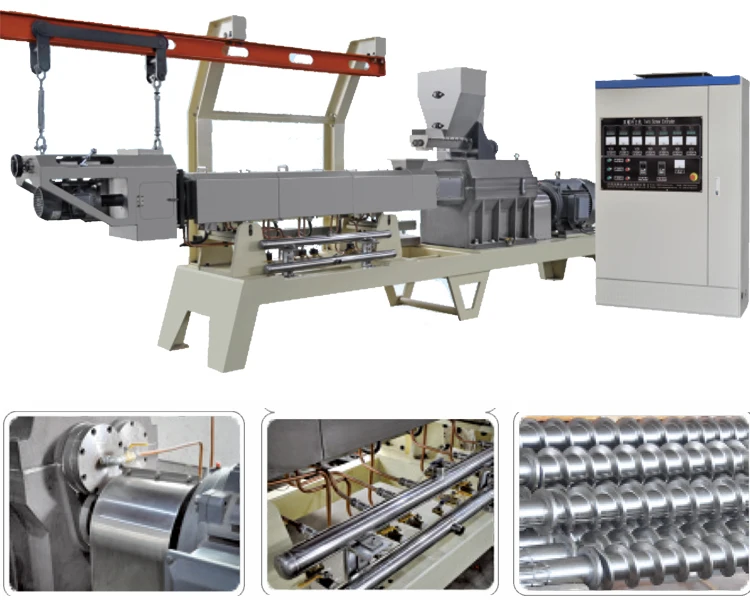
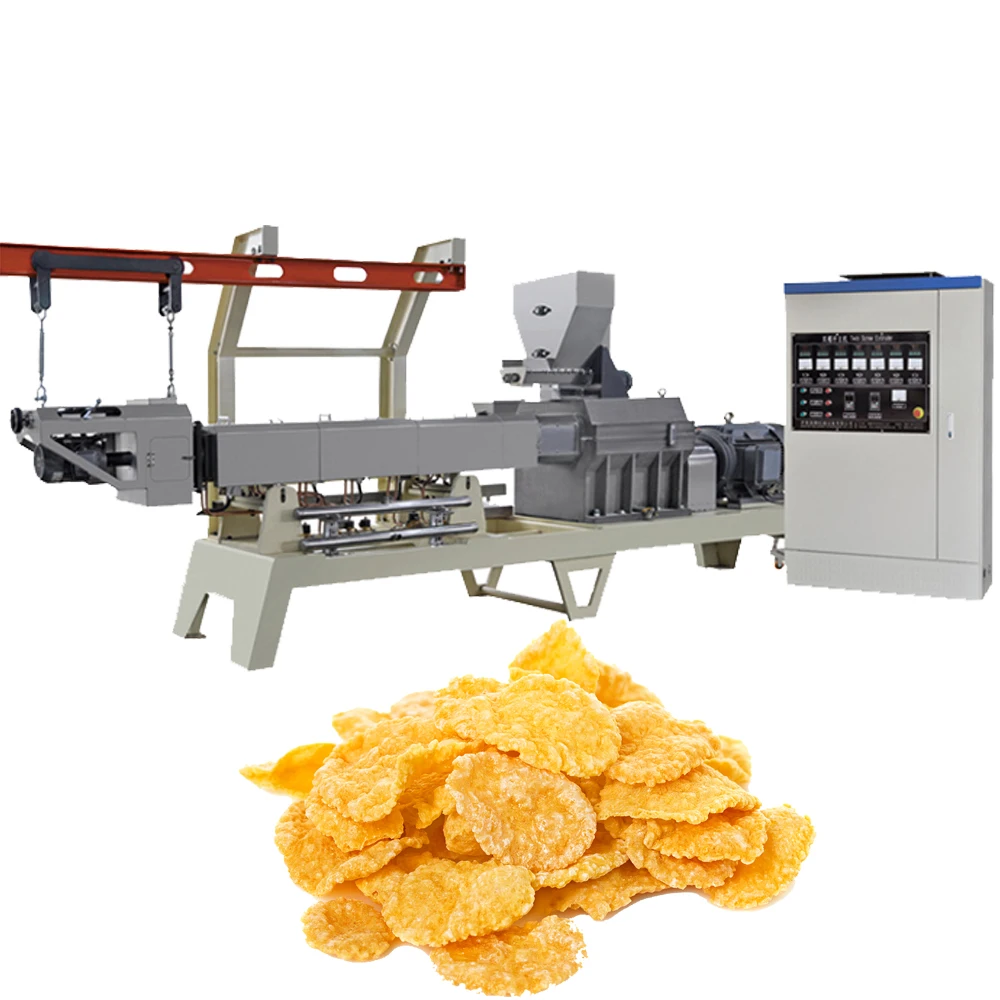
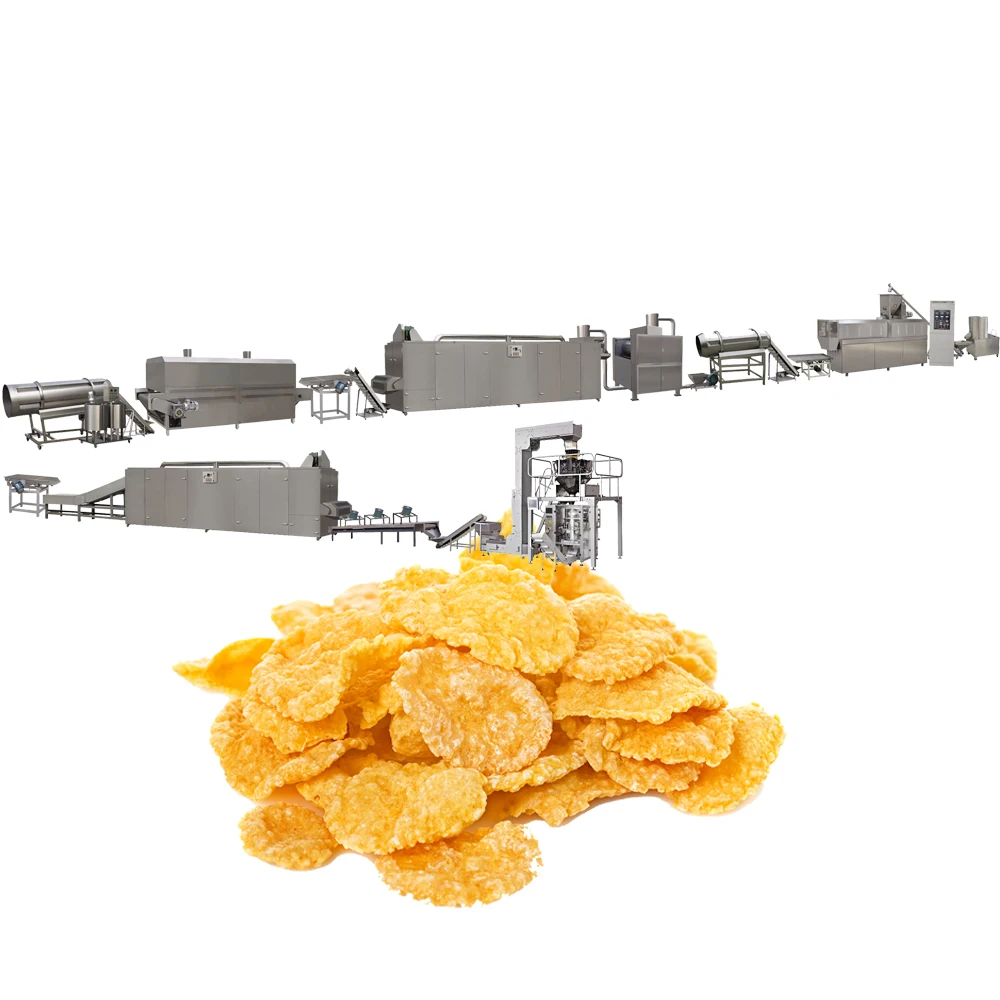

MT-75 Twin Screw Extruder Corn Flakes Production Line, 200-300 kg/h, PLC Control — engineered for consistent flake density and surface blistering across corn, rice, wheat, oat, and barley formulations.
- Twin-screw extrusion with screw configuration and die design matched to your grain blend and target texture
- Hydraulic double-roller flaking station with separate motor drives and infrared temperature control
- Hot air roasting oven with dual circulating fans and cyclone dust removal for precise crispness development
- Full line throughput synchronization from mixing through coating and packing under unified PLC/MCC control
Supported by in-house trial runs on your raw material before shipment, confirming flake density, blister pattern, and final product specification against your market requirements.
Description
Throughput-Matched Turnkey Engineering — Every station from extruder to packer is sized against your actual grain blend, so the corn flakes production line turnkey holds its rated output without downstream bottlenecks.
Technical Specifications
| Parameter | Value |
|---|---|
| Model | MT-75 Twin Screw Extruder |
| Screw Type | Twin Screw |
| Output Capacity | 200–300 kg/h (basis not stated in source — confirm raw material, moisture content, and product format) |
| Voltage | 220V / 380V |
| Control System | PLC control at flaking station; MCC/PLC line-level control |
| Flaking Station | Hydraulic double-roller system with separate motor drives per roller; infrared sensor temperature control |
| Heating Source (Dryer) | Gas / Electric (configurable) |
| Roasting Oven | Conciliation burner combustion chamber; dual circulating fans; cyclone dust removal; vibrating pan with high-temperature spraying tubes |
| Coating System | Double tumble sugar melting unit; elevator; coating drum; spraying nozzle |
| Natural Line Flow | Mixing → Extruding → Flaking → Drying → Hot Air Roasting → Cooling → Packing |
| Sugar-Coated Line Flow | Mixing → Extruding → Flaking → Drying → Hot Air Roasting → Sugar Spraying → Sugar Coating → Drying → Cooling → Packing |
| Lubrication | Automatic lubricating system with cooling function |
| Screw Material | Wear-resistant, special technology treatment |
| Core Components | Gearbox |
| Standards | CE; ISO |
| Warranty | 1 Year |
| Assembly State | Complete turnkey line |
Application Suitability
| Application | Material or Output |
|---|---|
| Natural corn flakes production | Corn grits at controlled moisture levels |
| Sugar-coated breakfast cereal | Corn, rice, or multi-grain base with sugar spray and tumble coating |
| Multi-grain flake production | Rice, wheat, oat, or barley formulations |
| Fortified breakfast cereal lines | Grain blends with added nutritional premix |
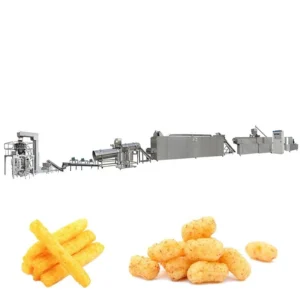
| Puffed snack variants | Alternative die configuration on the same extruder platform |
What a Nominal Capacity Figure Hides About Your Corn Flakes Production Line Turnkey
A capacity number quoted without raw material context is not a capacity number — it is a guess.
In breakfast cereal projects, one of the most expensive mistakes is building a line around a nominal output that collapses once real grain hits the extruder. I saw this recently with a client running an oat-heavy blend through a line spec’d for standard corn grits. The moisture and starch profile were completely different, and the flaking rolls could not produce uniform thickness. Output dropped sharply until we reconfigured the roller gap and adjusted the entire temperature curve from extrusion through roasting. That kind of mismatch does not show up in a brochure — it shows up on the first production day. [NEED_CITE: grain formulation variability and its effect on extrusion throughput]
How Screw Configuration Shapes Flake Density and Texture
The MT-75 twin-screw extruder is not shipped with a generic screw profile. The screw configuration and die design are specified against the buyer’s grain blend and target flake texture before the corn flakes production line turnkey goes into production. Corn grits behave differently under shear and moisture than oat or barley formulations, so the pitch, kneading block arrangement, and barrel temperature zones must be matched to achieve the right gelatinization level before the material reaches the flaking rolls.
Balancing Every Station to Prevent Line Chokepoints
A common failure pattern in breakfast cereal lines is an extruder that outfeeds the dryer or a roasting oven that cannot keep pace with the flaking station. Each station on this line is sized so that throughput remains consistent from batching through packing. The hydraulic flaking unit, the hot air roasting oven with its dual circulating fans, and the coating drum are all calculated against the same real-world output target rather than a theoretical maximum. [NEED_CITE: throughput synchronization principles in continuous food processing lines]
Reading the Specs That Actually Matter
The hydraulic double-roller flaking system with separate motor drives per roller gives independent control over each roll, which directly affects flake uniformity when processing multi-grain blends with varying hardness. Infrared sensor temperature control at the flaking station keeps roll surface temperature consistent, preventing the sticking and tearing that occurs when rollers develop hot spots during long production runs. The roasting oven’s conciliation burner with cyclone dust removal is designed to produce the surface blistering and crispness that consumers associate with quality corn flakes, and the dual circulating fans ensure even heat distribution across the product bed. The automatic lubrication system with cooling on the extruder gearbox matters during extended shifts, because gearbox temperature directly affects screw speed stability and therefore output consistency across batches.
The Hidden Cost of Skipping Pre-Shipment Verification
When a line ships without a trial run on the buyer’s actual raw material, all product development happens after installation — on your factory floor, on your time. Roller gap, extruder temperature profile, and drying curves all need adjustment based on grain behavior, and discovering this during commissioning means weeks of trial and error before you can ship product. Voltage and control language confirmed after production starts can delay commissioning further, and wear parts that are not documented mean the first screw or die replacement becomes a sourcing problem instead of a scheduled maintenance task. [NEED_CITE: pre-shipment factory acceptance testing standards for food extrusion equipment]
Why Source This Line Here
The complete corn flakes production line turnkey — from batching through packing — comes from a single supplier, meaning throughput calculations are internally consistent rather than negotiated between separate vendors. Screw and die configurations are documented and matched to your specific grain formulation before metal is cut. An in-house testing workshop runs your actual raw material before shipment, so flake density, blister pattern, and crispness are confirmed in advance. PLC and MCC control across the line allows throughput synchronization that independent station suppliers cannot guarantee. Electrical schematics with confirmed voltage and frequency are part of the standard documentation package, not an afterthought.
Documentation & Verification
- Line layout with throughput calculations per station matched to your grain formulation
- Factory trial run report on your raw material covering flake density and blister pattern
- Screw and die configuration record documenting exact build for your product
- Electrical schematic with voltage and frequency confirmed before production begins
- CE declaration of conformity and ISO certificate for customs and compliance
Installation, Commissioning & Support
- Floor plan and utility routing provided for the full line footprint including dryer and roaster clearance
- Voltage and frequency verified against your facility supply before the MCC panel is wired
- Line arrives pre-assembled by station with matching connection points for sequential commissioning
- PLC parameters and flaking roller gap calibrated during on-site startup using your raw material
- Operator training covers extruder screw speed, flaking temperature, and roasting oven airflow settings
- Wear parts list with screw and die replacement intervals specific to your grain blend
Before You Request a Quote
To configure this line correctly, we need your actual grain formulation or a sample shipment, your target flake thickness and density specification, and whether you plan to run natural, sugar-coated, or both variants. We also need your facility voltage, frequency, and preferred PLC language so that the control system is confirmed before production. If you are integrating this line with existing upstream batching or downstream packing equipment, share the interface specifications so throughput matching accounts for your current hardware.
Frequently Asked Questions
Q: How is the 200–300 kg/h capacity verified on my specific grain blend and moisture level?
A: The output range is confirmed through an in-house trial run using your actual raw material before shipment. We run your grain blend through the MT-75 extruder at your target moisture content, measure flake density and output at the flaking station, and document the results. The capacity figure in your quotation reflects that verified run, not a generic catalog number.
Q: Can the line produce both natural and sugar-coated corn flakes without hardware changeover?
A: Yes. The sugar-coated variant uses the same extrusion and flaking stations as the natural line, with the sugar spraying, coating drum, and additional drying stages activated when needed. The PLC control system stores separate recipes for each variant, so switching between natural and coated production requires parameter selection rather than mechanical rebuilds.
Q: What voltage, frequency, and control language options are confirmed before production?
A: Your facility voltage and frequency are confirmed during the specification stage, and the MCC panel is wired accordingly before the line ships. PLC interface language is set to your preference — typically English, with other options available. Electrical schematics reflecting these choices are included in your documentation package before production begins.
Q: Is a trial run on my raw material performed before shipment, and what does the report cover?
A: Every line undergoes a factory trial run on customer-supplied raw material in the testing workshop before dispatch. The report documents extruder screw configuration, flake thickness uniformity, blister pattern from the roasting oven, and measured output rate at your moisture level. You receive this report and can request adjustments before the line is packed for shipping.
Q: How is throughput matched between the extruder, flaking rolls, dryer, and roasting oven to prevent bottlenecks?
A: Each station is sized against the same verified output target based on your grain formulation. The flaking roll speed, dryer belt length, and roasting oven residence time are all calculated from the extruder’s confirmed throughput on your material. This matching is documented in the line layout and capacity calculation provided with your quotation.
Related products
-
Automatic Cornflakes Making Machine Corn Flakes Breakfast Cereals Processing Production Line
¥500.00 Select options This product has multiple variants. The options may be chosen on the product page -
Sweet Corn Flakes Maize Breakfast Cereal Full-automatic Food Grade Stainless Steel Heat Exchanger Mixer Fryer Processing Line
¥8,000.00 Add to cart -
Corn Flakes Production Line Breakfast Cereal Production Machine Line Corn Flake Making Machinery
¥59,800.00 Select options This product has multiple variants. The options may be chosen on the product page -
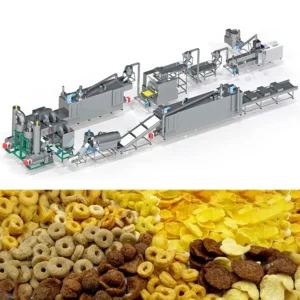
Corn Flakes Breakfast Cereal Production Line Making Machine Automatic
¥8,000.00 Select options This product has multiple variants. The options may be chosen on the product page