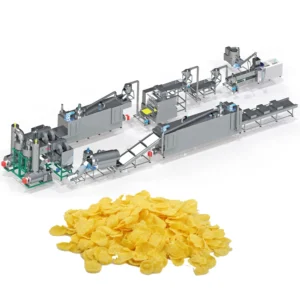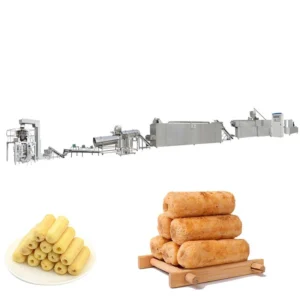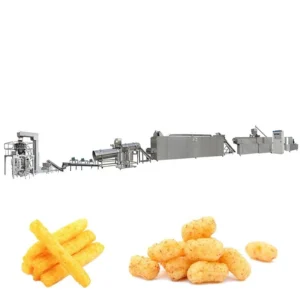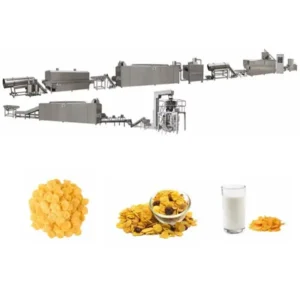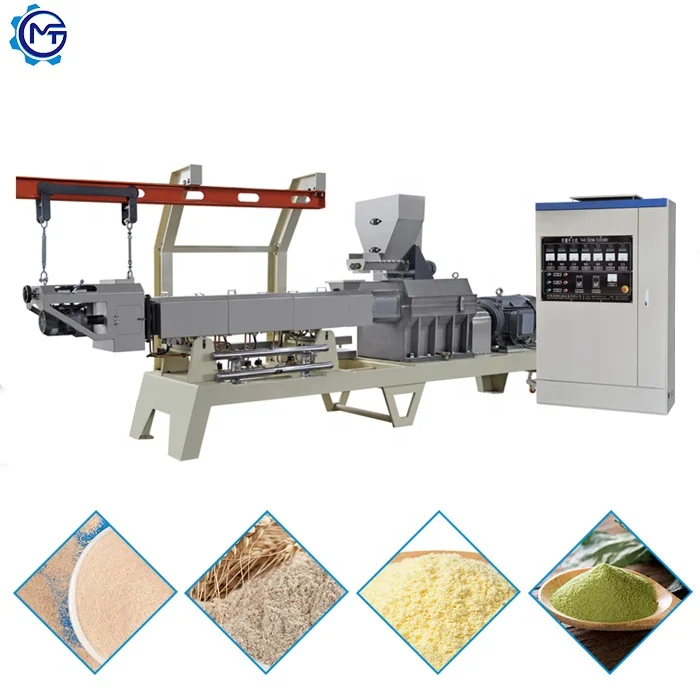
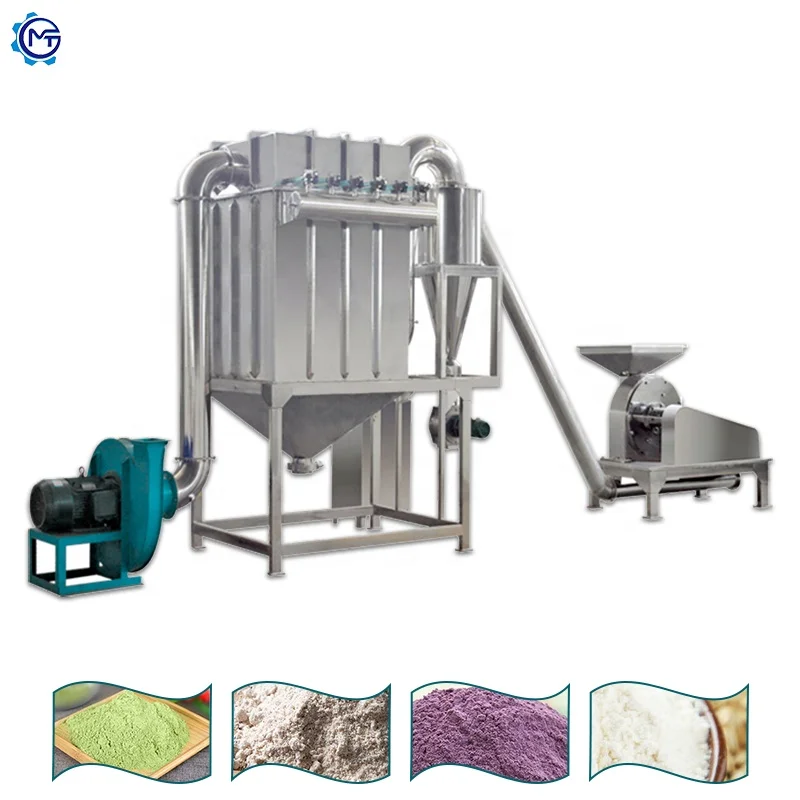
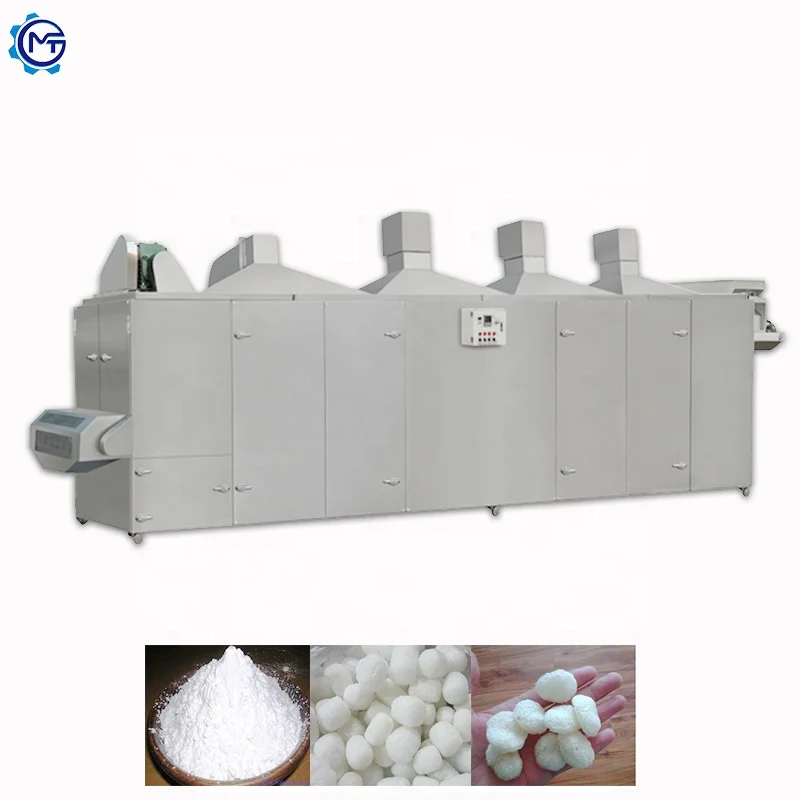
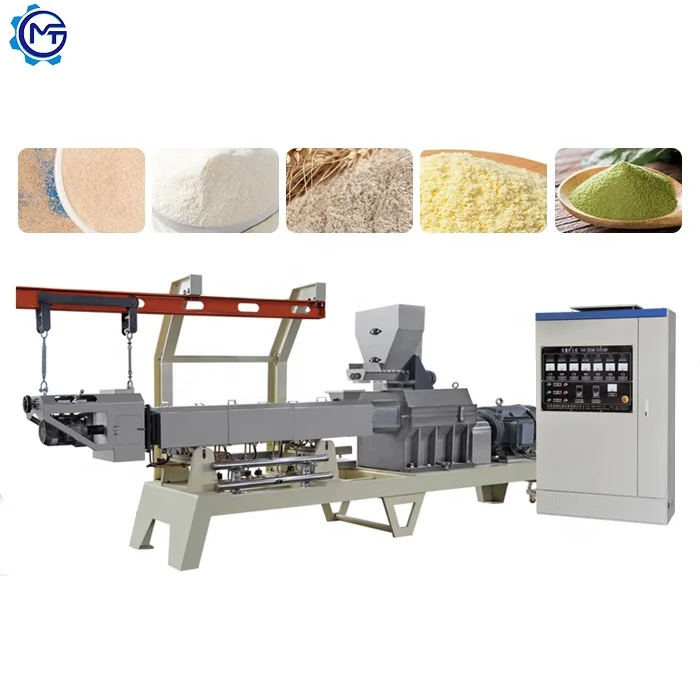
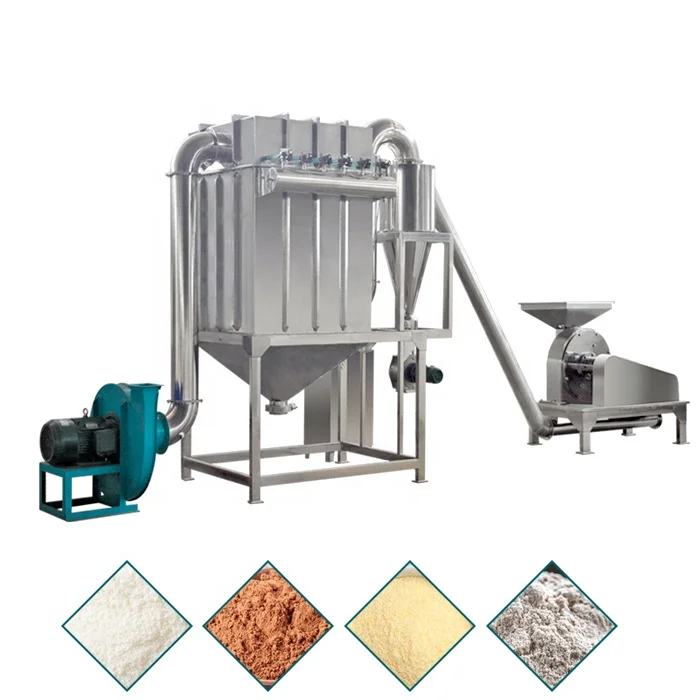
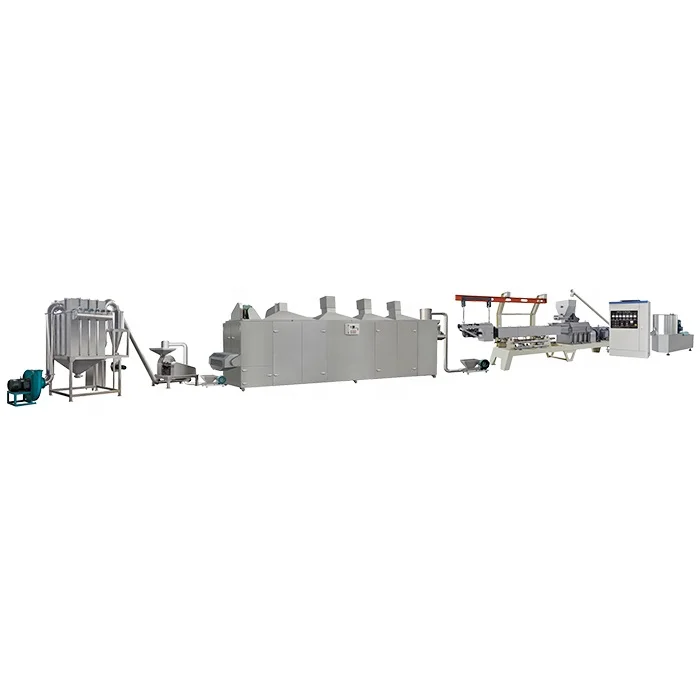
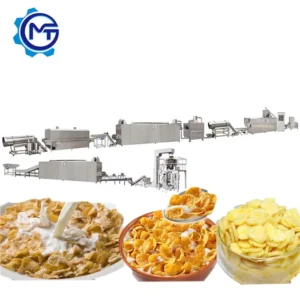
MT70 / MT85 / MT75 Corn Flakes Production Line, Twin-Screw Extrusion, PLC & MCC Control — complete turnkey system from batching through extrusion, flaking, hot air roasting, coating to packing.
- Screw configuration and die design specified to your raw material (corn, rice, wheat, oat, barley) and target flake density
- Hydraulic double-roller flaking with infrared temperature control ensures uniform flake thickness across all stations
Throughput matching across every station is engineered under one supplier, eliminating bottlenecks from mismatched dryer or roaster capacity.
Description
Matched Throughput Across Stations — A corn flakes production line is only as fast as its slowest station, so we configure extruder output, flaker roller speed, dryer residence time, and roaster capacity to the same target based on your recipe.
Technical Specifications
| Parameter | Value |
|---|---|
| Product Type | Corn Flakes and Breakfast Cereal Production Line |
| Model Options | MT70 / MT85 / MT75 |
| Screw Type | Twin Screw |
| Installed Power | MT70 — 160 kW; MT85 — 190 kW; MT75 — 210 kW |
| Power Consumption | MT70 — 120 kW; MT85 — 140 kW; MT75 — 150 kW |
| Output Capacity | MT70 — 150–200 kg/h (basis not stated in source); MT85 — 300–400 kg/h (basis not stated in source); MT75 — 300–500 kg/h (basis not stated in source) |
| Overall Dimensions (L×W×H) | MT70 — 41 × 1.5 × 2.2 m; MT85 — 43 × 1.5 × 3.2 m; MT75 — 45 × 1.5 × 3.5 m |
| Control System | PLC and MCC integration |
| Voltage Options | 415V 50/60Hz, 440V 50/60Hz, 220V 60Hz (configurable) |
| Extruder Screw Features | Wear-resistant alloy, automatic lubricating and cooling function |
| Flaking Machinery | Hydraulic double-roller system, separate motor driving, infrared sensor temperature control |
| Dryer Heating Source | Gas or Electric |
| Roasting Oven | Vibrating pan, high-temperature spraying tubes, conciliation burner, two circulating fans, cyclone dust removal |
| Coating System | Double tumble sugar melting, elevator, coating drum, spraying nozzle |
| Basic Raw Materials | Corn, rice, wheat, oat, barley powder |
| Assembly State | Complete turnkey line |
Application Suitability
| Application | Material or Output |
|---|---|
| Natural Corn Flakes Production | Corn grits, corn flour |
| Sugar-Coated Breakfast Cereals | Corn, rice, wheat base with sugar or honey coating |
| Multi-Grain Flaked Cereals | Blends of oat, barley, wheat, and rice |
| Shaped Extruded Cereal Pieces | Rings, balls, stars, tubes from mixed grain powders |
| Nutritional Instant Porridge | Fortified grain blends for baby food or instant meals |
Why Nominal Capacity Figures Mislead Cereal Buyers
A corn flakes production line turnkey project fails at startup when the quoted capacity ignores the actual behavior of your raw material under heat and shear.
Real throughput is defined by recipe, moisture content, and target flake density, not by the extruder motor nameplate.
I have walked into facilities where the extruder pushed out more dough than the flaker could press or the oven could dry, creating a bottleneck that forced the entire line to run below its paid-for capacity. When a corn flakes production line turnkey is assembled from unmatched stations, the buyer pays for the highest number and operates at the lowest. Synchronization between the extruder screw speed, flaking roller gap, and roasting oven belt speed must be calculated before metal is cut [NEED_CITE: throughput matching principles in continuous food processing lines].
Designing the Line Layout Around Your Factory Footprint
Every corn flakes production line turnkey we ship starts with a layout drawing that maps your available floor space, ceiling height, and utility entry points. The extruder, flaker, dryer, and roaster are positioned so that material flows by gravity or short conveyors, minimizing transfer points where hot, sticky dough can accumulate. This spatial planning prevents the need for costly repositioning after the equipment arrives on site.
Synchronizing the Flaker and Roaster with the Extruder
The flaking machinery uses a hydraulic double-roller system with infrared sensor temperature control to maintain uniform flake thickness across the entire roller width. If the rollers run too cool, the dough tears; too hot, and it sticks. Downstream, the hot air roasting oven uses a vibrating pan with high-temperature spraying tubes and two separate circulating fans to achieve the surface blistering that defines a crispy corn flake [NEED_CITE: Maillard reaction and blistering requirements in flaked cereal roasting]. These stations are specified to handle the exact mass flow the extruder delivers.
Reading the Specs That Actually Matter
The installed power figures — 160 kW for the MT70, 190 kW for the MT85, and 210 kW for the MT75 — reflect the total connected load across all motors and heaters, not the continuous draw. Power consumption values sit lower, indicating the thermal and mechanical energy actually transferred to the product. The twin-screw configuration provides the shear and residence time needed to fully gelatinize starch from corn, rice, or oat bases, which single-screw designs struggle to achieve at higher throughputs. Wear-resistant screw alloy with automatic lubrication reduces unplanned stops during long production runs. The configurable voltage options — 415V, 440V, or 220V at 50 or 60Hz — must match your facility supply before the control panels are wired, preventing the commissioning delays that occur when a 50Hz motor is energized on a 60Hz grid.
The Cost of Skipping Throughput Verification
When line capacity is accepted at face value without a trial run on the buyer’s specific grain blend, the first production week often reveals that the flakes emerge from the roaster too dense, too brittle, or insufficiently blistered. Correcting this after installation means replacing dies, reconfiguring screws, or worse, discovering that the dryer cannot remove moisture fast enough to keep pace. These are not adjustments an operator can make on the fly [NEED_CITE: post-installation line modification costs in food extrusion projects]. The downtime and raw material waste during that correction period quietly erase any upfront savings.
What We Build Into Every Project
Every station in our corn flakes production line turnkey is sourced from a single supplier, so throughput calculations carry through from the batching system to the packing conveyor without vendor-to-vendor finger-pointing. Screw configurations and die designs are specified to your raw material formulation, not copied from a generic build. Our in-house testing workshop runs your actual grain blend before shipment, producing a trial run report that confirms flake density, blistering, and moisture levels. Electrical schematics are confirmed against your local voltage and frequency, and PLC control language is set before the panels leave the factory. CE and ISO standards are maintained across the build.
Documentation & Verification
- Line layout and capacity calculation matched to your factory dimensions and target output
- Screw and die configuration record specific to your grain formulation
- Trial run report on your raw material produced in our testing workshop before dispatch
- Electrical schematic with confirmed voltage, frequency, and PLC language
- Factory test record documenting station-by-station throughput alignment
- Operation and maintenance manual with wear parts list
Installation, Commissioning & Support
- Foundation requirements mapped to the 41–45 m line length and individual station weights
- Dedicated power circuits specified for 120–150 kW continuous consumption per model variant
- Equipment shipped in modular sections for assembly within your ceiling height constraints
- PLC and MCC panels commissioned on-site with operator language confirmed
- Flaker hydraulic pressure and roaster burner calibrated to your specific recipe
- Wear parts list covering screws, dies, and roller surfaces with recommended replacement intervals
What We Need to Scope Your Line
To prepare an accurate corn flakes production line turnkey proposal, we need your target daily output, the grain base and formulation you intend to run, and whether you plan to produce natural flakes, sugar-coated flakes, or both. Please also share your facility floor dimensions, available ceiling height, and local voltage and frequency. If you have existing upstream mixing or downstream packing equipment, let us know so we can match the interface points.
Frequently Asked Questions
Q: How is line capacity verified against my specific raw material?
A: We run your actual grain blend in our in-house testing workshop before shipment. The trial produces sample flakes and generates a report covering moisture content, flake density, blistering quality, and throughput at each station. This confirms the line will hold its rated output on your recipe, not just on a standard corn grits baseline.
Q: How do you prevent bottlenecks between the extruder, flaker, and roaster?
A: Every station is specified from one supplier, so mass flow calculations carry through the entire line. The flaker roller speed, dryer belt residence time, and roaster pan vibration rate are all set to match the extruder’s verified output on your material, preventing accumulation or starvation at transfer points.
Q: Can I send my raw material for a trial run before placing the order?
A: Yes. We encourage buyers to ship a representative sample of their grain blend to our testing workshop. We run the material through the extruder and flaker at production-scale parameters and share the results, allowing recipe or configuration adjustments before the line enters manufacturing.
Q: What happens if my local voltage does not match standard configurations?
A: Voltage and frequency are confirmed during the specification stage, before control panels are wired. We supply lines for 415V, 440V, and 220V systems at 50 or 60Hz. Providing your facility’s exact supply data early prevents motor rewinding or transformer additions during commissioning.
Related products
-

Best Price Corn Flakes Making Machine Breakfast Cereals Processing Line with Motor As Core Component
¥19,000.00 Select options This product has multiple variants. The options may be chosen on the product page -
Complete Corn Flakes Production Line Breakfast Cereal Processing Machine Core Motor Component Cornflakes Processing Equipment
¥19,000.00 Select options This product has multiple variants. The options may be chosen on the product page -
Stainless Steel Honey Small Corn Flake Breakfast Cereal Flakes Maker Making Machine Production Plant
¥30,000.00 Add to cart -
Sweet Corn Flakes Maize Breakfast Cereal Full-automatic Food Grade Stainless Steel Heat Exchanger Mixer Fryer Processing Line
¥8,000.00 Add to cart