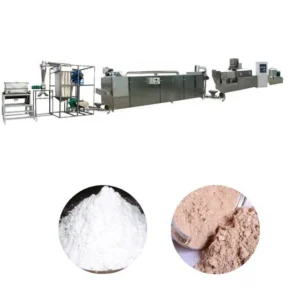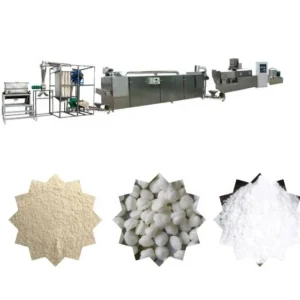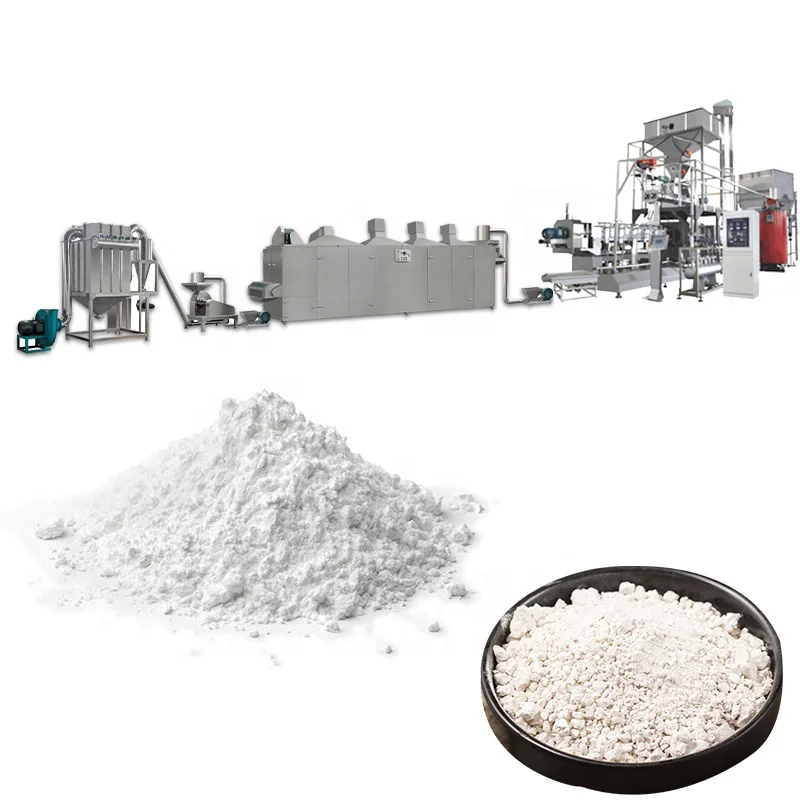
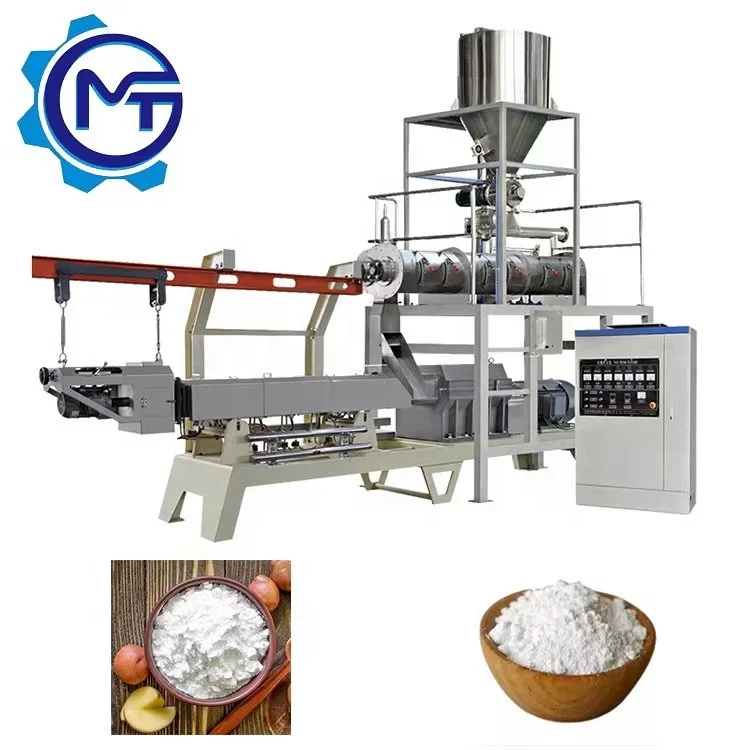

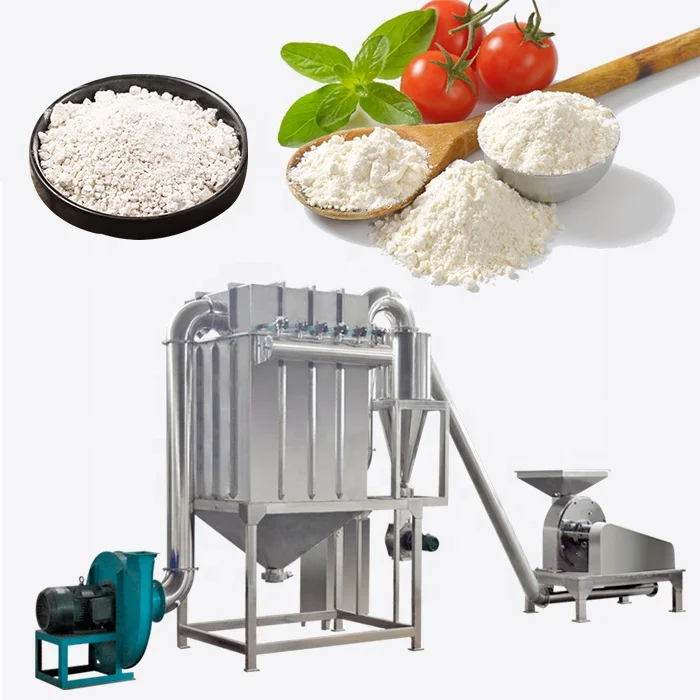
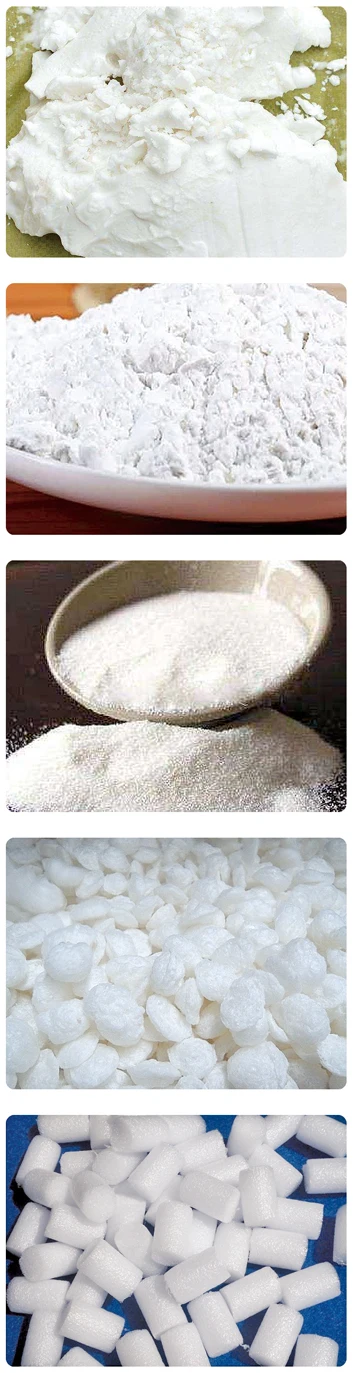

Modified Starch Processing Line, Twin-Screw Extrusion, 80–500 kg/h Capacity Range — configured for wheat flour, corn starch and potato starch with matched throughput from batching through drying and grinding. Twin-screw setup with screw configuration and die design specified to your target gelatinisation degree and viscosity. PLC and MCC control with food-grade stainless steel 304 contact materials. Line layout, trial run on your raw material, and electrical schematic confirmed before shipment — all under one supplier for full throughput accountability.
Description
Line-Balanced Throughput — Every station from batching through grinding is sized to the extruder’s actual output, preventing bottleneck at the dryer or conditioner.
Technical Specifications
| Parameter | Value |
|---|---|
| Product Type | Twin Screw Extrusion Modified Starch Processing Line |
| Screw Configuration | Twin-screw |
| Raw Materials | Wheat flour, corn starch, potato starch |
| Line Stations | Mixer → Screw Conveyor → Twin Screw Extruder → Air Conveyor → Dryer → Air Conveyor → Conditioning → Conveyor → Grinder |
| Energy Source Options | Electricity, gas, diesel, or steam |
| Power Consumption | ~100 kW (electricity); ~50–60 kW (gas or diesel) (basis to be confirmed) |
| Mixer Main Motor | 4.0 kW |
| Mixer Output | 3.0–4.0 kg/time (basis to be confirmed) |
| Mixer Dimensions | 1.2 × 0.9 × 1.4 m |
| Screw Conveyor Main Motor | 1.1 kW |
| Screw Conveyor Output | 0–150 kg/h (basis to be confirmed) |
| Screw Conveyor Dimensions | 2.5 × 0.6 × 2.3 m |
| Frame Material | Stainless steel 201 |
| Contact Material | Food grade stainless steel 304 |
| Control System | Available with PLC or MCC control |
| Voltage & Frequency | Three phases 380V/50Hz; Single phase 220V/50Hz (customizable to local voltage) |
| Warranty | One year with life-time technical guidance support |
Application Suitability
| Application | Material or Output |
|---|---|
| Pre-gelatinised starch for food ingredients | Corn starch, wheat flour |
| Modified starch for paper coating and sizing | Potato starch, corn starch |
| Industrial adhesive starch processing | Wheat flour, corn starch |
| Cross-linked or oxidised starch for textile sizing | Corn starch, potato starch |
Why "500 kg/h" on Starch Often Fails at the Dryer
Capacity must be verified at the grinder, not just at the extruder barrel.
A modified starch processing line turnkey quotation often lists an impressive extruder output, but starch modification demands thorough drying and conditioning before grinding. When the dryer or conditioner is undersized relative to the extruder, material backs up, gelatinisation degree drifts, and the line stalls. [NEED_CITE: starch extrusion line balancing principles] I have watched projects in humid tropical climates where the ambient moisture forced drying times far beyond the original estimate, leaving buyers with a bottleneck they could not resolve without replacing entire stations.
Screw Profile Dictates Modification Degree
The twin-screw configuration controls residence time, shear intensity, and thermal history inside the barrel. For pre-gelatinised starch intended as a cold-water thickener, a moderate shear profile with gradual barrel temperature ramping preserves granule integrity while achieving full gelatinisation. For cross-linked or oxidised variants, higher shear and tighter screw spacing drive the chemical reaction deeper into the starch matrix. Selecting the right screw elements for the target modification is the single most consequential decision in the modified starch processing line turnkey specification.
Barrel Zones and Reaction Precision
Multi-zone barrel heating allows independent temperature control along the screw length. Starch modification is not a single event; gelatinisation, dextrinisation, and any chemical cross-linking each occur at different temperature thresholds. Independent zone control lets the operator hold the feed zone cool enough to prevent premature swelling while the metering zone reaches the temperature required for the target viscosity. [NEED_CITE: twin-screw extrusion barrel temperature profiling]
What the Motor and Mixer Numbers Mean for Your Output
The 4.0 kW mixer motor handles batch blending of starch with any chemical reagents or moisture adjustment before extrusion. The 1.1 kW screw conveyor feeds the extruder at a controlled rate. If the mixer batch cycle does not align with the extruder’s continuous feed requirement, the extruder starves intermittently, causing density fluctuation in the final powder. The contact surfaces in food grade stainless steel 304 resist the mild acidity common in oxidised starch processing, extending component life where standard steel would pit.
The Cost of Undersizing the Conditioner
When the conditioning station cannot match the extruder’s discharge rate, partially modified starch accumulates. Inconsistent conditioning leads to variable moisture content entering the grinder, producing a final powder with uneven particle size distribution. Buyers then face rejection from downstream customers who specify tight viscosity ranges. [NEED_CITE: starch powder particle size and viscosity correlation] The grinder works harder on damp material, increasing wear and unplanned downtime.
Why This Line Holds Its Rated Configuration
The line layout and capacity calculation document covers throughput at every station, not only the extruder. Screw configuration and die design are specified to the buyer’s starch source and target viscosity, not copied from a generic build. An in-house testing workshop runs the buyer’s actual raw material before shipment, generating a trial run report. Energy source flexibility — electricity, gas, diesel, or steam — allows matching local utility infrastructure. Pre-sales consultation, on-site installation, commissioning, and ongoing maintenance form a continuous support chain.
Documentation & Verification
- Line layout and capacity calculation showing throughput at mixer, extruder, dryer, conditioner, and grinder
- Screw and die configuration record matched to your starch source and target viscosity
- Trial run report on your raw material from the testing workshop before dispatch
- Electrical schematic with confirmed voltage, frequency, and control language for your market
- CE declaration of conformity and factory test record
Installation, Commissioning & Support
- Foundation must accommodate the 2.5 m screw conveyor length and dryer footprint with level tolerance
- Three-phase 380V/50Hz supply with dedicated circuit for the extruder’s main drive
- Line ships in modular stations requiring on-site assembly and belt alignment
- Commissioning includes screw speed, barrel zone temperature, and dryer airflow calibration on your starch
- Operator training covers screw element changeover for different modification targets
- Wear parts list identifies screws, dies, and grinder blades for first replacement cycle
What to Include in Your Inquiry
Send your specific starch source — corn, wheat, or potato — along with the target modification grade and any viscosity specification from your downstream customer. Confirm your workshop voltage and frequency, and the available energy source for drying. If you have an existing grinder or packing station, share its capacity so the modified starch processing line turnkey layout accounts for integration.
Frequently Asked Questions
Q: How is line capacity verified on my specific starch source?
A: The buyer ships a sample of the actual raw material to the testing workshop. A trial run is conducted using the proposed screw configuration, barrel temperature profile, and dryer settings. The resulting trial run report records achieved throughput, gelatinisation degree, and final powder specification, forming the basis for the confirmed line capacity.
Q: How are screw and die selected for different modification targets?
A: Pre-gelatinised starch requires a different screw element arrangement and die opening than cross-linked or oxidised starch. The screw profile is matched to the target viscosity and modification chemistry, then validated during the in-house trial run before production begins.
Q: What voltage and control language options are confirmed?
A: Voltage and frequency are confirmed to match the buyer’s local supply before production. The control system is available with PLC or MCC architecture, and the interface language is set to the buyer’s preference. An electrical schematic is provided for verification before the line ships.
Q: How are dryer and conditioner sized to avoid bottleneck?
A: Each station’s capacity is calculated based on the extruder’s discharge rate and the moisture removal requirement of the specific starch. The line layout document shows throughput at every station, ensuring the dryer and conditioner can process the full extruder output without accumulation.
Q: Can I run a trial on my raw material before the line ships?
A: Yes. The testing workshop conducts a full trial run using the buyer’s starch sample. The trial run report documents capacity, product specification, and screw configuration, allowing parameter adjustments before the line leaves the factory.
Related products
-
Automatic Modified Corn Starch Making Machine 304 Stainless Steel Gearbox High Efficiency Starch Processing Production Line
¥30.00 Select options This product has multiple variants. The options may be chosen on the product page -
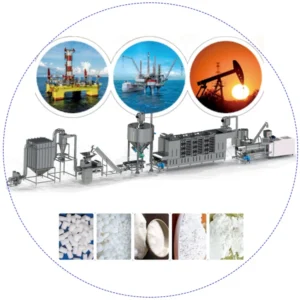
Automatic 304 Stainless Steel Modified Corn Starch Making Machine TWIN SCREW 500kg/h Capacity Starch Processing Production Line
¥50.00 Select options This product has multiple variants. The options may be chosen on the product page -
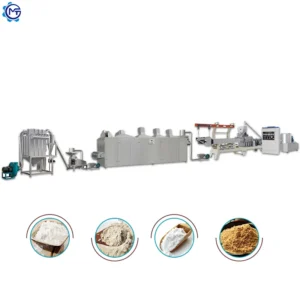
Automatic Deep Processing Machine – Food Grade Modified & Pregelatinized Starch Manufacturing Line
¥65.00 Select options This product has multiple variants. The options may be chosen on the product page -
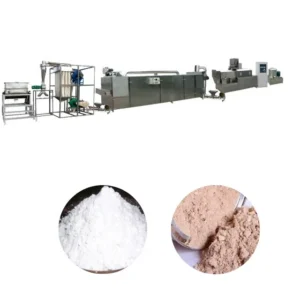
Modified Starch Production Line Industrial Drilling Twin Screw Extruder 304 Stainless Steel High Efficiency Flour Mill CE
¥50.00 Select options This product has multiple variants. The options may be chosen on the product page