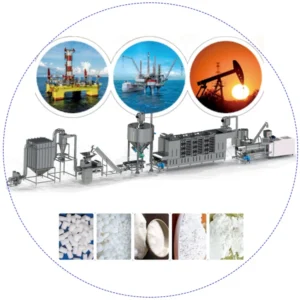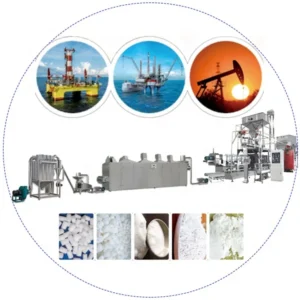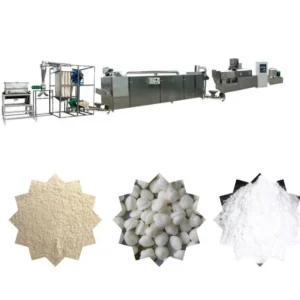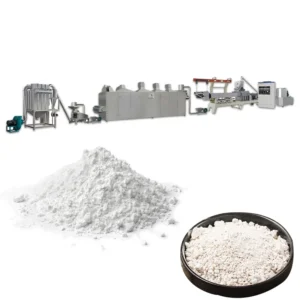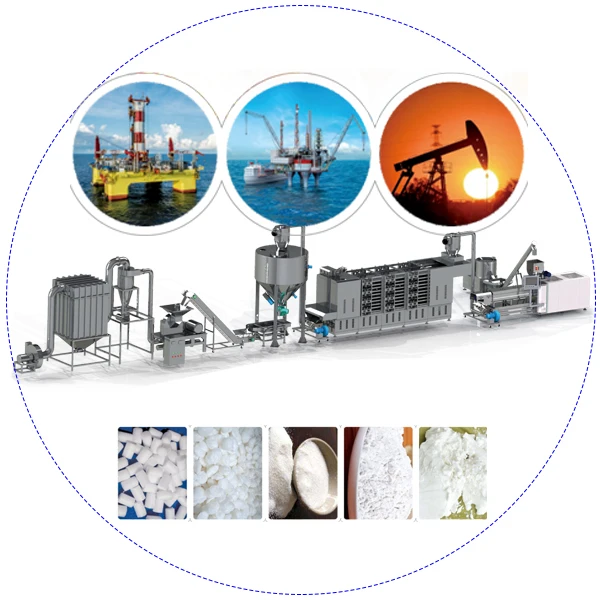


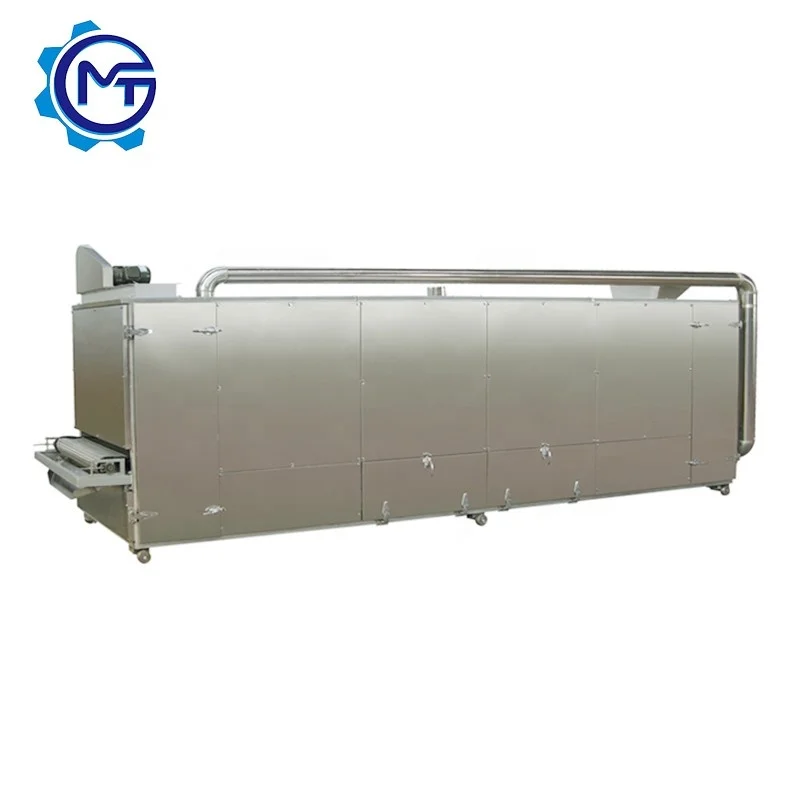


Modified Starch Production Line, Twin-Screw Extruder, 100-1500 kg/h, PLC & MCC Control — engineered as a complete turnkey project from batching through extrusion, cooling, grinding, and packing.
- Screw configuration and die design matched to cassava, corn, or potato starch for precise modification levels
- Throughput balanced across every station to eliminate bottlenecks in drying and grinding
- Trial runs on your actual raw material performed in-house before shipment
CE and ISO certified lines delivered with full layout documentation, capacity calculations, and electrical schematics confirmed to your facility voltage.
Description
Matched Throughput Across All Stations — We calculate upstream mixing, extrusion, cooling, and grinding capacities together before finalizing your modified starch production line layout, so no single station becomes a bottleneck.
Technical Specifications
| Parameter | Value |
|---|---|
| Product Type | Modified Starch Extrusion Production Line |
| Screw Type | Twin-screw |
| Motor Power | 45-200 kW (basis to be confirmed based on extruder model and line configuration) |
| Output Capacity | 100-1500 kg/h (basis to be confirmed based on raw material type and moisture content) |
| Voltage | 220-440V, tri-phase (specific frequency and configuration to be confirmed) |
| Equipment Weight | 1000-5000 kg (basis to be confirmed based on line configuration and station count) |
| Raw Materials | Cassava starch, rice flour, corn flour, soybean flour, potato starch, other grain flours |
| Control System | PLC and MCC control |
| Line Stations | Mixing and batching, extrusion, cooling conveyor, pulse grinder, packing |
| Contact Materials | Food-grade stainless steel (except some conveyors with PVC) |
| Fuel Options | Gas, diesel, electricity, steam |
| Testing Workshop | In-house machine testing workshop for trial runs |
| Assembly State | Complete production line with supporting equipment |
| Standards | CE, ISO |
Application Suitability
| Application | Material or Output |
|---|---|
| Food-grade modified starch for texture and functional properties | Cassava starch, corn flour, potato starch |
| Industrial modified starch for oil drilling fluids | Corn flour, soybean flour, grain flours |
| Modified starch for paper making and coating | Cassava starch, rice flour, corn flour |
| Fortified and nutritional starch for infant formula | Rice flour, soybean flour, potato starch |
| Large-scale industrial starch modification | Corn flour, cassava starch, mixed grain flours |
Why "Nominal Capacity" Fails on Real Starch Material
A modified starch production line turnkey quoted at a round number often cannot sustain that output on your specific raw material because starch gelatinisation behaviour varies with moisture content, amylose ratio, and modification target.
Capacity must be verified on your actual starch formulation, not a generic benchmark.
When I first started commissioning starch lines in humid southern workshops, I watched extruders choke on cassava starch at moisture levels the supplier never tested. The cooling conveyor then ran half-empty because the grinder downstream could not keep pace with the extruder’s surge output. Each station was sized independently, and the result was a line that spent more time idle than running [NEED_CITE: throughput matching principles in continuous food processing lines]. The modified starch production line turnkey you specify should come with a documented capacity calculation that shows every station’s throughput matched to the same raw material and moisture baseline.
How Line Throughput Matching Works in Practice
A modified starch production line turnkey requires the mixing and batching system to feed the extruder at a consistent rate, the cooling conveyor to handle peak extruder discharge without product overlap, and the pulse grinder to process cooled material at the same rate it exits the cooling stage. When any one station undershoots, the entire line throttles down to that station’s limit. When one overshoots, product accumulates and degrades before the next process step.
Starch Material Behaviour Drives Station Sizing
Different starch sources gelatinise at different temperatures and shear thresholds inside the twin-screw barrel. Cassava starch requires a different barrel temperature profile and screw configuration than corn flour or potato starch. If the screw elements and die are selected for one material but the buyer later switches to another, output volume and product quality shift — and downstream stations may no longer match. This is why the line layout should be finalized only after a trial run on the buyer’s actual raw material [NEED_CITE: starch gelatinisation temperature and shear sensitivity by source material].
Reading the Specification Sheet Beyond the Headline Numbers
Motor power in the 45-200 kW range covers a wide span of extruder sizes, and the correct selection depends on your target throughput and the viscosity of your starch formulation at processing moisture. Higher amylose starches demand more shear energy, which translates to higher motor load at the same screw speed. Voltage configuration — whether your facility runs 220V, 380V, or 440V at 50 or 60 Hz — must be confirmed before motor and control panel fabrication, because rewiring after delivery delays commissioning by weeks. The PLC and MCC control system allows recipe storage for different starch formulations, so operators can switch between cassava and corn runs without manual recalibration each time. Food-grade stainless steel contact surfaces prevent contamination across formulation changes, which matters when the same line processes both food-grade and industrial-grade modified starch in separate campaigns.
What Happens When Stations Are Sourced Separately
Buying an extruder from one vendor and a dryer or grinder from another is the most common cause of throughput mismatch in starch processing. The extruder vendor quotes capacity based on their machine alone, and the grinder vendor does the same. Nobody is responsible for the gap between them. On a project I supported, the grinder could only handle about two-thirds of what the extruder discharged, so the line ran at reduced feed rate and the buyer never reached contracted output. Separate sourcing also means separate control systems that do not communicate — the extruder cannot signal the grinder to speed up when feed rate increases [NEED_CITE: risks of multi-vendor line integration in food processing]. These mismatches surface only after installation, when rework is expensive and production deadlines are already slipping.
Why Buyers Choose This Line Configuration
Every station from batching through packing is specified under one supplier, so throughput calculations are cross-checked across the full line before fabrication begins. Screw configuration and die design are selected based on the buyer’s specific starch material and target modification level, not copied from a generic template. The in-house testing workshop runs trial production on the buyer’s actual cassava, corn, or potato starch before shipment, generating a documented trial run report. PLC and MCC control panels are built with the buyer’s confirmed voltage, frequency, and preferred operator language before the line leaves the factory. Pre-sales engineering covers line layout, utility planning, and phased installation scheduling, with on-site commissioning and operator training included after delivery.
Documentation & Verification
- Line layout with capacity calculation showing throughput at each station for your starch material
- Trial run report on your specific cassava, corn, or potato starch demonstrating achievable output
- Screw and die configuration record matched to your raw material and modification target
- Electrical schematic with your facility voltage, frequency, and control language confirmed
- Factory test record documenting full-line run before dispatch
- CE declaration of conformity and ISO certificate for customs and regulatory clearance
Installation, Commissioning & Support
- Foundation and floor load plan based on the confirmed line weight and station footprint for your layout
- Dedicated power circuit sizing for the 45-200 kW extruder motor and all supporting station motors
- Full line arrives in modular station groups, assembled and aligned on-site to the approved layout
- First-run parameter setting for barrel temperature profile, screw speed, and feed rate on your starch
- Operator training on PLC recipe management for switching between different starch formulations
- Wear parts list with screw elements and die inserts specified to your material for first replacement cycle
What to Prepare Before Requesting a Quotation
To move from inquiry to line configuration, we need your target starch material — cassava, corn, potato, or a blend — along with the moisture content and modification level your end product requires. Share your facility’s voltage and frequency, available floor space and ceiling height, and whether the line will connect to existing upstream storage or downstream packing equipment. If you can supply a sample of your raw starch material, we will run it through the testing workshop and return a trial report before the quotation is finalized.
Frequently Asked Questions
Q: How is the production capacity of the modified starch line verified?
A: Capacity is verified through a trial run on your specific starch material at your target moisture content and modification level. The trial takes place in the in-house testing workshop before shipment, and the resulting report documents actual throughput, product quality, and screw configuration used. We do not quote capacity based on generic benchmarks.
Q: How do you prevent throughput bottlenecks between the extruder and grinding station?
A: Each station’s throughput is calculated against the same raw material and feed rate before the line layout is finalized. The cooling conveyor length, pulse grinder capacity, and extruder output are all specified to match, so no single station restricts the others during continuous operation.
Q: Can you run a trial on our cassava or corn starch before we commit to the order?
A: Yes. Send us a sample of your raw starch material and your target product specification. We run it on a twin-screw extruder configured to your requirements and provide a trial run report covering output rate, product characteristics, and the screw and die setup used.
Q: What electrical documentation comes with the line?
A: You receive a complete electrical schematic with your facility’s voltage, frequency, and control panel language confirmed during the specification stage. The MCC and PLC panel wiring diagrams are included so your local electricians can handle any future modifications without guessing.
Q: How is the installation schedule structured for a complete starch processing line?
A: Installation follows a phased approach: foundation preparation, station positioning and alignment, electrical and utility connections, then cold commissioning followed by hot runs with your material. The schedule accounts for your facility readiness and any local permitting requirements before our engineers arrive on-site.
Related products
-
Modified Starch Production Line Industrial Drilling Twin Screw Extruder 304 Stainless Steel High Efficiency Flour Mill CE
¥50.00 Select options This product has multiple variants. The options may be chosen on the product page -
Modified Starch Production Line Modified Starch Processing Line Modified Starch Extruder
¥8,580.00 Select options This product has multiple variants. The options may be chosen on the product page -
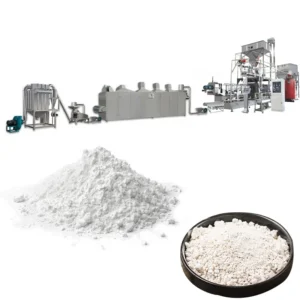
API Standard Pregelatinized Starch Line for Oilfield Drilling Fluid. High Yield Modified Starch Equipment
¥65.00 Select options This product has multiple variants. The options may be chosen on the product page -
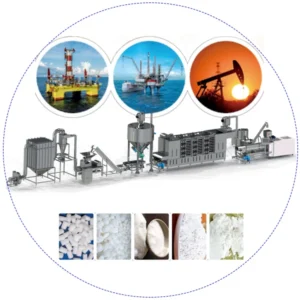
Modified Starch Production Line for Industrial Drilling Twin Screw Extruder Large Output Modified Starch Manufacturing Machine
¥50.00 Select options This product has multiple variants. The options may be chosen on the product page