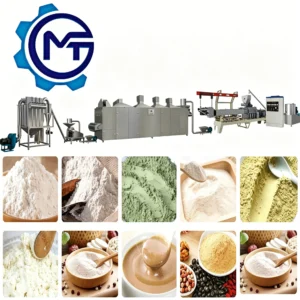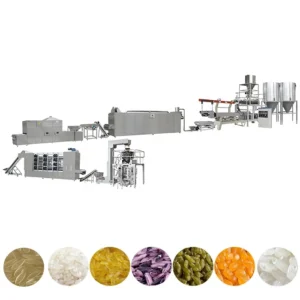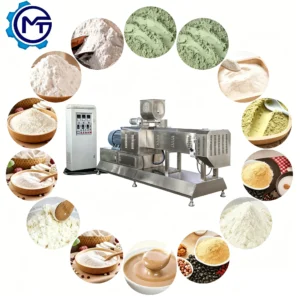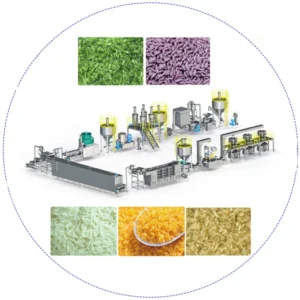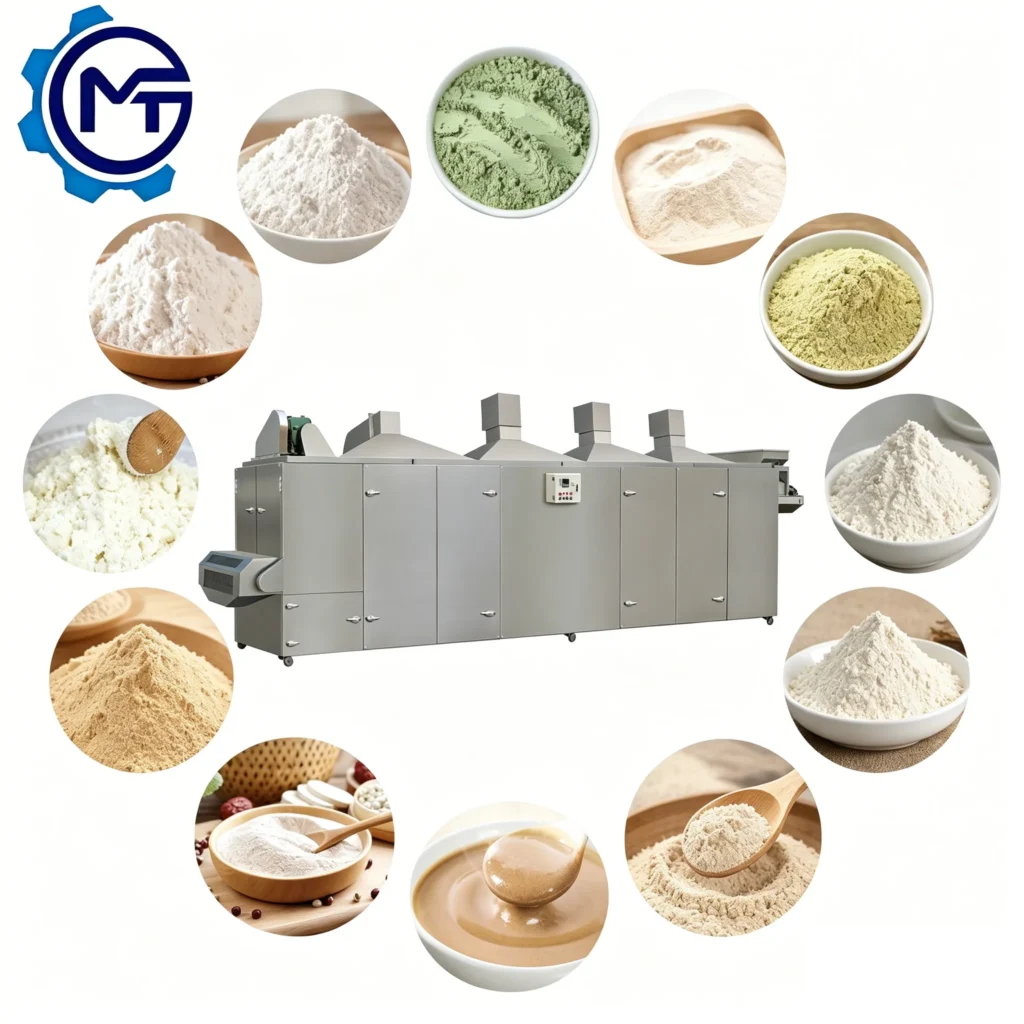


Nutrition Powder Processing Line, 304 Stainless Steel, Full Automatic PLC Control — throughput-matched from batching to packing, with screw and die configuration specified to your grain formulation.
- Designed for infant formula and fortified food producers, the line delivers repeatable batch-to-batch consistency across mixing, extrusion, drying, milling and packing stations
- Flexible electric, gas or steam heat source adapts to your existing plant utilities
- Touch control panel with digital system minimises manual intervention points
Trial runs on your raw material are completed in our testing workshop and documented before shipment.
Description
Turnkey Line Integration — Every station from mixing to packing is throughput-matched under one supplier, preventing the mid-line bottlenecks that stall output on grain-based nutrition powder runs.
Technical Specifications
| Parameter | Value |
|---|---|
| Product Type | Nutrition Powder Processing Line |
| Output Capacity | 200–500 kg/h (basis not stated in source — confirm raw material, moisture content, formulation) |
| Construction Material | Food-grade 304 stainless steel (contact parts) |
| Control System | Touch control panel, digital system |
| Heat Source Options | Electric / Gas / Steam |
| Automation Level | Full automatic |
| Line Stations | Baking ovens, mixers (other stations implied — confirm full line configuration) |
| Warranty | 1 year |
| After-Sales Service | Overseas engineer service available |
| Energy Profile | Low energy consumption (source claim — no specific figures) |
| Standards | CE / ISO (confirm from manufacturer documentation) |
Application Suitability
| Application | Material or Output |
|---|---|
| Baby food and infant nutrition powder | Rice, corn, beans, various grains |
| Porridge and instant cereal powder | Mixed grain formulations |
| Fortified food and nutrition programme supplies | Vitamin- and mineral-enriched grain blends |
| Breakfast and weaning food powders | Multi-grain and legume-based recipes |
Why "200–500 kg/h" Means Nothing Without Your Raw Material
A nutrition powder processing line turnkey quoted on nominal capacity often fails to sustain that output on the buyer’s actual grain formulation.
I have watched lines stall at barely half their nameplate figure once the real corn-to-bean ratio hits the extruder barrel. The problem is rarely a single machine — it is the mismatch between mixing batch size, extrusion throughput, and dryer residence time when equipment is sourced from separate vendors. A bottleneck at any station forces the entire line to idle or surge, and grain-based powders are especially sensitive because moisture content and starch composition shift with every harvest lot [NEED_CITE: grain moisture variability and extrusion throughput impact]. Before you sign a purchase order, the capacity claim must be anchored to your specific formulation, particle size, and target moisture at the packing station.
Throughput Matching Across Every Line Station
A nutrition powder processing line turnkey only performs when each station is sized to the same real-world output. The mixer must discharge batches fast enough to keep the extruder fed without overflow, the baking oven must handle the full volume without creating a moisture bottleneck, and the milling and packing stages must close the loop at an equal pace. When one station lags, operators either throttle back the entire line or accept inconsistent powder density from surging feed rates.
Trial Runs on Your Grain Blend Before Shipment
Running the buyer’s actual rice, corn, or bean blend in an in-house testing workshop reveals issues that a generic factory test never exposes. Starch gelatinisation behaviour, expansion ratio, and final powder particle size all depend on the raw material’s origin and storage history. A documented trial run report confirms throughput, energy draw, and product specification before the equipment leaves the factory [NEED_CITE: pre-shipment trial run standards for food extrusion lines]. This step removes the most expensive surprises from on-site commissioning.
Reading the Specs That Actually Matter
The food-grade 304 stainless steel contact surfaces are non-negotiable for infant nutrition powder, where regulatory audits trace every wetted part. The flexible heat source options — electric, gas, or steam — determine whether the line slots into your existing boiler room or demands a new utility build-out, a decision that shifts project cost and timeline considerably. The touch control panel with digital system governs batch-to-batch repeatability: temperature profiles, screw speed, and feed rate all sit behind that interface, and the control language must match your operators before the crate is opened. Full automatic operation reduces manual intervention points, which matters most during night shifts when a single missed adjustment can push an entire batch outside the particle-size window.
The Hidden Cost of a Misconfigured Line
When heat source and utility planning are left until the line arrives, you face weeks of idle crates while gas trains or steam headers are retrofitted into the workshop. Control panels shipped with the wrong voltage or language force electricians and translators onto the floor during what should be a straightforward start-up. And if spare wear parts — screws, dies, seals — are not listed and shipped with the first order, the first replacement event turns a planned changeover into an unplanned shutdown [NEED_CITE: production downtime costs from missing spare parts in food processing]. These are not hypothetical risks; they are the most common reasons commissioning stretches from days into weeks.
Why Source This Line Here
Every station is supplied by one manufacturer, so throughput calculations and mechanical interfaces are resolved in the layout drawing, not argued on the factory floor during installation. Screw configuration and die design are specified to your grain formulation and target powder fineness rather than copied from a generic build. The in-house testing workshop runs your raw material before shipment, producing a trial report you can audit. Twin-screw expertise spans infant nutrition, fortified cereal, and modified starch applications, meaning the process engineers have seen formulations close to yours before. Documentation — from line layout through electrical schematics to wear parts lists — is generated for your specific configuration, not pulled from a template library.
Documentation & Verification
- Line layout and capacity calculation showing throughput matching across mixing, baking, and packing stations
- Trial run report on your specific grain blend with recorded output and powder particle size
- Electrical schematic with voltage, frequency, and control language confirmed for your facility
- Screw and die configuration record matched to your formulation and target texture
- Wear parts list with part numbers and recommended first-order quantities
- Factory test record and packing photographs for your shipment audit trail
Installation, Commissioning & Support
- Foundation plan accounts for the full line footprint including mixer, oven, and packing station clearances
- Power supply confirmed for the selected heat source — electric elements, gas train, or steam header
- Modular shipment allows phased unloading through standard workshop doors
- On-site commissioning covers first-run parameter tuning on your grain formulation
- Operator training includes digital control panel navigation and batch recipe storage
- Wear parts inventory reviewed and first replenishment order scheduled before handover
What to Share in Your Inquiry
To size a nutrition powder processing line turnkey accurately, provide your grain types and their typical moisture content, target daily output, and the particle-size range your market expects. Confirm your workshop’s available voltage, frequency, and preferred heat source so the utility plan is settled before fabrication. If you have existing upstream milling or downstream packing equipment, share the interface dimensions and throughput so the new line lands without a gap or overlap.
Frequently Asked Questions
Q: How is the 200–500 kg/h capacity verified on my specific grain formulation?
A: Your raw material — rice, corn, beans, or a blend — is run in the testing workshop at your target moisture and particle size. The trial run report documents actual throughput, energy consumption, and powder specification. Only then is the capacity figure confirmed for your purchase order, replacing the generic nameplate number with a value you can plan production schedules around.
Q: Which line stations are included, and how is throughput matched?
A: The line covers mixing, extrusion, baking or drying, milling, and packing. Each station is sized so its maximum sustainable output equals the next station’s input rate. The line layout document shows these calculations station by station, ensuring no single machine forces the rest to idle or surge during continuous production.
Q: Can the heat source be configured to my factory’s existing supply?
A: Yes. The baking and drying stations accept electric, gas, or steam heat sources. Your existing utility infrastructure is reviewed during the proposal stage so the line connects directly to your boiler, gas train, or electrical panel without requiring a parallel utility build-out that delays commissioning.
Q: What trial runs are performed before shipment, and what does the report cover?
A: Your grain blend is processed through the configured line in the testing workshop. The report records throughput at steady state, powder moisture and particle size, energy draw per station, and any formulation adjustments made during the run. You receive this document before the equipment ships, not after it arrives.
Q: How are voltage, frequency, and control language confirmed for my market?
A: Your facility’s electrical specification and operator language are captured during the proposal stage. The electrical schematic, motor nameplates, and touch control panel interface are all built to those parameters and verified during the factory test, so commissioning starts with the correct supply and readable screens from day one.
Related products
-

Full Automatic Complete Baby Food Nutrition Powder Porridge Processing Production Line for Infant Nutrition Factory
¥9,500.00 Add to cart -

Compact Automatic Baby Cereal Nutrition Powder Production Line with 500kg/h Capacity and PLC Control
¥9,500.00 Add to cart -
High Productivity New Condition Nutritious Baby Food Meal Replacement Powder Production Line
¥30.00 Select options This product has multiple variants. The options may be chosen on the product page -

High Productivity New Condition Safe Healthy and Nutritious Baby Food Meal Replacement Powder Production Line
¥30.00 Select options This product has multiple variants. The options may be chosen on the product page