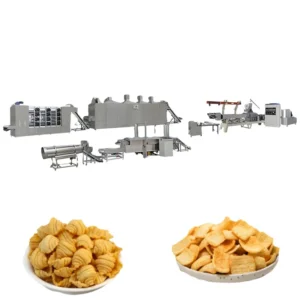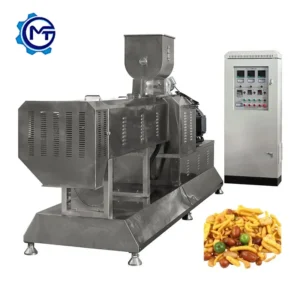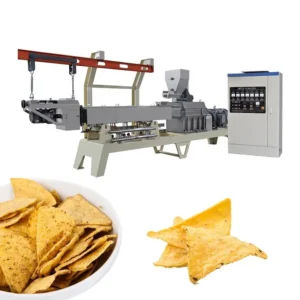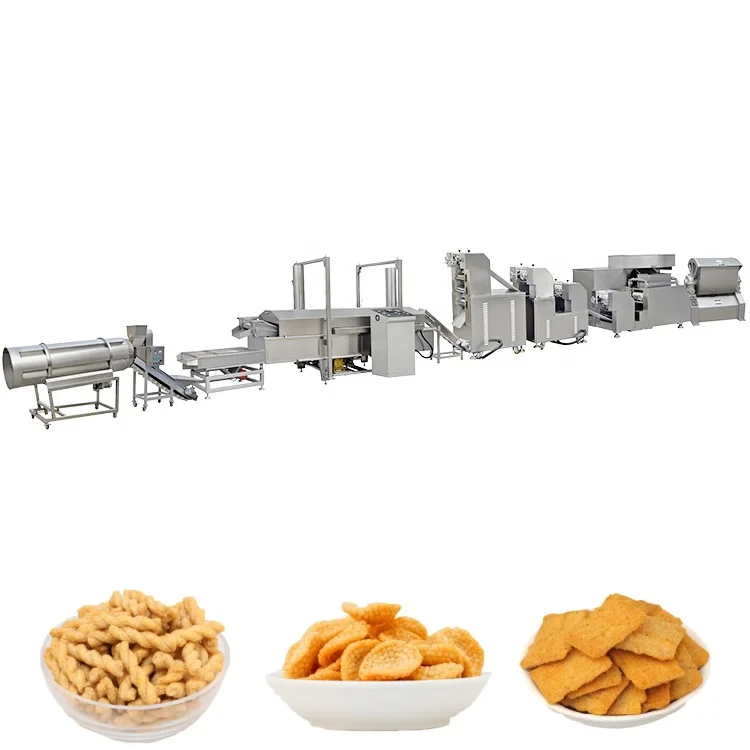

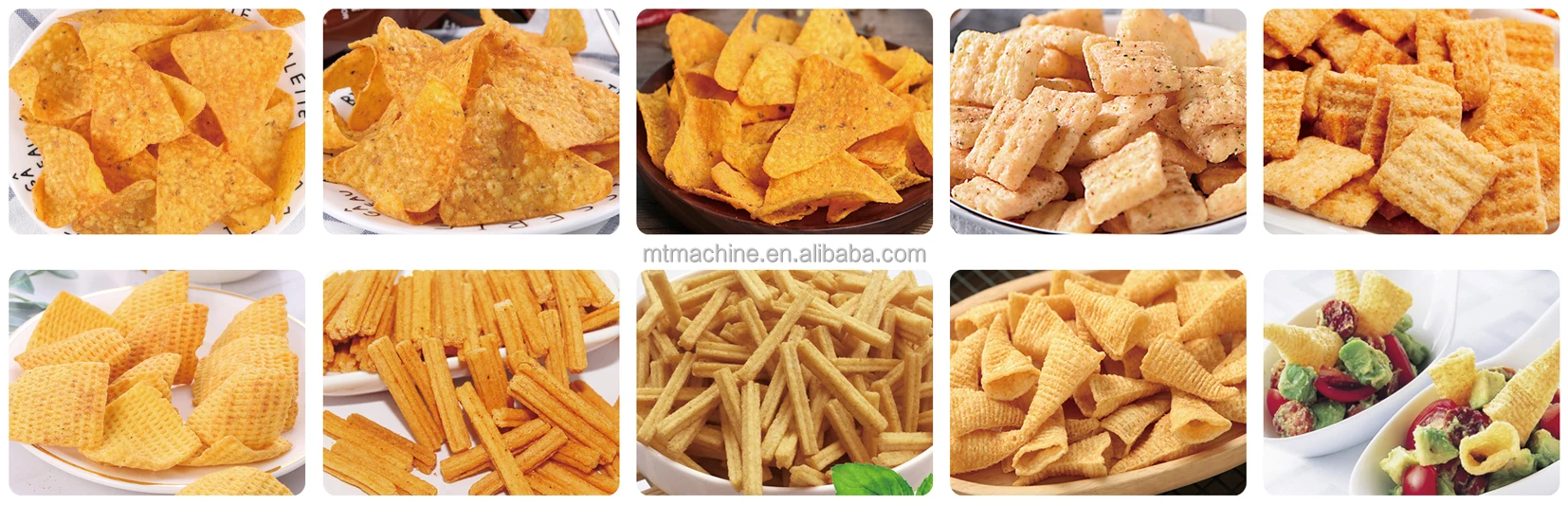
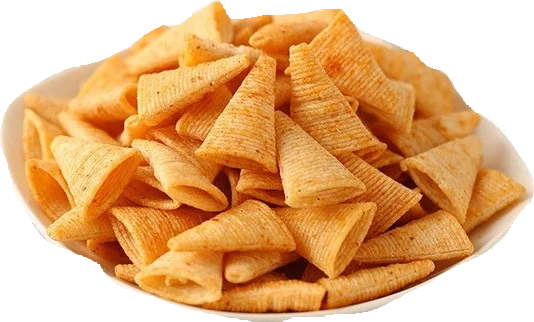

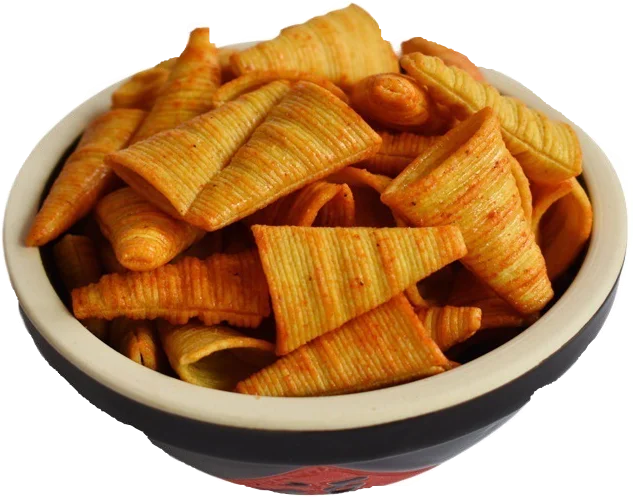
MT-65 / MT-70 / MT-85 / MT-75 / MT-95, 3D Pellet Fried Chips Production Line, Twin-Screw Extruder — designed for continuous gelatinization and forming of corn, wheat, and potato starch-based pellet snacks.
- Co-rotating sectional screw modules and interchangeable dies enable rapid shape changeover across Bugles, pillow, wave, and tube formats
- Fryer station features 600mm stainless steel belt with automatic temperature control and adjustable speed for consistent output density
Layout planning, throughput matching across every station, and in-house trial runs on your raw material before shipment ensure the line performs as specified from day one.
Description
Throughput-Matched Turnkey Engineering — every station from batching to packing is calculated against your raw material profile so the extruder never outpaces the fryer or dryer.
Technical Specifications
| Parameter | Value |
|---|---|
| Product Type | 3D Pellet Fried Chips & Bugles Snack Production Line |
| Models Available | MT-65, MT-70, MT-85, MT-75, MT-95 |
| Extruder Type | Co-rotating twin-screw with sectional modules |
| Contact Material | Food-grade stainless steel; housing in painted steel |
| Main Motor (MT-65) | 100 kW |
| Main Motor (MT-70) | 130 kW |
| Main Motor (MT-85) | 180 kW |
| Main Motor (MT-75) | 185 kW |
| Main Motor (MT-95) | 280 kW |
| Output Capacity (MT-65) | 120–150 kg/h (basis not stated in source — confirm raw material / moisture content) |
| Output Capacity (MT-70) | 200–250 kg/h (basis not stated in source — confirm raw material / moisture content) |
| Output Capacity (MT-85) | 300–500 kg/h (basis not stated in source — confirm raw material / moisture content) |
| Output Capacity (MT-75) | 400–500 kg/h (basis not stated in source — confirm raw material / moisture content) |
| Output Capacity (MT-95) | 800–1000 kg/h (basis not stated in source — confirm raw material / moisture content) |
| Mixer Power Options | 4 kW / 7.5 kW / 15 kW |
| Cutting Machine Power | 1.47 kW |
| Cutting Machine Dimensions | 2500 × 600 × 1100 mm |
| Fryer Belt Width | 600 mm stainless steel belt |
| Fryer Energy Options | Electricity / fuel gas |
| Drying / Heating Method | Gas / electric / diesel options |
| Voltage & Frequency | Configurable (e.g., 3ph 380V 50Hz, 3ph 415V 60Hz, 3ph 220V 60Hz) |
| Die Configuration | Interchangeable dies for Bugles, sticks, square sheet, rib chips, diamond chips, wavy chips, pillow, crisp pea, shell, screw, square tube, round tube, wave |
| Overall Line Dimensions (MT-65) | 22000 × 1200 × 2200 mm |
| Overall Line Dimensions (MT-70) | 24000 × 1500 × 2200 mm |
| Assembly State | Complete production line |
| Standards | CE, ISO |
| Warranty | 1 year complete, lifetime maintenance |
Application Suitability
| Application | Material or Output |
|---|---|
| Bugles-style corn chips | Corn flour, corn starch blended formulations |
| Pillow and wave-shaped fried pellets | Wheat flour, potato starch, rice flour blends |
| Rib and diamond chip formats | Potato powder combined with cereal starch bases |
| Shell and screw snack shapes | Multi-grain flour mixes with modified starch |
| 3D pellet sticks and square tubes | Corn and rice flour with adjustable moisture profiles |
Why "Rated Capacity" Without Raw Material Data Is Meaningless
A 3D pellet fried chips production line turnkey rated at 500 kg/h on paper may deliver far less once your actual flour blend and moisture content hit the barrel.
Every extrusion line I have walked through after commissioning tells the same story: the extruder was specified against a generic starch formula, but the buyer’s local corn flour absorbs water differently and gelatinizes at a shifted temperature window. The result is either under-cooked pellets that shatter in the fryer or over-worked dough that clogs the die plate. Output drops, scrap rates climb, and operators spend shifts adjusting parameters that should have been locked in before the machines left the factory [NEED_CITE: raw material variability in extrusion processing]. The only way to prevent this is to trial-run the buyer’s exact formulation on the actual screw configuration before shipment.
Screw Module Logic for Pellet Density Control
The co-rotating twin-screw extruder in this line uses sectional modules rather than a one-piece screw, which matters because different pellet shapes demand different shear and residence-time profiles. A Bugles tube requires sustained pressure through a longer compression zone, while a thin diamond chip needs rapid expansion and a shorter dwell. By rearranging the screw elements and adjusting barrel temperature zones, the same extruder platform adapts across the full die catalog without swapping hardware. This is the core engineering principle behind a properly configured 3D pellet fried chips production line turnkey.
How Dryer-to-Fryer Sequencing Determines Final Crispness
After extrusion and forming, the semi-finished pellets carry residual moisture that must be reduced to a narrow band before they enter the fryer. If the dryer is undersized relative to the extruder output, pellets arrive at the fryer belt with uneven moisture gradients — some chips blister on contact with oil while others stay dense and hard. If the dryer is oversized, throughput drops and energy cost rises without improving quality. The line is designed so dryer belt length, airflow volume, and fryer belt speed are calculated together, which is the only way to hold consistent texture across a production run [NEED_CITE: moisture equilibrium targets before deep frying].
Reading the Spec Sheet Against Your Actual Production Target
The main motor ratings — ranging from 100 kW on the MT-65 to 280 kW on the MT-95 — directly govern the torque available for high-moisture starch gelatinization. Heavier formulations with potato powder or rice flour demand more torque per kilogram of throughput than pure corn starch blends, so a model that nominally covers your target output may still be undersized for your specific recipe. The 600 mm fryer belt width sets a hard ceiling on how many pellets can pass through the oil per minute regardless of extruder speed, meaning fryer capacity must be checked against extruder capacity before either machine is ordered. Voltage configurability across 380V 50Hz, 415V 60Hz, and 220V 60Hz ensures the MCC and motor starters match destination electrical standards, avoiding the delays I have seen when a 60Hz market receives 50Hz-rated drives.
What Happens When Line Stations Are Sourced Separately
When an extruder, a dryer, and a fryer come from three different vendors, nobody is responsible for the hand-off points. The extruder delivers pellets faster than the dryer can handle, so semi-finished product piles up on transfer conveyors, absorbs ambient humidity, and loses the moisture profile the die was designed for. Chips exit the fryer with inconsistent color and oil absorption, and the coating drum receives a mix of over-fried and under-fried pieces. The blame moves between suppliers while the buyer absorbs the scrap cost [NEED_CITE: single-source versus multi-vendor line integration risks].
Why This Line Is Engineered Under One Supplier
Throughput matching across every station eliminates the bottleneck failures that occur when machines are assembled from separate vendors — the extruder, dryer, fryer, and coating drum are all sized against the same throughput calculation. Screw configuration and die design are specified to the buyer’s raw material and target shape before production begins, not copied from a generic template. An in-house testing workshop allows trial runs on the buyer’s actual formulation before shipment, so parameter settings travel with the machine. The line covers applications from corn-based Bugles to multi-grain pellet snacks under one supplier, simplifying accountability. Pre-sales engineering through on-site commissioning and operator training is handled by the same team that designed the layout, so there is no hand-off gap between sales promises and floor reality.
Documentation & Verification
- Line layout drawing scaled to your workshop footprint and utility connection points
- Capacity calculation sheet showing matched throughput at every station from mixer to packer
- Screw element arrangement and die plate record specific to your target pellet shape
- Trial run report produced on your raw material with moisture and texture data
- Electrical schematic with confirmed voltage, frequency, and control language
- CE declaration and ISO certificate in electronic or original format
Installation, Commissioning & Support
- Floor plan marks showing foundation loads for extruder, dryer, and fryer positions based on line dimensions
- Dedicated power circuit sizing matched to the main motor rating of the selected model
- Machine arrives as a complete line with station-by-station assembly sequence documented
- First-run parameter setting on your raw material replicated from the factory trial run
- Operator training covering screw changeover, die swap, and fryer belt speed calibration
- Wear parts list with reorder codes for screws, dies, and fryer belt segments
What We Need to Build Your Line Quote
Provide the flour or starch blend you plan to run, including typical moisture content after mixing, along with the pellet shapes you want to produce in the first year. Share your workshop length, width, and clear height so we can draft a layout that respects utility corridors and maintenance access. Confirm local voltage, phase, and frequency, plus the control language your operators read, so the MCC and interface panels arrive correct.
Frequently Asked Questions
Q: How is output capacity verified against my specific raw material formulation?
A: We run your exact flour blend and moisture recipe through the extruder in our testing workshop before shipment. The trial run records throughput, pellet density, and gelatinization quality under the screw configuration specified for your product. That report ships with the line so commissioning starts from known parameters rather than guesswork.
Q: What voltage, frequency, and control language options are confirmed before production?
A: The line supports configurations including 380V 50Hz, 415V 60Hz, and 220V 60Hz. We confirm the destination market standard during the quotation stage and lock it into the electrical schematic. Control panel labeling and PLC text are set to the operator language you specify before the MCC cabinet is wired.
Q: How are extruder, dryer, and fryer stations matched to prevent bottlenecks?
A: Each station is sized from the same throughput calculation based on your target output and raw material. The dryer belt length and airflow are calculated against extruder discharge rate, and the 600 mm fryer belt speed is set so pellets spend the correct residence time in oil. No station is specified independently.
Q: Can a trial run be performed on my raw material before shipment?
A: Yes. The testing workshop runs your formulation through the actual extruder and die combination ordered for your line. The resulting report includes moisture readings, pellet dimensions, and texture assessment. You receive this documentation before the machines are crated, so any adjustment happens at the factory, not on your floor.
Q: What spare wear parts are included, and how is long-term supply handled?
A: The initial shipment includes a wear parts list with reorder codes for screw elements, die plates, and fryer belt segments specific to your configuration. Replacement parts are manufactured to the same specification as the originals, and orders can be placed directly against the serial-numbered build record for your line.
Related products
-
New Fully Automatic Large Capacity 304 Stainless Steel Savory Frying Snack Production Line Crisp Bugles Chips Processing Machine
¥30.00 Select options This product has multiple variants. The options may be chosen on the product page -
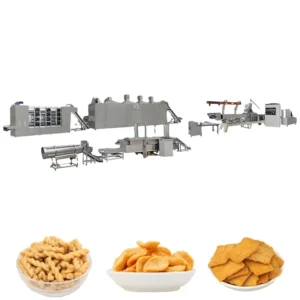
Doritos Chips Making Extruder Fried Corn Bugles Crispy Chips Process Machine Frying Salad Sticks Pellet Snacks Production Line
¥100.00 Select options This product has multiple variants. The options may be chosen on the product page -
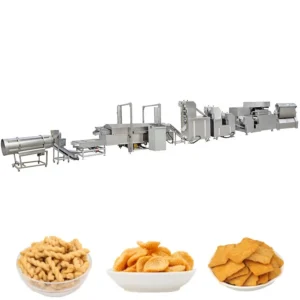
Frying Crispy 3D Corn Bugles Pellets Fried Chips Snacks Food Machine Production Line Bugles Making Extruder
¥100.00 Select options This product has multiple variants. The options may be chosen on the product page -
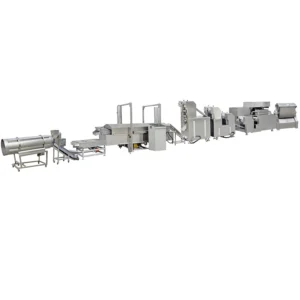
Orion TURTLE CHIPS Snack Puffing Machinery Internet Celebrity Puffed Four-layer Crispy Production Line
¥65.00 Select options This product has multiple variants. The options may be chosen on the product page