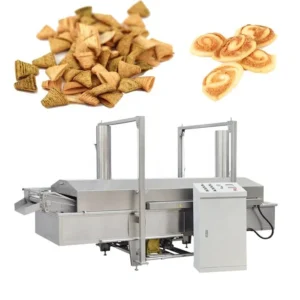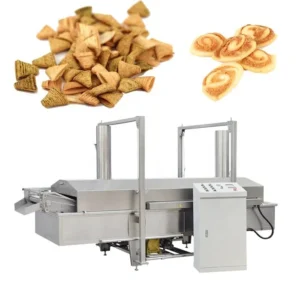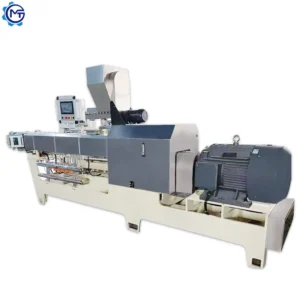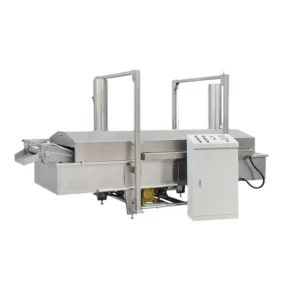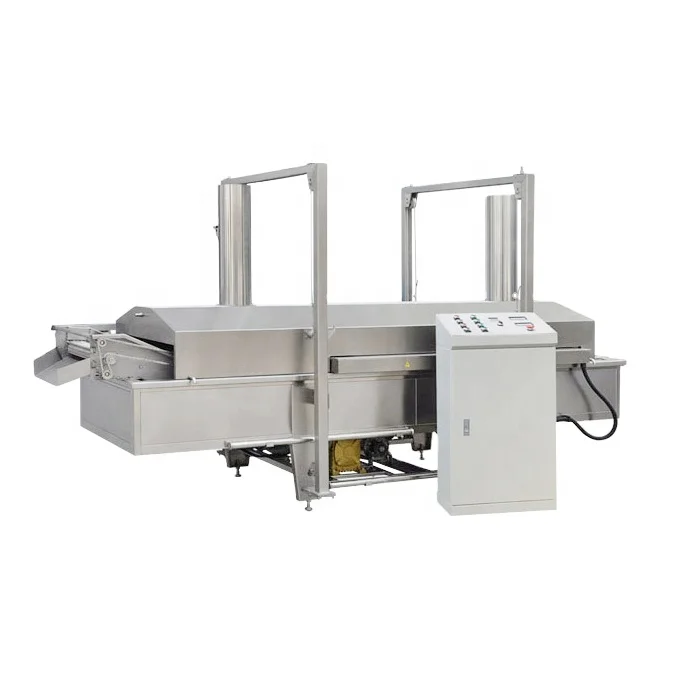
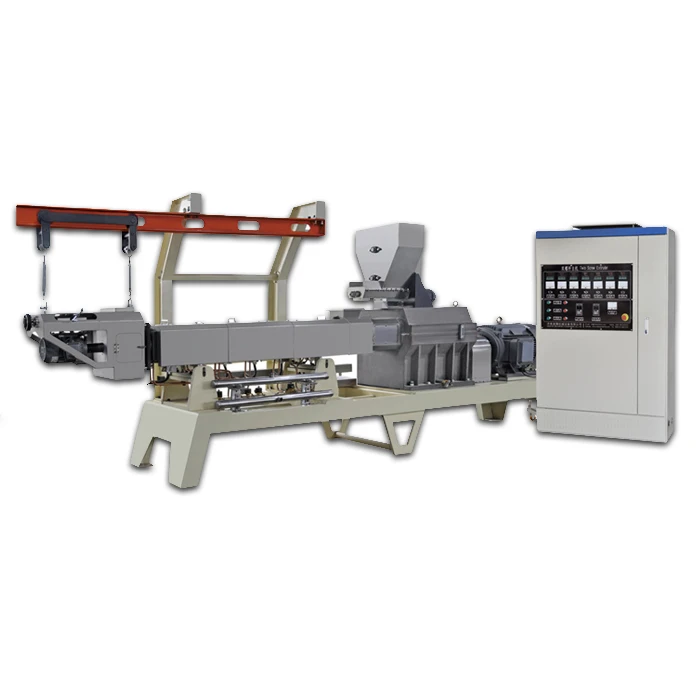
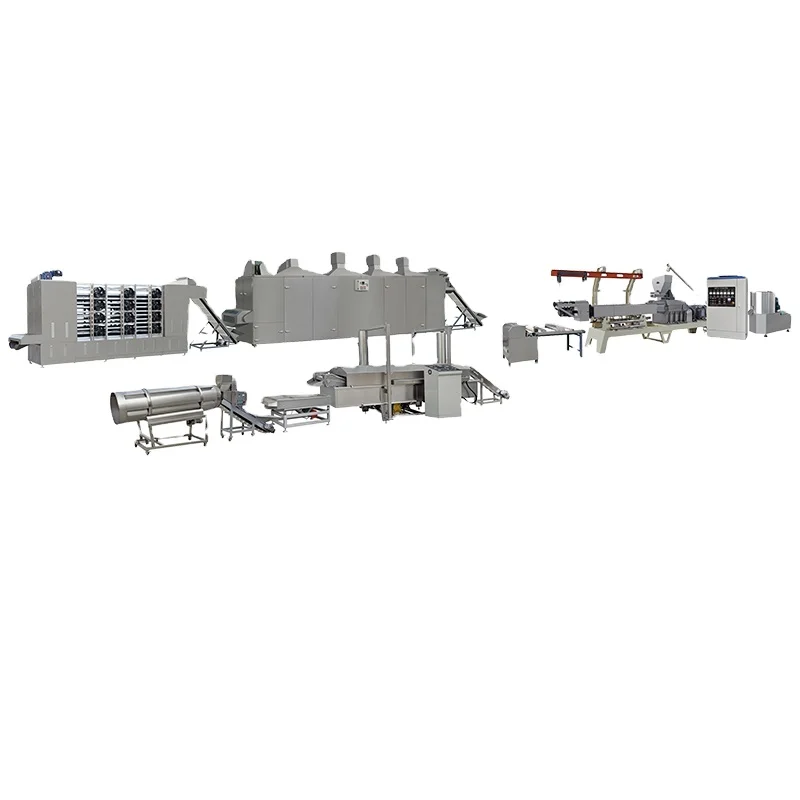

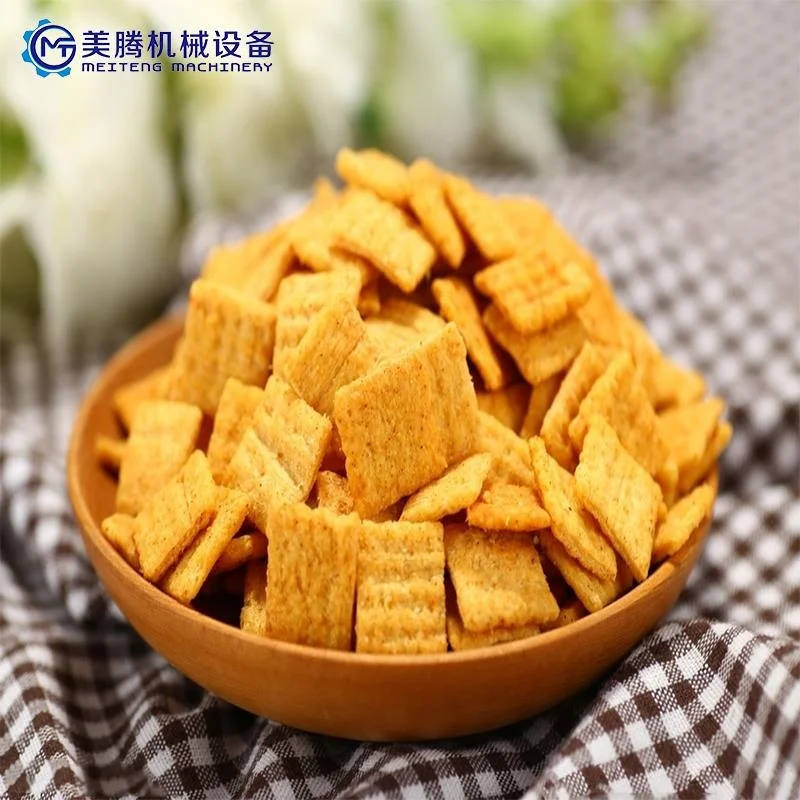
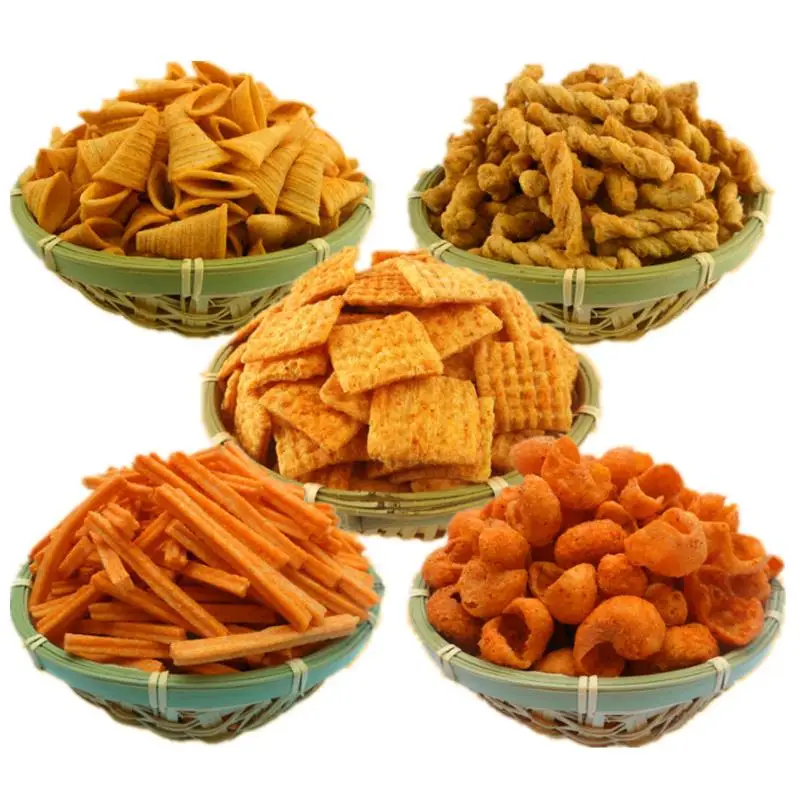
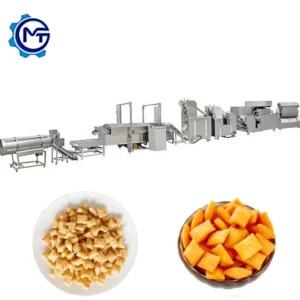
MT65 / MT70 / MT85 / MT75 / MT95 Fried Puffed Snack Production Line, Twin-Screw Extrusion, PLC & MCC Control, CE Certified — designed as a turnkey project with every station throughput-matched to eliminate bottlenecks from mixing through frying, seasoning and packing. Screw configuration and die design are specified to your raw material and target shape, with trial runs in our testing workshop before shipment to verify real output and product density. Complete line layout, capacity calculation and electrical documentation provided under one project responsibility.
Description
Integrated Line Engineering — Every station from powder mixing to final packing is throughput-balanced under single-source responsibility, eliminating the mismatch between extruder output and fryer capacity that stalls production on multi-vendor setups.
Technical Specifications
| Parameter | Value |
|---|---|
| Product Type | Fried Puffed Snack Production Line |
| Models Available | MT65, MT70, MT85, MT75, MT95 |
| Extruder Type | Twin-screw |
| Installed Power | 142 kW (MT65) / 185 kW (MT70) / 240 kW (MT85) / 245 kW (MT75) / 370 kW (MT95) |
| Actual Power Consumption | 100 kW (MT65) / 130 kW (MT70) / 180 kW (MT85) / 185 kW (MT75) / 280 kW (MT95) |
| Output Capacity | 120–150 kg/h (MT65) / 200–250 kg/h (MT70) / 300–500 kg/h (MT85) / 400–500 kg/h (MT75) / 800–1000 kg/h (MT95) (basis not stated in source — confirm raw material formulation and moisture content) |
| Overall Dimensions (L×W×H) | 22000×1200×2200 mm (MT65) to 30000×1500×2800 mm (MT95) |
| Powder Mixer Tank Volume | 150 kg |
| Powder Mixer Rotary Speed | 385 rpm |
| Fryer Temperature Range | 0–260 °C |
| Fryer Dimensions | 4500×1350×2350 mm |
| Control System | PLC and MCC control |
| Construction Material | Food-grade stainless steel contact surfaces |
| Line Stations | Mixing → Extrusion → Forming/Cutting → Frying → Flavoring → Drying → Cooling → Packing |
| Warranty | 1 year complete warranty |
| Certification | CE, ISO |
Application Suitability
| Application | Material or Output |
|---|---|
| Tortilla chips and corn curls | Corn flour, corn grits, masa harina |
| Bugles and cone-shaped snacks | Wheat flour, corn starch blends |
| Rice crust and rice crackers | Rice flour, glutinous rice powder |
| 2D/3D formed shapes (triangles, fish, duck, gourd) | Multi-grain flour formulations with starch |
| Wonderful crisp corners and golden corners | Potato starch, tapioca, wheat blends |
What "Nominal Capacity" Leaves Out on a Fried Snack Line
Real throughput is determined by your specific flour formulation and moisture content, not by a catalogue number.
I once watched a Middle Eastern snack producer lose an entire first production run because their local chickpea flour behaved nothing like the corn meal the line was originally sized for. The oil temperature profile went wrong, expansion collapsed, and the finished product density was outside any acceptable market spec. A fried puffed snack production line turnkey project only works when capacity is verified against your actual raw material before the equipment leaves the factory, not after it arrives on your floor [NEED_CITE: raw material behaviour variation in twin-screw extrusion]. Sizing a line on paper without a physical trial run is how bottlenecks get baked into the layout permanently.
Screw Configuration Matched to Your Snack Shape
The twin-screw extruder in this line does not ship with a generic screw profile. The screw element arrangement and die geometry are specified to your target product — whether that is a thin-walled bugle cone requiring high shear and fast residence time, or a dense rice crust needing lower screw speed and a wider die opening. Getting this wrong means the extrudate enters the fryer at the wrong moisture and density, and no amount of oil temperature adjustment downstream will correct the final texture.
Throughput Balancing Across Every Station
A common failure on assembled lines is that the extruder runs at full output while the fryer falls behind, forcing the operator to idle the front end. On this system, the powder mixer batch cycle, extruder feed rate, fryer belt speed, and flavoring drum throughput are calculated together during the layout phase. The fryer operates across a 0–260 °C range with a belt length that allows the required residence time at your target production rate, so the line runs continuously rather than in stop-start batches [NEED_CITE: continuous fryer residence time and throughput matching].
Reading the Power and Dimension Specs
The gap between installed power and actual consumption — for example 185 kW installed versus 130 kW consumed on the MT70 — reflects the motor starting reserve and peak load during screw startup, not steady-state running cost. Overall line length stretches from 22 metres on the MT65 up to 30 metres on the MT95, which means your facility needs clear linear floor space plus service access on both sides. The fryer alone occupies 4500×1350 mm, and that footprint must be positioned with exhaust ducting and oil filtration access in mind. The PLC and MCC control panel governs all stations from one interface, so voltage and frequency must be confirmed against your local supply before the electrical schematic is finalised, not after the panels are already wired.
The Cost of Skipping the Trial Run
When a line ships without a prior test on the buyer’s actual formulation, commissioning becomes product development. The extruder screw profile, die selection, fryer temperature curve, and seasoning adhesion all need to be solved simultaneously on your factory floor, with raw material burning through the budget and delivery deadlines slipping. I have seen this push first commercial production back by weeks, sometimes longer, while the buyer’s customers are waiting on sample approval [NEED_CITE: commissioning delays in extrusion-based food processing lines].
Why Source the Complete Line from One Project Responsibility
The mixing, extrusion, forming, frying, seasoning, drying, cooling, and packing stations are engineered together, so throughput at every junction is calculated before metal is cut. Screw and die configurations are documented to your formulation, not copied from a generic reference build. The in-house testing workshop runs your raw material before dispatch, producing a trial report you can review before the crate is sealed. Electrical schematics arrive with your voltage, frequency, and control language already specified. Post-installation support covers operator training, wear part scheduling, and ongoing process adjustment as your formulations evolve.
Documentation & Verification
- Line layout showing throughput calculation between extruder, fryer, and flavoring drum
- Screw and die configuration record matched to your flour type and target snack shape
- Trial run report on your raw material from the in-house testing workshop
- Electrical schematic confirming voltage, frequency, and PLC language before production
- Factory test record documenting full-line run before crate sealing
- CE declaration of conformity and ISO certificate for customs clearance
Installation, Commissioning & Support
- Floor space of 22 to 30 metres linear length depending on model, with utility trenches planned before delivery
- Dedicated electrical circuit matching confirmed voltage and frequency, sized for the actual consumption draw
- Extruder barrel and screw segments shipped assembled; fryer and flavoring drum positioned and connected on-site
- First production run supervised with temperature, screw speed, and fryer belt parameters set to your formulation
- Operator training covering die changes, screw wear inspection, and oil filtration routines
- Wear parts list for screws, dies, and fryer belt components with reorder lead times documented
What to Share with Your Inquiry
Provide your primary flour or starch type along with any secondary ingredients, your target daily output in kilograms, and the specific snack shapes you plan to produce. Include your facility’s available linear floor space and ceiling height, plus the local voltage and frequency standard so the electrical design can begin early. If you have an existing upstream batching system or downstream packing line, note the interface points so the new equipment can be matched.
Frequently Asked Questions
Q: How is actual line capacity verified against my raw material formulation?
A: Your flour blend and moisture target are run through the twin-screw extruder in the in-house testing workshop before shipment. The trial produces a report covering extrudate density, expansion ratio, and fryer behaviour at your formulation, so capacity is confirmed on your material rather than assumed from a standard reference recipe.
Q: How are the extruder, fryer, and flavoring stations throughput-matched?
A: Each station’s rate is calculated during layout design. The extruder output feeds the fryer belt at a speed that allows full residence time within the 0–260 °C range, and the flavoring drum cycle is timed so seasoning coverage is even at full line speed without product backlog between stations.
Q: What screw configuration is selected for my target snack shape?
A: The screw element sequence and die geometry are chosen based on your target shape and density. Thin-walled shapes like bugles require a high-shear screw profile and a specific die land length, while denser products like rice crusts use a different compression ratio to control expansion entering the fryer.
Q: How are voltage, frequency, and control language confirmed before production?
A: The electrical schematic and PLC program are drafted using your site supply data and operator language preference. These are reviewed and signed off before the MCC panel is wired, preventing the commissioning delays that happen when control systems arrive configured for the wrong market standard.
Q: What does the installation and commissioning schedule look like?
A: After delivery, the line is positioned, utilities connected, and stations aligned over a phased schedule. Commissioning begins with dry runs, then product trials using your formulation to set screw speed, barrel temperatures, and fryer parameters, followed by operator training on daily maintenance and wear part replacement.
Related products
-
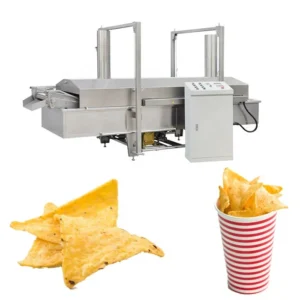
New Fully Automatic Large Capacity 304 Stainless Steel Savory Frying Snack Production Line Crisp Bugles Chips Processing Machine
¥30.00 Select options This product has multiple variants. The options may be chosen on the product page -
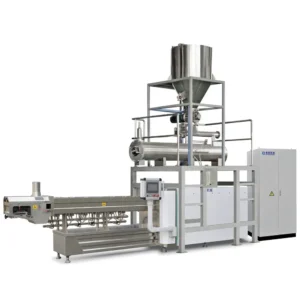
New Automatic 150-200kg/h Nimko Fried Pasta Snacks & Kurkure Making Machine Food Grade Stainless Steel High Productivity
¥8,585.00 Select options This product has multiple variants. The options may be chosen on the product page -
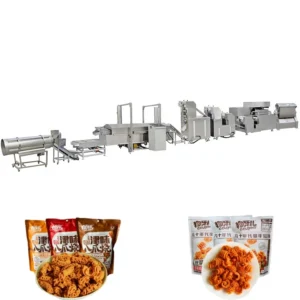
Puffed Octopus Snack Processing Line – Full-Automatic Fried Octopus Production Machinery
¥65.00 Select options This product has multiple variants. The options may be chosen on the product page -
Hot Selling Full Automatic Fried Dough Wheat Flour Bugles Snacks Frying Machine Fried Puffed Food Bugles Snack Production Line
¥7,349.41 Select options This product has multiple variants. The options may be chosen on the product page