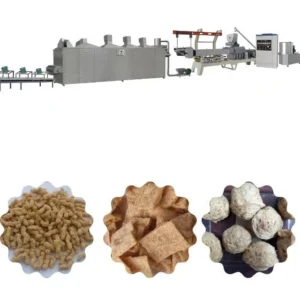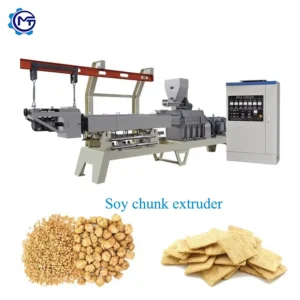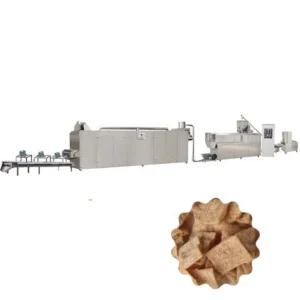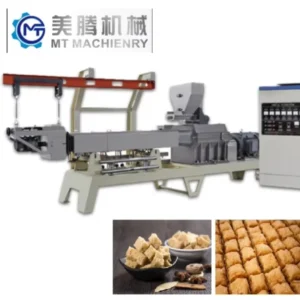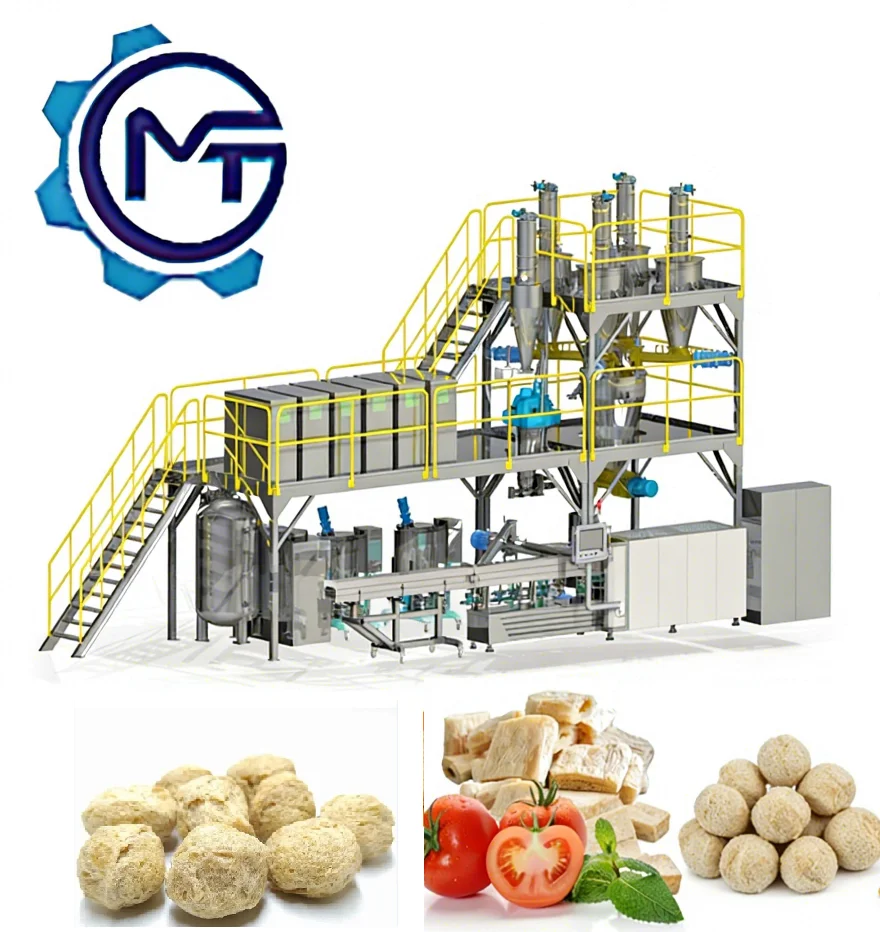
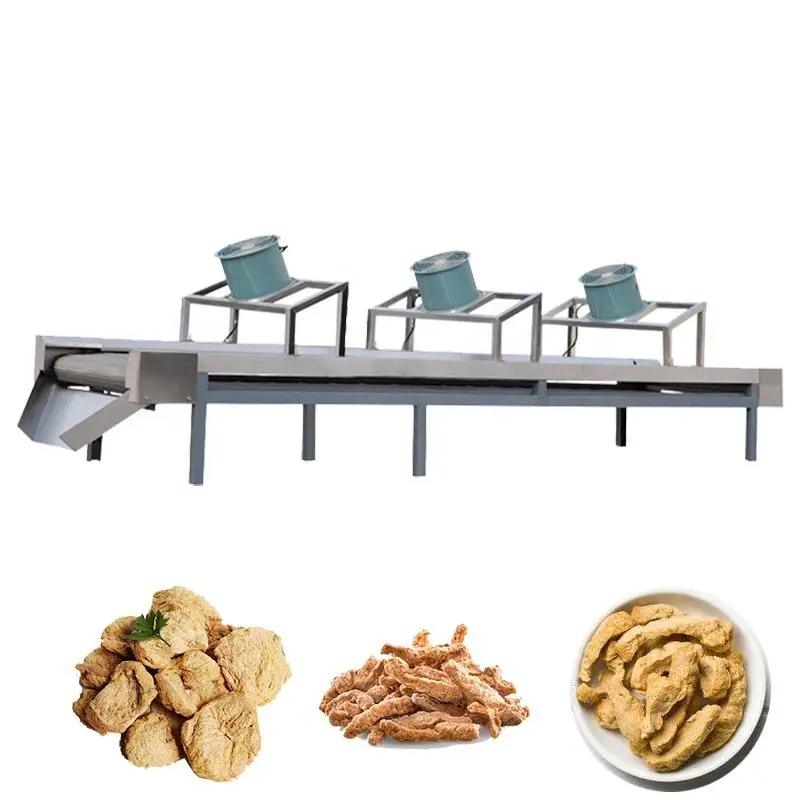
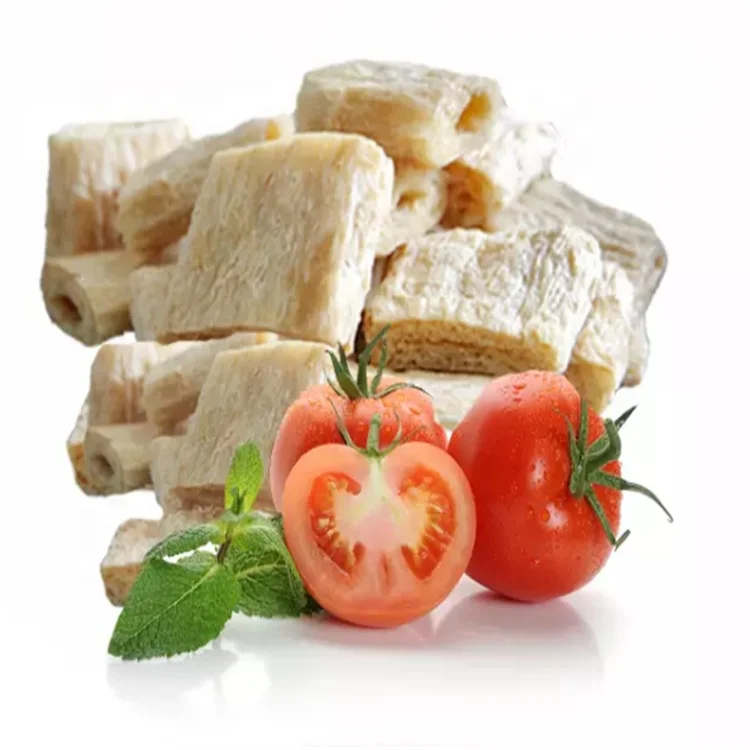
MT65 / MT70 / MT75 / MT85 Twin Screw Plant-Based Meat Processing Line, 84–210 kW Installed Power, 100–300 kg/h Output — configured for textured vegetable protein, soy chunks and plant-based meat floss from defatted soya flour or low-temperature soya flakes.
- Screw length 1050 mm / 1520 mm with die design matched to raw material for target fibre structure and density control
- Multi-layer dryer with fuel / gas / electric heating and adjustable temperature for precise final moisture
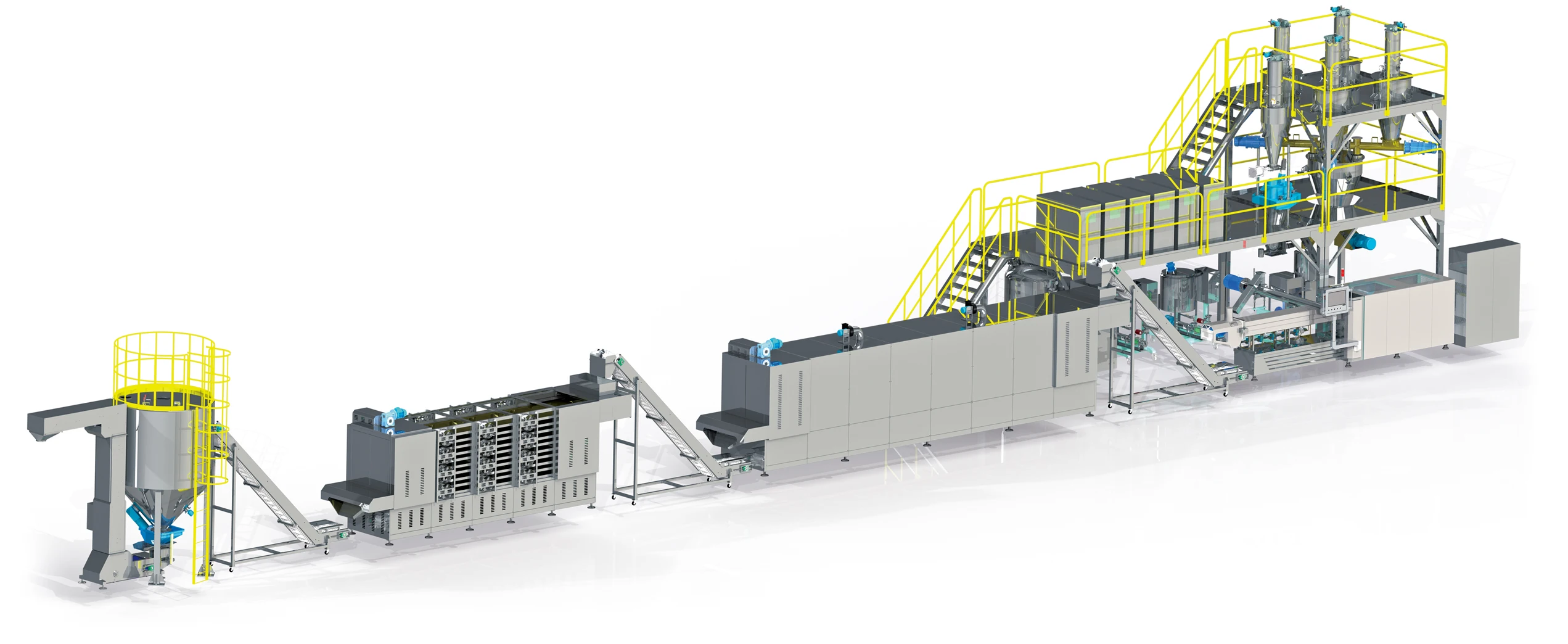
- Full line stations — mixer, extruder, dryer, cooler — throughput-matched under one supplier
Trial runs on buyer’s raw material in our in-house testing workshop confirm capacity before shipment, backed by complete layout documentation and on-site commissioning support.
Description
Throughput-matched layout — every station from the stainless steel mixer to the multi-layer dryer is sized against the extruder’s actual output on your soy protein formulation, not a generic catalog number.
Technical Specifications
| Parameter | Value |
|---|---|
| Product Type | Textured Vegetable Protein (TVP) / Plant-Based Meat Extrusion Line |
| Model Options | MT65 / MT70 / MT75 / MT85 |
| Screw Type | Twin Screw |
| Installed Power | 84 kW (MT65) / 160 kW (MT70) / 190 kW (MT75) / 210 kW (MT85) |
| Power Consumption | 59 kW (MT65) / 120 kW (MT70) / 140 kW (MT75) / 140 kW (MT85) |
| Output Capacity | 100–150 kg/h (MT65) / 150–200 kg/h (MT70) / 150–200 kg/h (MT75) / 250–300 kg/h (MT85) (basis not stated in source — confirm raw material, moisture content, and die configuration) |
| Overall Dimensions (L×W×H) | 40000×1200×2200 mm (MT65) / 41000×1500×2200 mm (MT70) / 43000×1500×3200 mm (MT75) / 45000×1500×3500 mm (MT85) |
| Line Stations | Mixer → Screw Conveyor → Twin Screw Extruder → Air Conveyor → Multi-layer Dryer → Cooling Machine |
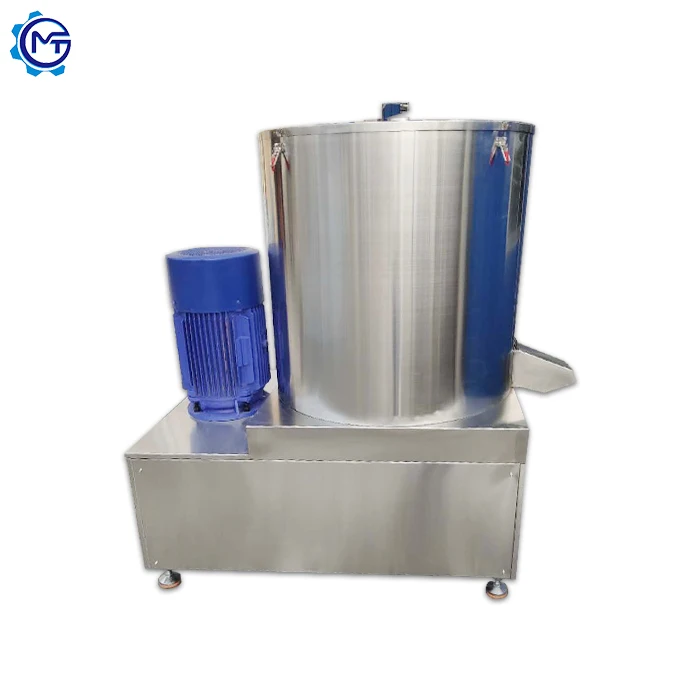
| Mixer Capacity | 20–30 kg / 70–80 kg / 170–180 kg |
| Mixer Motor Power | 4 kW / 7.5 kW / 15 kW |
| Mixer Contact Material | Stainless Steel 304 |
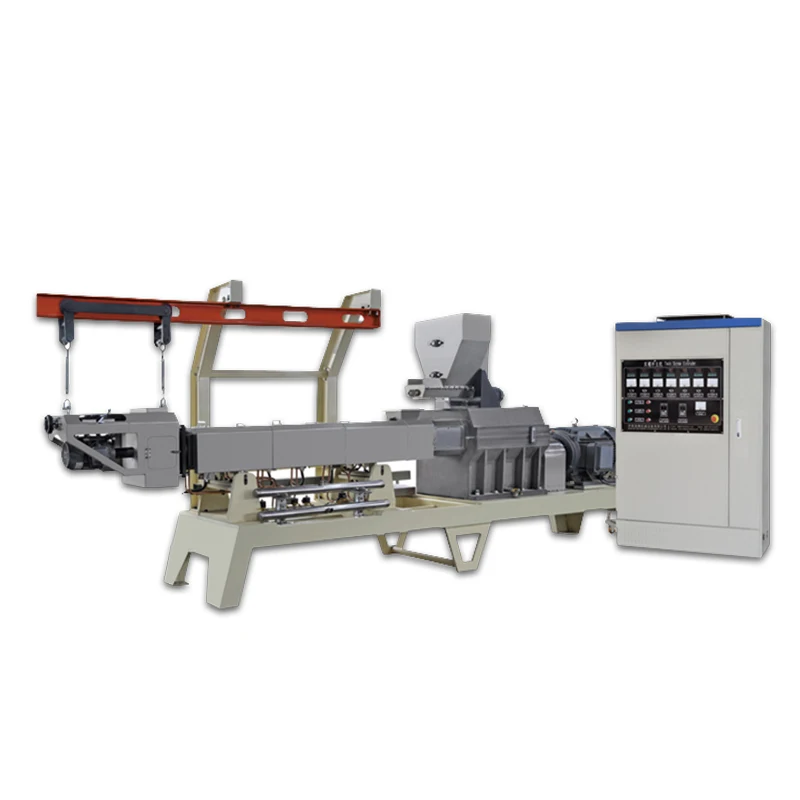
| Extruder Main Motor Power | 22 kW / 30 kW / 45 kW |
| Extruder Screw Length | 1050 mm / 1520 mm |
| Rotary Cutting Motor Power | 0.75 kW |
| Feeding Motor Power | 0.75 kW |
| Pump Motor Power | 0.37 kW |
| Extruder Heating Power | 10 kW / 14 kW / 14 kW |
| Dryer Heating Options | Fuel / Gas / Electricity |
| Dryer Drive | Double pitch roller chain drive, round-trip drying |
| Certifications | CE (since 2014), ISO certified |
Application Suitability
| Application | Material or Output |
|---|---|
| Textured soy protein (TVP/TSP) | Defatted soya flour, low temperature soya flakes |
| Soy chunks and soy nuggets | Soy protein concentrate and isolate blends |
| Vegetarian meat floss | Soybean dregs, peanut dregs with starch binders |
| Plant-based meat analogue ingredients | Formulations requiring fibrous, meat-like texture |
| Cereal snacks (screw configuration change) | Corn, rice, wheat flour, oat blends |
What "200 kg/h Capacity" Leaves Out About Plant Based Meat Processing Lines
Nominal throughput disappears the moment your raw material formula changes.
I have watched a plant based meat processing line hit its rated numbers on a standard defatted soya flour blend during factory testing, then drop noticeably in actual output when the buyer introduced a higher proportion of low-temperature soya flakes at their facility. The screw configuration that worked for one formulation failed to develop the correct fibre structure for another, requiring days of on-site adjustment before the extrudate met specification. Buyers who sign off on a capacity number without confirming it against their own raw material mix are signing off on a number that may never materialize on their production floor [NEED_CITE: impact of soy protein formulation variables on twin-screw extrusion throughput].
Fibre Structure Development Through Barrel Configuration
The twin-screw extruder forms the core of any TVP production system. Achieving the layered, meat-like fibre structure that end markets expect depends on shear forces generated between the intermeshing screws, barrel temperature profile, and residence time inside the barrel. The available screw lengths of 1050 mm and 1520 mm give processors flexibility in tuning that residence time — a longer barrel allows a more gradual transition through the gelatinisation and texturisation zones, which matters when working with high-procentage soy protein concentrates that need controlled moisture and heat input.
Matching Die Geometry to Target Product Density
Die configuration determines expansion ratio, surface texture, and bulk density of the extrudate. Soy chunks destined for rehydration need a different die geometry than fine-textured meat floss. When the die opening and land length do not match the specific formulation and moisture content, the extrudate can emerge either too dense to rehydrate properly or too expanded to hold a fibrous bite. This is why the plant based meat processing line approach treats die selection as a variable tied to the buyer’s target product rather than a fixed catalog item [NEED_CITE: die geometry influence on textured vegetable protein expansion and density].
Reading the Power and Dimension Data for Line Planning
The main motor power ranges from 22 kW on the MT65 up to 45 kW on the MT75, with installed power reaching 210 kW on the MT85 when all stations are counted. Power consumption figures — 59 kW to 140 kW in actual operation — tell you what your electrical infrastructure must sustain continuously, which differs from the peak installed rating. The line lengths spanning 40 to 45 metres mean that workshop layout planning must account for the full footprint including air conveyor runs and cooling sections, not just the extruder alone. Stainless steel 304 contact surfaces in the mixing station ensure that no corrosion or metal migration contaminates the protein blend before it reaches the extruder barrel.
When Stations Are Sized Separately, Someone Pays for It
A dryer that cannot keep pace with the extruder forces the operator to throttle output, turning a line rated for higher throughput into one running well below its nameplate number. I recall a textured protein project where the cooling conveyor was specified to a generic length without calculating the actual exit temperature from the dryer, which left product still warm entering the packing area and caused moisture condensation inside sealed bags. These mismatches do not show up on a quotation — they surface only after installation, when the cost of downtime and rework has already accumulated [NEED_CITE: throughput mismatch consequences in multi-station food processing lines].
What This Supplier Brings to a Turnkey TVP Project
Every station in the plant based meat processing line — mixer, screw conveyor, extruder, air conveyor, dryer, and cooler — is selected and sized by one supplier, which means throughput calculations across the chain sit on a single set of engineering drawings rather than split between vendors pointing at each other when bottlenecks appear. Screw configuration and die design are specified to the buyer’s raw material formula and target fibre structure before the machine enters production. An in-house testing workshop runs the buyer’s actual formulation before shipment, so product development begins in Shandong rather than on the buyer’s factory floor during commissioning. Pre-sales consultation flows into engineer-designed layout proposals, on-site installation, commissioning support, and operator training that covers screw changes for different product formats. CE and ISO certifications provide documentation support for import clearance and local compliance requirements.
Documentation & Verification
- Line layout and capacity calculation with throughput matched across mixer, extruder, and dryer stations
- Screw and die configuration record tied to your soy protein formulation and target product
- Trial run report on your raw material conducted in the testing workshop before dispatch
- Electrical schematic with voltage, frequency, and control language confirmed prior to production
- CE declaration of conformity and ISO certificate for customs and local compliance
- Wear parts list identifying screws, dies, and cutting blades for initial spare stock planning
Installation, Commissioning & Support
- Foundation planning based on the full 40–45 metre line footprint and individual station weights
- Power supply specification covering 59–140 kW operating consumption with dedicated circuit recommendations
- Extruder barrel heating zones configured to local voltage and frequency before factory assembly
- On-site commissioning includes screw configuration fine-tuning on your actual raw material blend
- Operator training covers die changes, moisture adjustment, and dryer temperature protocols
- Wear parts inventory guidance based on screw length and expected replacement intervals
What to Include in Your Next Enquiry
To size a plant based meat processing line correctly, share the specific soy protein or plant-based raw materials you plan to run — including supplier and protein percentage if available — along with your target product format and desired hourly output. Provide your workshop length, ceiling height, and local voltage and frequency so that the layout and electrical specification can be locked in before production begins. If you need a trial run on your own formulation in the testing workshop before shipment, state that requirement up front so the raw material logistics can be arranged.
Frequently Asked Questions
Q: How is output capacity verified on the buyer’s actual raw material before shipment?
A: The testing workshop runs a trial using your specific soy protein formulation and moisture levels, documenting actual throughput, fibre structure, and extrudate density. The trial run report accompanies the shipment so you can compare on-site results against the factory baseline.
Q: How are screw configuration and die design matched to different plant-based formulations?
A: Engineers review your raw material protein content, particle size, and target texture to select screw element arrangement, barrel length, and die geometry. Configuration records are documented per product type so you can replicate results or switch between formats like soy chunks and meat floss.
Q: What is the phased installation and commissioning schedule for a complete turnkey line?
A: Installation follows a station-by-station sequence — extruder placement, dryer assembly, conveyor connections — followed by electrical hookup and individual station testing. Commissioning then runs the full line on your raw material, with operator training covering daily operation and screw changeover procedures.
Q: How is throughput matched between the extruder, dryer and cooler to prevent line bottlenecks?
A: Each station’s capacity is calculated against the extruder’s verified output on your formulation. Dryer belt speed, residence time, and heating capacity are sized so that product exits at target moisture, and the cooler length allows product to reach packing temperature without accumulating upstream.
Related products
-
Vegetarian Beef Substitute Making Machine with Twin Screw Extruder
¥9,500.00 Select options This product has multiple variants. The options may be chosen on the product page -
Small Multifunctional Textured Soy Protein Machine – Soy Protein Production Line – Vegetarian Meat Processing Equipment
¥65.00 Select options This product has multiple variants. The options may be chosen on the product page -
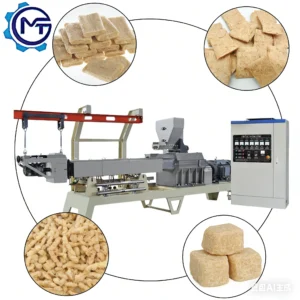
High Moisture Vegetarian Meat Extrusion Machine
¥9,500.00 Select options This product has multiple variants. The options may be chosen on the product page -
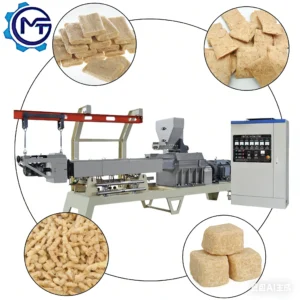
Automatic Vegetarian Meat Production Line with Twin Screw Extruder
¥9,500.00 Select options This product has multiple variants. The options may be chosen on the product page