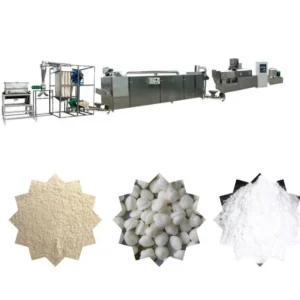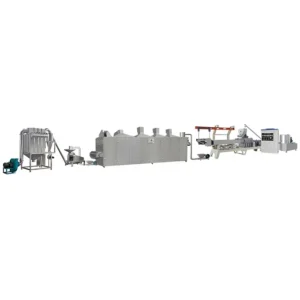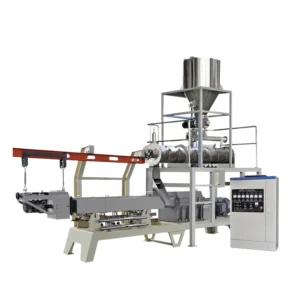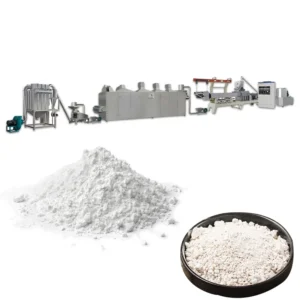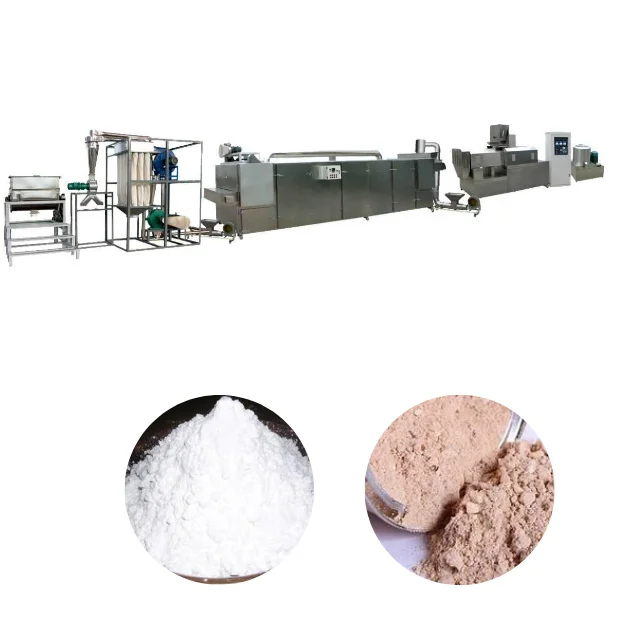
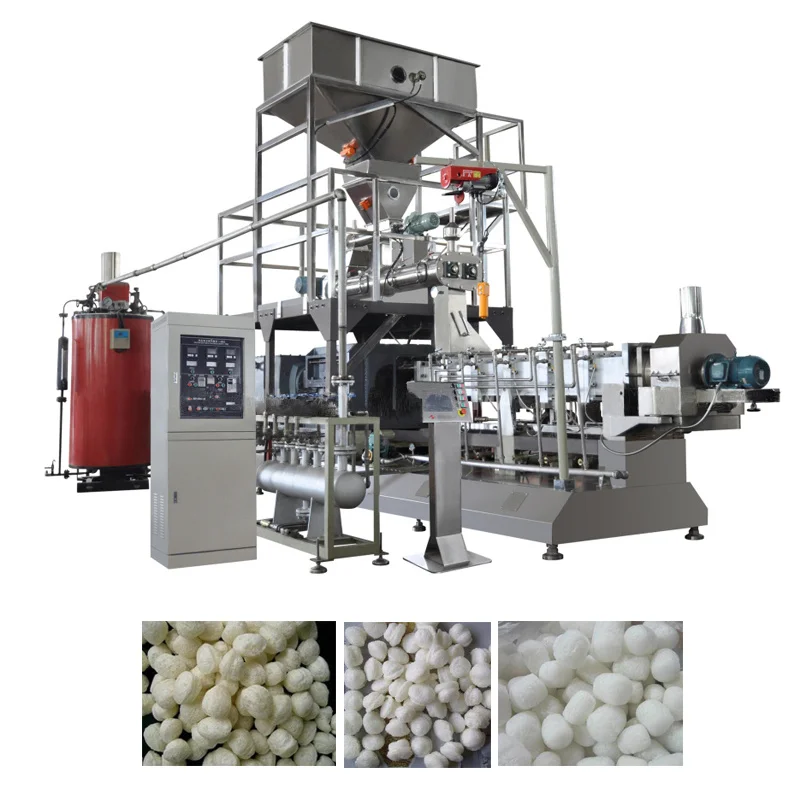
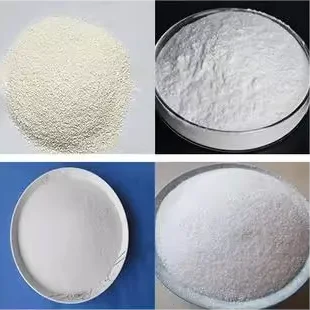

MT85 / MT100 / MT110 / MT135 Modified Starch Production Line, Twin-Screw Extruder, 90–240 kW Installed Power — configured as a turnkey project from batching through extrusion, drying, grinding and packing.
- Screw configuration and die design matched to corn, tapioca or potato starch and target gelatinisation degree
- Line throughput balanced across mixing, extrusion, drying and grinding to eliminate station bottleneck
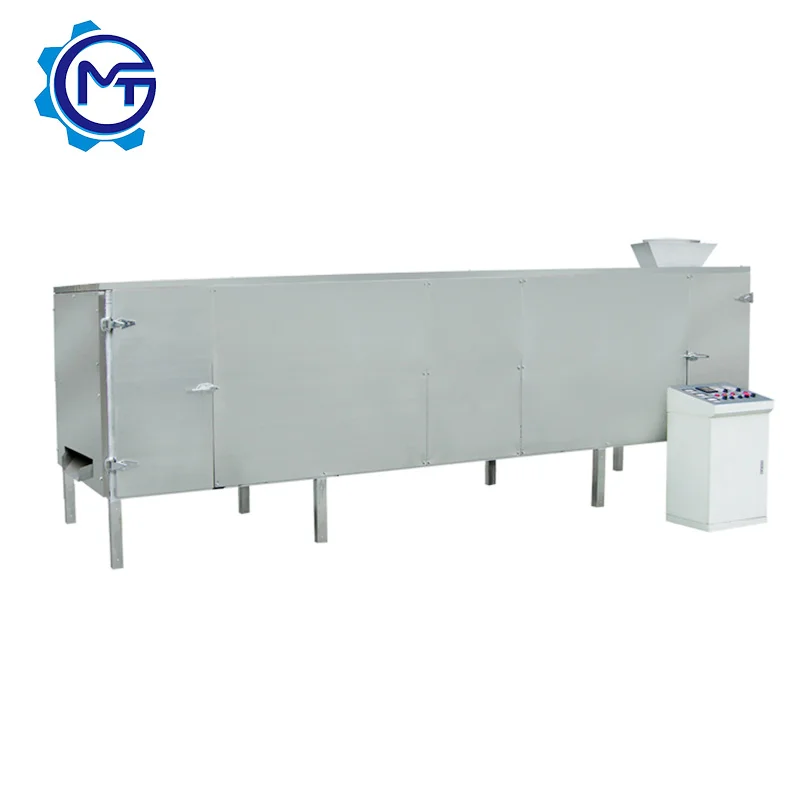
- Dryer heating selectable between electric, steam and gas for local utility fit
- Capacity range covering 100 kg/h to 1500 kg/h depending on model and raw material
Layout, trial run on your raw material and on-site commissioning are included so the line performs to specification from day one.
Description
Throughput matched across every station — a modified starch line where mixing, extrusion, drying, grinding and packing are sized together prevents the bottleneck that stalls output when one vendor supplies the extruder and another the dryer.
Technical Specifications
| Parameter | Value |
|---|---|
| Model | MT85 / MT100 / MT110 / MT135 |
| Product Type | Modified Starch Production Line |
| Installed Power | 90 kW (MT85) / 180 kW (MT100) / 200 kW (MT110) / 240 kW (MT135) |
| Real Consumption | 63 kW (MT85) / 120 kW (MT100) / 150 kW (MT110) / 165 kW (MT135) |
| Output Capacity | 100-200 kg/h (MT85) / 500-600 kg/h (MT100) / 500-600 kg/h (MT110) / 1000-1500 kg/h (MT135) (basis to be confirmed) |
| Screw Type | Twin-screw extruder |
| Control System | Frequency speed controlling system |
| Line Stations | Materials preparation — Material blending — Mixing — Extruding — Drying — Grinding — Packing |
| Heating Source Options (Dryer) | Electric / Steam / Gas |
| Grinding Machine Discharge | Bottom butterfly valve |
| Grinding Machine Particle Fineness | Less than 10 mm |
| Grinding Machine Contact Material | Stainless steel 304 |
| Lubrication | Automatic lubricating and cooling system |
| Assembly State | Turnkey line with OEM/ODM factory layout design |
Application Suitability
| Application | Material or Output |
|---|---|
| Pre-gelatinized starch for textile sizing | Corn starch, tapioca starch |
| Modified starch for paper coating | Potato starch, corn starch |
| α-form starch for bakery and instant food | Corn starch, tapioca starch, potato starch |
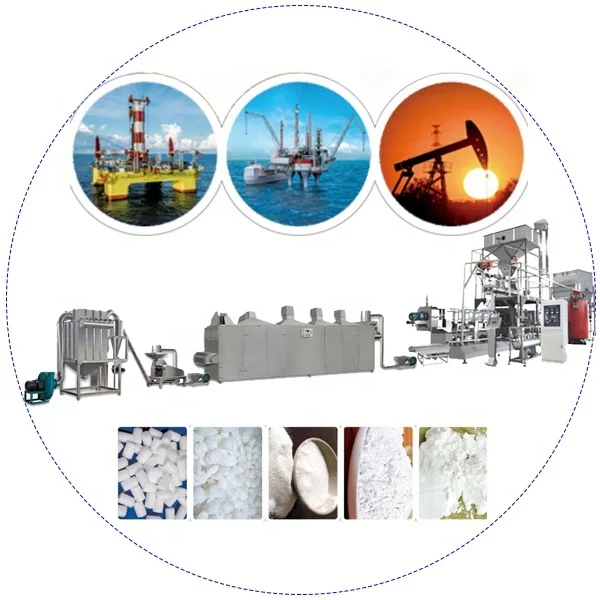
| Industrial modified starch for oil drilling and construction | Corn starch, tapioca starch |
Why Nominal Output on a Modified Starch Production Line Turnkey Is Often Misleading
A capacity figure means nothing without the raw material type, moisture content and target gelatinisation degree it was measured against.
When a modified starch production line turnkey is quoted on nominal capacity, the number usually comes from a test on standard corn starch under ideal moisture. Swap in wheat starch or tapioca with different particle size, and the screw speed, barrel temperature profile and residence time all shift. I spent five days on site in Southeast Asia adjusting gelatinisation parameters because the line was built for corn starch but the customer was running wheat starch. [NEED_CITE: starch gelatinisation temperature variation by source material]
How Starch Source Dictates Extruder Configuration
Different starch types gelatinise at different temperatures and require distinct shear profiles. Corn starch, tapioca starch and potato starch each respond differently to barrel zone heating and screw element geometry. A modified starch production line turnkey configured for one source will underperform on another unless the screw configuration and die design are specified to the buyer’s actual raw material before production begins.
Matching Dryer and Grinder Capacity to Extruder Throughput
The extruder is only one station. If the dryer cannot remove moisture fast enough, the grinding station receives product too wet for consistent particle fineness below 10 mm. Every modified starch production line turnkey must have throughput calculated across mixing, extruding, drying and grinding so that no single station chokes the line. [NEED_CITE: dryer residence time calculation for pre-gelatinized starch]
What the Installed Power and Real Consumption Numbers Mean
The gap between installed power and real consumption reflects the motor headroom needed for peak torque during startup and feed surges. MT85 draws 63 kW in steady operation against 90 kW installed, while MT135 runs at 165 kW against 240 kW installed. This headroom keeps the twin-screw extruder from tripping under load variation. The automatic lubricating and cooling system maintains barrel and shaft temperature during continuous runs, reducing unplanned stops.
What Happens When Line Stations Are Mismatched
A buyer who sources the extruder from one supplier and the dryer from another often finds the dryer undersized for the actual output. The extruder pushes product faster than the dryer can handle, and material backs up on the conveyor. Moisture content at the grinder inlet rises, particle fineness drifts above specification, and the packing station receives inconsistent product. These problems do not appear during a short factory test — they emerge during sustained production. [NEED_CITE: throughput mismatch in multi-vendor processing lines]
Why Procurement from a Single Line Builder Matters
Every station on this modified starch processing line is specified under one supplier, so throughput is matched across mixing, extruding, drying, grinding and packing. Screw configuration and die design are documented against the buyer’s raw material and target starch properties, not copied from a generic build. The dryer heating source is selectable between electric, steam and gas to match local utility conditions, avoiding costly retrofit after arrival. An in-house testing workshop runs trial production on the buyer’s actual starch before shipment, so gelatinisation parameters are validated before the line leaves the factory.
Documentation & Verification
- Line layout and capacity calculation specific to your starch source and target gelatinisation degree
- Screw and die configuration record documenting the build matched to your formula
- Trial run report on your raw material from the in-house testing workshop before dispatch
- Electrical schematic and voltage confirmation matching your local grid standard
- Factory test record with grinding fineness and moisture content measurements
Installation, Commissioning & Support
- Foundation and floor space plan matched to the selected model’s footprint and station sequence
- Dedicated circuit sizing for the real consumption range from 63 kW to 165 kW depending on model
- Frequency speed controlling system commissioning with parameter setting for your starch type
- Operator training covering barrel zone temperature profiles and screw speed adjustment
- Wear parts list for screws, dies and grinder contact components with reorder references
What to Prepare Before Requesting a Quotation
Send the specific starch type you will process, target gelatinisation degree and desired daily output. Include your local voltage, frequency and preferred control language. If you have existing upstream blending or downstream packing equipment, provide model and capacity details so the modified starch production line turnkey can be configured to integrate with them.
Frequently Asked Questions
Q: How is line capacity verified on my specific starch raw material before shipment?
A: The testing workshop runs a trial on your actual corn, tapioca or potato starch before dispatch. Screw speed, barrel temperature and moisture are adjusted until the gelatinisation degree and output match your specification. A trial run report documenting these parameters ships with the line.
Q: How do you match throughput across mixing, extrusion, drying and grinding to avoid bottlenecks?
A: Each station is sized during layout design based on the same capacity target and raw material. Dryer residence time and grinder feed rate are calculated against extruder output so no station accumulates backlog during sustained production.
Q: What voltage, frequency and control language options are confirmed before production?
A: Electrical specifications are confirmed during the quotation stage. The electrical schematic and voltage confirmation document records your local grid standard and preferred control language before the frequency speed controlling system is assembled.
Q: Can screw configuration and barrel zones be specified to my target gelatinisation degree?
A: Yes. Screw element arrangement and die design are configured to your starch type and target properties. The configuration is documented in the screw and die record, and validated during the pre-shipment trial run on your raw material.
Q: What turnkey installation and commissioning support is included?
A: On-site installation covers station placement, utility connection and system integration. Commissioning includes parameter setting for your starch source, test production runs and operator training on temperature profiles, screw speed control and daily maintenance routines.
Related products
-
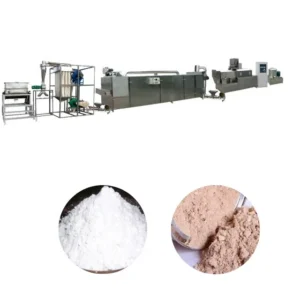
Modified Starch Production Line Industrial Drilling Twin Screw Extruder 304 Stainless Steel High Efficiency Flour Mill CE
¥50.00 Select options This product has multiple variants. The options may be chosen on the product page -
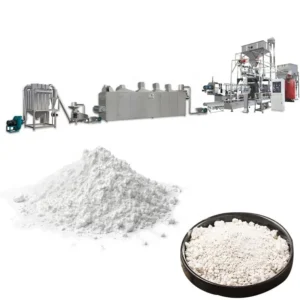
Modified Starch for Construction Adhesives Production – Custom Built Double Screw Extruder Line
¥65.00 Select options This product has multiple variants. The options may be chosen on the product page -
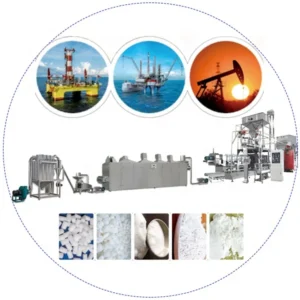
Pre-gelatinized Starch Production Line – Modified Starch Integrated Puffing Equipment
¥65.00 Select options This product has multiple variants. The options may be chosen on the product page -
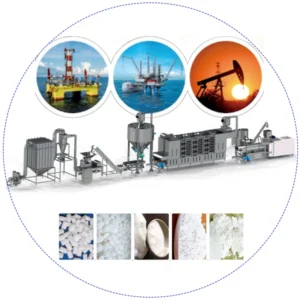
Big Capacity Modified Starch Production Line Making Machine
¥30.00 Select options This product has multiple variants. The options may be chosen on the product page