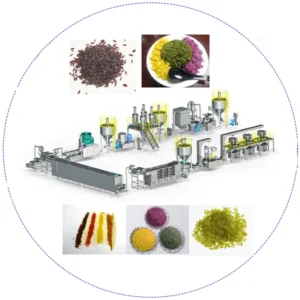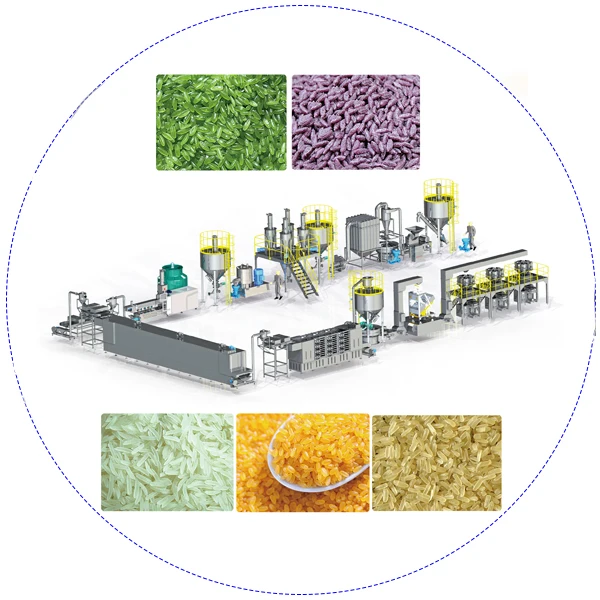
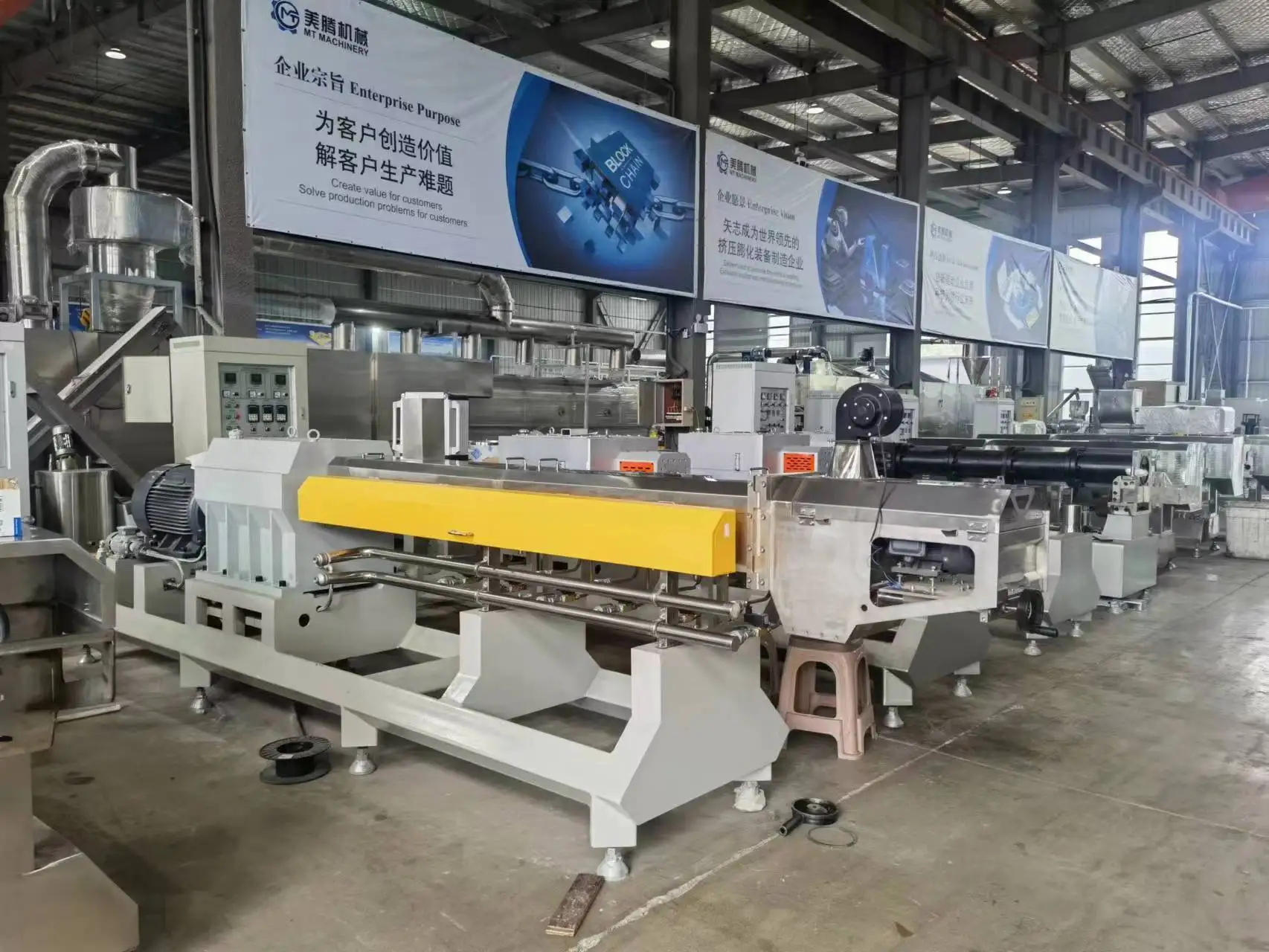
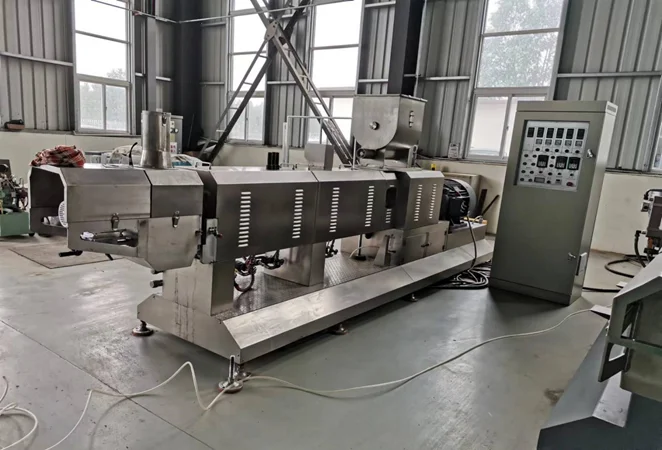
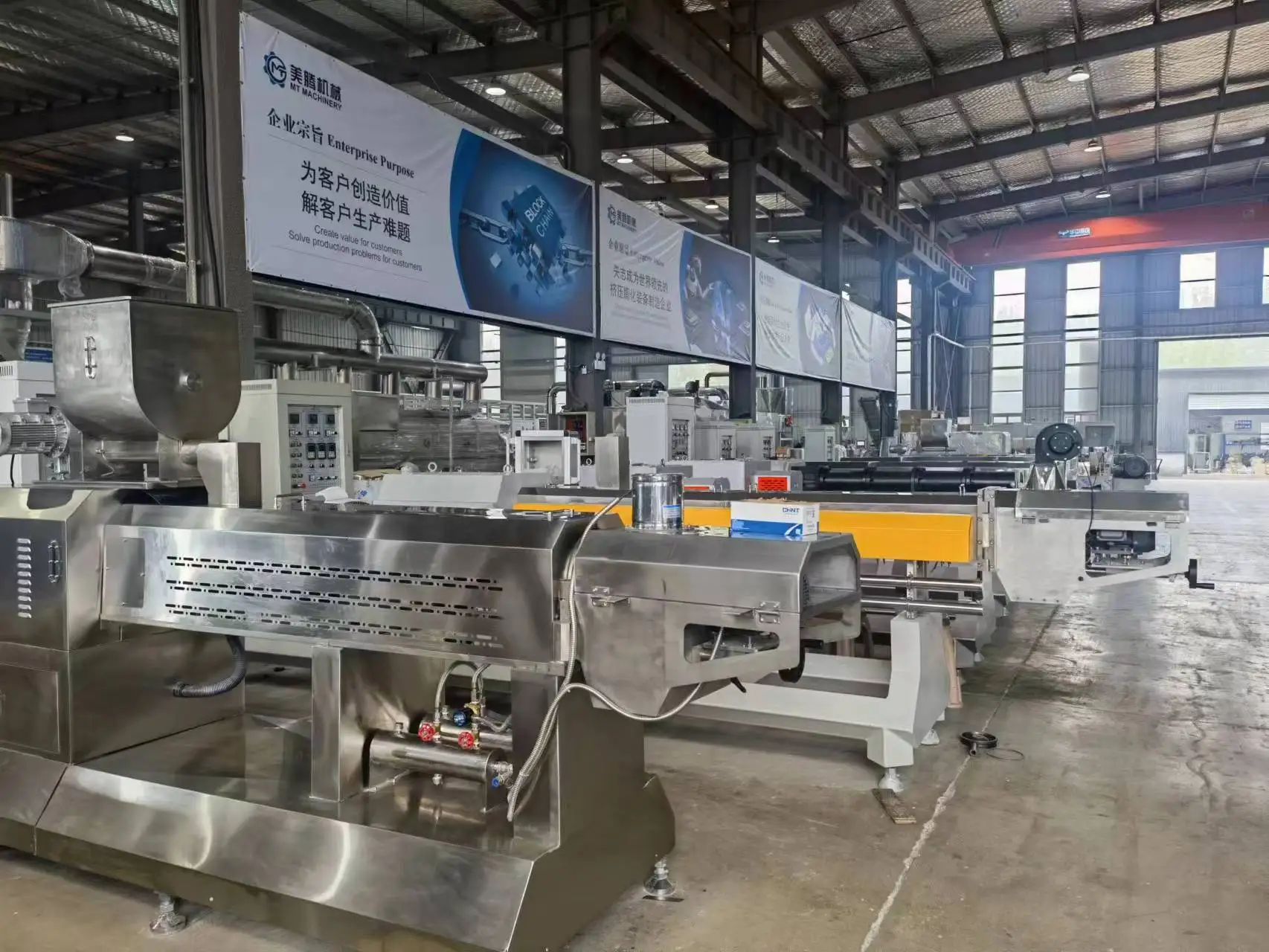
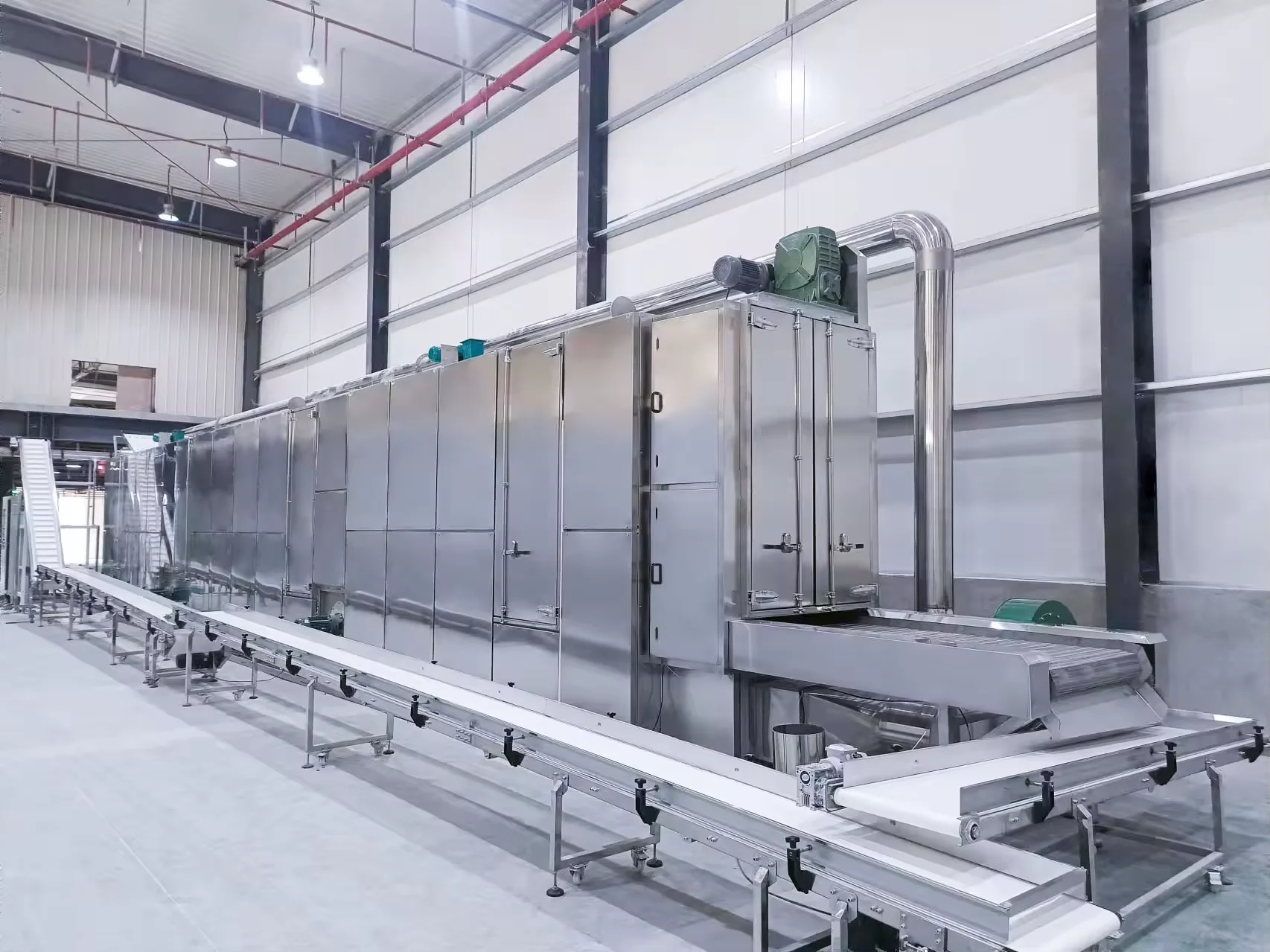
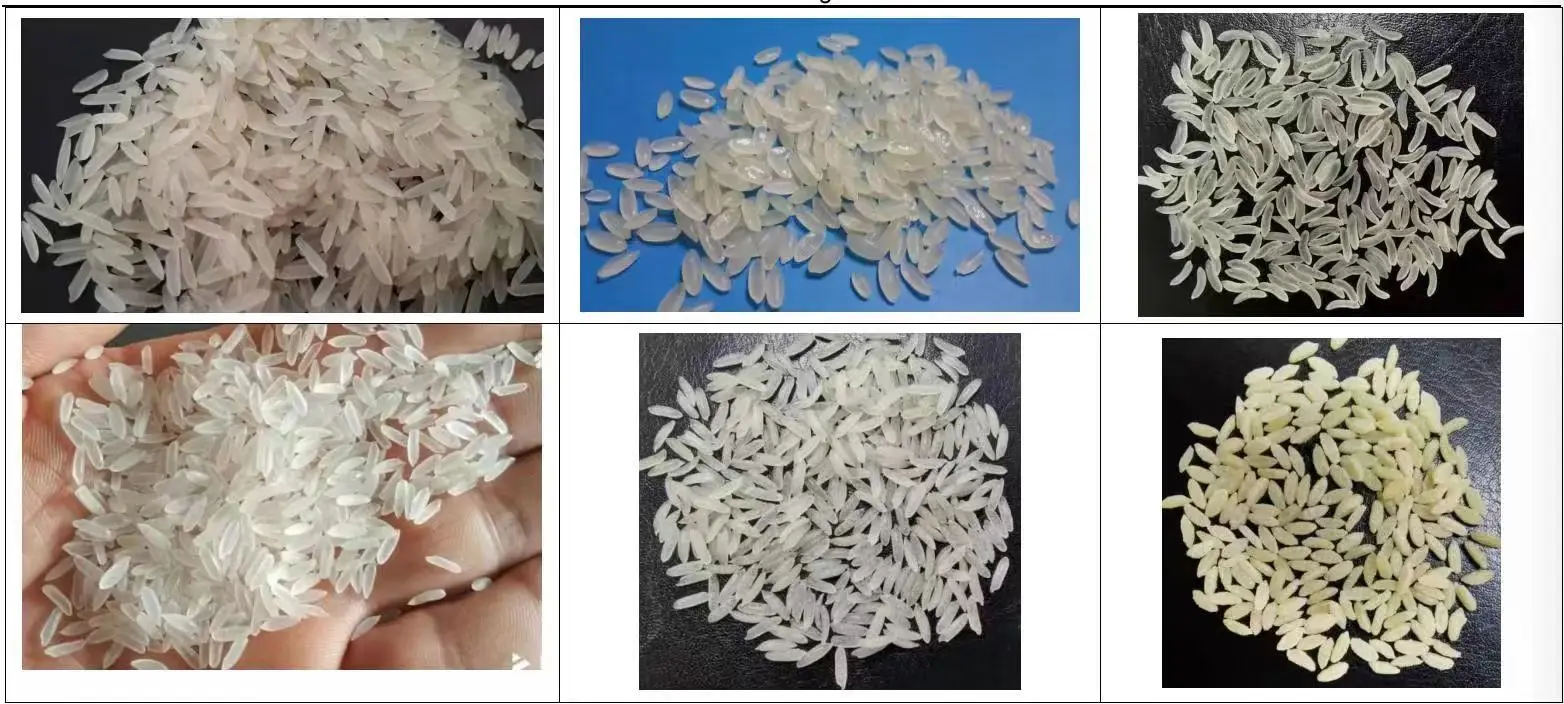
MT65 / MT70 / MT85 / MT75 / MT95 Artificial Nutrition Fortified Rice Production Line, Twin-Screw, Complete Turnkey Layout — capacity-matched stations from mixing through extrusion, drying to packing, avoiding throughput bottlenecks.
- Screw configuration and die design specified to buyer’s raw material blend and target kernel density
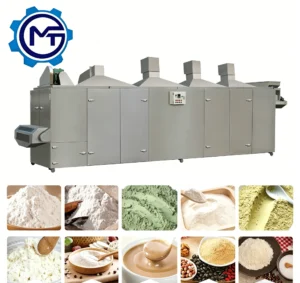
- Circulation drying oven with frequency-controlled mesh belt speed ensures uniform moisture reduction
- Trial runs on customer formulation performed in-house before shipment
End-to-end line documentation includes layout, electrical schematics and trial run reports, with on-site commissioning and operator training provided.
Description
Throughput-Matched Engineering — Every station from batching to packing is calculated against your raw material blend, ensuring the extruder, dryer, and packaging line operate at synchronized speeds without bottlenecks.
Technical Specifications
| Parameter | Value |
|---|---|
| Model | MT65 / MT70 / MT85 / MT75 / MT95 |
| Product Type | Artificial Nutrition Fortified Rice Production Line |
| Screw Type | Twin-screw (single or double screw feeding system selectable per material) |
| Output Capacity (MT65) | 80–100 kg/h (basis not stated in source — confirm raw material blend / moisture / pellet size) |
| Output Capacity (MT70) | 100–120 kg/h (basis not stated in source — confirm raw material blend / moisture / pellet size) |
| Output Capacity (MT85) | 200–300 kg/h (basis not stated in source — confirm raw material blend / moisture / pellet size) |
| Output Capacity (MT75) | 300–500 kg/h (basis not stated in source — confirm raw material blend / moisture / pellet size) |
| Output Capacity (MT95) | 800–1000 kg/h (basis not stated in source — confirm raw material blend / moisture / pellet size) |
| Installed Power | 85 kW (MT65) to 260 kW (MT95) |
| Power Consumption | 60 kW (MT65) to 195 kW (MT95) |
| Overall Dimensions (L×W×H) | 28 × 1.2 × 2.2 m (MT65) to 36 × 3.5 × 4.3 m (MT95) |
| Voltage | 220V / 380V (verify target market frequency and phase) |
| Control System | Frequency speed controlling, high automation (PLC / MCC to be confirmed) |
| Barrel & Screw Material | Special alloy tech, wear-resistant (specific grade not stated) |
| Lubrication | Automatic lubricating system |
| Cooling | Integrated cooling system for extruder |
| Drying Oven Heating Source | Electric or gas |
| Drying Oven Feature | Circulation drying process, frequency motor controls mesh belt speed |
Application Suitability
| Application | Material or Output |
|---|---|
| Fortified Rice Kernels (FRK) | Broken rice, rice bran, and micronutrient premixes for public health programs |
| Artificial Rice Production | Rice flour, corn, millet, wheat, oats, and buckwheat blends |
| Nutritional Cereal Processing | Starch-based formulations with added vitamins and minerals |
| Grain Processing Enterprises | Conversion of broken rice into uniform, high-nutrition kernels |
Why "Nominal Capacity" Fails on Fortified Rice Lines
A production line quoted on standard capacity often collapses when introduced to the buyer’s specific raw material blend. The most frequent failure in fortified rice projects is not machine breakdown but throughput mismatch — the extruder cannot process the buyer’s formulation at the promised rate, creating cascading delays through drying and packaging [NEED_CITE: common causes of throughput mismatch in food extrusion lines]. This artificial fortified rice production line turnkey solves that by requiring pre-shipment trial runs on the customer’s actual ingredients.
The viscosity of rice flour varies significantly based on the source grain, milling method, and moisture content. A formulation with higher amylose content or added micronutrient powders may behave entirely differently from the standard test material used in factory demonstrations. Without verification on your specific blend, you risk installing a line that operates at reduced capacity from day one.
Screw Configuration Matched to Your Formulation
This artificial fortified rice production line turnkey uses twin-screw extrusion with screw geometry and die design specified to your raw material blend. The screw configuration determines residence time, shear profile, and gelatinization degree — all of which directly affect kernel density, cooking tolerance, and nutritional retention. Generic builds that copy standard configurations often produce kernels that either fracture during packaging or fail to cook properly when the end user prepares them.
Circulation Drying with Frequency-Controlled Belt Speed
The drying oven uses a circulation process with frequency motor controls on mesh belt speed, ensuring uniform moisture removal across the entire batch. Inconsistent drying leads to kernels with variable hardness — some too brittle for transport, others too soft to mill alongside natural rice. This station is throughput-matched to the extruder output, preventing material accumulation or starvation that would otherwise compromise product consistency [NEED_CITE: importance of matched throughput in food processing lines].
Understanding the Extruder Specifications
The installed power ranges from 85 kW on the MT65 to 260 kW on the MT95, reflecting the motor capacity required to maintain screw torque across different formulations and throughputs. Higher-amylose blends and formulations with significant micronutrient loading require more torque to achieve proper gelatinization without stalling. The automatic lubricating system and integrated cooling system allow continuous operation across production shifts, reducing unplanned downtime that disrupts batch scheduling.
The twin-screw design offers superior mixing and self-cleaning compared to single-screw alternatives, which is essential when processing formulations that include vitamin and mineral premixes. These additives can cause buildup and cross-contamination between batches if the screw configuration is not properly specified. The barrel and screw materials use special alloy technology for wear resistance, though the specific grade should be confirmed based on your formulation’s abrasiveness.
The Hidden Cost of Throughput Mismatch
When the extruder runs slower than downstream stations expect, the dryer operates partially empty, wasting energy while failing to achieve uniform moisture removal. The packaging line then waits for material, creating idle labor costs and missed shipment deadlines. Conversely, if the extruder outpaces the dryer, material accumulates in vibrating conveyors, leading to product degradation and waste [NEED_CITE: consequences of throughput imbalance in food production]. These problems compound over time, eroding profitability in ways that are difficult to trace back to the original line configuration error.
Why Procure This Line Here
Every station from mixing through extrusion, vibrating, low-temperature drying, cooling, high-temperature roasting, and packing is calculated as a single integrated system. The screw configuration and die design are specified to your raw material blend and target kernel density rather than copied from a generic template. An in-house testing workshop conducts trial runs on your actual ingredients before shipment, generating a documented report that verifies throughput and product quality. Pre-sales consultation extends through engineer design, on-site installation, commissioning, and ongoing maintenance support. Documentation includes line layout and capacity calculations showing throughput at every station, not just the extruder nominal rating.
Documentation & Verification
- Line layout and capacity calculation document showing throughput at every station
- Screw and die configuration record matched to your specific raw material blend
- Trial run report on customer raw material conducted in the testing workshop before shipment
- Electrical schematic with voltage, frequency, and control language confirmed for target market
- Machinery test report and video outgoing-inspection provided before dispatch
Installation, Commissioning & Support
- Foundation and floor space planning based on overall dimensions from 28 × 1.2 × 2.2 m to 36 × 3.5 × 4.3 m
- Power supply verification for 220V / 380V systems with frequency and phase confirmation
- Complete line delivered as integrated assembly with on-site installation and commissioning
- First-run parameter setting for screw speed, barrel temperature, and drying oven belt frequency
- Operator training covering twin-screw operation, automatic lubricating system, and daily maintenance
- Wear parts list and spare screw and die availability for first replacement cycle
- 1-year warranty covering core components including motor and control system
What to Provide in Your Inquiry
To receive an accurate line configuration and layout proposal, specify your target product type (artificial rice or fortified rice kernels), raw material blend including moisture content and particle size distribution, and target daily output. Confirm your local voltage, frequency, and preferred control language. Indicate whether you require a trial run on your raw material before shipment and provide sample material for testing. Specify any existing upstream or downstream equipment that must integrate with the new line, as well as workshop dimensions and ceiling height constraints.
Frequently Asked Questions
Q: How is the line capacity verified on my specific raw material blend and moisture content?
A: Before shipment, your raw material is tested in the in-house workshop using the configured screw and die setup. The trial run generates a documented report showing actual throughput, product quality, and process parameters. This verification ensures the line performs on your formulation rather than on generic test material, preventing post-installation capacity shortfalls.
Q: How are the extruder, dryer, and packing stations matched so no single station bottlenecks throughput?
A: Each station is calculated based on the extruder’s verified output on your raw material. The dryer capacity, cooling conveyor speed, and packaging rate are all specified to handle the actual throughput, not a nominal rating. This prevents material accumulation or idle time that would otherwise reduce overall line efficiency.
Q: Can a trial run be performed on my raw material before shipment, and what does the trial report include?
A: Yes, trial runs are conducted in the testing workshop using your provided raw material. The report includes actual throughput measurements, product quality assessment, screw and die configuration details, and recommended process parameters. This documentation allows you to verify performance before the line ships and provides a baseline for commissioning.
Q: What voltage, frequency, and control language configurations are confirmed before production?
A: The electrical schematic is confirmed with you before production begins, specifying voltage (220V / 380V or custom), frequency (50Hz / 60Hz), and phase requirements for your market. The control system language and interface are also configured to match your operator requirements, preventing commissioning delays caused by mismatched specifications.
Related products
-

Full Automatic Complete Baby Food Nutrition Powder Porridge Processing Production Line for Infant Nutrition Factory
¥9,500.00 Add to cart -
Small Scale MT Brand Automatic Baby Food Nutrition Powder Rice Flour Making Machine with 500kg/h Production Capacity PLC Control
¥9,500.00 Add to cart -

Compact Automatic Baby Cereal Nutrition Powder Production Line with 500kg/h Capacity and PLC Control
¥9,500.00 Add to cart -

Automatic Instant Powder Production Line Nutritional Powder Extruder Machine
¥10,000.00 Select options This product has multiple variants. The options may be chosen on the product page