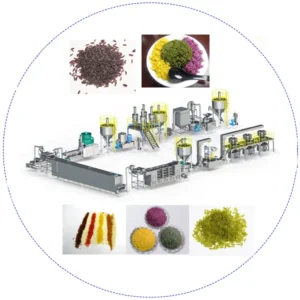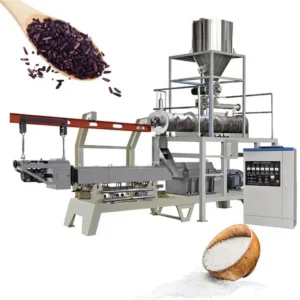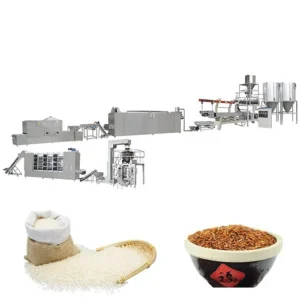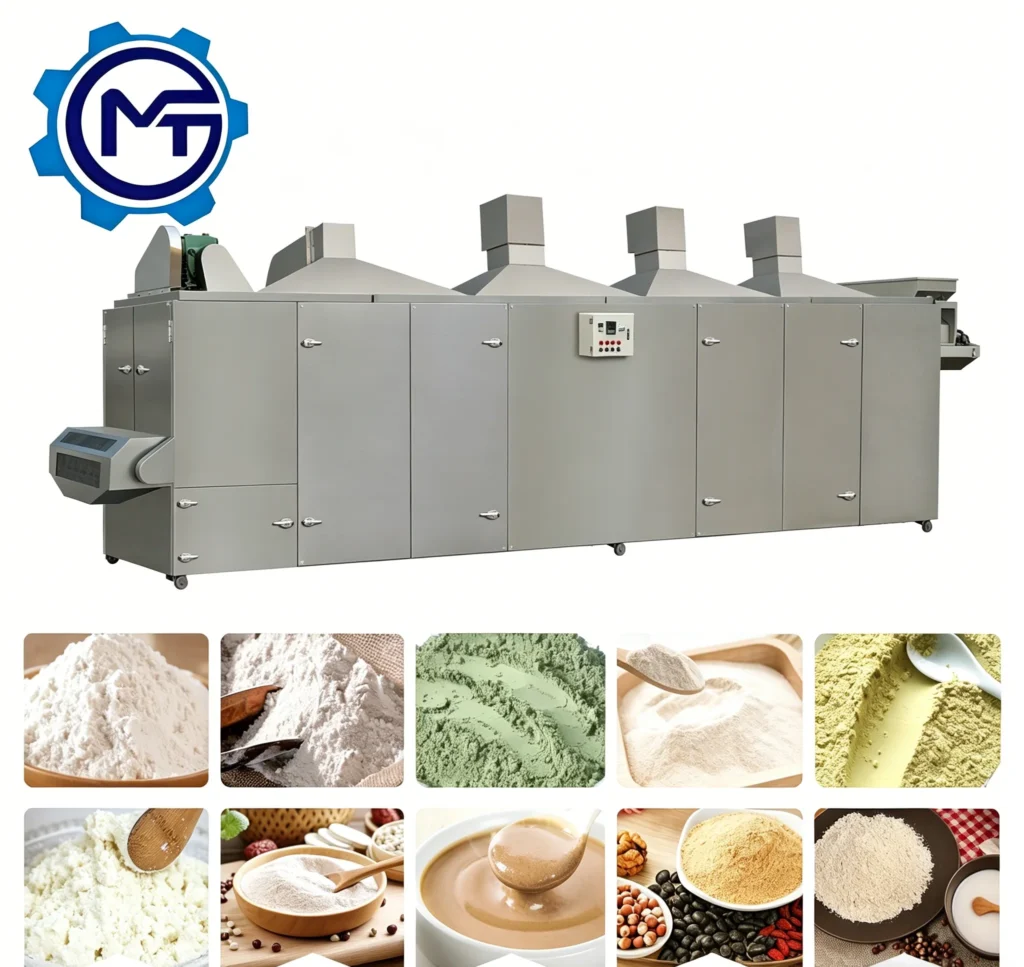


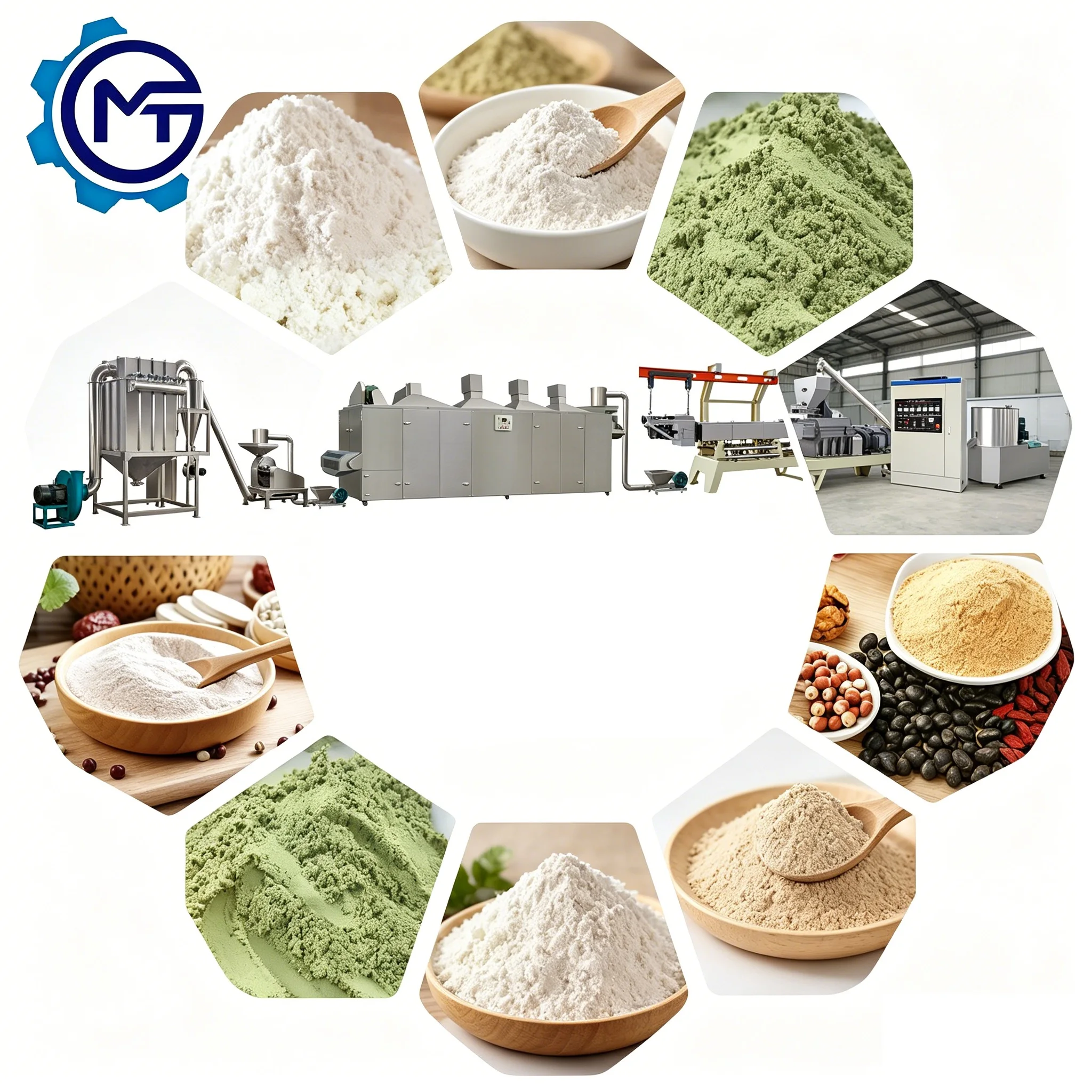


Baby Food Nutrition Powder Extrusion Production Line, 200-500 kg/h, Food-Grade 304 SS, Full Automatic PLC Control — engineered for multi-grain formulations spanning rice, corn, beans and blended recipes.
Screw configuration and die design are specified to your raw material blend, controlling moisture, shear and expansion for consistent powder density and gelatinisation across every batch. Flexible heat source options — electric, gas or steam — align with your factory utility setup.
- Turnkey layout from batching through extrusion, drying and packing under one supplier
- In-house testing workshop validates output on your actual formulation before shipment
- Voltage, frequency and control language confirmed prior to production to prevent commissioning delays
Description
Integrated Throughput Matching — every station from batching through extrusion to packing is calculated against your actual rice and grain formulation so no single unit chokes the line.
Technical Specifications
| Parameter | Value |
|---|---|
| Product Type | Baby Food Nutrition Powder Extrusion Production Line |
| Output Capacity | 200-500 kg/h (basis not stated in source — confirm raw material / moisture / formulation) |
| Construction Material | Food-Grade 304 Stainless Steel |
| Heat Source Options | Electric / Gas / Steam |
| Control System | Touch Control Panel with Digital System |
| Automation Level | Full Automatic |
| Key Line Stations | Baking Ovens, Mixers, Extruder, Dryer, Packing |
| Raw Materials Processed | Rice, Corn, Beans, Various Grains |
| Standards | CE |
| Warranty | 1 Year |
| After-Sales Service | Overseas Engineer Service Available |
Application Suitability
| Application | Material or Output |
|---|---|
| Infant nutrition powder and baby rice cereal | Rice and fortified grain blends with added micronutrients |
| Multi-grain porridge powder for toddler feeding | Corn, beans and mixed grain recipes |
| Fortified nutritional powder for aid programmes | Blended cereal bases with vitamin and mineral premix |
| Breakfast cereal and instant drink powder | Single or blended grain formulations |
Why Nominal Capacity Figures Fail on Real Grain Blends
A line rated on clean starch will behave differently when you introduce fibre, protein and calcium premix into the barrel.
When a nutritional powder production line turnkey is quoted at a headline output, that number is almost always derived from a simple corn or rice starch test. Once an infant formula producer adds calcium carbonate, iron salts and bran fibre, the melt viscosity inside the barrel shifts. Gelatinisation temperature climbs, expansion drops, and the dryer has to work longer to hit the target moisture. Buyers who skip the raw-material trial stage regularly find that their line stalls well below the brochure figure during the first week of production [NEED_CITE: effects of mineral fortification on extrusion melt viscosity].
Matching Barrel Shear to Your Grain Recipe
A nutritional powder production line turnkey must be configured around the exact starch-to-protein ratio of the incoming blend. Rice flour gelatinises at a lower temperature and requires less mechanical shear than a high-bean recipe. The screw profile, barrel zone temperatures and moisture injection points are therefore adjusted to each formulation, preventing under-cooked starch or burnt protein residues that would show up as off-flavours in the final powder.
Drying and Cooling Synchronisation
The baking ovens and downstream cooler are sized so that residence time matches the extruder output at the target moisture. If the dryer belt runs too fast, the powder leaves with a high centre moisture that invites clumping in the packing stage. Too slow and the line backs up, forcing the extruder to idle and lose temperature stability. This nutritional powder production line turnkey is laid out so every station holds pace without manual throttling.
Reading the Spec Sheet Beyond the Headline Numbers
The food-grade 304 stainless steel contact surfaces are specified for hygiene and clean-in-place compatibility, not as a cosmetic choice — infant food plants face strict microbial audits and any corroded mild-steel pocket becomes a contamination vector. The touch control panel with digital system stores recipe parameters for each grain blend, meaning an operator can switch from a pure-rice baby cereal to a multi-bean porridge powder without recalculating barrel temperatures by hand [NEED_CITE: hygiene requirements for infant food processing equipment]. Heat source selection between electric, gas or steam is confirmed during the layout stage to match the buyer’s existing boiler or transformer capacity, avoiding the situation where a factory orders a steam-heated dryer but has no steam header available on the floor. The full automatic sequence covers start-up, steady-state running and flush-out, reducing the window where operator error can introduce batch variation.
What Happens When Stations Are Sized Independently
A dryer specified without reference to the extruder’s actual moisture output becomes the first bottleneck. The extruder pushes wet product onto a belt that cannot evaporate water fast enough, forcing the line to cut throughput or accept out-of-spec powder. Similar mismatches occur when the mixer batch size is larger than the extruder hopper can absorb, leaving premix sitting in the blender long enough for vitamin degradation to begin. These failures rarely appear in the quotation stage because each vendor only guarantees their own unit [NEED_CITE: common bottlenecks in multi-vendor food processing lines].
Project-Level Reasons Buyers Consolidate Here
The in-house testing workshop runs your exact rice, corn or bean formulation before the line ships, so expansion, density and moisture figures are recorded on a trial run report rather than assumed from generic starch data. Throughput matching across mixing, extrusion, baking and packing is calculated on a single line-layout document, eliminating the finger-pointing that happens when separate vendors each blame the other for a shortfall. Electrical schematics are drawn after voltage, frequency and control language are confirmed with the buyer’s site engineer, preventing the commissioning delays that arise when a touch panel arrives in a language the operators cannot read. A documented screw and die configuration record accompanies every shipment, giving maintenance teams the reference they need when ordering replacement wear parts months later.
Documentation & Verification
- Line layout drawing showing matched throughput at every station for your grain formulation.
- Trial run report produced on your specific rice, corn or bean recipe before dispatch.
- Electrical schematic confirming voltage, frequency and touch-panel language for your site.
- CE declaration of conformity and ISO certificate package for customs and audit files.
- Screw and die configuration record enabling accurate wear-part reordering.
- Operation and maintenance manual written for your operator language.
Installation, Commissioning & Support
- Floor plan and utility load sheet sized to the line’s electric, gas or steam heat source.
- Overseas engineer dispatched for first-start parameter tuning on your grain recipe.
- Touch control panel programmed in the confirmed operator language before arrival.
- Wear-parts list with part numbers for screws, dies and dryer belts provided at delivery.
- Scheduled maintenance calendar built around your production shift pattern.
Preparing Your Project Brief
Share the exact grain blend, including any calcium, iron or vitamin premix percentages, together with the target hourly output and the moisture specification for the packed powder. Provide the factory’s available voltage, frequency and whether steam or gas is already on-site, so the heat source and control cabinet can be locked in before production begins.
Frequently Asked Questions
Q: How is line capacity verified on my specific raw material blend before shipment?
A: Your rice, corn or bean formulation, including any mineral and vitamin premix, is run in the in-house testing workshop. The trial records actual output, expansion and moisture, and those figures — not generic starch data — become the basis for the final line configuration and the capacity guarantee written into the contract.
Q: How do you prevent bottlenecks between the mixer, extruder and dryer?
A: Each station is sized on a single line-layout calculation that starts from your recipe’s moisture and throughput target. The mixer batch cycle, extruder screw speed and dryer belt length are all derived from that number, so no individual unit is asked to handle more than the upstream station can deliver.
Q: Which electrical and control details are confirmed before production starts?
A: Voltage, frequency, plug type and touch-panel language are recorded on the electrical schematic before the control cabinet is wired. This prevents the common situation where a panel arrives programmed in a language the local operators cannot read, delaying commissioning by days.
Q: What does on-site commissioning cover for a nutritional powder line?
A: The overseas engineer verifies utility connections, runs each station individually, then operates the full line on your grain recipe. Parameter sets for each product type are saved in the digital control panel, and operators are trained on start-up, changeover and cleaning procedures before the engineer leaves site.
Q: How are spare wear parts managed after the line is running?
A: A wear-parts list with part numbers for screws, dies and dryer belts ships with the line. The configuration record lets you reorder identical components without reverse-engineering dimensions, and typical multi-week lead times are communicated so you can hold a site stock aligned with your maintenance schedule.
Related products
-

Fully Automatic 500kg/h Baby Cereal Nutrition Powder Extrusion Drying Line with PLC Control
¥9,500.00 Add to cart -
Industrial Instant Corn Paste Production Line Nutritional Powder Processing Equipment Meal Replacement Nutrition Powder Machine
¥65.00 Select options This product has multiple variants. The options may be chosen on the product page -
Full Automatic Complete Baby Food Nutrition Powder Porridge Processing Production Line for Infant Nutrition Factory
¥9,500.00 Add to cart -

Automatic Iron Fortified Baby Rice Cereal Nutrition Powder Making Machine 500kg/h PLC Controlled
¥8,238.27 Add to cart