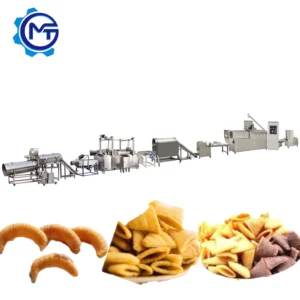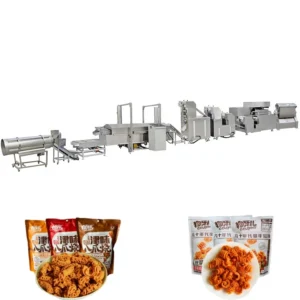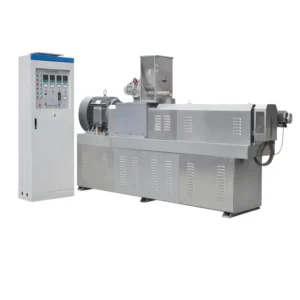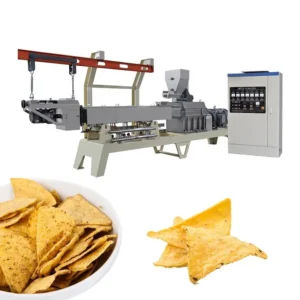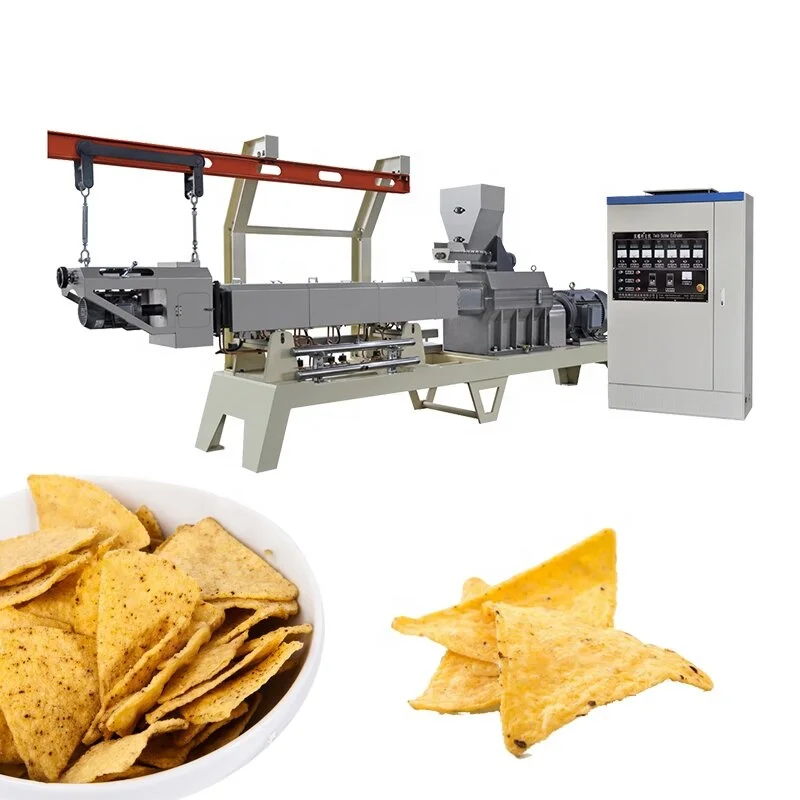


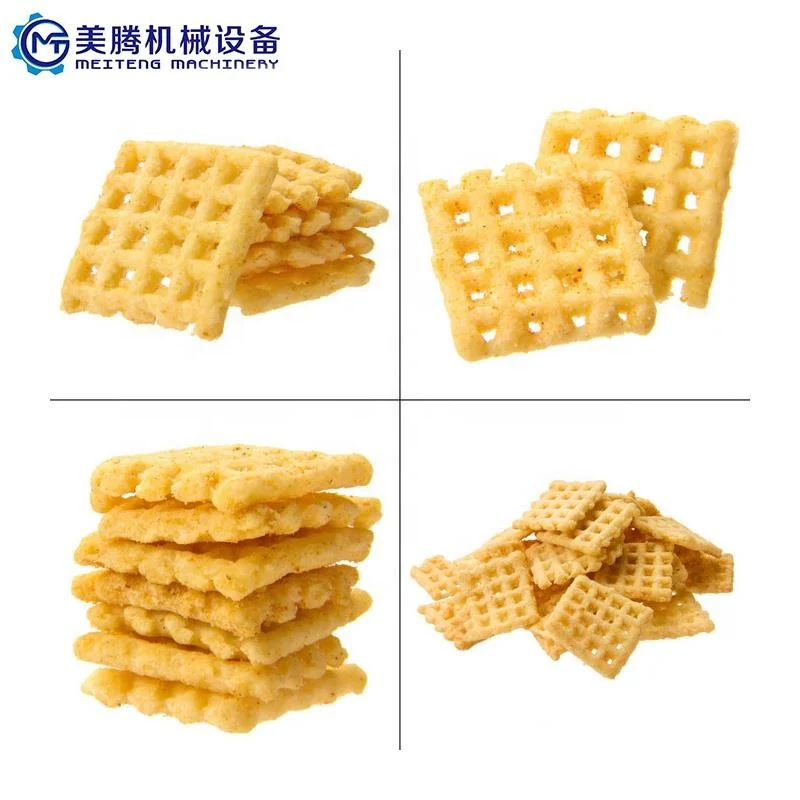
MT100/MT120 Automatic Fried Potato Chips Production Line, Single Screw Extruder, 50-70 kW — configured as a complete turnkey project from mixing to packing. Line throughput is balanced across every station, with screw configuration and die design matched to your raw material — potato starch, corn starch, or wheat flour — ensuring consistent expansion and density on your target product format. Delivered with in-house trial runs on your actual raw material before shipment and on-site commissioning support.
Description
Throughput-Matched Station Design — every unit from mixer to flavoring drum is configured to hold the same output on your actual raw material, eliminating the hidden bottlenecks that fragment line performance.
Technical Specifications
| Parameter | Value |
|---|---|
| Model | MT100/MT120 |
| Product Type | Automatic Fried Potato Chips Production Line |
| Extruder Type | Single Screw Extruder |
| Screw Configuration | High and low pressure screw |
| Rated Power | 50–70 kW (electricity); 50–60 kW (gas or diesel) |
| Voltage & Frequency | Three phases 380V/50Hz, Single phase 220V/50Hz (customizable to customer’s local voltage) |
| Control System | Delta inverter; Delixi or Delta electrical components |
| Overall Dimensions (L×W×H) | 12,000–26,000 × 1,200 × 2,200 mm |
| Output Capacity | 120 kg/h (basis not stated in source — confirm raw material type, moisture, and product format) |
| Energy Options | Electricity / Gas / Diesel / Steam |
| Material of Construction | Food-grade stainless steel 201 (304 available) |
| Product Shapes | Screw shell, round tube, square tube, ring, cartoon shapes (adjustable via die change) |
| Assembly State | Complete production line |
| Certification | CE / ISO 9001 |
| Warranty | One year warranty and lifetime technical guidance |
Application Suitability
| Application | Material or Output |
|---|---|
| Secondary puffing snack food production | Potato starch, corn starch, wheat flour blends |
| Fried extruded snack formats (golgappa / pani puri style) | Starch-based dough with varying moisture profiles |
| Snack line capacity expansion projects | Existing producers adding a matched frying and flavoring segment |
| Contracted turnkey snack line installations | Full batching-to-packing scope for project contractors |
Why "120 kg/h" Means Nothing Without the Raw Material Context
A fried potato chips production line turnkey is only as fast as its slowest matched station on the buyer’s actual starch blend.
I spent two weeks in a Mexican plant recalibrating a fried snack line because the local potato starch had lower amylose content than the sample used for sizing. Slicer-to-fryer timing fell apart, fragments jammed the conveyor, and effective output dropped sharply from the nameplate figure. The line was rated correctly — for a different raw material. This is the gap that most quotations leave wide open [NEED_CITE: raw material variability impact on extrusion line throughput]. When the extruder pushes product faster than the fryer can handle, you get oil temperature collapse and inconsistent color. When the fryer outpaces the flavoring drum, product piles up and cools before seasoning adheres. Every station must be calculated against the same material specification and target format.
Station-to-Station Throughput Balancing on a Fried Snack Line
A fried potato chips production line turnkey succeeds or fails on whether each station holds the same mass flow. The mixer must batch at a rate that keeps the screw conveyor continuously fed without surge loading the single screw extruder. The pulling and cutting machine must match the extrudate speed precisely — too fast and the sheet tears, too slow and material backs up at the die face. The automatic fryer must have sufficient belt length and oil volume to handle the cut pieces at the line rate without dropping oil temperature below the set point.
Utility Planning Before the Line Ships
Energy configuration is one of the most frequently mismatched parameters on snack line installations in Latin America and Southeast Asia. This line supports electricity, gas, diesel, or steam for the fryer and dryer stations, but the decision must be locked before production starts. A gas-fired fryer behaves differently from an electric one in terms of recovery time and temperature uniformity across the belt width. I have walked into plants where the gas supply pressure was insufficient for the burner rating, causing the fryer to lag during peak load [NEED_CITE: industrial gas supply pressure requirements for continuous fryers]. Confirming local utility specifications — including voltage, phase, frequency, and gas pressure — is a prerequisite, not a commissioning-day surprise.
Screw Configuration and Die Selection for Starch-Based Snacks
The single screw extruder on this line uses a high and low pressure screw configuration, which affects how the starch gelatinizes inside the barrel. Potato starch, corn starch, and wheat flour each have different gelatinization temperatures and shear sensitivities. A screw profile that works for corn starch may over-shear potato starch, producing excessive fines at the die face. The die determines the cross-sectional shape — screw shell, round tube, square tube, ring, or custom cartoon shapes — but the land length and orifice diameter also control expansion ratio and wall thickness. Getting these parameters wrong at the quotation stage means the product texture will not match market expectation, and correcting it after installation requires new screw elements and potentially a new die set.
The Cost of Specifying Stations from Separate Vendors
When a buyer assembles a fried snack line from individual equipment suppliers, each vendor sizes their machine independently. The extruder supplier quotes a capacity based on ideal conditions. The fryer supplier does the same. But nobody is responsible for the transfer points — the conveyor between extruder and cutter, the drop from cutter to fryer belt, the transition from fryer to flavoring drum. These transfer zones are where product loss, temperature drop, and timing mismatch accumulate [NEED_CITE: production line transfer point loss in snack food manufacturing]. On a project where throughput is not matched across every station under one supplier’s accountability, the buyer becomes the integrator — and the integrator is usually the last person to discover the bottleneck.
Why This Line Is Specified as One Project
The complete production line from batching through extrusion, cutting, frying, flavoring, and cooling is configured under single-supplier responsibility so throughput calculations are consistent across every station. Screw configuration and die design are specified to the buyer’s raw material blend and target product format rather than copied from a generic build. The in-house testing workshop runs trial production on the customer’s actual starch material before shipment, verifying texture, expansion, and fry behavior. Line dimensions spanning 12,000 to 26,000 mm in length allow phased layout planning that fits existing factory footprints without requiring building modifications. Electrical schematics and voltage confirmation are completed against the destination country’s standards before the control panel is wired, avoiding commissioning delays from frequency or phase mismatch.
Documentation & Verification
- Line layout drawing with station-by-station capacity calculation for your starch blend
- Trial run report on your actual raw material confirming expansion, texture, and fry response
- Screw and die configuration record matched to your target product shape and density
- Electrical schematic with voltage and frequency locked to your destination country
- Factory test record documenting continuous run performance before crating
- CE declaration of conformity and ISO 9001 certificate for customs and compliance filing
Installation, Commissioning & Support
- Foundation and floor space planning based on the 12,000–26,000 mm line length and 2,200 mm height clearance
- Dedicated circuit provisioning for the 50–70 kW rated power draw with confirmed voltage and phase
- Station-by-station assembly sequence with utility connections verified before first material feed
- Initial run parameter setting including barrel temperature profile, screw speed, and fryer oil curve
- Operator training covering die changeover, screw element replacement, and fryer maintenance intervals
- Wear parts inventory list covering screws, dies, and cutter blades with first replacement cycle guidance
What to Include in Your Inquiry
Provide your raw material specification — starch type, supplier data sheet, and typical moisture content — along with your target product format and daily production target. Include your factory floor dimensions, ceiling height, and local utility details (voltage, phase, frequency, gas pressure if applicable). If you are integrating this fried potato chips production line turnkey with existing upstream or downstream equipment, share the interface points so the layout accounts for transfer conveyors and buffer zones.
Frequently Asked Questions
Q: How is line throughput verified across every station to prevent bottlenecks?
A: Each station — mixer, extruder, cutter, fryer, flavoring drum — is calculated against the same raw material specification and target format. A trial run in the testing workshop on the customer’s actual starch material confirms that mass flow holds consistently from batching through packing before the line ships.
Q: What raw material formats can this line process and how does the screw adapt?
A: The single screw extruder handles potato starch, corn starch, and wheat flour blends. The high and low pressure screw configuration is selected based on the gelatinization behavior of your specific material, and the die is matched to your target product shape and wall thickness requirement.
Q: How is the utility plan confirmed before production begins?
A: Voltage, phase, frequency, and energy source — electricity, gas, diesel, or steam — are confirmed against the buyer’s facility data before the electrical panel is wired and the fryer burner is specified. This prevents mismatches that would otherwise surface only during commissioning.
Q: What does phased installation look like for a full snack production line?
A: The line layout is planned in sections to match the factory’s available space and utility readiness. Stations are installed sequentially from mixer through packing, with utility connections and alignment verified at each stage before proceeding to the next segment of the line.
Q: How are spare wear parts stocked and supplied after commissioning?
A: A wear parts list covering screws, dies, and cutter blades is provided with the line documentation. The first replacement cycle is estimated based on the trial run data, and spare sets can be included with the initial shipment to cover the early production period.
Related products
-
New Fully Automatic Large Capacity 304 Stainless Steel Savory Frying Snack Production Line Crisp Bugles Chips Processing Machine
¥30.00 Select options This product has multiple variants. The options may be chosen on the product page -
Double Screw Extruder Corn Flour Puffs Snack Nacho Chips Tortilla Doritos Making Machine Savory Snack Production Line
¥50.00 Select options This product has multiple variants. The options may be chosen on the product page -
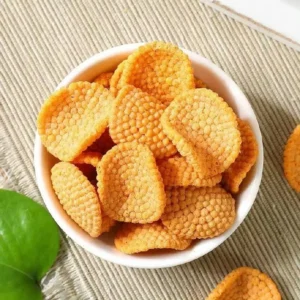
New Automatic Bugles Puff Snack Production Line Price Corn Chips Making Machine Fried Maize Machine High Productivity Large
¥8,570.00 Select options This product has multiple variants. The options may be chosen on the product page -
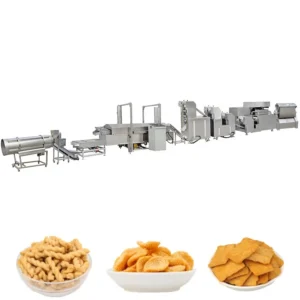
Electric Heating Fried Puffed Food Production Line – Salad Sticks Making Equipment
¥65.00 Select options This product has multiple variants. The options may be chosen on the product page