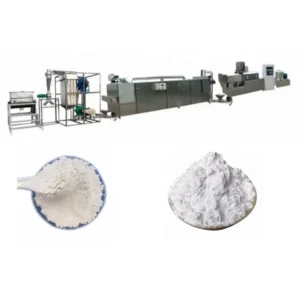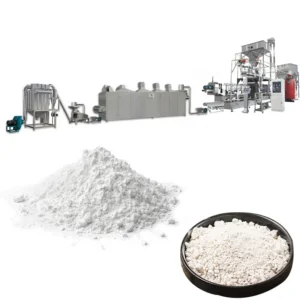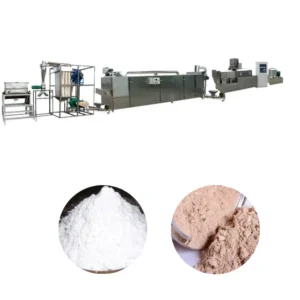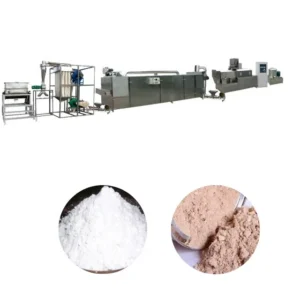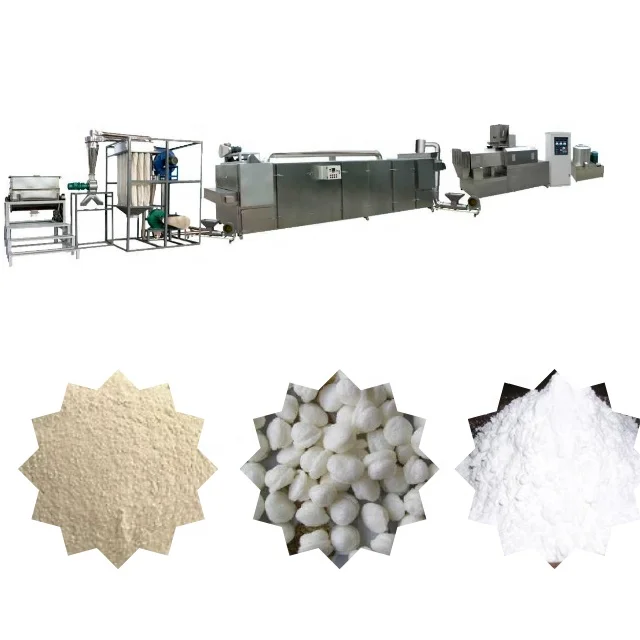

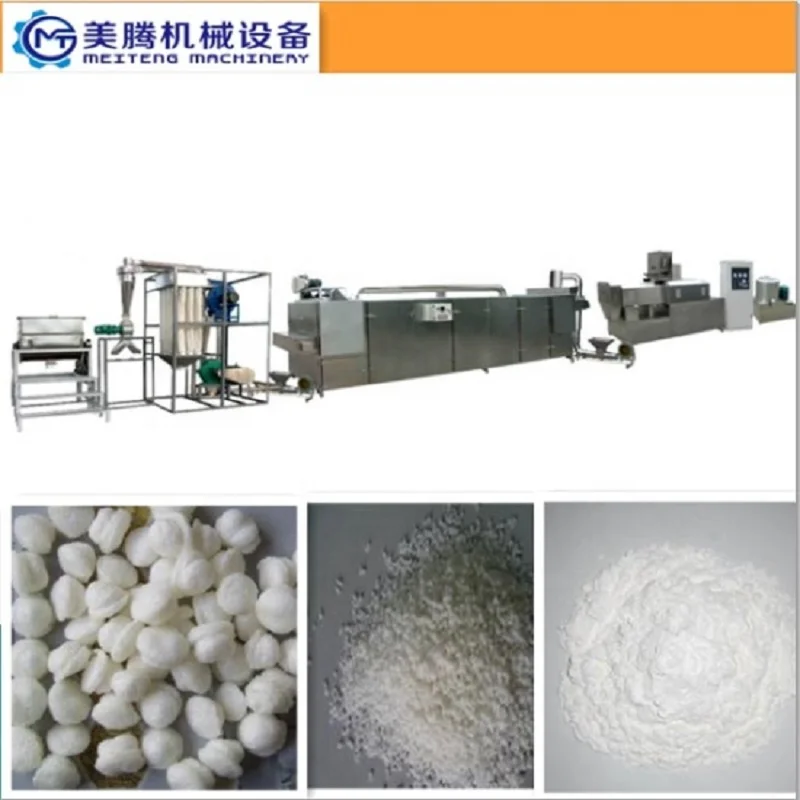
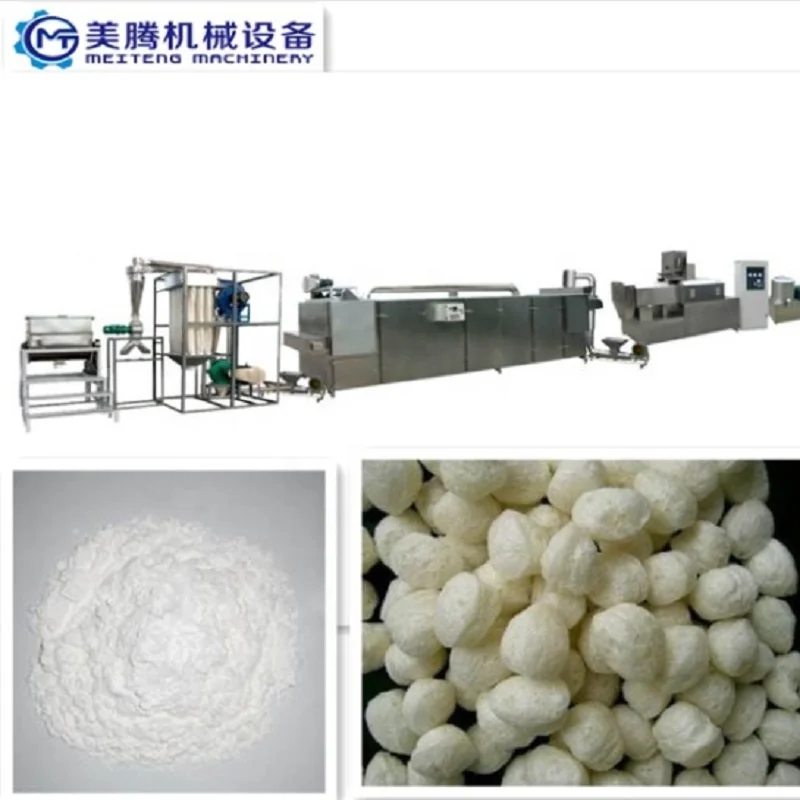
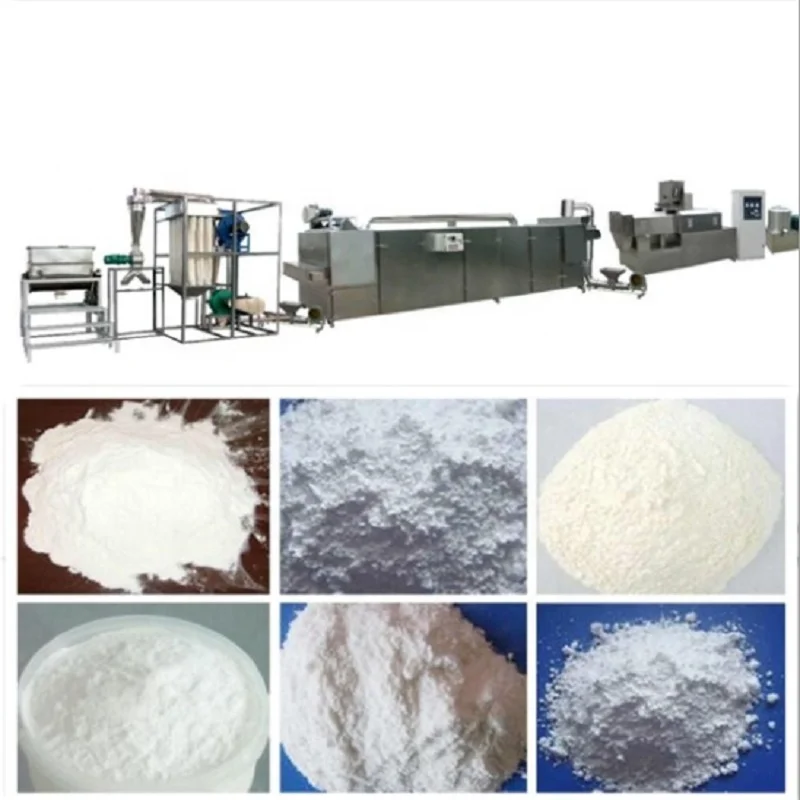
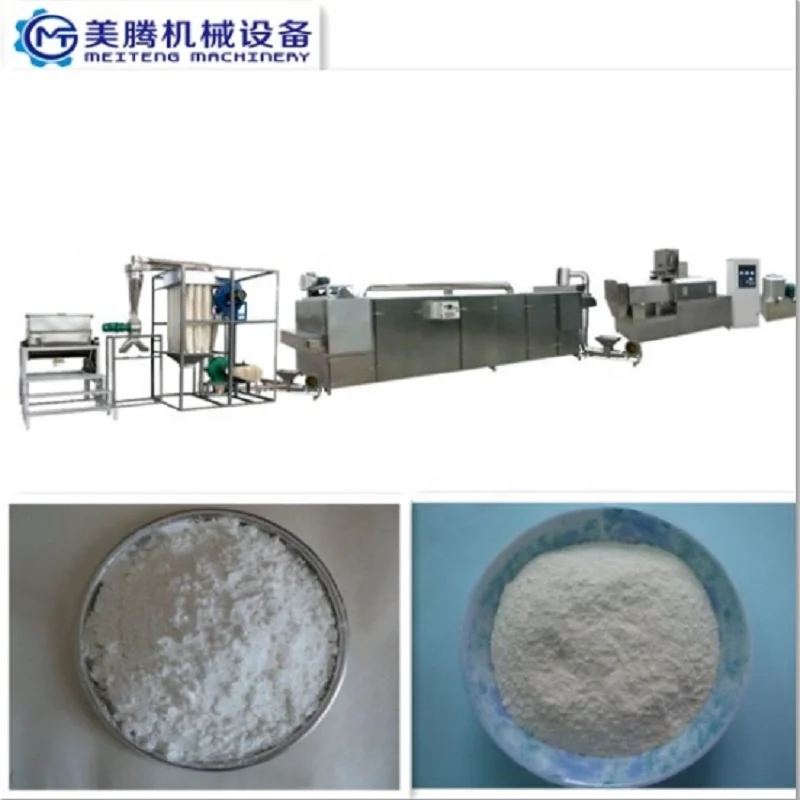
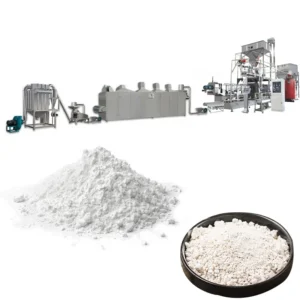
Modified Starch Extrusion Production Line, Twin-Screw, Carbon Steel Screw & Barrel — configured for potato, maize, and cassava starch thermochemical treatment with 3-phase screw design (convoying, smelting, inflated) and customized gap/distance per raw material.
Delivered as a complete turnkey project from mixing through extruding to baking, with line layout, throughput matching across every station, utility planning, and phased commissioning schedule. Voltage options confirmed pre-shipment to match your facility electrical standards.
Backed by in-house trial runs on your actual starch raw material before shipment, full documentation handover including electrical schematics and wear parts lists, plus on-site installation with operator training.
Description
Integrated Line Engineering — throughput matched across mixing, extruding, and baking stations so your modified starch line runs at its rated output without station-level bottlenecks.
Technical Specifications
| Parameter | Value |
|---|---|
| Product Type | Modified Starch Extrusion Production Line |
| Extruder Type | Twin-screw (double screw extruder) |
| Screw Phases | 3-phase (convoying phase, smelting phase, inflated phase) |
| Screw Material | Carbon steel |
| Barrel Material | Carbon steel |
| Model Options | MT-65 / MT-70 / MT-85 / MT-95 |
| Output Capacity (MT-65) | 300 kg/h (basis not stated in source — confirm raw material type and moisture content) |
| Output Capacity (MT-70) | 500 kg/h (basis not stated in source — confirm raw material type and moisture content) |
| Output Capacity (MT-85) | 800 kg/h (basis not stated in source — confirm raw material type and moisture content) |
| Output Capacity (MT-95) | 1500 kg/h (basis not stated in source — confirm raw material type and moisture content) |
| Motor Power (MT-65) | 45 kW |
| Motor Power (MT-70) | 55 kW |
| Motor Power (MT-85) | 75 kW |
| Motor Power (MT-95) | 90 kW |
| Voltage Options | 380V / 220V / 430V (frequency to be confirmed) |
| Overall Dimensions (MT-65) | 2 × 3 × 5 m |
| Overall Dimensions (MT-70) | 2 × 3 × 6 m |
| Overall Dimensions (MT-85) | 2.5 × 5 × 8 m |
| Overall Dimensions (MT-95) | 2.8 × 6 × 10 m |
| Line Stations | Mixing → Extruding → Baking |
| Process Technology | Cooking extrusion for thermochemical starch modification |
| Warranty | 1 year for auger and cylinder (modular wearing parts) |
| Standards | CE, ISO |
Application Suitability
| Application | Material or Output |
|---|---|
| Modified maize starch processing | Corn starch raw material for food-grade or industrial modified starch |
| Modified potato starch processing | Potato starch for thickening, binding, and texturizing applications |
| Modified cassava starch processing | Cassava starch for adhesive, paper, and food ingredient markets |
| Thermochemical starch treatment | Cooking extrusion to alter starch molecular structure and functionality |
What "Nominal Capacity" Leaves Out About Modified Starch Lines
A quoted output figure means nothing until the line is validated on your actual starch raw material.
I have seen modified starch processors take delivery of an extruder rated for a specific hourly throughput, only to discover during commissioning that their maize or cassava starch formulation behaves differently under shear and heat than the generic test material the factory used. The modified starch production line turnkey then runs below expectation while the buyer scrambles to adjust screw configuration and barrel temperatures on-site. [NEED_CITE: importance of raw material trial runs for starch extrusion lines] When mixing, extruding, and baking stations are sourced from separate vendors, the problem compounds — one station runs faster than the next, material piles up, and operators manually gate the feed to avoid spillage or blockage.
Throughput Matching Across Every Station
A modified starch production line turnkey is not just an extruder with a mixer upstream and a dryer downstream. The mixing station must feed at a rate that keeps the twin-screw extruder barrel consistently charged without overfilling, while the baking station must handle the full output of thermochemically treated starch without creating a moisture bottleneck. When all stations come from a single supplier with matched capacity calculations, the transition between stages stays continuous and operators focus on product quality rather than material flow management.
Utility Planning Before the Foundation Pours
Utility requirements for a cooking extrusion line extend beyond the main power supply. The baking station demands controlled thermal input for starch modification, and the mixing station may require metered water addition at specific stages of blending. A phased installation plan sequences utility connections to match the construction schedule, so electrical panels, water lines, and exhaust ducting are in place before each station arrives. [NEED_CITE: utility planning requirements for industrial starch processing facilities] Addressing voltage options and frequency confirmation before shipment prevents the situation where a 430V motor arrives at a facility wired for 380V.
Decoding the Screw Configuration for Starch Modification
The 3-phase screw design on this twin-screw extruder serves a specific function in starch chemistry. The convoying phase moves raw starch forward with minimal shear, the smelting phase introduces mechanical energy and heat to begin gelatinisation, and the inflated phase completes the thermochemical modification by controlling expansion and residence time. Carbon steel construction handles the abrasive nature of concentrated starch streams. Screw gap and distance are configurable per raw material — maize starch, potato starch, and cassava starch each demand different shear profiles and barrel temperature settings to reach the target modification degree.
The Hidden Cost of Missing Wear Parts
When an extruder arrives without a matched wear parts list, the first screw or die replacement becomes a line-down event. I have watched starch processors lose days of production because a replacement screw segment was not in stock and the lead time for a shipment stretched well beyond a weekend. The modular design on this line allows individual wearing parts to be replaced without swapping the full screw or cylinder set, but that advantage only matters if the parts list is established before the line ships and the initial spare set arrives with the equipment. [NEED_CITE: production downtime costs from missing extruder wear parts]
Why Source This Modified Starch Line From One Supplier
The line layout and capacity calculation document ties every station to a shared throughput target, eliminating the finger-pointing that happens when a mixer vendor blames the extruder and the extruder vendor blames the dryer. The in-house testing workshop runs trial production on your specific potato, maize, or cassava starch before shipment, generating a test report that validates screw configuration and barrel temperature settings. Voltage and frequency are confirmed against your facility electrical standards before the motors are wired. Screw and die configuration records are documented per your raw material, so future reorders match the original setup. On-site installation covers the full line with operator training included in the commissioning schedule.
Documentation & Verification
- Line layout drawing showing matched throughput across mixing, extruding, and baking stations
- Trial run report on your specific maize, potato, or cassava starch raw material
- Screw and die configuration record with gap and distance settings per application
- Electrical schematic with confirmed voltage and frequency for your facility
- Operation and maintenance manual with modular wear parts replacement procedures
- CE declaration of conformity for machinery entering regulated markets
Installation, Commissioning & Support
- Foundation layout provided per model footprint, from MT-65 at 2×3×5 m to MT-95 at 2.8×6×10 m
- Electrical panel sized for the selected motor power, up to 90 kW on the MT-95
- Voltage confirmed pre-shipment from available options (380V, 220V, or 430V) to match local supply
- Phased commissioning over a multi-week period including line test and parameter tuning
- Operator training covers screw gap adjustment and barrel temperature profiling per starch type
- Wear parts list issued at shipment so replacement screw segments are on hand from day one
What We Need to Configure Your Line
To build a layout and capacity calculation that holds on your actual material, provide the starch type you process (maize, potato, or cassava), your target hourly output, and the modification specification your market requires. Confirm your facility voltage and frequency so the motors and control panels are wired correctly before dispatch. Share your workshop floor dimensions and ceiling height so the line layout fits without field modifications.
Frequently Asked Questions
Q: How is throughput matched across mixing, extruding, and baking stations?
A: Each station is sized against a shared output target during layout design. The mixer feed rate, extruder barrel fill level, and baking residence time are calculated together so no station becomes a bottleneck. The capacity document is included in the project handover.
Q: What utility requirements need planning before installation?
A: Power, water metering for the mixing stage, and thermal input for the baking station must be routed before the equipment arrives. Voltage options include 380V, 220V, and 430V, with frequency confirmed to your local grid standard before the electrical panels are built.
Q: How is the commissioning schedule structured?
A: Installation is phased across a multi-week period. Mechanical assembly comes first, followed by utility connection, dry runs, and live production trials on your starch raw material. Operator training covers screw configuration adjustment and temperature profiling per product.
Q: Can a trial run be done on our starch before shipment?
A: Yes. The testing workshop runs your specific maize, potato, or cassava starch through the extruder before dispatch. A trial report documents the screw gap, barrel temperature, and product test results so the line arrives with validated process settings.
Q: What documentation comes with the turnkey project handover?
A: You receive a line layout with capacity calculations, electrical schematics, screw and die configuration records, a factory test report on your raw material, and an operation manual with a wear parts list. CE documentation is included for regulated export markets.
Related products
-
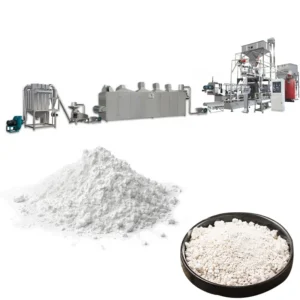
High-Efficiency Customizable Modified Starch Production Line – Automatic Corn Pellet Adhesive Making Equipment
¥65.00 Select options This product has multiple variants. The options may be chosen on the product page -
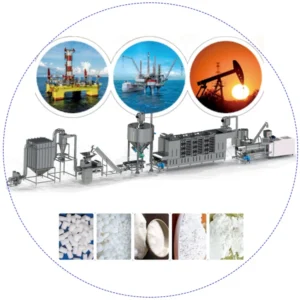
Automatic 304 Stainless Steel Modified Corn Starch Making Machine TWIN SCREW 500kg/h Capacity Starch Processing Production Line
¥50.00 Select options This product has multiple variants. The options may be chosen on the product page -
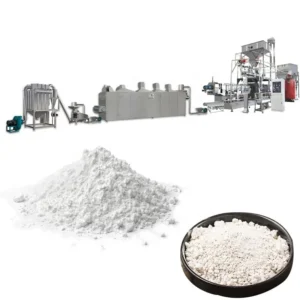
Corn Cassava Modified Starch Powder Production Line Electric-powered Motor Automatic 400kg/h Processing Equipment New Condition
¥65.00 Select options This product has multiple variants. The options may be chosen on the product page -
API Standard Pregelatinized Starch Line for Oilfield Drilling Fluid. High Yield Modified Starch Equipment
¥65.00 Select options This product has multiple variants. The options may be chosen on the product page