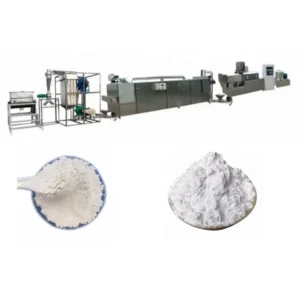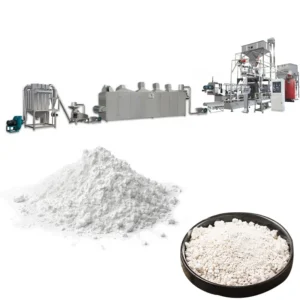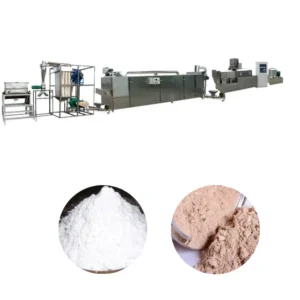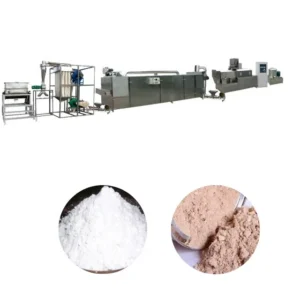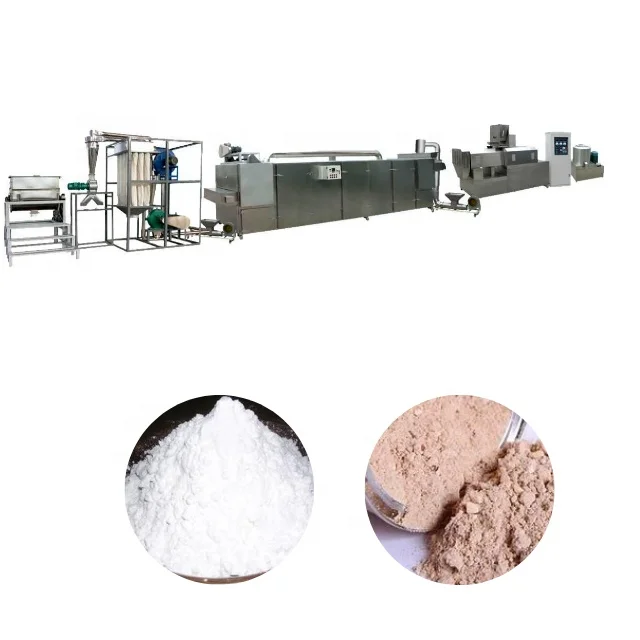

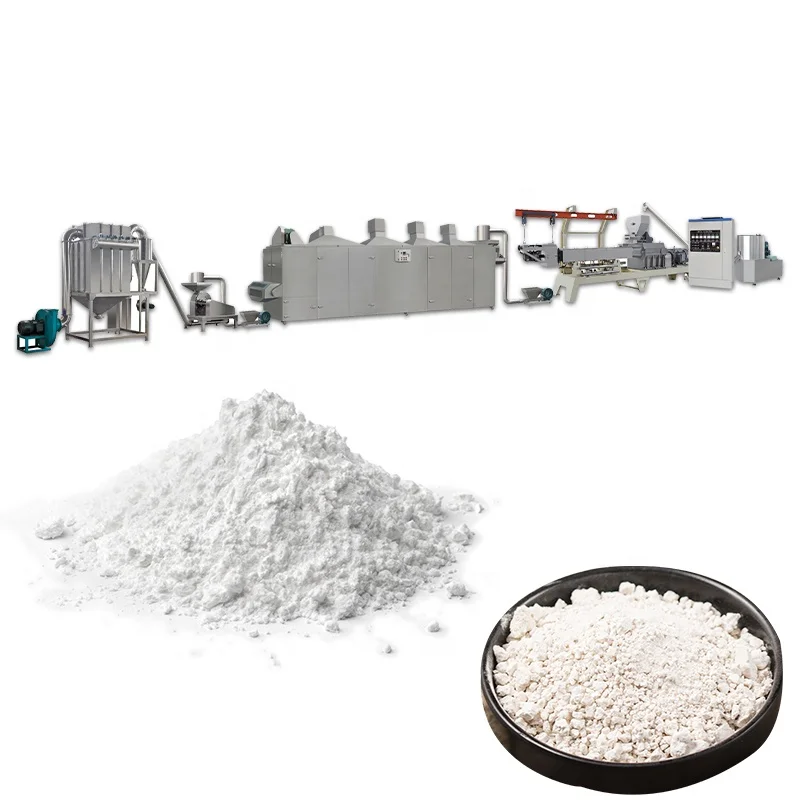


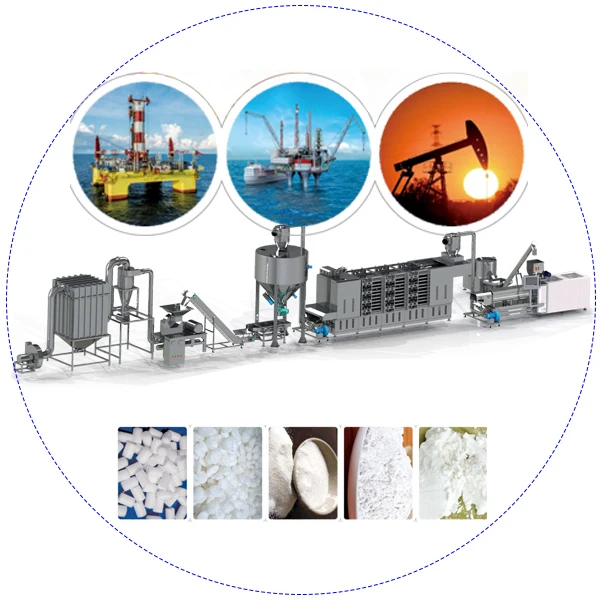
Modified Starch Processing Line, Twin Screw Extruder, 100–1500 kg/h, PLC & MCC Control — engineered as a single turnkey project from batching through extrusion, cooling, grinding, and packing.
- Screw configuration and barrel zone profile matched to your raw starch type and target modification degree
- Throughput balanced across every station to eliminate bottlenecks, validated by in-house trial runs before shipment
- Utility planning (voltage, frequency, fuel) confirmed pre-production to avoid commissioning delays
Delivered with full line layout documentation, trial run reports on your actual raw material, and on-site installation with operator training included.
Description
Throughput-Matched Engineering — Every station on this modified starch processing line turnkey is sized to the extruder’s verified output, eliminating the mid-line bottlenecks that plague lines assembled from separate vendors.
Technical Specifications
| Parameter | Value |
|---|---|
| Product Type | Modified Starch Processing Line |
| Extruder Type | Twin Screw |
| Installed Power | 45–200 kW |
| Nominal Capacity | 100–1500 kg/h (basis not stated in source — confirm raw material type, moisture content and modification degree) |
| Machine Weight | 1000–5000 kg |
| Voltage | 220–440 V, tri-phase |
| Frequency | 50/60 Hz |
| Control Architecture | PLC & MCC |
| Contact Material | Food-grade 304 stainless steel |
| Line Stations | Mixing/batching → Twin Screw Extruder → Cooling Conveyor → Pulse Grinder → Packing |
| Cooling Method | Wind-knife air drying at ambient temperature |
| Grinder Configuration | Pulse grinder with cyclone discharge, dust collector, filter pockets |
| Assembly State | Complete integrated line |
| Certification | CE, ISO |
Application Suitability
| Application | Material or Output |
|---|---|
| Food-grade thickening starch | Modified corn starch, potato starch for sauces and bakery fillers |
| Oil drilling fluid additive | Pregelatinised starch blends for wellbore stability compounds |
| Papermaking sizing agent | Cationic and oxidised wheat-based modified starch |
| Industrial adhesive starch | Dextrinised and cross-linked corn and rice flour blends |
| Textile sizing compound | Modified potato and tapioca starch for warp yarn treatment |
Why "Rated Capacity" Means Nothing Without the Starch Type
The only capacity number that matters is what the line holds on your exact raw formulation at your target modification degree.
I once signed off on a modified starch line where the extruder was quoted at a comfortable margin above our target output. Day one, we ran waxy maize instead of the standard dent corn the vendor had tested with. The gelatinisation profile was completely different — barrel temperatures needed a full recalibration, and screw speed had to come down to prevent scorching. The line eventually ran well, but we lost an entire week of production while the supplier flew in an engineer from overseas. That week cost more than the price difference between the two bids we had been comparing [NEED_CITE: impact of raw material variability on extrusion throughput]. When you evaluate a modified starch processing line turnkey, the first question should never be what the nameplate says. It should be what the supplier actually tested, on what material, and whether they will test on yours before the machine leaves their floor.
Barrel Zone Profiling and Screw Configuration
Each barrel zone on the twin-screw extruder is mapped to a specific stage of starch modification — feeding, compression, gelatinisation, and metering. The screw configuration is selected based on whether the buyer is producing lightly cross-linked starch for food applications or heavily degraded dextrins for industrial use. Moisture injection points and vent ports are positioned to match the residence time required for the target degree of substitution. A modified starch processing line turnkey configured this way holds consistent product quality across batch changes without requiring manual screw swaps between runs.
Throughput Balancing Across Every Station
The extruder is only as productive as the station behind it. If the cooling conveyor cannot shed heat fast enough, pregelatinised starch clumps before it reaches the grinder. If the pulse grinder cyclone is undersized, fine powder backs up into the filter pockets and chokes airflow. On this line, the cooling conveyor length, wind-knife array density, and grinder motor rating are all calculated from the extruder’s verified output on the buyer’s specific starch type. This matching prevents the scenario where one machine runs at full speed while the next station forces the entire line to slow down [NEED_CITE: throughput balancing principles in continuous food processing lines].
How Screw Geometry and Barrel Temperature Interact
The twin-screw design allows independent control over shear intensity and residence time — the two variables that determine whether starch granules swell uniformly or rupture into uneven fragments. A longer L/D ratio gives more barrel zones for gradual temperature ramping, which matters when processing potato starch that gelatinises at a lower threshold than corn starch. The 45–200 kW power range covers everything from pilot-scale food ingredient runs to continuous industrial drilling fluid production. PLC control with MCC integration means barrel temperature setpoints, screw speed, and feed rate are coordinated automatically, reducing batch-to-batch variation that manual operation inevitably introduces.
What Happens When Utility Specs Are Left to the Last Minute
Voltage and frequency mismatches are the single most common cause of commissioning delays on starch processing lines shipped internationally. A motor wound for 380V/50Hz will overheat and trip thermal protection on a 440V/60Hz supply — not immediately, but after the first hour of continuous load when the buyer is trying to meet a delivery schedule. Control panel labels in the wrong language add hours to every troubleshooting session. These are not engineering failures; they are communication failures that happen when utility confirmation is treated as a paperwork formality rather than a production prerequisite [NEED_CITE: electrical specification verification for exported industrial machinery]. On a modified starch processing line turnkey, voltage, frequency, control language, and fuel source for any thermal station must be locked before fabrication begins.
What This Supplier Brings to a Starch Line Project
Every station from batching through packing comes from a single source, so capacity calculations are the supplier’s responsibility, not a coordination problem the buyer inherits. The in-house testing workshop runs the buyer’s actual raw starch through the extruder before shipment, producing a trial report that validates both product texture and output rate. Screw and die configurations are documented per formulation, so reorders or product changes reference a known baseline rather than starting from scratch. Utility planning — voltage, frequency, fuel type — is confirmed in writing before production, and the electrical schematic ships with the line for local contractor reference.
Documentation & Verification
- Line layout with station-by-station capacity calculation for your starch formulation
- Trial run report on buyer-supplied raw material conducted before dispatch
- Screw and die configuration record matched to target modification degree
- Electrical schematic with confirmed voltage, frequency, and control language
- CE declaration of conformity and ISO certificate for customs clearance
- Wear parts list with recommended first-replacement intervals
Installation, Commissioning & Support
- Foundation plan reflecting the 1000–5000 kg line weight and cooling conveyor span
- Dedicated circuit sizing for the 45–200 kW extruder drive and grinder motor
- Cooling conveyor and pulse grinder assembled on-site and aligned to extruder discharge
- Barrel zone temperature profile and screw speed calibrated during first production run
- Operator training covering PLC interface navigation and MCC fault response
- Spare screw elements and die plates identified on the wear parts list at shipment
What to Include with Your Inquiry
Send the specific starch type or blend you intend to process — corn, potato, wheat, or a proprietary formulation — along with the target modification degree and end-use application. Confirm your facility’s available voltage and frequency, and note whether control panel labels should be in English or a local language. If you have an existing grinder or packing station you plan to integrate, provide its throughput rating so the upstream stations can be sized accordingly.
Frequently Asked Questions
Q: How is line capacity verified before shipment?
A: The supplier runs your actual raw starch through the twin-screw extruder in the in-house testing workshop and records output rate, product texture, and moisture at discharge. This trial run report ships with the line so you know the verified throughput before installation begins, rather than discovering it during commissioning.
Q: How is throughput balanced between the extruder, cooling conveyor, and grinder?
A: Each downstream station is sized from the extruder’s verified output on your specific starch formulation. The cooling conveyor length and wind-knife density are calculated to handle the discharge rate, and the pulse grinder motor and cyclone are rated to prevent material backup at full line speed.
Q: What utility details must be confirmed before production starts?
A: Voltage, frequency, and control language are confirmed in writing and reflected on the electrical schematic. If any thermal station is included, the fuel type — gas, diesel, electricity, or steam — is specified by the buyer and designed into the system before fabrication.
Q: How are screw and die configurations matched to different starch types?
A: The screw element arrangement and die geometry are selected based on the raw starch gelatinisation temperature, target modification degree, and desired particle size after grinding. A configuration record is generated for each formulation and included in the documentation package for future reference or reorders.
Related products
-
Automatic Deep Processing Machine – Food Grade Modified & Pregelatinized Starch Manufacturing Line
¥65.00 Select options This product has multiple variants. The options may be chosen on the product page -
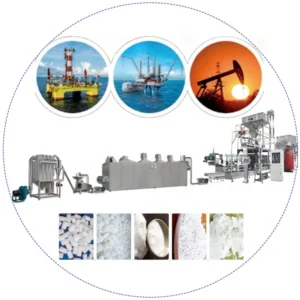
Automatic Modified Tapioca Starch Production Line 304 Stainless Steel Flour Mill and Bakery Machine
¥30.00 Select options This product has multiple variants. The options may be chosen on the product page -
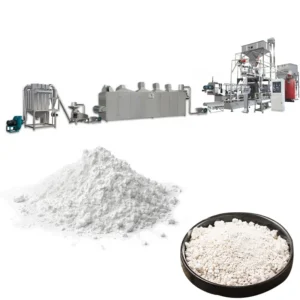
High-Efficiency Customizable Modified Starch Production Line – Automatic Corn Pellet Adhesive Making Equipment
¥65.00 Select options This product has multiple variants. The options may be chosen on the product page -
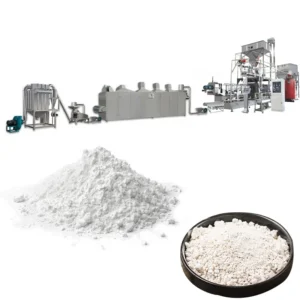
API Standard Pregelatinized Starch Line for Oilfield Drilling Fluid. High Yield Modified Starch Equipment
¥65.00 Select options This product has multiple variants. The options may be chosen on the product page