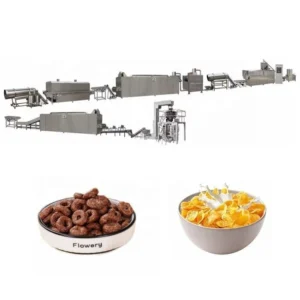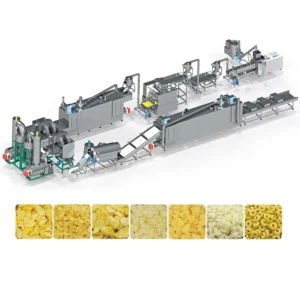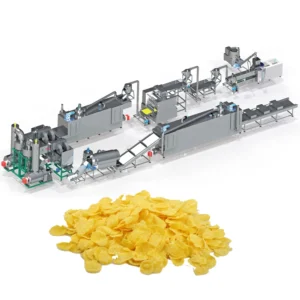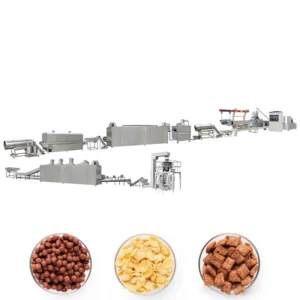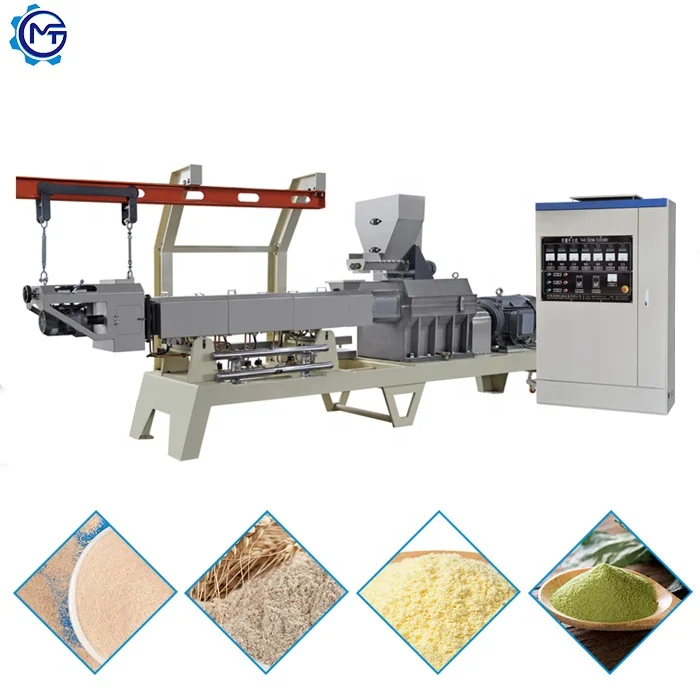
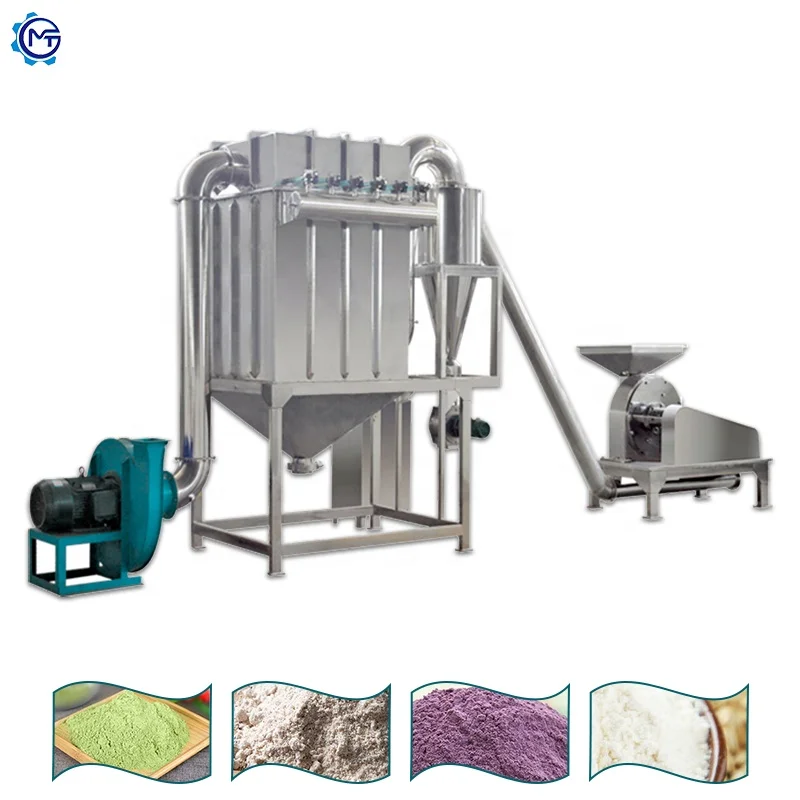
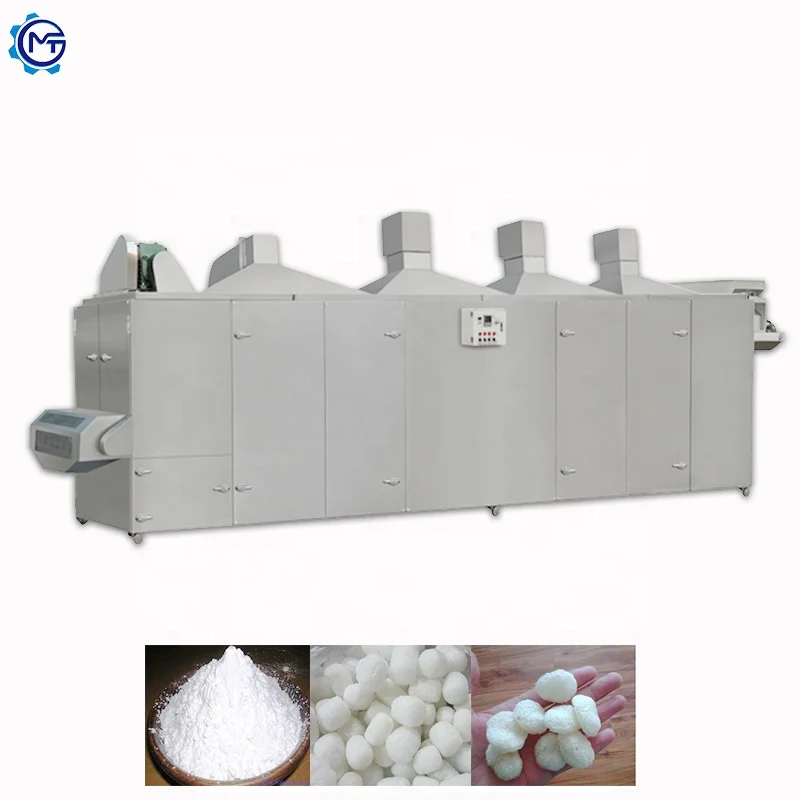
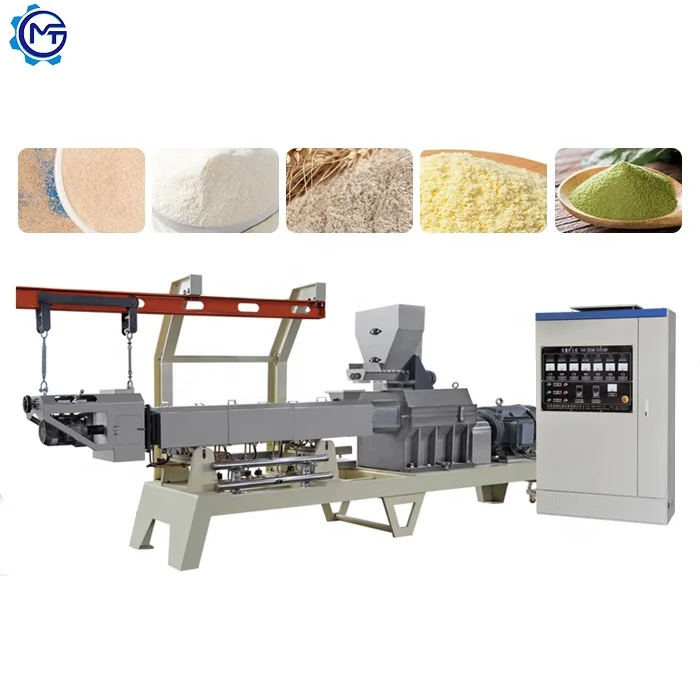
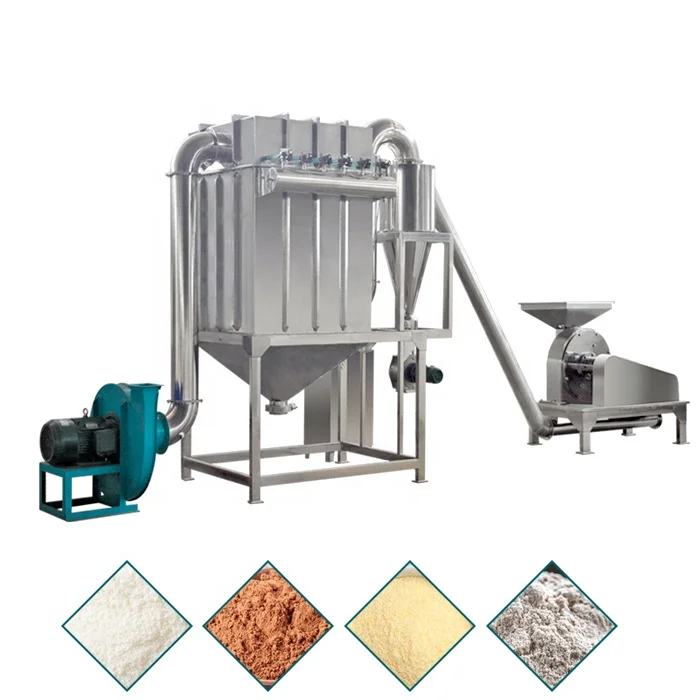
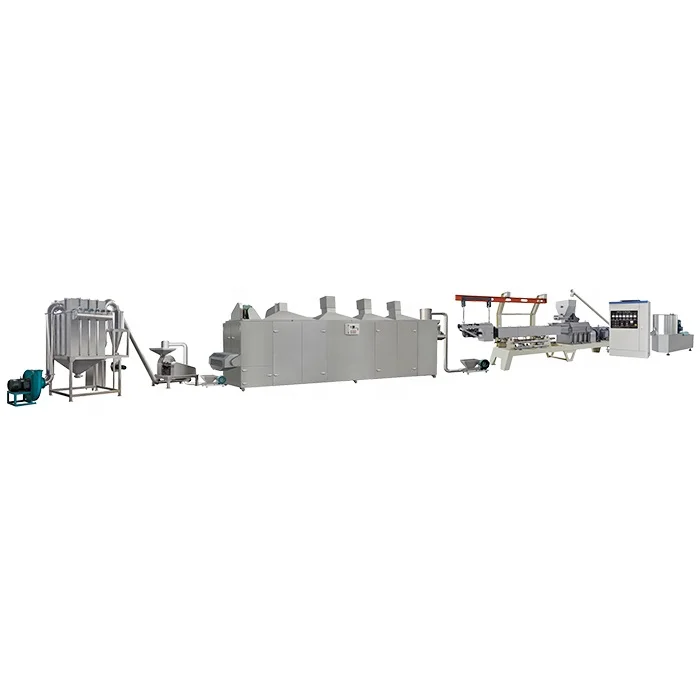
MT70 / MT85 / MT75 Corn Flakes Processing Line, Twin-Screw Extruder, PLC Control — engineered as a complete turnkey project from batching through extrusion, flaking, roasting and packing, with every station throughput-matched to eliminate bottlenecks common when assembling from separate vendors. Screw configuration and die design are specified to your raw material and target flake density, while hydraulic double-roller flaking ensures uniform sheet thickness.
- Line layout and capacity calculation provided with matched throughput across all stations
- Trial run on your actual raw material completed in our testing workshop before shipment
- Electrical schematic and voltage confirmed to your market requirements before production
Description
Integrated Throughput Matching — Every station from mixing to packing is calculated against your actual corn grits moisture and target flake density, so the dryer never becomes the bottleneck that halves your line output.
Technical Specifications
| Parameter | Value |
|---|---|
| Product Type | Corn Flakes Processing Line |
| Model | MT70 / MT85 / MT75 |
| Installed Power | 160 kW (MT70) / 190 kW (MT85) / 210 kW (MT75) |
| Power Consumption | 120 kW (MT70) / 140 kW (MT85) / 150 kW (MT75) |
| Output Capacity | 150–200 kg/h (MT70); 300–400 kg/h (MT85); 300–500 kg/h (MT75) (basis not stated in source — confirm raw material and moisture content) |
| Overall Dimensions (L×W×H) | 41 × 1.5 × 2.2 m (MT70) / 43 × 1.5 × 3.2 m (MT85) / 45 × 1.5 × 3.5 m (MT75) |
| Screw Type | Twin Screw |
| Control System | PLC automated line control |
| Flaking Machinery Drive | Double motors for separate roller driving; hydraulic system for double rollers |
| Flaking Temperature Control | Infrared sensor for even temperature pipe control |
| Dryer Heating Source | Gas / Electric (selectable) |
| Roasting Oven | Hot air roasting with conciliation burner, dual circulating fans, cyclone dust removal, vibrating pan with high-temperature spraying tubes |
| Coating System | Double tumble for sugar melting, elevator, coating drum, spraying nozzle |
| Voltage & Frequency | Configurable (commonly 415V 50/60Hz; 440V 50/60Hz; 220V 60Hz) |
| Extruder Specific Capacity (MT75) | 200–300 kg/h (basis not stated in source — confirm raw material and moisture content) |
| Standards | CE, ISO |
Application Suitability
| Application | Material or Output |
|---|---|
| Natural corn flakes production | Corn, rice, wheat, oat, barley powder |
| Sugar-coated breakfast flakes | Corn base with sugar syrup coating |
| Shaped breakfast cereal snacks | Ball, tube, stick, ring, fruit loop, star, wheel, flower, heart forms via extruder mould adjustment |
| Instant porridge and nutritional cereal | Multi-grain powder blends |
Why "Rated Capacity" Means Nothing Without Dryer and Flaker Matching
A corn flakes production line turnkey only delivers its stated output when every downstream station is sized to the extruder’s actual discharge volume and moisture load.
I once walked into a plant where the extruder was pushing material at a respectable rate, but the dryer had been specified to the line’s brochure number rather than the real moisture content coming off the flaking rolls. The result was a dryer running at full belt speed with half-dried flakes piling up at the discharge end, and the roasting oven receiving product too wet to blister properly. The whole line ran at roughly half its nameplate rate for months before anyone re-examined the throughput chain [NEED_CITE: common throughput mismatch issues in breakfast cereal processing lines]. That is the scenario a properly engineered corn flakes production line turnkey project eliminates by calculating station-to-station mass and energy balance before any steel is cut.
Screw Configuration and Die Design Set the Flake Foundation
The twin-screw extruder is where corn flakes begin their transformation. Screw element arrangement and die geometry determine how thoroughly the starch gelatinises inside the barrel and what moisture level the extrudate carries into the flaking station. On this corn flakes production line turnkey, the screw configuration is specified to the buyer’s raw material blend — corn alone, or a multi-grain mix with oat or barley — so that the gelatinisation degree and exit moisture land within the narrow window the downstream flaker and dryer expect.
From Flaking Rolls to the Roasting Oven: Controlling Surface and Structure
The PLC-controlled flaking machinery uses independent dual-motor drives and a hydraulic roller system to press extrudate into consistent sheet thickness, while infrared sensors maintain uniform temperature across the roller surface. Downstream, the hot air roasting oven employs a conciliation burner with two separate circulating fans and a cyclone dust removal device to deliver even surface blistering — that signature corn flake crispness — without scorching edges or leaving damp centres [NEED_CITE: hot air circulation requirements for consistent cereal roasting]. A vibrating pan with high-temperature spraying tubes keeps flakes moving through the roast zone at a controlled rate.
Reading the Specs That Actually Matter for Breakfast Cereal
Twin-screw extrusion gives corn flakes an advantage over single-screw designs when processing blends with varying particle sizes, because the intermeshing screws create a self-wiping action that prevents material hang-up and ensures uniform residence time. The installed power spread across the three models — 160 kW to 210 kW — reflects the increasing barrel length and screw diameter needed for higher throughput, but real capacity depends on your corn grits moisture and the target flake density. The selectable gas or electric dryer heating source matters for operating cost and local utility availability; plants with reliable natural gas supply typically see lower per-kilogram drying cost. Voltage configurability across 415V, 440V, and 220V at 50 or 60 Hz means the corn flakes production line turnkey electrical package can match the target market’s grid standard without costly post-arrival transformer additions.
The Cost of Skipping Station-to-Station Verification
When a flaking machine is sourced from one vendor and the dryer from another, nobody owns the moisture balance between them. Flakes arrive at the roasting oven with inconsistent water content, leading to batches that are either under-toasted or burnt at the edges. Operators compensate by slowing the line, and the project’s payback timeline quietly stretches [NEED_CITE: hidden cost of multi-vendor cereal line integration]. Sugar-coated variants add another variable — the coating drum and double tumble sugar melting system must be timed to the cooled flake throughput, or sugar distribution becomes uneven across the batch.
Why Source This Line as a Single Turnkey Project
Every station — mixing, extruding, flaking, drying, roasting, coating, cooling, packing — is throughput-matched under one engineering responsibility, so no interface gap exists between vendors. The in-house testing workshop runs your actual corn or multi-grain blend through the extruder and flaker before shipment, producing a trial report that confirms flake thickness and moisture at each stage. Screw and die configuration records document the exact build for your product specification. Electrical schematics confirm voltage, frequency, and PLC language before production begins, not after the line arrives on site. Both natural and sugar-coated configurations are available on the same platform, allowing future product diversification without replacing the extrusion core.
Documentation & Verification
- Line layout drawing with station-by-station throughput calculation for your target output
- Trial run report on your corn or grain blend executed in the testing workshop before dispatch
- Screw and die configuration record matched to your flake density and texture specification
- Electrical schematic with confirmed voltage, frequency, and PLC interface language
- CE declaration of conformity and ISO certificate for customs and regulatory filing
- Wear parts list with recommended first-year spares for screws, dies, and flaking rollers
Installation, Commissioning & Support
- Foundation plan based on the 41–45 m line footprint and 2.2–3.5 m headroom requirement
- Dedicated circuit sizing for 120–150 kW operating load across extruder, dryer, and roasting oven
- Phased assembly sequence matching station delivery order to your floor readiness
- First-run parameter setting for barrel temperature zones, roller gap, and roast fan speed
- Operator training covering PLC interface navigation, screw changeover, and sugar coating drum timing
- Recommended spare inventory for twin-screw elements, die plates, and hydraulic roller seals
What to Include in Your Project Inquiry
Provide your primary raw material — whether straight corn grits or a multi-grain blend — along with the target moisture content at extruder discharge and the final flake thickness you need. Specify your local voltage and frequency, preferred PLC language, and whether the line should include the sugar coating loop or start as natural-flake-only with future expansion capacity. Workshop dimensions and ceiling height help us confirm the layout fits before we issue the line proposal.
Frequently Asked Questions
Q: How is line capacity verified on my specific raw material before shipment?
A: Your corn or multi-grain blend is run through the twin-screw extruder and flaking station in our in-house testing workshop. We measure discharge moisture, flake thickness, and throughput rate, then issue a trial run report documenting actual performance against the proposed station sizing.
Q: How do you ensure throughput matching between extruder, dryer, flaking and roasting stations?
A: Each station is calculated on the mass and moisture balance from the preceding stage rather than selected from a catalogue. The dryer capacity, flaking roll speed, and roasting oven belt rate are all derived from the extruder’s verified output on your raw material.
Q: What voltage, frequency and control language options are confirmed before production?
A: We confirm your site voltage — commonly 415V, 440V, or 220V — along with frequency at 50 or 60 Hz, and the PLC interface language before the electrical schematic is finalised and production begins.
Q: What does the phased installation and commissioning schedule look like for a full turnkey line?
A: Stations are sequenced for installation based on floor readiness and utility connections, starting with the mixer and extruder foundation work and progressing through flaking, drying, roasting, and packing. Our engineer remains on site through first production runs and operator training.
Q: How is operator training structured and what wear parts are recommended for first-year operation?
A: Training covers PLC operation, screw and die changeover, flaking roller gap adjustment, and sugar coating drum timing. The wear parts list included with documentation specifies twin-screw elements, die plates, and hydraulic roller seals sized for your first year of production.
Related products
-
Small Scale Breakfast Cereal Manufacturing Machine for Corn Flakes Process Line
¥45,000.00 Select options This product has multiple variants. The options may be chosen on the product page -
Automatic Cornflakes Making Machine Corn Flakes Breakfast Cereals Processing Production Line
¥500.00 Select options This product has multiple variants. The options may be chosen on the product page -
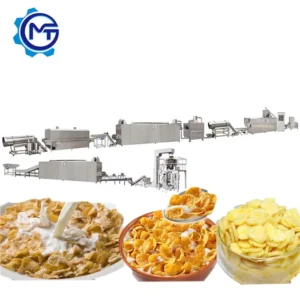
Sweet Corn Flakes Maize Breakfast Cereal Full-automatic Food Grade Stainless Steel Heat Exchanger Mixer Fryer Processing Line
¥8,000.00 Add to cart -
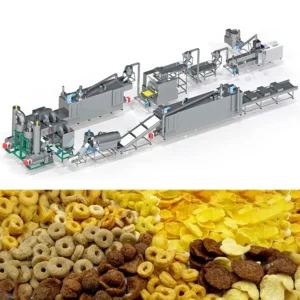
Corn Flakes Breakfast Cereal Production Line Making Machine Automatic
¥8,000.00 Select options This product has multiple variants. The options may be chosen on the product page