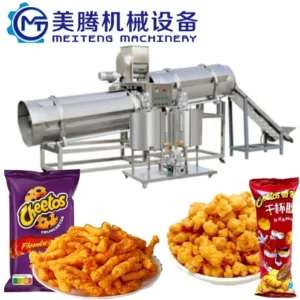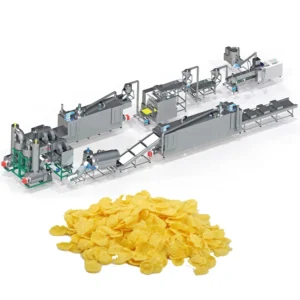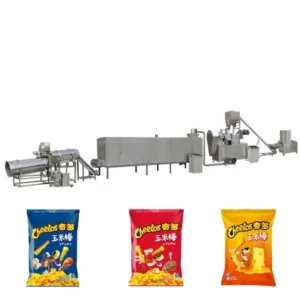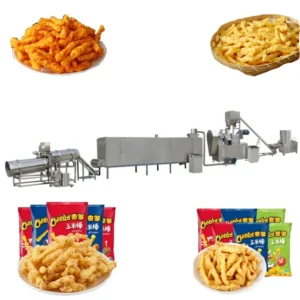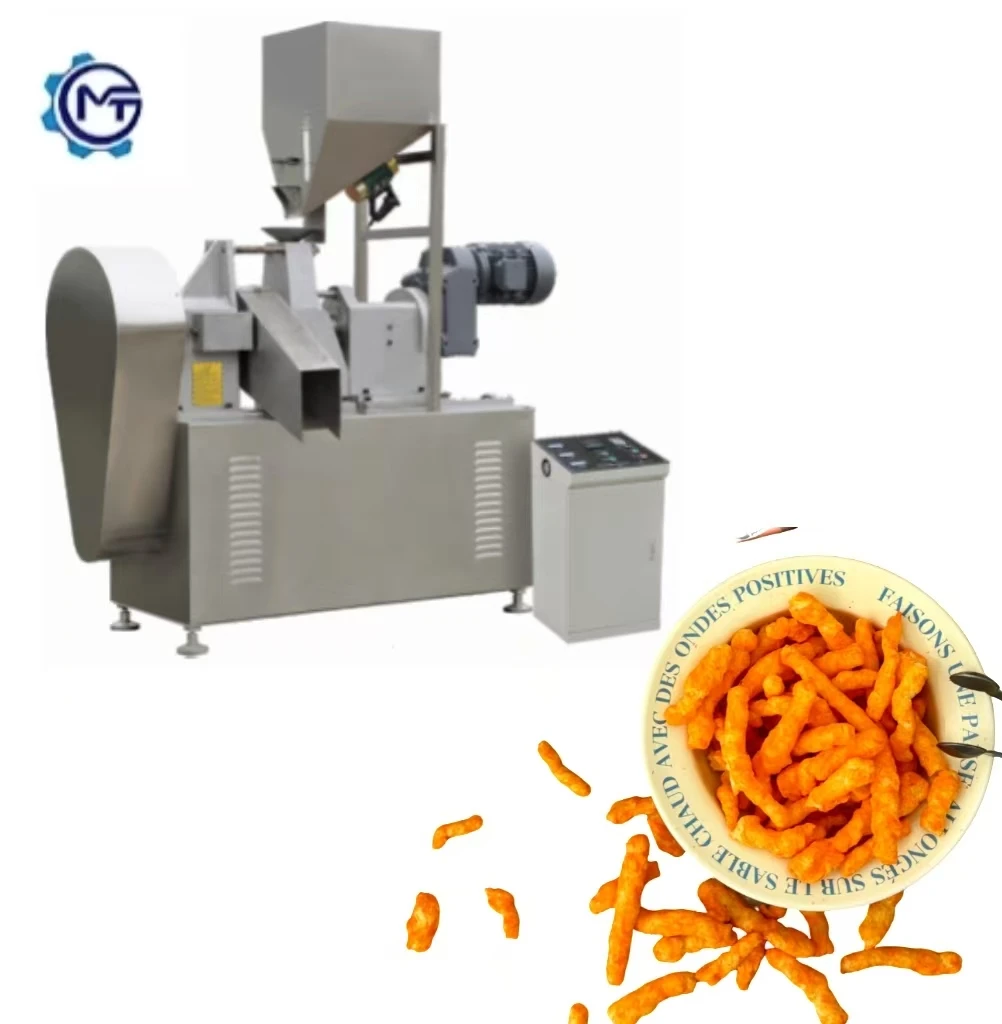
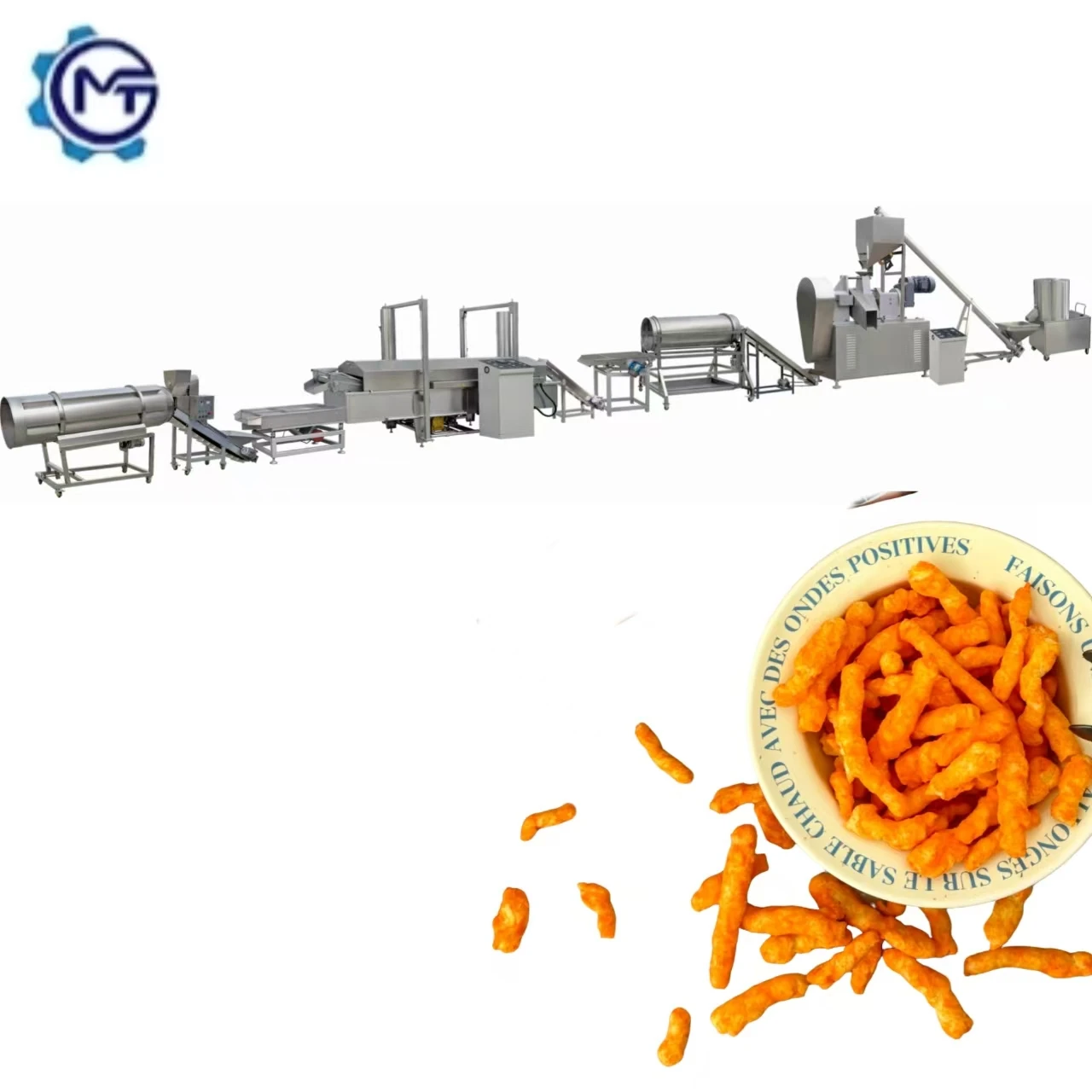

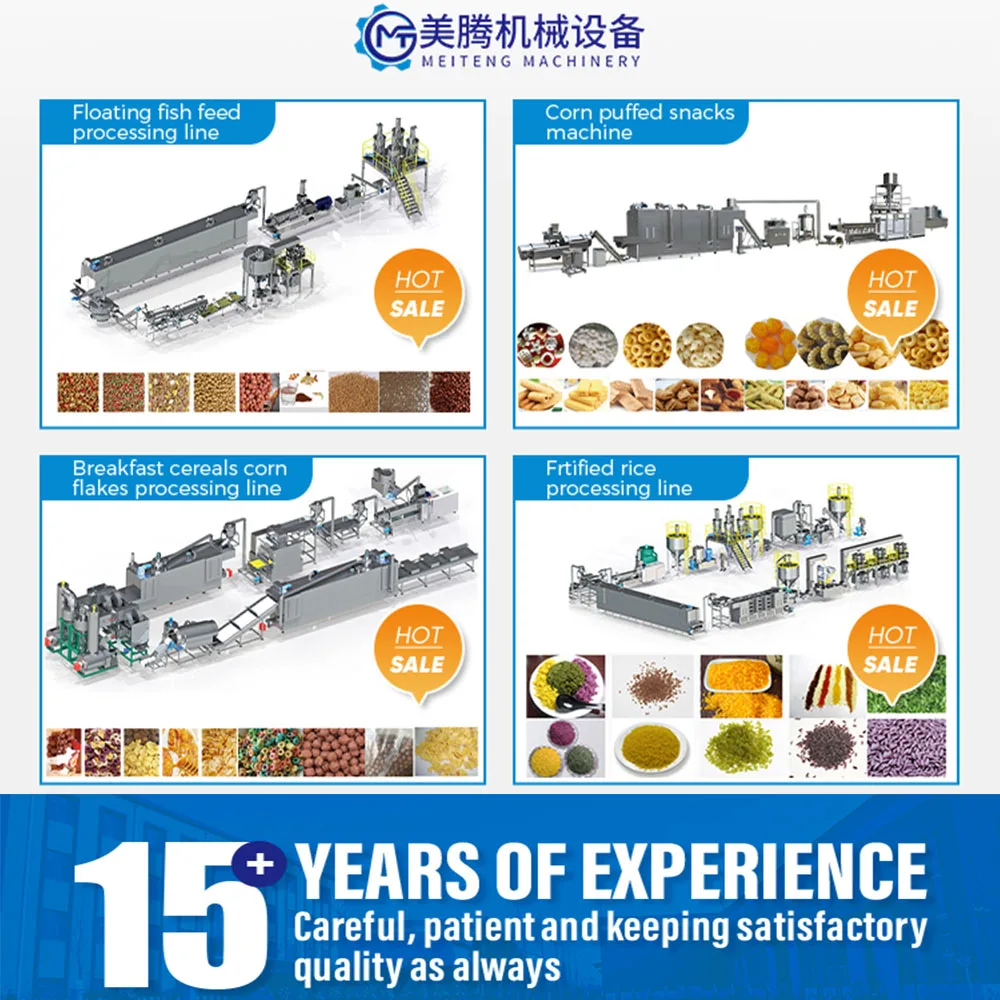
Kurkure / Nik Naks Extruder Machine, 250 kg/h capacity (basis pending confirmation), 304 Stainless Steel contact surfaces, dual voltage 220V / 380V compatibility — configured for complete puffed corn snack production lines.
Designed as a turnkey project from layout through phased commissioning, this line matches throughput across extrusion, frying or baking, seasoning, and packing stations so output holds at every point rather than bottlenecking at one. Screw configuration and die design are specified to the buyer’s corn flour formulation and target snack density.
Trial runs on your raw material are conducted in the in-house testing workshop before shipment, with a verified capacity report and full wear parts list included.
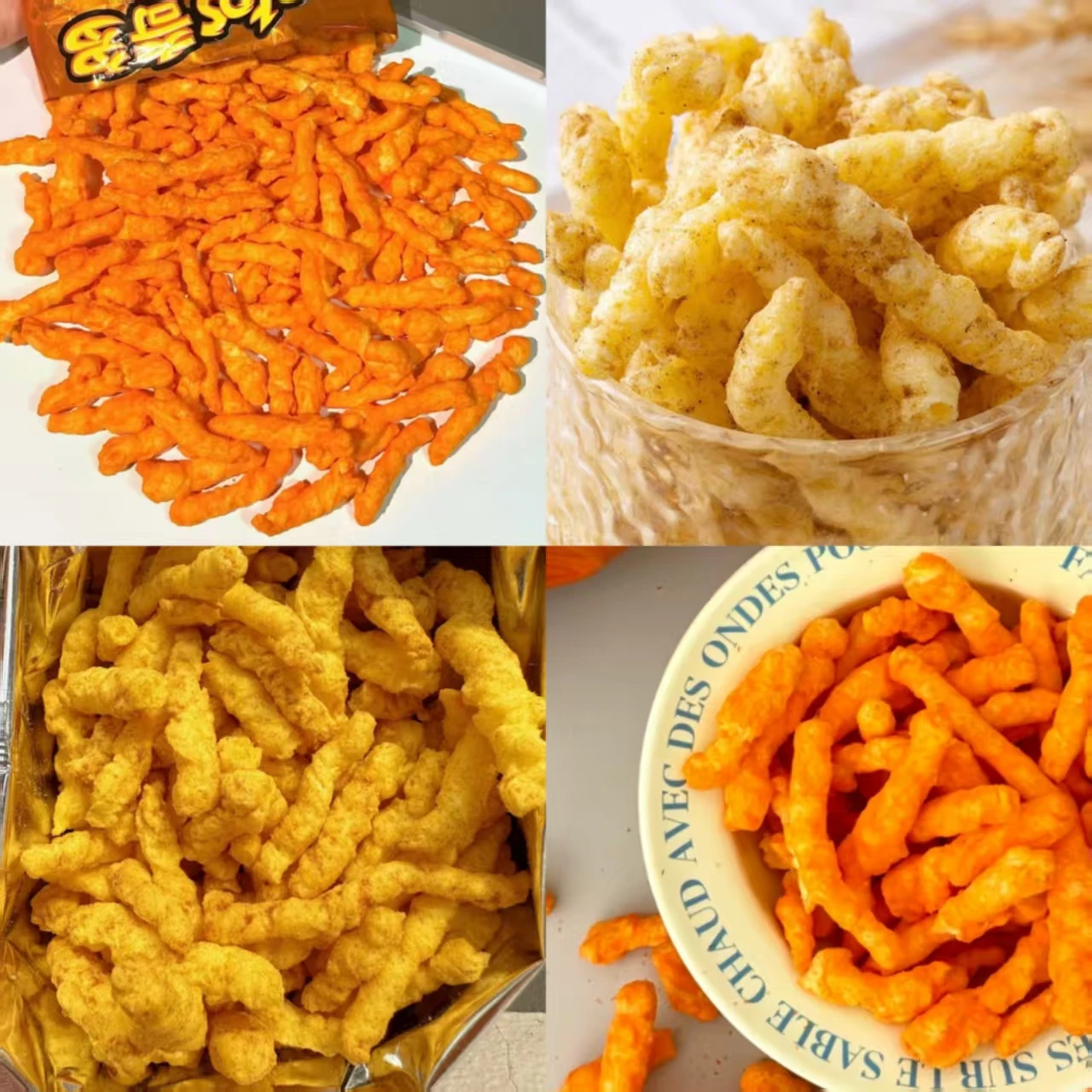
- Application: Kurkure, Cheetos, and Nik Naks format extruded corn snacks
- Support: On-site installation, operator training, and ongoing maintenance
Description
Throughput matched across every station — each section of the Kurkure and Nik Naks extrusion line, from batching through packing, is configured against your actual corn flour formulation to prevent capacity drop-offs downstream.
Technical Specifications
| Parameter | Value |
|---|---|
| Product Type | Kurkure / Nik Naks Extruder Machine |
| Output Capacity | 250 kg/h (basis not stated in source — confirm raw material type, moisture content, and product format) |
| Construction Material | 304 Stainless Steel contact surfaces, Carbon Steel frame |
| Voltage Compatibility | 220V / 380V (frequency to be confirmed for destination market) |
| Control System | Available with PLC or MCC control |
| Screw Configuration | Specified to raw material and target product geometry |
| Adjustable Rack System | Accommodates different downstream cooking vessel sizes |
| Certification | CE and ISO certified manufacturing |
Application Suitability
| Application | Material or Output |
|---|---|
| Kurkure-style puffed corn snacks | Corn grits and corn flour blends at controlled moisture |
| Nik Naks extruded snack formats | Maize-based formulations requiring rotary die shaping |
| Cheetos-type cheese-coated snacks | Extruded corn pellets after frying or baking and seasoning |
| Expanded snack line diversification | Secondary format for existing corn snack producers |
Why a Quoted Capacity Figure Rarely Holds on Your Own Corn Grits
The number on the quotation assumes a specific moisture content and particle size that may not match what your local mill actually delivers.
I have watched lines run perfectly on standard grits in our testing workshop, only to lose expansion and density the moment a buyer switches to their regional corn flour. The extruder screw combination, barrel temperature profile, and moisture addition must be recalibrated for each formulation. When that recalibration does not happen before the machine ships, the commissioning team ends up adjusting parameters on-site while the buyer watches their promised output slip. A turnkey Kurkure Nik Naks extruder production line should be validated on your exact raw material before it leaves the factory, not after it is bolted to your floor [NEED_CITE: raw material variability in extrusion processing].
Matching Extruder Output to Fryer and Seasoning Throughput
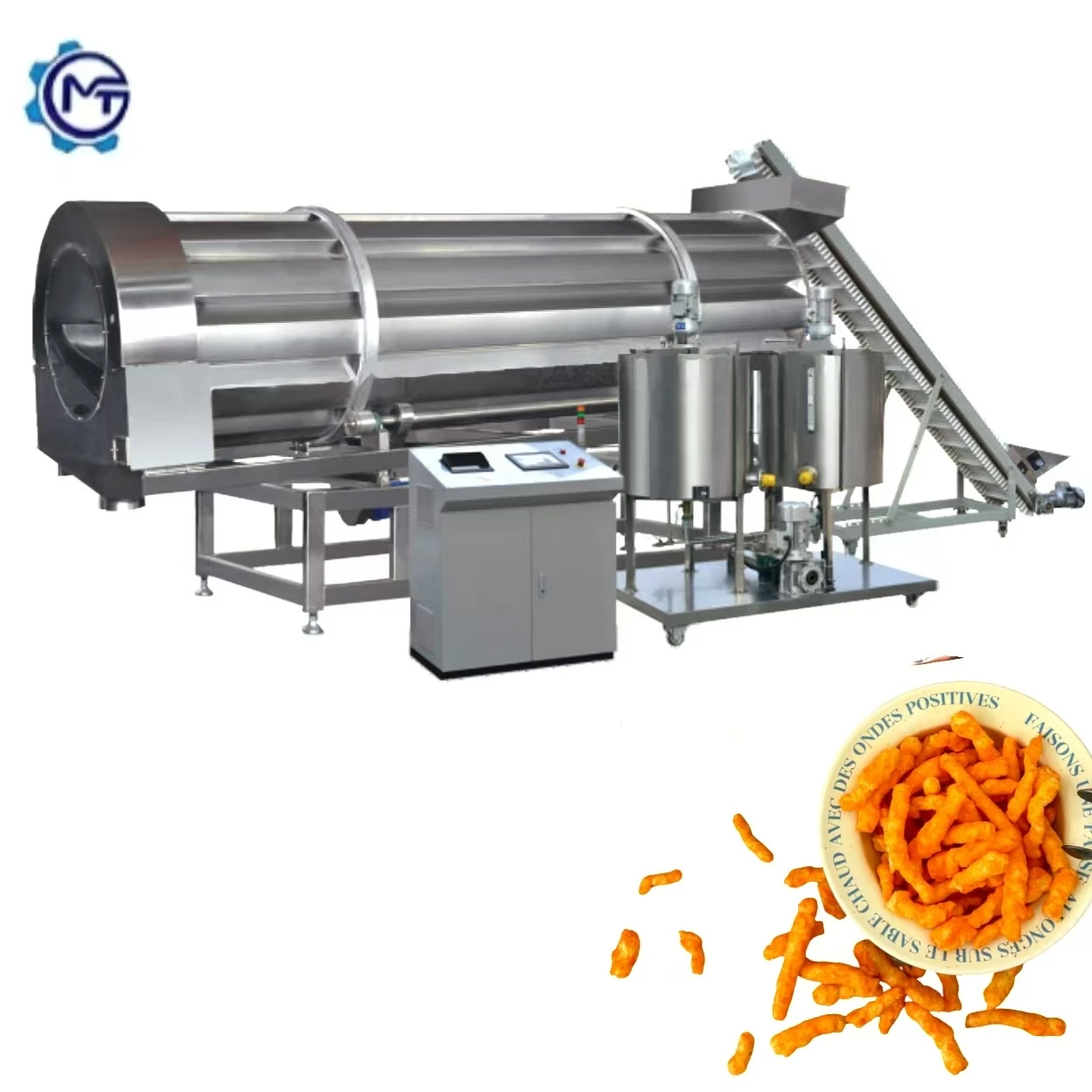
A Kurkure Nik Naks extruder production line only delivers its rated volume when every downstream station can absorb what the extruder feeds it. If the fryer basket capacity or the seasoning drum residence time falls short, the extruder must be throttled back, and the entire line runs below the figure on the contract. Sizing each station against the actual product density and moisture loss at every stage is the engineering work that separates a functioning line from a bottlenecked one.
Die Geometry and the Curl That Defines the Format
The irregular spiral shape of a Kurkure snack is produced by a rotary die that cuts and shapes the dough as it exits the extruder barrel. Die diameter, land length, and knife clearance all influence the curl tightness and surface texture. A die specified for one corn variety may produce a straighter, denser piece when the starch gelatinisation behaviour changes, which is why die selection is never a catalogue pick but a matched decision based on your formulation and the market texture expectation [NEED_CITE: die design principles for extruded snacks].
Reading the Specifications That Actually Matter
The 304 stainless steel contact surfaces ensure that product contact zones meet food-grade requirements, while the carbon steel frame keeps structural cost contained. Dual voltage compatibility at 220V and 380V allows the line to be wired for different destination markets, though frequency must be confirmed separately because motor speeds and heating element outputs shift with Hz changes. The adjustable rack system for cooking vessels means the line can accommodate different fryer or oven formats if your production plan changes after installation. Control options between PLC and MCC determine whether operators interact with a touchscreen interface or traditional push-button panels, a choice that affects training time and recipe storage capability.
What Happens When Screw Configuration Is Copied Instead of Calculated
A generic screw build that was never tested on your corn formulation will force the commissioning engineer to experiment on your production floor. Moisture addition points, compression ratio, and kneading block placement all change how the starch gelatinises inside the barrel. Get those wrong and the product emerges either under-expanded and dense or over-expanded and fragile, neither of which survives the fryer intact. That debugging phase consumes raw material, delays your market launch, and burns through operator patience [NEED_CITE: screw configuration impact on snack texture].
Why Buyers Source This Line Here
Every station on the Kurkure Nik Naks extruder production line is sized under one supplier, so the extruder output, fryer throughput, seasoning drum volume, and packing speed are calculated together rather than assembled from mismatched vendors. The screw configuration and die design are specified to the buyer’s raw material and target curl geometry, not copied from a generic template. An in-house testing workshop runs your actual corn flour before the line ships, producing a trial run report that documents verified output and product texture. Pre-sales consultation covers line layout and utility planning, and on-site installation includes operator training that addresses your specific control system and language requirements.
Documentation & Verification
- Line layout drawing showing throughput matching across extruder, fryer, and seasoning stations
- Trial run report on your corn flour formulation conducted before dispatch
- Electrical schematic with voltage, frequency, and control language confirmed for your market
- Screw and die configuration record matched to your target product geometry
- Wear parts list covering screws, dies, and fryer belt elements with replacement availability
Installation, Commissioning & Support
- Foundation plan reflecting line footprint and adjustable rack system clearances for cooking vessels
- Dedicated electrical circuit sized for confirmed voltage and total connected load across all stations
- Barrel and screw assembly verified during commissioning against your raw material behaviour
- PLC or MCC control interface configured to operator language before training sessions begin
- First set of replacement screws and dies staged on-site for the initial changeover cycle
- Daily and weekly maintenance schedule covering contact surfaces and drive components
What We Need to Configure Your Line
Share the specific corn grits or flour particle size your local mill supplies, along with the moisture content you typically receive. Let us know your target daily production volume and the Kurkure or Nik Naks format dimensions your market expects. Confirm the voltage, frequency, and preferred control language at your facility so the electrical package is correct before fabrication starts.
Frequently Asked Questions
Q: How is the 250 kg/h capacity verified, and what raw material basis does it assume?
A: The figure requires confirmation of your corn flour type, moisture content, and the final product format. We run a trial in our testing workshop using your supplied raw material and document the actual output before shipment, so the capacity you receive reflects your formulation rather than a generic benchmark.
Q: How do you match extruder output with fryer and seasoning drum capacity?
A: Each station is calculated against the product density and moisture loss at that stage. The fryer residence time and seasoning drum volume are sized to absorb full extruder output without forcing a throttle-back, preventing the bottleneck that reduces real throughput.
Q: What electrical details are confirmed before production begins?
A: Voltage, frequency, and control panel language are all locked in during the specification phase. The electrical schematic reflects your facility’s supply standard, and the control interface is set to your operator’s language before the line ships.
Q: Do you run a trial on my corn flour before the line is dispatched?
A: Yes. Our in-house testing workshop produces actual Kurkure or Nik Naks pieces using your raw material. The trial run report documents screw configuration, barrel temperature profile, die selection, and verified output, giving you a baseline before installation begins.
Q: What does on-site commissioning cover for a full turnkey line?
A: Commissioning includes mechanical alignment, electrical verification, and production runs on your raw material with your operators present. Training covers control system operation, screw and die changeover, daily maintenance points, and troubleshooting procedures specific to your line configuration.