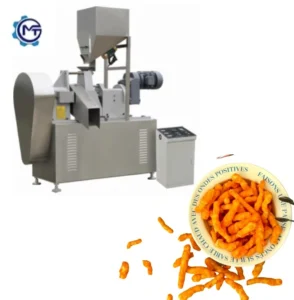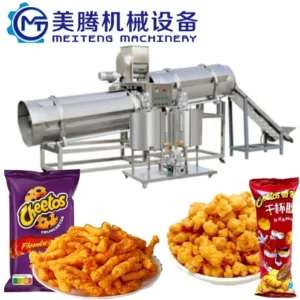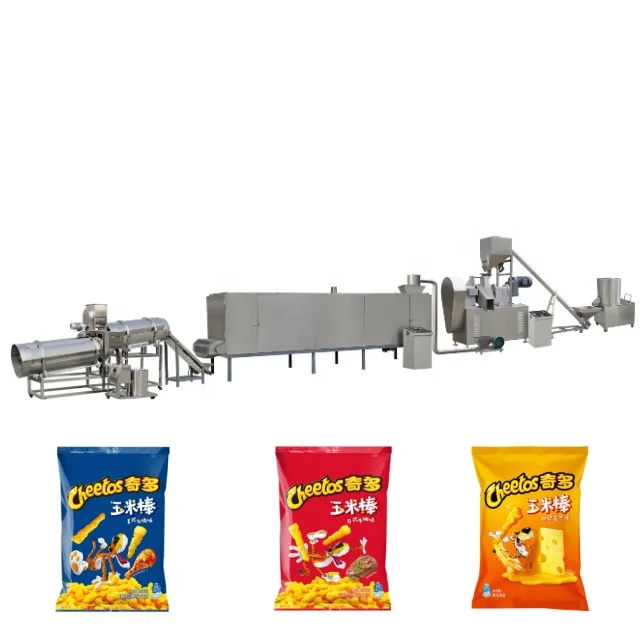


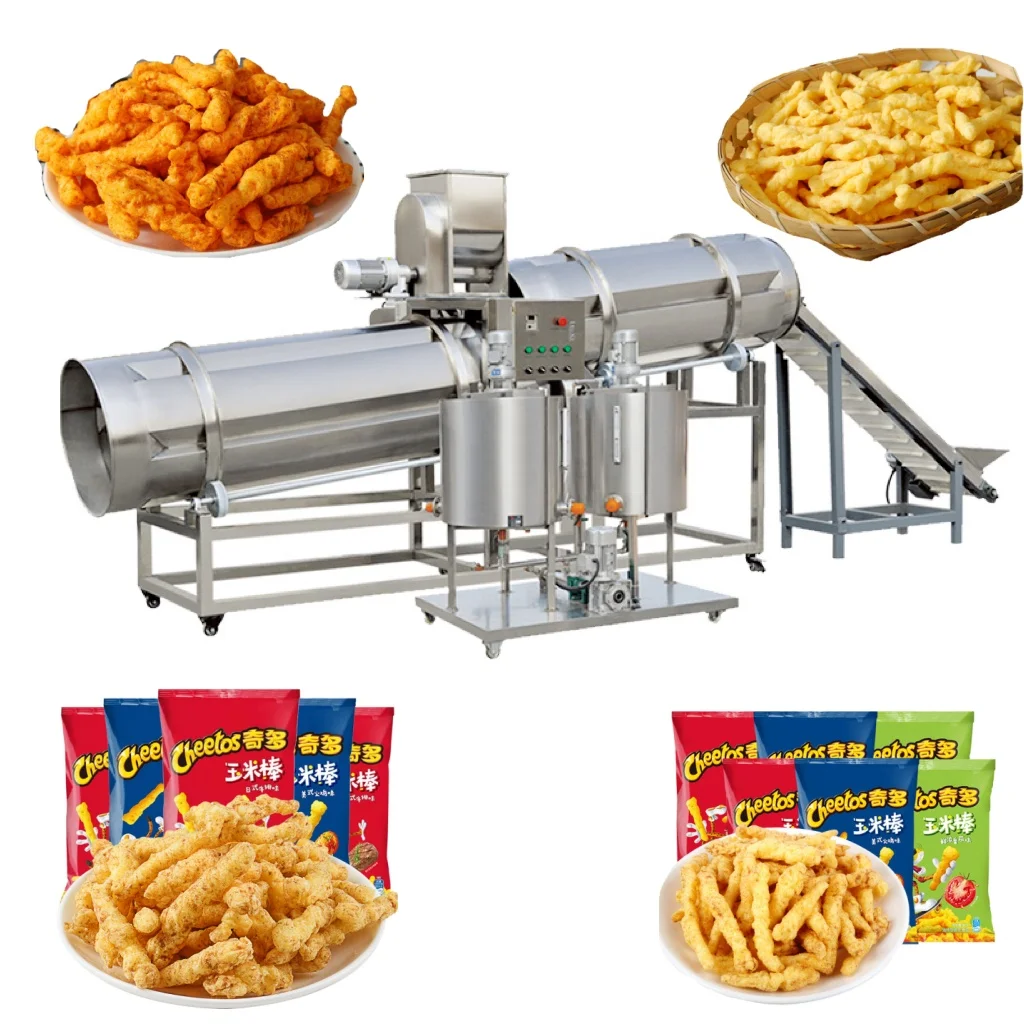


MT 120 Kurkure Cheetos Making Machine, 304 Stainless Steel, Fully Automatic PLC Control — engineered for consistent extrusion of puffed snacks with matched throughput across frying, flavouring, and packing stations. Twin-screw configuration and die design are specified to your flour blend, moisture content, and target expansion density for precise kurkure or cheetos texture. Complete turnkey line layout, in-house raw material trial runs, and on-site commissioning ensure verified performance from day one.
Description
Integrated Project Delivery — Every station from mixing through extrusion to packing is sized to the same throughput target before fabrication begins, eliminating the mismatch that bottlenecks snack lines.
Technical Specifications
| Parameter | Value |
|---|---|
| Model | MT 120 |
| Product Type | Kurkure Cheetos Processing Line |
| Output Capacity | 120-350 kg/h (basis not stated in source — confirm raw material, moisture content, product format) |
| Heat Source | Electric |
| Construction Material | 304 Stainless Steel (food-contact stations) |
| Automation Level | Fully Automatic |
| Control System | PLC and MCC |
| Certification | CE |
Application Suitability
| Application | Material or Output |
|---|---|
| Kurkure-style extruded puffed snacks | Corn grits, corn flour, rice flour blends |
| Cheetos-type rotary head snacks | Maize meal with seasoning post-fry |
| Small-to-medium puffed snack production | Various starch-based raw material mixes |
| Snack manufacturers launching new formats | Flexible die and screw setup per product density target |
What a Kurkure Cheetos Making Machine Production Line Quote Often Leaves Out
The capacity number on a brochure means nothing until every downstream station can hold that same rate on your actual raw material.
I once watched a line stall because the extruder pushed 350 kg/h of extruded kurkure into a fryer rated for 200 kg/h. The fryer basket overflowed, oil temperature dropped, and the product came out greasy and off-spec. The entire batch was rejected by the buyer’s quality team. This happens when vendors quote the extruder alone and leave the fryer, dryer, and flavouring drum as afterthoughts. A turnkey kurkure cheetos processing line only delivers its rated output when every station is calculated against the same throughput assumption and raw material behaviour [NEED_CITE: throughput matching principles in food extrusion lines].
How Station Matching Prevents Line Stoppages
A kurkure cheetos making machine production line moves product through mixing, extrusion, frying or baking, drying, and flavouring in sequence. If the extruder outputs more than the fryer can handle, product piles up on the conveyor, cools unevenly, and absorbs excess oil. If the flavouring drum turns too slowly for the upstream rate, seasoning coverage becomes inconsistent across batches.
Every station on the MT 120 line is sized so that the slowest link still meets the target throughput. The conveyor speeds, fryer basket cycle times, and drum rotation rates are all calculated during the layout phase, not adjusted on-site after installation fails.
Why Raw Material Behaviour Dictates the Whole Line Design
Corn grits at different moisture levels expand differently inside the barrel, which changes the density and texture of the extruded kurkure or cheetos piece. A denser product takes longer to fry and requires a different oil temperature profile. A lighter, more expanded piece may need a shorter fry but a longer drying cycle to reach the target moisture for shelf stability.
The screw configuration and die design are specified after reviewing the buyer’s exact flour blend. The barrel temperature profile is then set to match, and the downstream fryer and dryer capacities are adjusted accordingly. This is why a generic line build copied from another customer’s setup often produces the wrong texture or density [NEED_CITE: starch gelatinisation and expansion control in twin-screw extrusion].
Reading the Specs That Actually Matter
The 120-350 kg/h capacity range reflects different raw material formulations and target product densities — a high-moisture corn blend extrudes and fries at a different rate than a dry rice flour mix. Confirming the basis with your specific recipe is essential before treating any number as a firm output commitment.
Electric heating across the extruder barrel zones gives precise temperature control, which matters because kurkure and cheetos rely on controlled starch gelatinisation inside the barrel to achieve the correct expansion at the die face. Even a few degrees of drift can shift the product from crisp to chewy.
The 304 stainless steel construction on food-contact stations meets hygiene requirements for snack production and withstands the washdown cycles that a seasoning-heavy environment demands. PLC and MCC control allows operators to store and recall recipes, keeping extrusion pressure, barrel temperature, and fryer settings consistent across production runs.
The Hidden Cost of Undersized Downstream Equipment
When a fryer cannot keep pace with the extruder, operators slow the extruder down to match — which means the line never reaches its quoted capacity. The buyer pays for a 350 kg/h system and runs it at 200 kg/h, extending payback timelines without understanding why [NEED_CITE: bottleneck effects in sequential food processing lines].
Worse, when the flavouring drum is undersized, operators increase drum speed to compensate, which breaks the extruded pieces and generates fines. The result is a product that looks damaged in the bag and generates customer complaints about broken snacks and uneven seasoning coverage.
Why Sourcing the Full Line from One Supplier Matters
A single-supplier turnkey kurkure cheetos processing line means throughput calculations are done once, across every station, rather than negotiated between separate extruder, fryer, and packing vendors who each optimise for their own equipment.
The screw configuration and die design are recorded against the buyer’s raw material, so replacements can be ordered without re-engineering the process from scratch. An in-house testing workshop allows trial runs on the buyer’s actual flour blend before shipment, catching texture and density issues at the factory rather than after installation.
Pre-sales consultation covers line layout, utility planning, and phased installation scheduling. Electrical schematics confirm voltage, frequency, and control language before production starts, avoiding the commissioning delays that happen when a 380V machine arrives at a 415V facility.
Documentation & Verification
- Line layout drawing showing matched throughput at every station from mixer to packer
- Trial run report produced on your specific corn or rice flour blend before dispatch
- Screw configuration and die design record matched to your target kurkure texture and density
- Electrical schematic with voltage, frequency, and PLC language confirmed to your facility spec
- CE declaration of conformity covering the complete processing line assembly
- Wear parts list identifying screws, dies, and fryer baskets with replacement intervals
Installation, Commissioning & Support
- Floor plan review confirming footprint and utility connection points for the full MT 120 line layout
- Dedicated electrical circuit sizing based on the electric heating load across extruder barrel zones and fryer
- Phased station assembly starting with extruder alignment, then fryer, dryer, and flavouring drum integration
- First-run parameter setting covering barrel temperature profile, screw speed, and fryer cycle timing
- Operator training on PLC recipe recall and MCC safety interlocks for daily start-up and shutdown
- Spare screw, die, and fryer basket supply scheduled against the first projected replacement cycle
What We Need to Build Your Line Correctly
Share your raw material specification — corn grits, corn flour, rice blend, or a custom mix — along with moisture content and target product density. Let us know your facility voltage, frequency, and preferred PLC operating language.
If you have existing upstream batching or downstream packing equipment, provide the make and throughput rating so the new kurkure cheetos making machine production line can integrate without creating a new bottleneck. A sample of your raw material sent to the testing workshop allows a trial run before the quotation is finalised.
Frequently Asked Questions
Q: How is the 120-350 kg/h line capacity verified against our raw material?
A: The capacity range reflects different formulations and moisture levels. Before quotation, your raw material sample runs through our in-house testing workshop. We measure actual output rate, expansion ratio, and product density, then size every downstream station to match the verified extrusion rate on your specific blend.
Q: How are extruder, fryer, and flavouring drum throughput matched?
A: During line layout design, each station is calculated against the same target throughput. Conveyor speeds, fryer basket cycle times, and drum rotation rates are set so no station forces the others to slow down. This prevents the bottleneck that causes product pile-up and inconsistent quality.
Q: Can we do a trial run on our flour blend before shipment?
A: Yes. Send your raw material to the testing workshop, and we run it through the configured extruder with your specified screw and die setup. You receive a trial run report documenting output rate, product texture, density, and recommended downstream settings before the line ships.
Q: What voltage and control language options are confirmed before production?
A: Electrical schematics are reviewed with you before fabrication. We confirm supply voltage, frequency, phase, and PLC interface language to match your facility. This prevents the commissioning delays that occur when control systems arrive configured for a different market standard.
Q: What does the installation and commissioning schedule look like?
A: Installation follows a phased sequence — extruder positioning and alignment first, then fryer and dryer connection, followed by flavouring and packing integration. Commissioning covers parameter tuning on your raw material, operator training on the PLC and MCC system, and a supervised production run to verify throughput.
Related products
-
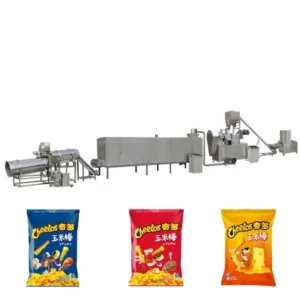
Turnkey Solution Cheetos Kurkure Production Line – 304 Stainless Steel
Read more -
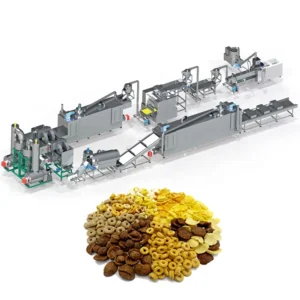
Turnkey Solution Corn Flakes Production Line for Breakfast Cereal
Read more -
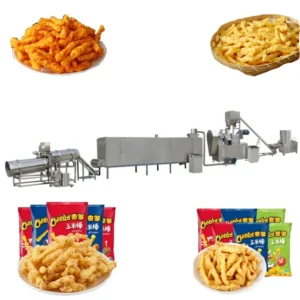
Fried Snack Cheetos Kurkure Making Machine 200kg/H Capacity Production Line
¥8,238.27 Select options This product has multiple variants. The options may be chosen on the product page -
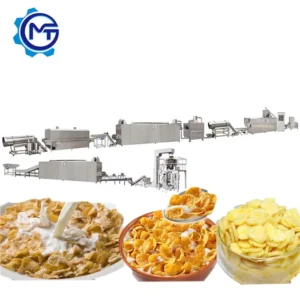
Corn Flakes Production Line for Breakfast Cereal – Turnkey Solution
Read more