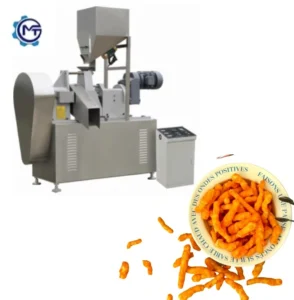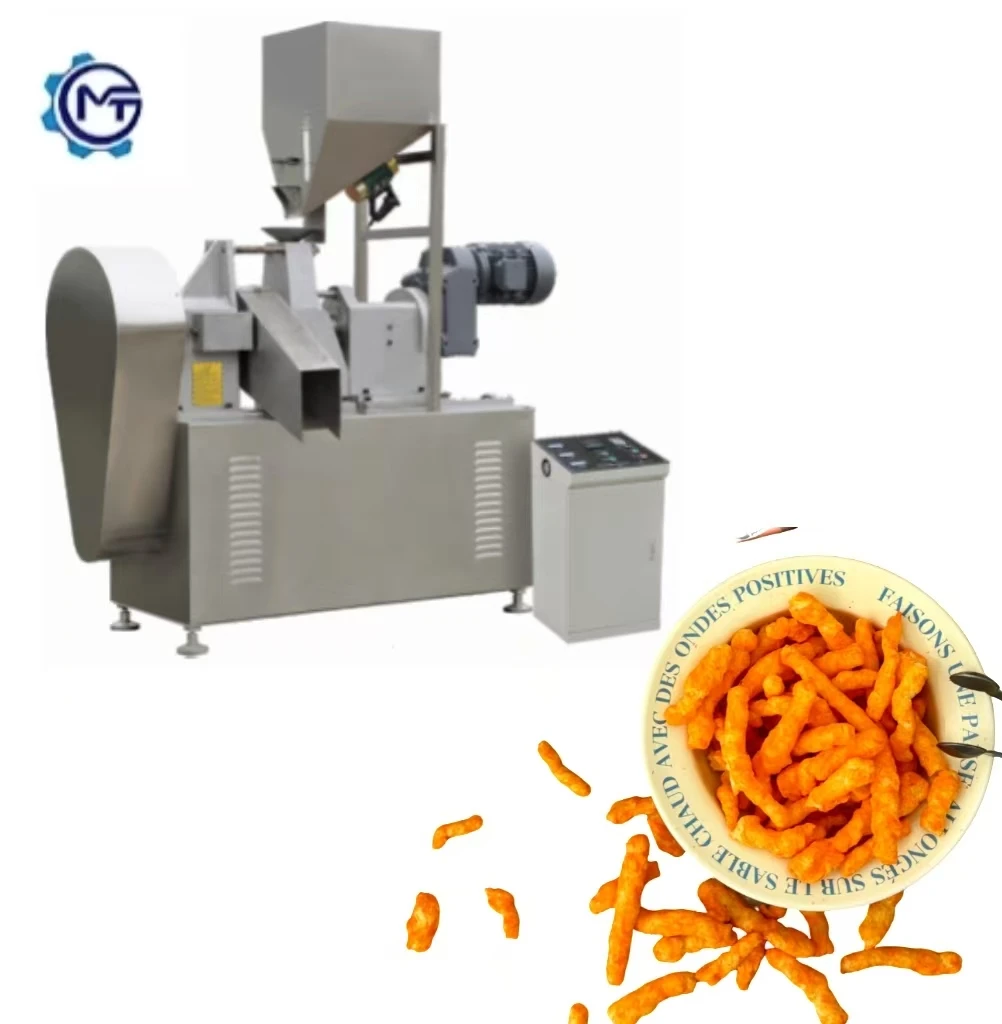
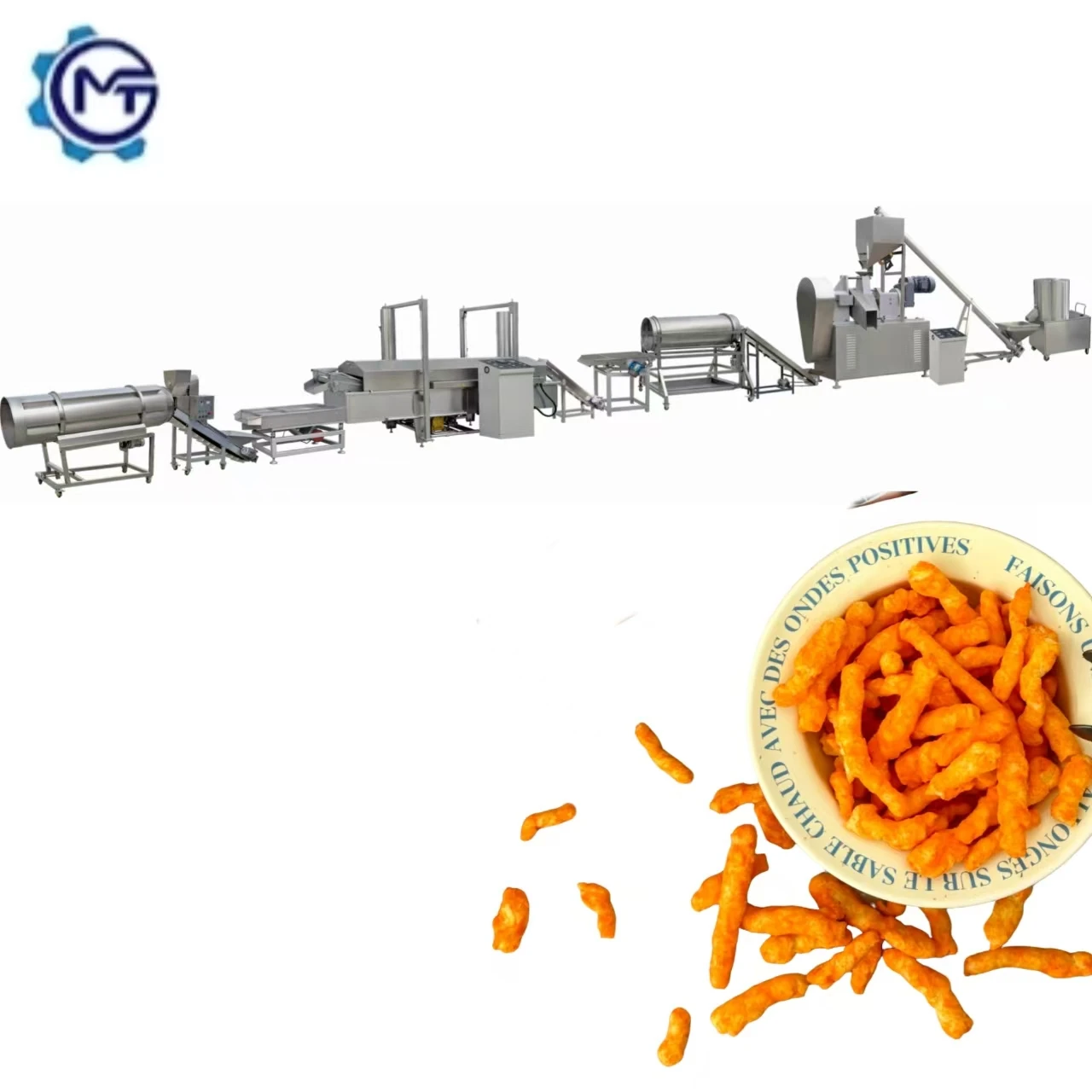
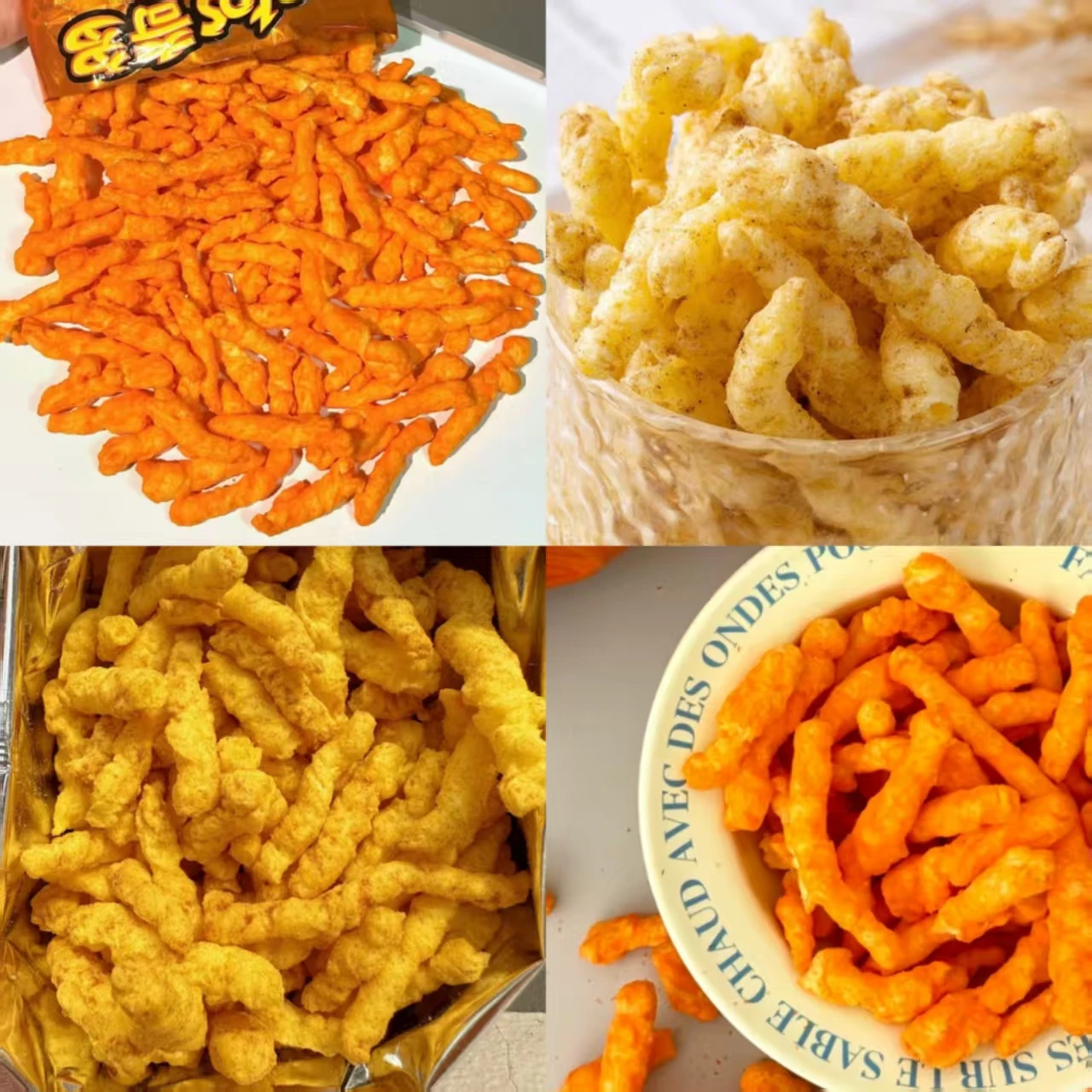
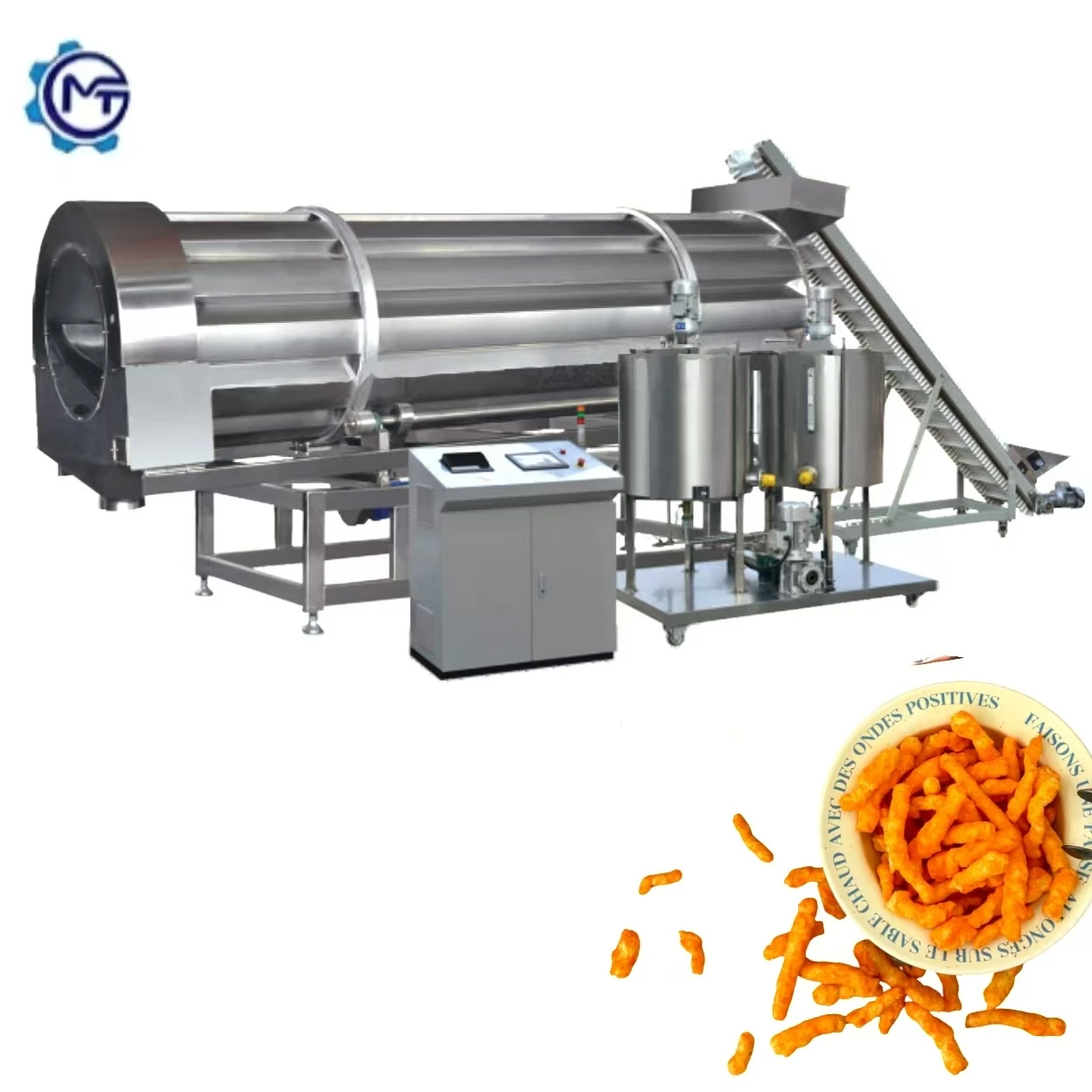

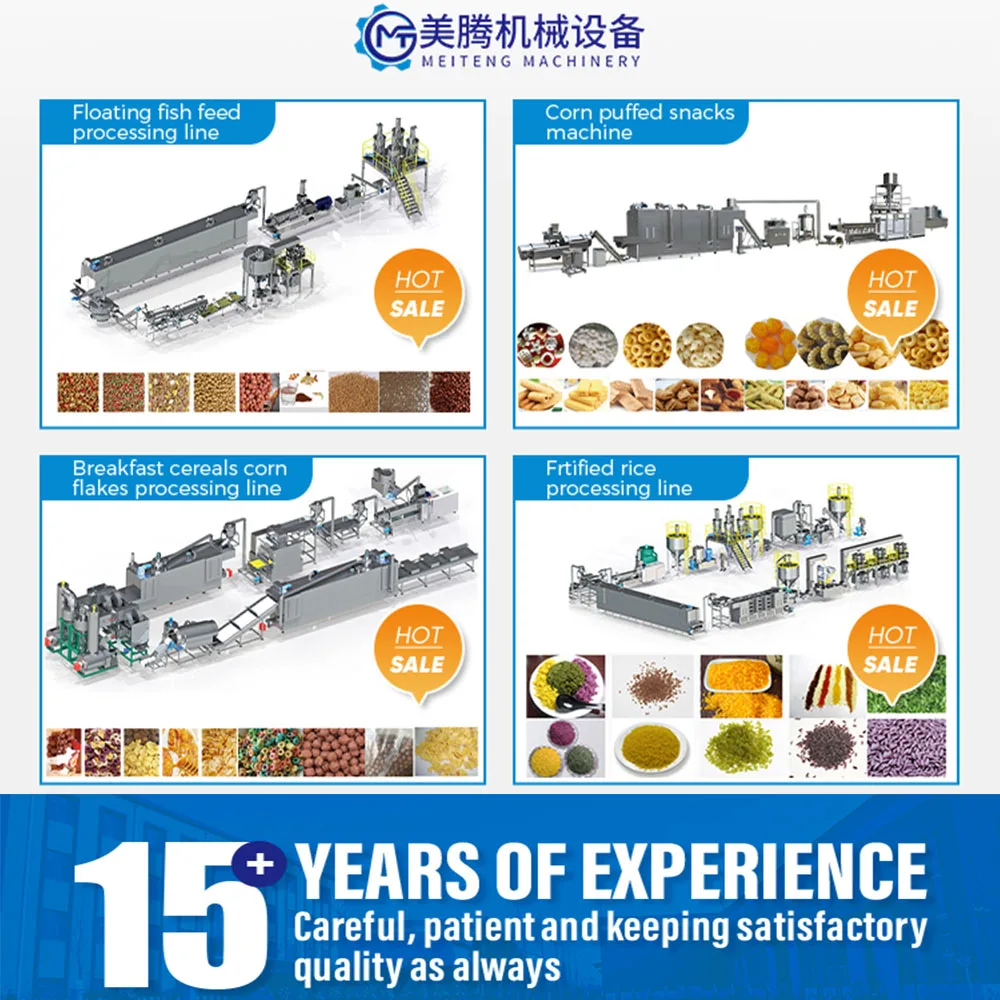
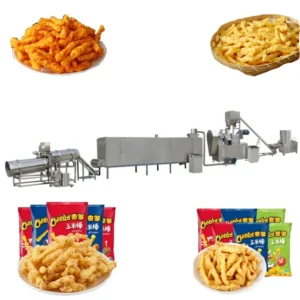
Kurkure Cheetos Making Machine, 304 Stainless Steel, 220V/380V — engineered for corn-based puffed snack extrusion from mixing through packing. Designed around twin-screw extrusion principles, with screw configuration and die geometry matched to corn grits behaviour, moisture content, and target snack density to control expansion and texture precisely. Throughput at frying, drying, and flavouring stations is balanced to the extruder output, preventing line bottlenecks common when equipment is sourced separately. Layout, capacity calculation, and trial run report on your raw material are documented before shipment.
Description
Balanced Station Throughput — A kurkure cheetos making machine line where extruder output, fryer residence time, and flavouring drum speed are calculated as one system, not quoted as isolated numbers.
Technical Specifications
| Parameter | Value |
|---|---|
| Product Type | Kurkure / Cheetos / Nik Naks Snack Extruder Machine |
| Output Capacity | 250 kg/h (basis not stated in source — confirm raw material, moisture content, and product format) |
| Voltage Options | 220V / 380V (frequency to be confirmed per market) |
| Construction Material | 304 Stainless Steel and Carbon Steel |
| Applicable Products | Cheetos, Kurkure, Nik Naks |
| Control System | PLC and MCC (configuration to be specified) |
| Certification | CE and ISO available (project-specific declaration) |
Application Suitability
| Application | Material or Output |
|---|---|
| Kurkure-format extruded snack production | Corn grits and maize flour at controlled moisture |
| Cheetos-style puffed snack line | Corn meal blended with minor ingredients |
| Nik Naks crunchy snack manufacturing | Coarse-ground maize and starch-based formulations |
| Snack pilot runs for new product development | Customer-supplied corn raw material for density testing |
What "250 kg/h" Actually Means on Your Corn Grits
The number on the nameplate only matters when tied to the exact raw material, moisture level, and snack format you plan to run.
A kurkure cheetos making machine production line quoted at a nominal throughput figure can behave very differently once your local corn grits enter the hopper. Coarse-ground maize with higher moisture content will expand less in the barrel, producing a denser extrudate that then fries unevenly or comes out harder than the market expects. I have watched a batch get scrapped after the fryer because the density was off by enough to change the bite entirely. Verifying capacity against your actual raw material before the line ships is the only way to protect your first production run [NEED_CITE: snack extrusion throughput variance by raw material].
Matching Screw Profile to Corn Grit Behaviour
The kurkure cheetos making machine extruder screw must be configured around the specific particle size and moisture range of the corn you source. A forward-conveying screw element that works well with fine maize flour may fail to gelatinise coarse grits fully, leaving hard centres in the extrudate. Die geometry then controls the cross-section and surface texture that define the Kurkure or Cheetos identity. Getting both right at the design stage avoids costly screw replacements after the line is installed.
Throughput Balance Across Every Station
An extruder that pushes out more than the downstream fryer can handle creates a backlog of half-set extrudate sitting on belts, losing surface moisture and deforming under its own weight. The dryer after frying must then cope with a higher oil load, and the flavouring drum may not have enough dwell time to coat each piece evenly. A turnkey kurkure cheetos making machine line sizes every station against the others so that material flow stays continuous from mixing through to packing [NEED_CITE: extrusion line throughput matching principles].
Reading the Numbers That Matter
The 220V / 380V dual voltage rating tells you the machine can be wound for different markets, but the frequency — 50 Hz or 60 Hz — changes motor speed and therefore screw RPM, which directly affects shear and expansion in the barrel. Construction in 304 stainless steel at contact points keeps the line compliant with food-grade hygiene expectations, while carbon steel in structural frames holds cost down where product contact does not occur. PLC and MCC control together give the operator recipe-level automation alongside manual overrides for commissioning and troubleshooting [NEED_CITE: food machinery electrical standards for export markets].
When a Cheap Extruder Costs More Than a Full Line
Buyers sometimes save on the extruder and plan to add a fryer and flavouring drum from local fabricators later. The mismatch in throughput usually shows up within the first week of production: the extruder floods the fryer basket, oil temperature drops, and the snack absorbs excess oil, coming out greasy rather than crisp. Rectifying this means either slowing the extruder permanently — losing the capacity you paid for — or replacing the fryer entirely [NEED_CITE: snack line bottleneck from mismatched station capacity].
What You Get When the Whole Line Comes From One Source
The kurkure cheetos making machine production line is specified as a single project, so the extruder barrel length, fryer belt width, dryer zone count, and flavouring drum diameter are all calculated from the same throughput target. Screw and die configurations are recorded against your raw material before production begins. An in-house testing workshop allows trial runs on the corn grits you ship in advance, producing a density and texture report you can review before the line leaves the factory. Voltage, frequency, and HMI language are locked in during the design phase, not discovered on commissioning day.
Documentation & Verification
- Line layout drawing showing matched station capacities and material flow direction
- Trial run report on your supplied corn grits recording density and expansion ratio
- Screw and die configuration sheet matched to your target Kurkure or Cheetos format
- Electrical schematic confirming voltage, frequency, and control language for your market
- Factory test record documenting run time and throughput before crate packing
Installation, Commissioning & Support
- Foundation plan reflecting total line weight and extruder vibration isolation points
- Dedicated power circuit sizing for 380V extruder motor and fryer heating elements
- Assembled extruder barrel alignment check and die seating verification on site
- First-run parameter setting for screw speed, barrel temperature zones, and fryer oil temperature
- Operator training covering recipe changeover, screw pull procedure, and daily cleaning cycle
- Wear parts list with reorder codes for screw elements, die inserts, and fryer belt sections
What We Need to Size Your Line Correctly
Send the corn grits or maize flour specification you plan to use — particle size distribution, moisture content, and any blending ingredients. Include your target daily output in packed weight and the shift pattern you intend to run. Confirm the factory supply voltage and frequency at the installation site, along with the preferred HMI language for operators.
Frequently Asked Questions
Q: How is the 250 kg/h output verified, and on which raw material?
A: That figure must be confirmed against your specific corn grits or maize flour, including moisture content and particle size. We run a trial on customer-supplied raw material in the testing workshop before the line ships and document the actual throughput achieved on the target Kurkure or Cheetos format.
Q: How are extruder, fryer, dryer, and flavouring stations sized to prevent bottlenecks?
A: Each station is calculated from the extruder’s verified output on your raw material. Fryer belt speed, dryer zone length, and flavouring drum rotation rate are all set so that material flows continuously without backlog or starvation at any transfer point.
Q: What voltage, frequency, and control language options are confirmed before build?
A: We confirm the exact supply voltage and frequency at your installation site during the design phase. The PLC and MCC panels are then wired accordingly, and the HMI language is set to match your operators before the control cabinet leaves the factory.
Q: Can a trial run be done on our own corn grits before the line ships?
A: Yes. You can ship a batch of your actual raw material to the testing workshop. The extruder is configured with the screw and die set planned for your line, and a trial run is conducted to verify density, expansion, and texture before final production begins.
Q: What does on-site installation, commissioning, and operator training cover?
A: It covers mechanical alignment of the full line from mixer to packer, electrical connection and PLC verification, first-run parameter tuning on your raw material, and hands-on operator training covering daily operation, recipe changeover, cleaning procedures, and screw element replacement.
Related products
-
Turnkey Solution Kurkure Cheetos Nik Naks Corn Snacks Extruder Making Machine
Read more -
Automatic Kurkure Cheetos Processing Line – Production Line
Read more -

Kurkure Cheetos Making Machine MT 120 | Turnkey Solution
Read more -
Fried Snack Cheetos Kurkure Making Machine 200kg/H Capacity Production Line
¥8,238.27 Select options This product has multiple variants. The options may be chosen on the product page