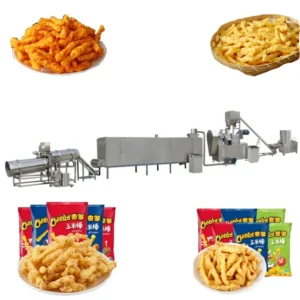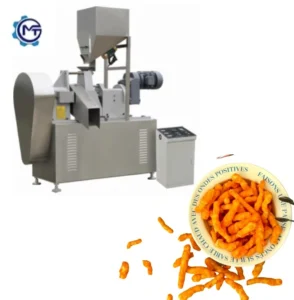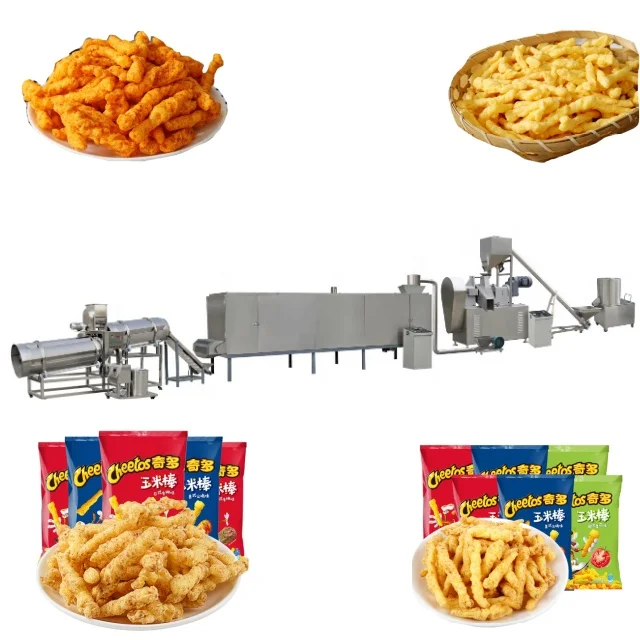
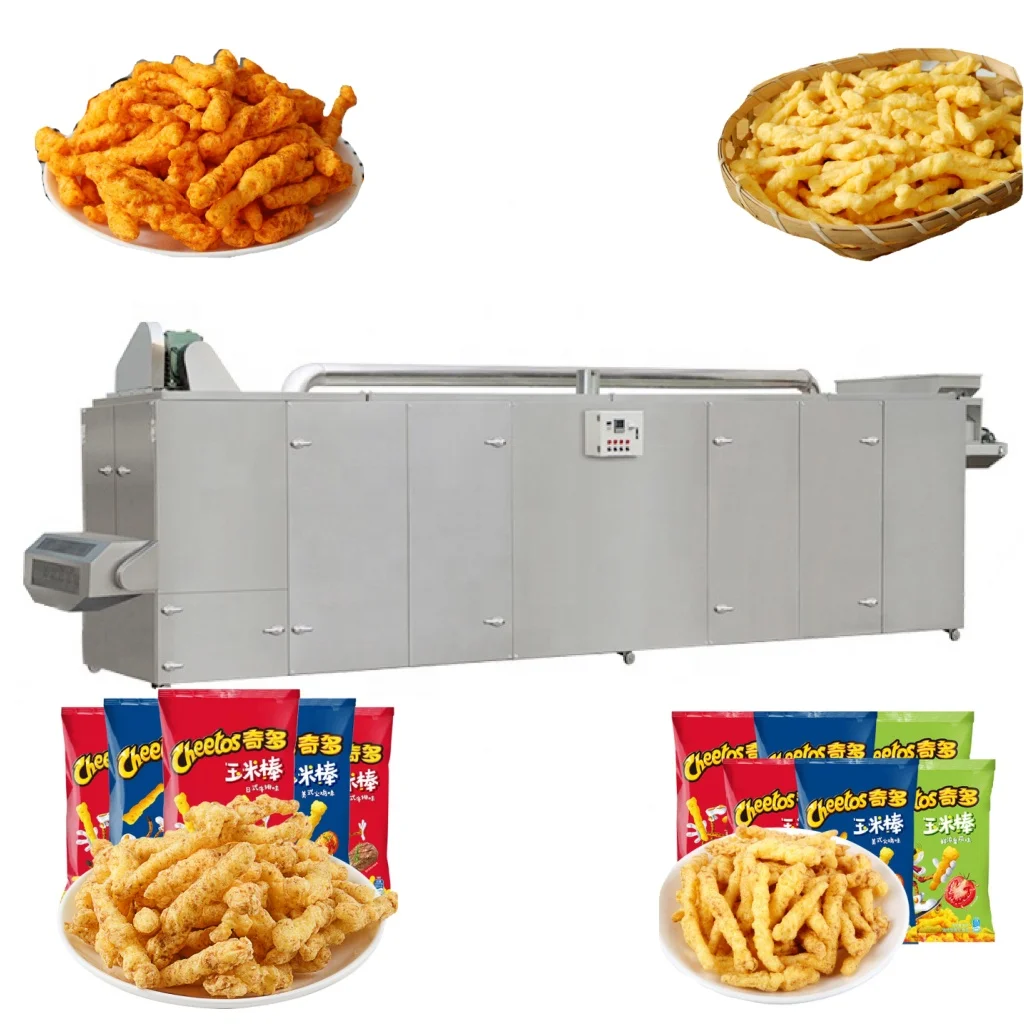


Fried Snack Cheetos Kurkure Making Machine, Twin Screw Extrusion, 304 Stainless Steel, 220V/380V — engineered as a complete turnkey project where batching, extrusion, frying, flavouring and packing stations are throughput-matched from the start. Screw configuration and die design are specified to your corn flour recipe and target format, controlling moisture shear and expansion density throughout the line. Every station is balanced to eliminate bottlenecks before commissioning begins.
- In-house trial runs on your raw material validate output before shipment
- Line layout and capacity calculation provided for full project transparency
- Electrical schematic confirmed for local voltage, frequency and PLC language
Description
Integrated Line Engineering — every station from batching through frying to packing is throughput-matched so no single machine bottlenecks the Kurkure or Cheetos output you planned for.
Technical Specifications
| Parameter | Value |
|---|---|
| Product Type | Fried Snack Extrusion Production Line |
| Output Capacity | 200–250 kg/h (basis not stated in source — confirm raw material type, moisture content, and product format) |
| Screw Type | Twin screw |
| Voltage & Frequency | 220V / 380V (frequency and phase configurable to target market) |
| Construction Material | 304 Stainless Steel contact parts, Carbon Steel frame |
| Control System | PLC or MCC control (configuration to be confirmed) |
| Line Stations | Batching, extrusion, frying, flavouring/coating, cooling, packing |
| Certification | CE and ISO certified facility (line-specific certificates to be confirmed) |
Application Suitability
| Application | Material or Output |
|---|---|
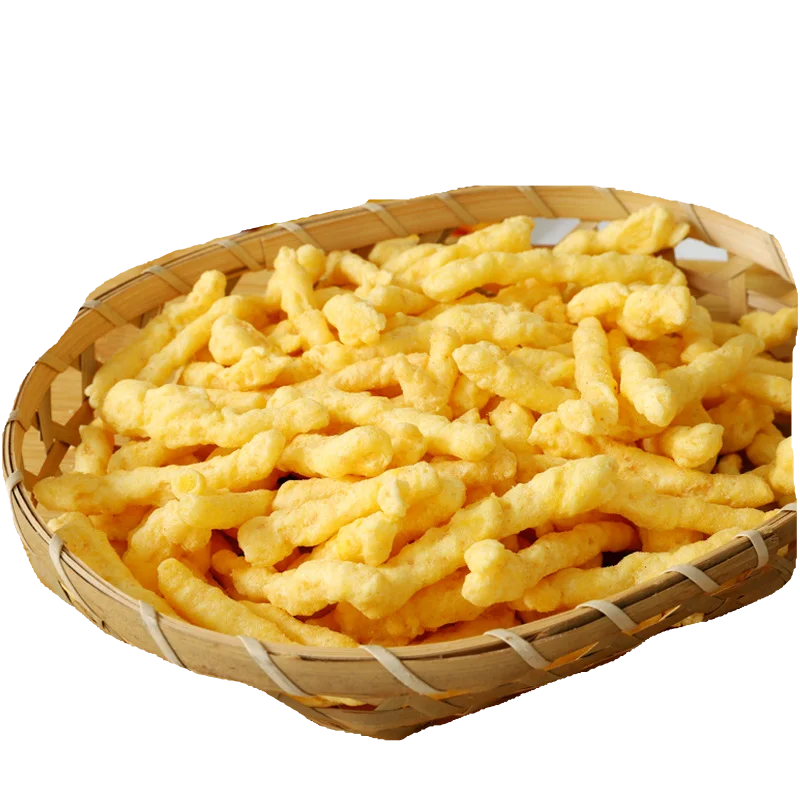
| Kurkure-style fried puffed snacks | Corn grits, corn flour blends |
| Cheetos-format extruded curls | Corn meal with moisture conditioning |
| Niknak-type fried corn snacks | Maize-based dough at controlled hydration |
| Spicy or cheese-coated variants | Post-fry seasoning in rotating flavouring drum |
Why the Extruder-to-Fryer Throughput Gap Wrecks Commissioning Week
Matching extruder output to fryer residence time is where most fried snack lines fail their first production run.
A kurkure cheetos making machine turnkey production line might quote 250 kg/h on the extruder side, but if the downstream fryer cannot hold that throughput with proper oil immersion time, the product either comes out under-cooked or the line backs up into a pile of wet dough on the conveyor. I spent three days beside a fryer in Southeast Asia watching exactly this happen — the extruder pushed product faster than the oil bath could finish it, moisture levels spiked, and the output density drifted outside what the local market expected. The issue was not a bad machine; it was two machines that had never been calculated against each other [NEED_CITE: importance of throughput matching in sequential food processing stations].
How Station Sequencing Shapes Final Product Density
In fried corn snack lines, density is determined long before the product reaches the fryer. The twin-screw extruder controls gelatinisation through screw speed, barrel temperature profile, and die geometry — each variable shifting how much the dough expands when it exits the die plate. For Kurkure and Cheetos formats, the expansion must be partial at the extruder stage because the fryer provides the second expansion event through rapid moisture flash-off. If the die configuration is generic rather than specified to the buyer’s corn grit particle size and target moisture, the kurkure cheetos making machine turnkey production line will produce curls that are either hollow and fragile or dense and under-expanded.
The Role of Oil Temperature Zoning in Consistent Crunch
Frying is not a single-temperature step. The oil bath typically runs across zones, and the temperature drop when wet extrudate enters the first zone must be accounted for in the heating capacity calculation. A fryer undersized for the extruder’s output will see oil temperature sag, leading to higher oil absorption and a greasy mouthfeel that consumers reject. This is why the kurkure cheetos making machine turnkey production line must be engineered with fryer heating capacity matched to the maximum extruder throughput, not the average [NEED_CITE: oil temperature recovery rates in continuous industrial fryers]. The flavouring drum downstream must also hold enough residence time for seasoning adhesion before cooling begins.
Reading the Specs That Actually Matter for Your Raw Material
Screw configuration is the first parameter to verify against your corn source. Coarse grits require a different compression ratio and kneading block arrangement than fine corn flour, and using the wrong setup leads to die blockage or uneven expansion. Voltage and frequency confirmation must happen before production starts — a 380V/50Hz machine shipped to a 220V/60Hz market will run at incorrect motor speeds, altering screw RPM and feeding rates in ways that compound through every downstream station. The 304 stainless steel contact construction ensures food-grade compliance across all wet-contact zones, while the carbon steel frame keeps structural costs contained where hygiene requirements are lower. Control system selection between PLC and MCC determines whether recipe changes can be stored and recalled for batch consistency or whether operators adjust parameters manually each shift.
What Happens When Die Configuration Is an Afterthought
I have seen lines arrive on site with a die plate specified for a generic corn snack rather than the buyer’s actual Kurkure or Cheetos format. The result is predictable: the curl shape does not match market expectations, oil absorption is uneven because the surface-to-volume ratio is wrong, and the flavouring drum cannot coat the product uniformly. Retooling a die after installation means weeks of lost production while replacement parts are machined and shipped — a problem entirely avoidable if the die configuration is documented against the target product before the line enters production [NEED_CITE: die geometry impact on extruded snack oil absorption].
What This Line Buys You Beyond the Machines
Throughput matching across every station — extruder, fryer, flavouring drum, cooler, and packer — is calculated in the line layout document so no single machine gates your output. Screw and die configuration is specified against your actual corn grit source and target product format, not copied from a standard build. An in-house testing workshop runs your raw material through the extruder before shipment, so the trial run report reflects your recipe, not a generic one. Electrical schematics confirm voltage, frequency, and PLC language before production begins, eliminating commissioning delays. Full documentation — from capacity calculations to wear parts lists — ships with the line so your maintenance team is not guessing when the first screw replacement is due.
Documentation & Verification
- Line layout with throughput calculation across extruder, fryer, and flavouring stations
- Trial run report on buyer’s corn grit recipe before shipment
- Screw and die configuration record matched to target Kurkure or Cheetos format
- Electrical schematic with voltage, frequency, and control language confirmed pre-production
- Wear parts list covering screws, dies, and fryer belt segments
Installation, Commissioning & Support
- Foundation plan reflecting line footprint and fryer oil load for structural reinforcement
- Dedicated power circuit sized to extruder and fryer combined rated draw at confirmed voltage
- Extruder barrel and fryer tank shipped disassembled for container loading, reassembled on site
- First-run parameter logging for screw speed, barrel zones, and oil temperature across production formats
- Operator training covering die changeover and fryer oil filtration cycles
- Spare screw elements and die plates stocked for first replacement interval
Before You Request a Quote
To size the line correctly, share your corn grit or corn flour specification including particle size distribution, the target daily output in kilograms, your facility’s available floor space and ceiling height, and the local voltage and frequency standard. If you have an existing seasoning or packing setup you want to integrate, note the conveyor heights and throughput rates so the new stations can match.
Frequently Asked Questions
Q: How is the 200–250 kg/h capacity verified and on what raw material basis?
A: The capacity range is verified through an in-house trial run using the buyer’s actual corn grit or corn flour at the specified moisture content. The trial run report documents throughput at steady state across the extruder and fryer together, not the extruder alone, so the figure reflects real line output rather than a single-machine rating.
Q: How do you ensure extruder output matches fryer and flavouring drum capacity?
A: Each station is calculated against the extruder’s maximum steady-state output during the line layout phase. The fryer heating capacity, belt speed, and oil volume are sized so residence time stays constant at full throughput, and the flavouring drum rotation speed is set to match the product flow rate without accumulation.
Q: Can the line voltage, frequency, and PLC language be configured for our market?
A: Voltage and frequency are confirmed during the specification stage and locked in before production begins. The PLC interface language is set to the buyer’s preference, and the electrical schematic ships with the line so local electricians can verify connections during installation without referencing foreign-language documentation.
Q: Is a trial run on our specific corn recipe performed before shipment?
A: Yes. The buyer sends a representative sample of their corn grit or flour to the testing workshop, where the extruder runs the material through the configured screw and die setup. The trial run report documents expansion ratio, product density, and any adjustments made before the line is approved for shipment.
Q: What does the installation schedule look like for a complete fried snack line?
A: Installation is phased: foundation and utility connections first, then extruder and fryer assembly, followed by flavouring and packing station integration. Commissioning runs each station individually before linking the full line, with operator training conducted across multiple production shifts to cover recipe changes and maintenance routines.
Related products
-
Turnkey Solution Kurkure Cheetos Nik Naks Corn Snacks Extruder Making Machine
Read more -

Turnkey Corn Flake Production Line – Breakfast Cereal Extruder
Read more -
Automatic Kurkure Cheetos Processing Line – Production Line
Read more -
Corn Flakes Production Line for Breakfast Cereal – Turnkey Solution
Read more